
Overview
That strange noise from your transmission isn’t just annoying—it’s a warning sign that could save you from a potential $3,000+ repair bill if addressed promptly. This guide decodes the different transmission sounds (whining, grinding, clunking), explains their causes from low fluid to worn components, and provides practical maintenance tips to extend your transmission’s life through regular fluid checks, responsible driving, and knowing when to seek professional help.
Table of Contents
- What Does Your Transmission Actually Do?
- Common Transmission Noises and Their Causes
- Warning Signs Your Transmission is in Trouble
- What Causes Transmission Noise?
- How to Prevent Transmission Problems
- When to Repair or Replace Your Transmission
- DIY vs. Professional Repairs
- Conclusion
- Frequently Asked Questions
What Does Your Transmission Actually Do?
That strange noise coming from underneath your car isn’t just annoying – it’s your transmission trying to tell you something important. When I hear customers say their transmission is making noise, I know we need to act fast to avoid a potential $3,000+ repair bill.
Think of your transmission as the middleman between your engine and wheels. It’s like the gear selector on a bicycle, but way more complex. Your transmission ensures your engine runs at the optimal RPM range while delivering the right amount of power to your wheels based on what you’re doing – cruising on the highway, climbing a steep hill, or navigating rush hour traffic.
There are three main types of transmissions you’ll find in vehicles today:
- Automatic transmissions handle all the gear shifting for you using hydraulic pressure and a complex system of planetary gears
- Manual transmissions require you to change gears using a clutch pedal and shift lever
- Continuously Variable Transmissions (CVTs) don’t have traditional gears but use a belt or chain running on pulleys for infinite gear ratios
Each type has its own unique components that can cause distinctive noises when something goes wrong. The quicker you identify and address these sounds, the better chance you have of avoiding a transmission catastrophe.
Common Transmission Noises and Their Causes
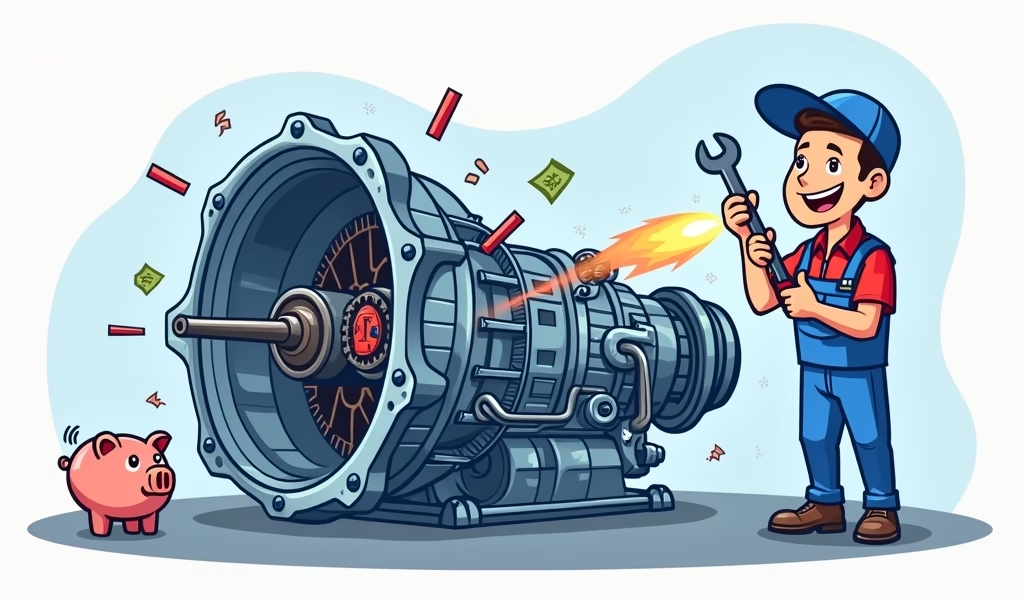
Your transmission speaks its own language of sounds. Let me translate what these noises typically mean:
Whining or Buzzing
This high-pitched noise during acceleration or deceleration often points to low transmission fluid or pressure problems. In automatics, it might mean your torque converter is failing. In manuals, worn bearings or low fluid are common culprits.
I recently had a customer bring in her Honda Civic with a persistent whine that got louder during acceleration. A quick check revealed she was two quarts low on transmission fluid. After topping it off and fixing a small leak, the noise disappeared completely.
Grinding Sounds
Grinding is never normal and demands immediate attention. In manual transmissions, it typically means worn synchronizers or clutch issues. For automatics, grinding suggests serious internal gear damage or metal debris in the fluid.
As transmission repair specialists confirm, grinding sounds almost always indicate advanced wear that will require significant repairs if ignored.
Clunking or Thumping
These alarming sounds usually occur during gear shifts and suggest something is loose or broken inside your transmission. Possible causes include damaged mounts, failing universal joints, or broken gear teeth.
Humming or Droning
A consistent humming that changes with vehicle speed but not engine RPM often indicates bearing wear in the transmission or differential. This noise might start subtly but will intensify over time.
Clicking or Ticking
Rhythmic clicking might indicate a damaged CV joint or broken gear teeth engaging intermittently. While CV joints are technically part of the drivetrain rather than the transmission itself, they’re closely related and often mistaken for transmission noise.
Warning Signs Your Transmission is in Trouble
Beyond noise, your transmission will send other distress signals when it’s struggling. Recognizing common transmission problems early can save you from a world of headaches and expense. Here’s what to look for:
Delayed or Rough Shifting
When your car hesitates before engaging a gear or lurches forward when shifting, something’s amiss in the control system or with internal components. This hesitation often precedes more serious issues.
Burning Smell
That distinctive burnt toast smell means transmission fluid is overheating. This happens due to internal friction from worn parts or fluid breakdown. It’s like smelling the clutch burning on a manual car—a clear warning sign.
Transmission Fluid Leaks
Spots of red or brown fluid beneath your parked car are telling you something’s leaking. Even small leaks can eventually lead to low fluid levels and catastrophic damage. Don’t ignore those drips!
According to AAA’s automotive experts, addressing leaks early can prevent damage to seals and internal components that would otherwise require complete transmission rebuilds.
Check Engine Light
Modern transmissions are computer-controlled, and transmission problems often trigger the check engine light. Don’t ignore it – get the code scanned right away. Even if the car seems to be driving normally, those codes can identify problems before they become severe.
Slipping Gears
If your engine revs but your car doesn’t accelerate proportionally, or if the transmission unexpectedly shifts to neutral, you’re experiencing transmission slippage. This serious problem requires immediate attention before it leads to complete failure.
What Causes Transmission Noise?
Understanding what’s behind those noises can help determine how urgently you need repairs:
Low Transmission Fluid
Often the simplest cause of noise, low fluid means inadequate lubrication and cooling. Your transmission depends on proper fluid levels to function correctly. When fluid runs low, metal components start making contact where they shouldn’t, creating noise and damage.
Learning how to check your transmission fluid is one of the most valuable maintenance skills any driver can develop. It’s simple, takes just minutes, and can save thousands in repair costs.
Contaminated or Degraded Fluid
Transmission fluid breaks down over time, losing its protective properties. If your fluid looks brown or black instead of bright red, or smells burnt rather than slightly sweet, it’s time for a change. Contamination from metal particles or water further reduces its effectiveness.
Worn Components
Gears, bearings, bands, and clutches endure enormous stress and eventually wear out. As precision parts lose their exact dimensions, gaps create noise and reduce efficiency. These wear patterns accelerate when fluid levels are low or contaminated.
Torque Converter Issues
In automatic transmissions, a failing torque converter creates whining or rattling noises, especially during acceleration or when shifting between drive and reverse. This fluid coupling between your engine and transmission is critical for smooth operation.
Electrical Problems
The solenoids that control fluid flow in automatic transmissions can fail electrically or become clogged. This causes delayed shifts and unusual noises as the transmission struggles to change gears properly.
How to Prevent Transmission Problems
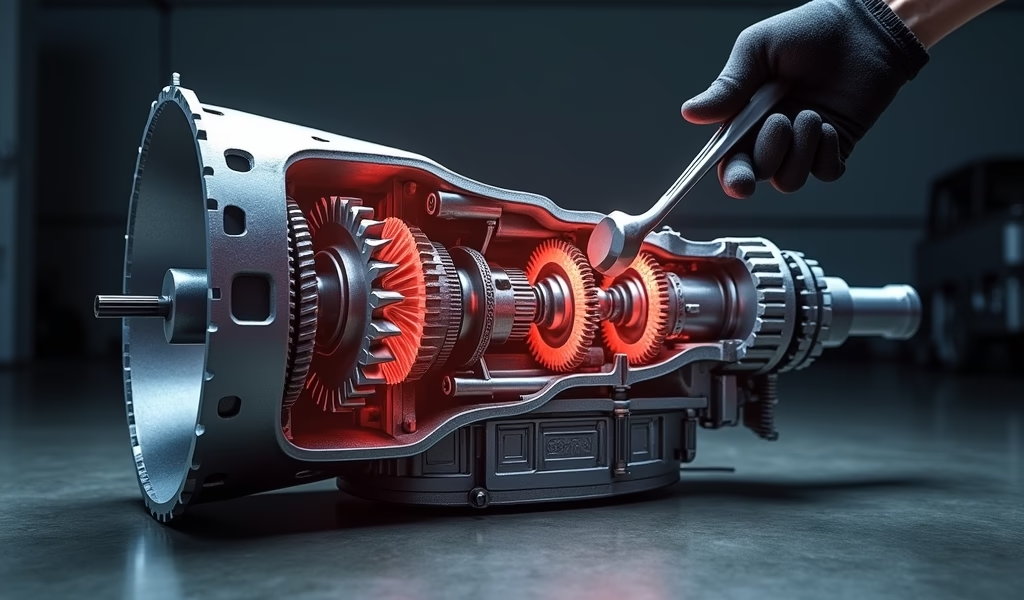
An ounce of prevention is worth a pound of cure—especially with transmissions. Here’s what I recommend to my customers to keep their transmissions healthy:
Regular Fluid Maintenance
Check your transmission fluid monthly and inspect its condition—it should be bright red or pink, not brown or black, and should smell slightly sweet, not burnt. Most manufacturers recommend changing automatic transmission fluid every 30,000 to 60,000 miles.
Manual transmission fluid typically requires changes every 60,000 to 90,000 miles. Even if your vehicle has “lifetime” fluid, I still recommend changing it every 60,000-100,000 miles for maximum transmission life.
Cooling System Maintenance
Many transmission failures stem from overheating. Keep your car’s cooling system in top shape, as it often helps cool the transmission as well. A clogged radiator or failing water pump can indirectly cause transmission damage.
Filter Replacement
Automatic transmissions have filters that trap debris. These should be changed with each fluid service to prevent clogging and pressure loss. It’s like changing the oil filter with your oil—skipping it defeats much of the benefit.
Drive Responsibly
Your driving habits directly impact transmission longevity. Allow your transmission to fully engage before accelerating. In cold weather, give your car a minute to warm up. Avoid rocking between drive and reverse to get unstuck without coming to a complete stop.
Research from Consumer Reports shows that regular maintenance can extend transmission life by tens of thousands of miles, making this an investment that pays off dramatically.
When to Repair or Replace Your Transmission
Sometimes, despite your best efforts, repairs become necessary. Here’s how to navigate this challenging decision:
Diagnosing Severity
Minor issues like low fluid, solenoid problems, or sensor failures often need simple repairs. However, grinding noises, severe slippage, or metal debris in the fluid typically indicate major internal damage requiring extensive work.
Repair Options
Common repairs include fluid and filter changes, solenoid replacement, band adjustments, and clutch replacement (for manuals). Sometimes removing the transmission pan and cleaning the valve body can resolve shifting issues without a complete rebuild.
When Replacement Makes Sense
If your technician finds metal shavings in the fluid, severe internal damage, cracked cases, or multiple failed components, replacement often becomes more economical than repair. This is especially true for high-mileage vehicles or those with previous transmission issues.
Rebuild vs. Replacement
A rebuild involves disassembling your transmission, replacing worn parts, and reassembling it. A replacement means installing an entirely different transmission—either new, remanufactured, or used. Each approach has different cost and warranty implications worth discussing with your mechanic.
Cost Expectations
Be prepared for the financial reality: transmission work isn’t cheap. Simple fluid and filter services range from $150-$400. Solenoid replacements might cost $400-$800. A clutch replacement for manual transmissions typically runs $800-$1,500.
Major repairs get even pricier—a full rebuild usually costs $1,500-$3,000, while complete replacement with a remanufactured unit typically ranges from $2,500-$4,500 installed. Luxury and high-performance vehicles can cost substantially more.
DIY vs. Professional Repairs
Some transmission maintenance can be handled yourself, while other jobs require professional expertise:
DIY-Friendly Tasks
Checking fluid levels, changing transmission fluid on some vehicles, and adjusting shifter linkage are within reach of mechanically inclined DIYers with proper tools and knowledge. I always encourage my customers to learn these basic maintenance procedures.
When to Seek Professional Help
Internal repairs, diagnosis of complex electronic issues, and complete rebuilds require specialized tools, expertise, and often dealer-level diagnostic equipment. Don’t risk making expensive mistakes by tackling jobs beyond your comfort level.
Finding a Qualified Shop
Look for shops specializing in transmissions rather than general repair facilities. Check for ASE certifications, read reviews, and ask about their diagnostic process and warranty terms. A good transmission shop will explain the problem thoroughly and offer options before proceeding with expensive repairs.
Conclusion
Your transmission speaks a language of sounds – some benign, others signaling expensive troubles ahead. By understanding what different noises mean and addressing them promptly, you can often avoid catastrophic failures and their accompanying financial pain.
Remember that preventive maintenance is always cheaper than major repairs. Regular fluid checks and changes, appropriate driving habits, and addressing minor issues before they escalate will help your transmission live a long, quiet life.
When problems do arise, don’t panic – but don’t delay either. The difference between a $300 repair and a $3,000 replacement often comes down to how quickly you respond to those first warning signs. Your wallet will thank you for paying attention to what your transmission is trying to tell you.
Frequently Asked Questions
Is it safe to drive with a noisy transmission?
No, it’s not safe for long. Even short drives with a noisy transmission can turn a repairable issue into catastrophic damage that could leave you stranded.
How much does it cost to fix transmission noise?
Costs vary widely from $150 for a simple fluid change to $4,500+ for a complete replacement. The earlier you address the noise, the less expensive the repair usually is.
Will adding transmission fluid stop the noise?
If low fluid is the only cause, adding the correct type might stop the noise. However, if components are already damaged, adding fluid is just a temporary band-aid.
How long will a transmission last after it starts making noise?
This varies dramatically depending on the cause. Some noises might persist for thousands of miles with proper maintenance, while others signal failure within hours of driving.
Can transmission noise come and go?
Yes, intermittent noises often occur when specific conditions are met. These should never be ignored as they typically worsen over time and eventually become constant.