
Overview
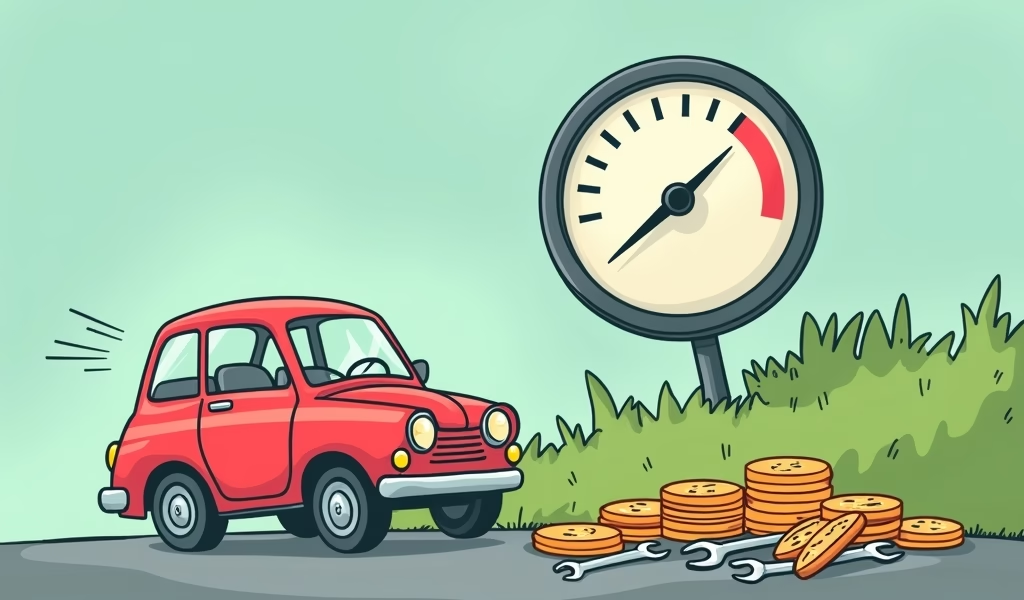
When your vehicle’s MPG starts dropping, it’s not just costing you extra at the pump—it’s actually your car’s way of whispering that something needs attention before more serious problems develop. From maintenance issues like dirty air filters and underinflated tires to driving habits and seasonal factors, understanding the common causes of declining fuel economy empowers you to make simple fixes that can improve efficiency by up to 40% while preventing costlier repairs down the road.
Table of Contents
- Understanding MPG and Why It Matters
- Common Causes of Declining Fuel Economy
- Engine-Related Issues That Decrease MPG
- How Your Driving Habits Affect Fuel Economy
- Seasonal Factors That Impact MPG
- Maintenance Tips to Improve Fuel Efficiency
- Diagnosing MPG Problems at Home
- Conclusion
- Frequently Asked Questions
Understanding MPG and Why It Matters
If you’re wondering “why is my MPG dropping,” you’re not alone. As a mechanic with over 15 years of experience, I’ve seen countless drivers puzzled by unexpected decreases in their fuel economy. That little MPG (miles per gallon) number on your dashboard isn’t just a random figure—it’s a direct window into your vehicle’s overall health and efficiency.
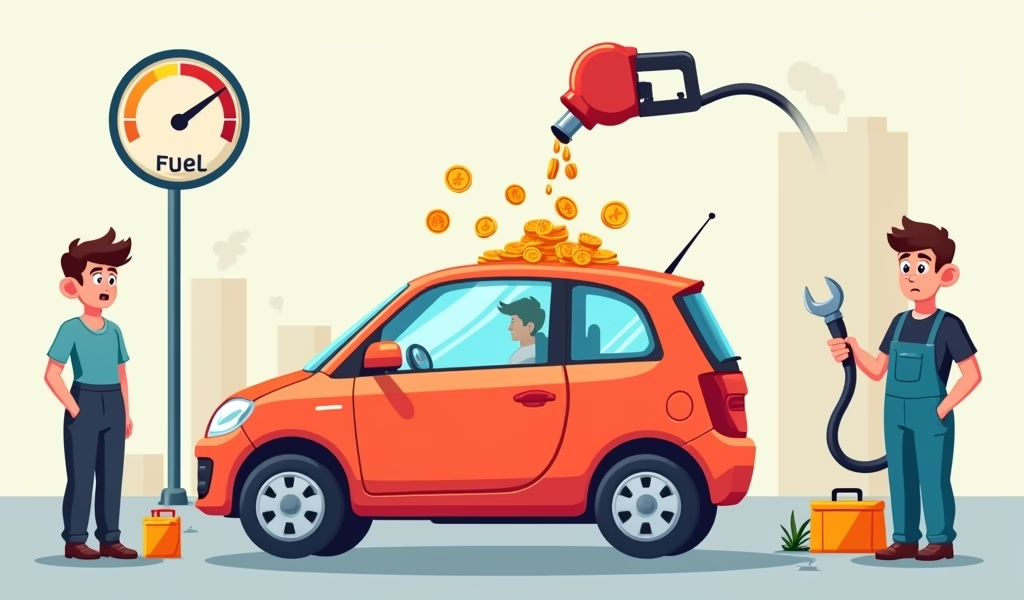
Fuel efficiency represents how effectively your car converts fuel into forward motion. When your MPG starts dropping, your vehicle is essentially telling you that something’s changed—it now requires more fuel to travel the same distance. This change might be subtle at first, perhaps just a mile or two per gallon, but it can quickly translate into real money flowing from your wallet at the pump.
Beyond the financial impact, declining fuel economy often serves as an early warning system for mechanical issues. By paying attention to these changes and addressing them promptly, you can avoid more costly repairs down the road. Think of your MPG as your car’s way of whispering that something needs attention, before it starts shouting with more serious symptoms.
Common Causes of Declining Fuel Economy
When your gas mileage takes a noticeable dive, several common culprits might be responsible. Let’s break these down into categories so you can start narrowing down the possibilities:
Maintenance issues tend to be the most frequent cause of MPG decline. Dirty or clogged air filters can restrict airflow to your engine, forcing it to work harder and burn more fuel. Similarly, worn spark plugs can’t efficiently ignite the air-fuel mixture, resulting in wasted gasoline and reduced power. These simple maintenance items can reduce your fuel economy by up to 20% when neglected.
Tire problems significantly impact your car’s efficiency. Underinflated tires increase rolling resistance, making your engine work harder to maintain speed. According to the Department of Energy, properly inflated tires can improve gas mileage by around 3%. That might not sound like much, but it adds up quickly over thousands of miles.
Fuel quality matters more than most people realize. Lower-quality gasoline may contain less energy per gallon and can leave deposits in your engine over time. These deposits restrict optimal engine operation, gradually reducing efficiency. In some cases, cleaning your fuel injectors can help restore lost performance.
Mechanical problems often announce themselves through decreasing MPG before other symptoms appear. A failing oxygen sensor, for instance, can cause your engine to run rich (using too much fuel), decreasing economy by up to 40%. Similarly, a sticking brake caliper creates constant resistance that your engine must overcome, burning extra fuel in the process.
Engine-Related Issues That Decrease MPG
Your engine is a complex system where everything must work in harmony for optimal efficiency. When this harmony is disrupted, your fuel economy suffers. Let’s explore some specific engine issues that commonly lead to MPG drops.
A malfunctioning oxygen (O2) sensor dramatically impacts fuel efficiency. These sensors tell your car’s computer how much oxygen is in the exhaust, allowing it to adjust the fuel mixture appropriately. When they fail, your engine typically runs “rich” (too much fuel, not enough air). I’ve seen properly functioning O2 sensors improve MPG by up to 40% compared to failed ones.
Dirty fuel injectors can’t properly atomize fuel, leading to incomplete combustion. Instead of creating power, some fuel particles exit through your exhaust unburned—literally money up in smoke. Regular use of quality fuel injector cleaners can help, but severe cases may require professional cleaning.
Vacuum leaks create havoc with your engine’s carefully calibrated air-fuel mixture. These sneaky leaks allow unmetered air into the engine, throwing off the balance needed for efficient operation. Common symptoms include rough idling and decreased power alongside poor fuel economy.
A failing thermostat might not seem like an MPG killer, but it absolutely is. If your engine can’t reach optimal operating temperature (usually around 195°F), it will remain in an inefficient “warm-up” mode. This mode uses significantly more fuel to protect a cold engine, but it’s wasteful when running continuously due to a stuck-open thermostat.
Carbon buildup on intake valves and combustion chambers creates a double whammy for efficiency. First, it reduces the effective compression in the cylinder; second, it can cause hot spots that lead to pre-ignition. Both problems reduce power output while increasing fuel consumption. Modern direct-injection engines are particularly prone to this issue, often requiring specialized cleaning procedures.
How Your Driving Habits Affect Fuel Economy
Sometimes the answer to “why is my MPG dropping” isn’t about what’s wrong with your car—it’s about how you’re driving it. Your behind-the-wheel habits have a tremendous impact on fuel economy, often more than you might realize.
Aggressive acceleration is the enemy of good fuel economy. When you stomp the gas pedal, your vehicle dumps extra fuel into the engine to create that quick burst of power. Instead, try accelerating moderately—you’ll reach the same speed using significantly less fuel. In city driving, gentle acceleration can improve your MPG by up to 30%.
High-speed highway driving increases aerodynamic drag exponentially. A vehicle traveling at 75 mph uses about 25% more fuel than one cruising at 65 mph. That’s because wind resistance increases with the square of your speed—a small increase in velocity requires a disproportionately larger amount of power to overcome air resistance.
Excessive idling burns fuel while going nowhere. Modern engines are efficient enough that restarting uses less fuel than idling for more than about 10 seconds. If you’re waiting for more than a brief moment, consider turning off your engine to reduce fuel consumption.
Carrying unnecessary weight costs you at the pump. Every 100 pounds of extra cargo reduces fuel economy by roughly 1%. That roof rack you never use, those golf clubs perpetually in your trunk, or that collection of “just in case” items all add up to wasted fuel over time.
Using cruise control on highways helps maintain a consistent speed, eliminating the small, fuel-wasting accelerations and decelerations that occur when controlling speed manually. On flat interstate highways, cruise control can improve economy by 7-14% compared to manual throttle control.
Seasonal Factors That Impact MPG
Fuel economy fluctuations throughout the year are completely normal and expected. Understanding these seasonal impacts can help you distinguish between natural variations and actual problems with your vehicle.
Winter brings several MPG-reducing factors. Cold engines run rich until they reach operating temperature, using more fuel. Winter-blend gasoline contains fewer energy-dense hydrocarbons than summer blends, delivering less energy per gallon. Add in increased idling for defrosting, greater rolling resistance on snow-covered roads, and the energy drain from heater use, and winter MPG drops of 10-20% are typical in cold regions.
Summer has its own efficiency challenges. While warmer temperatures help engines reach operating temperature quickly, air conditioning use significantly impacts fuel economy, especially during city driving with frequent stops. The extra load from the AC compressor can reduce MPG by 5-25%, depending on the vehicle and conditions.
Seasonal fuel blends affect performance directly. Refineries produce different gasoline formulations throughout the year to optimize for temperature-related concerns like volatility. Summer-blend gasoline generally delivers better fuel economy but costs more to produce, which is why you often see price increases during summer months.
Temperature swings affect tire pressure, with each 10°F drop in ambient temperature causing approximately 1 PSI loss in your tires. Without regular pressure checks during changing seasons, your tires might gradually become underinflated, reducing fuel economy without any obvious visual cues.

Maintenance Tips to Improve Fuel Efficiency
Proactive maintenance is your best defense against declining MPG. Here’s what I recommend to my customers who want to maximize their fuel economy through proper vehicle care:
- Replace air filters regularly. A clogged air filter can reduce acceleration performance and economy by restricting airflow to the engine. Most vehicles need a new air filter every 15,000-30,000 miles, but dusty environments may require more frequent changes.
- Keep up with spark plug replacement. Modern plugs with precious metal tips last longer than old copper plugs, but they’re not immortal. Follow your manufacturer’s replacement schedule—typically every 60,000-100,000 miles for iridium or platinum plugs.
- Monitor tire pressure monthly. Even visually normal-looking tires might be 5-10 PSI below optimal pressure. Use the pressure recommended on your driver’s door jamb sticker, not the maximum pressure printed on the tire itself.
- Change oil and oil filters according to your owner’s manual. Fresh oil reduces internal engine friction, directly improving efficiency. Synthetic oils generally provide better fuel economy than conventional oils, especially in extreme temperatures.
- Have your oxygen sensors checked if your vehicle has over 100,000 miles. These critical components often degrade gradually, slowly reducing fuel economy without triggering warning lights until they fail completely.
- Consider fuel system cleaning services every 30,000 miles. Professional cleaning goes beyond what fuel additives can accomplish, especially for direct injection systems prone to intake valve deposits.
Remember that maintaining proper wheel alignment prevents your tires from scrubbing against the road surface, which wastes energy and reduces fuel economy. If your vehicle pulls to one side or the steering wheel isn’t centered when driving straight, you’re likely due for an alignment.
Regular inspection of brake components ensures they’re not creating drag when released. Even slightly dragging brakes can significantly impact fuel economy while accelerating premature wear on expensive brake components.
Diagnosing MPG Problems at Home
Before heading to the shop, you can perform several diagnostic checks at home to help identify the cause of your declining fuel economy. These simple tests might save you a trip to the mechanic—or at least help you arrive better informed.
Start by verifying the actual MPG drop. Reset your trip odometer at your next fill-up, fill the tank completely, and track exact mileage until your next complete fill-up. Divide miles traveled by gallons used for an accurate MPG calculation. Compare this to your vehicle’s EPA rating and your normal experience to confirm there’s really a problem.
Check tire pressure with a quality gauge, not just a visual inspection. Even tires that look properly inflated might be several PSI low. Measure pressure when tires are cold (before driving) for accurate readings, and inflate to the specification on your vehicle’s door jamb sticker.
Inspect air filters by removing the air filter housing (usually secured with simple clips or a few screws). Hold the filter up to a bright light—if light doesn’t pass through easily, it’s time for a replacement. This five-minute check can identify a major fuel waster.
Listen for unusual engine sounds that might indicate mechanical problems. A rough idle, hesitation during acceleration, or knocking/pinging sounds all suggest issues that could affect fuel economy. Modern engines should run smoothly and quietly—any deviation warrants investigation.
Consider your recent driving patterns honestly. Have you been taking more short trips? Driving in more congested conditions? Using climate control more aggressively? These factors significantly impact real-world fuel economy and might explain changes you’re experiencing.
Conclusion
Declining MPG isn’t just an inconvenience—it’s your vehicle communicating that something’s changed. Whether it’s maintenance issues, driving habits, seasonal factors, or mechanical problems, understanding why your MPG is dropping empowers you to take appropriate action.
By addressing fuel economy concerns promptly, you’ll not only save money at the pump but potentially avoid more costly repairs down the road. Many of the most common causes—like underinflated tires, dirty air filters, or driving habits—are easily fixable with minimal expense.
Remember that modern vehicles are complex systems where everything is interconnected. That small MPG drop might be your first warning of a developing issue, giving you the opportunity to intervene before more serious symptoms appear. Treat declining fuel economy as the check engine light before the actual check engine light comes on.
With the diagnostic steps and maintenance tips we’ve covered, you’re now equipped to tackle most common causes of declining fuel economy. For those issues beyond DIY solutions, you’ll be able to approach your mechanic with specific information about your vehicle’s symptoms, making diagnosis more efficient and repairs more targeted.
Keep track of your vehicle’s normal MPG range so you can quickly spot meaningful changes. Your attention to this often-overlooked metric might just save you hundreds in fuel costs and thousands in preventable repairs over your vehicle’s lifetime.
Frequently Asked Questions
How much can dirty air filters decrease my MPG?
A clogged air filter can reduce fuel economy by up to 10% in older carbureted engines and impact acceleration in modern fuel-injected engines. Replace air filters every 15,000-30,000 miles or more frequently in dusty conditions.
Does using the AC really affect fuel economy that much?
Yes, air conditioning can reduce fuel economy by 5-25%, with the greatest impact occurring during hot weather and city driving. For highway driving at higher speeds, the aerodynamic penalty of open windows can actually exceed the AC’s energy consumption.
Can bad spark plugs cause my MPG to drop?
Absolutely—worn spark plugs cannot efficiently ignite the air-fuel mixture, wasting fuel and reducing power. Modern iridium or platinum plugs typically last 60,000-100,000 miles before performance deteriorates.
How quickly will I notice MPG improvements after fixing issues?
Many maintenance fixes like air filter replacement or proper tire inflation show immediate improvements in your next tank of gas. More complex issues involving sensors or engine components might take 2-3 driving cycles for the vehicle’s computer to fully adapt and optimize fuel delivery.
Is premium fuel worth it for better MPG?
Only use premium fuel if your vehicle manufacturer specifically requires it. Using higher octane fuel in an engine designed for regular gasoline typically provides no efficiency benefit and wastes money on more expensive fuel.