
Overview
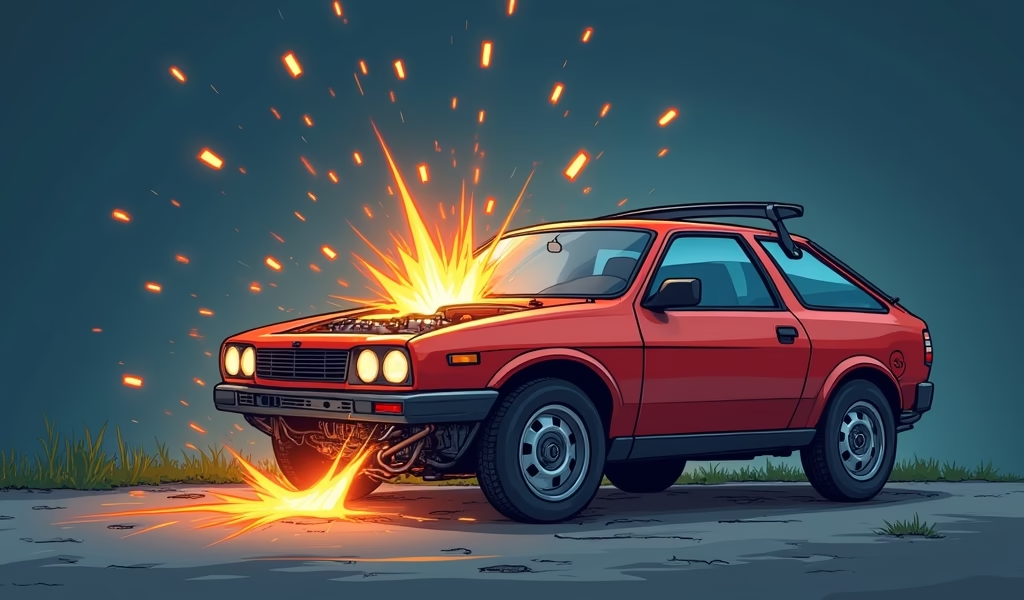
That alarming knocking sound when starting your car is your engine’s desperate cry for help, potentially stemming from issues like low oil levels, rod bearing wear, piston slap, fuel problems, or timing issues that require prompt attention. Ignoring these warning signs can transform a simple $50 maintenance task into catastrophic engine failure costing thousands, making early diagnosis and regular maintenance not just mechanical wisdom but a financial imperative for every vehicle owner.
Table of Contents
- The Morning Panic: What That Knocking Sound Means
- Common Causes of Engine Knocking at Startup
- How to Diagnose That Mysterious Knock
- The Consequences of Ignoring Engine Knocks
- DIY Fixes You Can Try Today
- When to Seek Professional Help
- Preventing Future Knocking Sounds
- Cost Comparison: Prevention vs. Repairs
- Conclusion: Your Engine Deserves Attention
- Frequently Asked Questions
The Morning Panic: What That Knocking Sound Means
We’ve all been there. It’s early morning, you’re running late, and when you turn the key, instead of your engine’s healthy purr, you hear an alarming knock. Your heart sinks as you wonder what that sound means for your day – and your wallet.
That knocking sound when starting your car is more than just an annoyance; it’s your vehicle’s way of communicating that something isn’t right. As a mechanic with over 15 years of experience, I’ve seen countless drivers ignore these early warning signs, often resulting in repairs that could have been avoided.
Engine knocking at startup can stem from several issues ranging from minor maintenance needs to serious mechanical problems. Understanding what’s causing that knock is crucial because addressing it promptly could save you thousands in repairs and extend your vehicle’s lifespan.
In this guide, I’ll walk you through everything you need to know about startup engine knocks – what causes them, how to diagnose them, and what steps you can take to resolve the issue. Whether you’re mechanically inclined or simply want to understand what’s happening under your hood, you’ll find practical advice that could save your engine – and your budget.
Common Causes of Engine Knocking at Startup
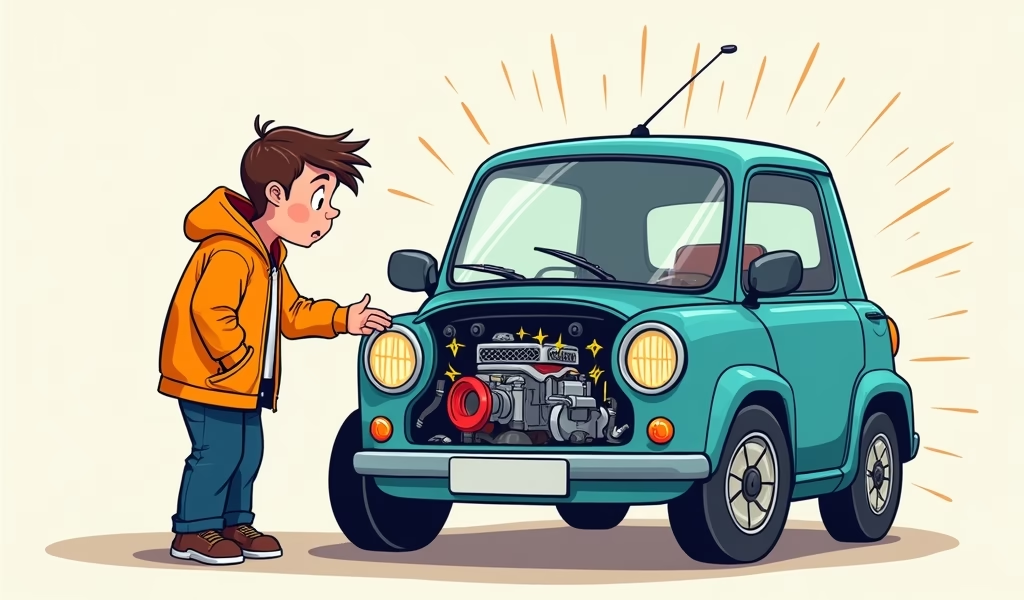
Before we dive into solutions, let’s understand what might be causing that worrisome knock when you start your engine. In my years working on vehicles, these are the most common culprits I encounter:
Low Oil Level or Poor Oil Quality
Your engine’s components need proper lubrication to function smoothly. When oil levels drop too low or oil becomes degraded, metal parts can make direct contact, creating that distinctive knocking sound. This is especially common first thing in the morning when oil has settled in the oil pan overnight.
I once had a customer who insisted his weekly commuter only needed oil changes yearly. By the time he brought it in for the knocking sound, his oil had turned to sludge and his rod bearings were severely damaged – a simple maintenance task turned into a $2,500 repair.
Rod Bearing Wear
Rod bearings connect your pistons to the crankshaft, and when they wear down, they develop excessive clearance. This creates a distinct, rhythmic knocking that typically worsens as engine RPM increases. It’s one of the more serious causes of engine knocking and often indicates significant wear.
If you’re hearing a deep, consistent knock that intensifies when you accelerate, your rod bearings might be crying out for attention. Ignoring this particular knock can lead to catastrophic engine failure when a connecting rod breaks through your engine block – something I’ve seen happen too many times.
Piston Slap
When clearance between a piston and cylinder wall becomes excessive, the piston can “slap” against the cylinder wall, especially when cold. This typically creates a hollow-sounding knock that often diminishes as your engine warms up and parts expand.
Cold weather makes piston slap more pronounced, which is why many drivers notice it most on those frosty winter mornings. While not immediately catastrophic like rod knock, piston slap indicates internal engine wear that will gradually worsen.
Fuel-Related Issues
Using fuel with a lower octane rating than your engine requires can cause pre-ignition or detonation – conditions where fuel ignites at the wrong time in the combustion cycle. This creates a knocking sound that’s often most noticeable during acceleration or when your engine is under load.
Modern engines with advanced fuel systems can sometimes adjust timing to compensate for lower-octane fuel, but they can’t completely eliminate the potential for knock. If you’ve recently switched to a lower grade of fuel, this might be your culprit.
Timing Problems
Your engine’s timing belt or chain ensures that valves open and close in perfect harmony with piston movement. When timing components wear or slip, this carefully choreographed dance falls out of sync, potentially creating knocking noises and reducing performance.
Have you noticed a change in your engine’s performance along with the knocking sound? Does your vehicle hesitate when accelerating? These symptoms alongside knocking could point to timing issues that need attention from a professional.
How to Diagnose That Mysterious Knock
Now that we understand what might be causing your engine’s knock, let’s talk about how to pinpoint the specific issue. With a methodical approach, you can often narrow down the problem even before visiting a mechanic.
The Visual Inspection
Start with the basics – pop your hood and perform these simple checks:
- Check your oil level using the dipstick. Is it between the minimum and maximum marks? Oil that’s too low is a common cause of engine knocking.
- Examine the oil’s condition. Fresh oil is amber and transparent; old oil looks dark and opaque. Oil that appears milky might indicate coolant contamination – a serious issue requiring immediate attention.
- Look for obvious leaks around the engine. Oil stains on your driveway or puddles under the car can indicate where oil is escaping.
I once had a customer convinced he needed a new engine due to severe knocking, only to discover his oil was nearly two quarts low. After a proper oil change with the correct viscosity oil, his knock disappeared completely. Sometimes the simplest explanation is the correct one.
Listening Techniques
Your ears can be powerful diagnostic tools if you know how to use them:
- With the engine running, use a long screwdriver as a makeshift stethoscope. Place the metal end against solid engine components (avoiding moving parts like belts) and the handle end to your ear. This amplifies sounds from specific areas.
- Pay attention to when the knock occurs. Does it happen only on startup? Does it change with RPM? Does it disappear after warming up? These timing clues can significantly narrow down potential causes.
Rod knock typically maintains a consistent rhythm that increases with engine speed, while piston slap often diminishes as the engine warms. Fuel-related knocks tend to occur under load or during acceleration rather than at idle.
Using Diagnostic Tools
Technology can provide valuable insights into your engine’s health:
- Basic OBD-II scanners (starting around $30) can retrieve error codes from your vehicle’s computer system. Look for codes related to misfires, knock sensor issues, or oil pressure problems.
- More advanced engine diagnostic apps paired with Bluetooth OBD adapters can provide real-time data about your engine’s performance, helping identify anomalies.
Remember that diagnostic codes indicate symptoms, not necessarily root causes. They’re helpful clues, but they don’t always tell the complete story of what’s happening inside your engine.
While diagnosing a knocking sound, a customer once showed me his OBD scanner reading of a P0325 code (knock sensor circuit malfunction). After testing, we discovered the knock sensor was functioning correctly – it was actually detecting a legitimate knock caused by worn rod bearings that needed replacement. This illustrates why proper diagnosis requires multiple approaches.
The Consequences of Ignoring Engine Knocks
When it comes to engine knocks, what you don’t know absolutely can hurt you – or at least your wallet. Let me share what happens when these warning signs go unheeded.
The Progression of Damage
Engine problems rarely improve on their own. Instead, they follow a predictable pattern of escalation:
- Initial stage: Minor wear creates occasional knocking with minimal performance impact
- Intermediate stage: Consistent knocking accompanied by reduced power, increased fuel consumption, and potential oil contamination
- Advanced stage: Severe knocking with significant performance loss, potential for oil pressure problems, and risk of secondary damage to other engine components
- Catastrophic failure: Complete engine seizure or major component failure (such as a thrown rod piercing the engine block)
I’ve seen this progression countless times in my shop. One memorable customer heard knocking for nearly six months before bringing his vehicle in. What started as a relatively simple rod bearing replacement became a complete engine rebuild when one of his connecting rods finally gave up and punched a hole through his engine block while driving on the highway.
The Financial Impact
The longer you wait to address engine knocking, the more expensive the repair typically becomes:
- Early intervention for oil-related issues: $50-200 (oil change, additives, minor adjustments)
- Moderate repairs (caught before major damage): $500-1,500 (timing components, valve adjustments)
- Major component replacement: $1,500-4,000 (rod bearings, pistons, head gasket)
- Catastrophic failure: $3,500-8,000+ (engine rebuild or replacement)
According to the American Automobile Association, neglected maintenance leads to an average of $8,900 in preventable repair costs over a vehicle’s lifetime. That knock you’re hearing is likely contributing to that statistic.
Beyond Financial Costs
The consequences of ignoring engine knocks extend beyond repair bills:
- Unreliability: Vehicles with advanced engine problems are more likely to leave you stranded at inconvenient moments
- Safety concerns: Sudden engine failure can create hazardous driving situations, especially at highway speeds
- Environmental impact: Damaged engines often burn more oil, increasing emissions and your carbon footprint
Remember that tow trucks, rental cars, and missed work days all add hidden costs to delayed repairs. Prevention is almost always less expensive than the cure – especially when it comes to engine health.
DIY Fixes You Can Try Today
Before heading to the mechanic, there are several do-it-yourself approaches that might resolve your engine knock. Here are some effective solutions I often recommend to my customers who are comfortable working on their vehicles:
Oil-Related Remedies
Since many knocking issues stem from lubrication problems, start here:
- Change your oil and filter using the manufacturer-recommended viscosity. Fresh oil provides better lubrication and can immediately reduce knocking in many cases.
- Consider using high-mileage oil formulations if your vehicle has over 75,000 miles. These contain additives that can help condition seals and provide better protection for worn components.
- Try oil additives designed to reduce friction or improve viscosity. Products containing ZDDP (zinc dialkyldithiophosphate) can be particularly helpful for older engines with flat-tappet camshafts.
I had a customer with a 2007 Toyota that knocked terribly on cold starts. After switching to a slightly higher viscosity oil (going from 5W-20 to 10W-30) and adding a quality oil treatment, the knocking diminished significantly. This $50 solution bought him time to save for more extensive repairs down the road.
Fuel System Solutions
For knocks related to combustion issues:
- Switch to the octane rating recommended in your owner’s manual. Using premium fuel in an engine designed for it isn’t wasting money – it’s providing necessary protection.
- Try a quality fuel system cleaner to remove carbon deposits that might be causing hot spots in your combustion chamber. Look for products containing polyetheramine (PEA), which is particularly effective at removing deposits.
- Check and replace your spark plugs if they’re worn or fouled. Improper combustion can contribute to knocking sounds.
One customer came in convinced he needed major engine work due to severe knocking during acceleration. After examining his maintenance history, I discovered he’d been using regular fuel in his turbocharged engine that required premium. After switching to the correct fuel and adding a cleaning treatment, his knock disappeared completely.
Timing and Belt Checks
If you’re mechanically inclined:
- Inspect your timing belt or chain for signs of wear or improper tension
- Check accessory belts that might be slipping or misaligned, which can sometimes create knocking sounds that mimic internal engine problems
- Ensure all engine mount bolts are tight, as loose or broken motor mounts can cause knocking noises that sound like internal engine issues
Remember that timing adjustments require specific tools and knowledge for your particular engine. If you’re unsure, this is a job best left to professionals, as incorrect timing can cause significant engine damage.
When to Seek Professional Help
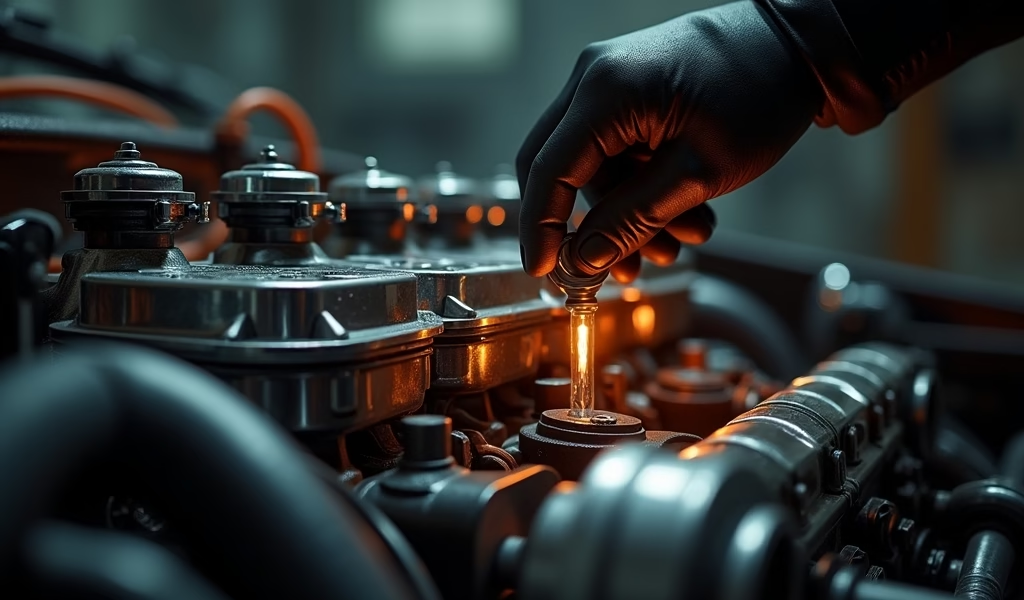
While DIY approaches can resolve some knocking issues, others require professional intervention. Here’s how to know when it’s time to visit a qualified mechanic:
Red Flags That Demand Immediate Attention
In my experience, these symptoms indicate serious problems that typically require professional diagnosis and repair:
- Knocking that increases significantly with engine RPM
- Knocking accompanied by a check engine light
- Metal particles visible in your oil (check your dipstick or oil drain plug)
- Smoke from the exhaust (blue, white, or black)
- Knocking that persists after oil changes or fuel adjustments
- Significant loss of power or performance
I once had a customer attempt to “fix” his rod knock by simply adding thicker oil. When he finally came to my shop, we discovered his crankshaft was severely damaged – turning what might have been a $2,000 repair into a complete engine replacement exceeding $5,000. Don’t let pride or budget concerns prevent you from seeking help when these warning signs appear.
Choosing the Right Mechanic
Finding a qualified professional for engine diagnostics matters tremendously:
- Look for ASE-certified technicians with specific certification in engine repair (A1 Engine Repair)
- Ask about their experience with your specific make and model
- Request a detailed explanation of their diagnostic process
- Get a written estimate before authorizing work
- Ask if they can show you the damaged parts after repair
A reputable shop will take time to diagnose the problem correctly rather than jumping to worst-case scenarios or vague explanations. They should be willing to explain what they’re finding in terms you can understand.
Don’t be afraid to ask questions about your vehicle’s condition. As a mechanic, I always appreciate customers who want to understand what’s happening with their cars – it shows they value proper maintenance and helps build trust in my recommendations.
What to Expect During Professional Diagnosis
A thorough professional diagnosis typically includes:
- Comprehensive computer diagnostics to check for error codes and monitor engine parameters
- Mechanical tests to pinpoint the location and cause of knocking sounds
- Oil pressure testing to identify potential lubrication issues
- Compression and leak-down tests to evaluate the condition of pistons, rings, and valves
- Visual inspection using borescopes or partial disassembly if necessary
According to Motor Magazine, professional mechanics typically use a systematic approach to isolate engine noises, working from most common causes to least common. This methodical process helps ensure accurate diagnosis before any parts are replaced.
Preventing Future Knocking Sounds
As with most automotive issues, preventing engine knocks is far easier and cheaper than fixing them. Here’s my professional advice for keeping your engine running smoothly and quietly for years to come:
Maintenance Essentials
Follow these fundamental maintenance practices to minimize your risk of engine knocking:
- Change your oil and filter regularly according to your manufacturer’s recommendations. For most vehicles, that’s every 5,000-7,500 miles with modern synthetic oils.
- Keep an eye on your oil level between changes. Check it at least monthly or before long trips.
- Use the correct grade of fuel for your engine. Check your owner’s manual or the label inside your fuel door.
- Follow your vehicle’s maintenance checklist for timing belt/chain replacement and other critical services.
- Address minor issues promptly before they escalate into major problems.
I’ve maintained my personal truck for over 250,000 miles without major engine work by following these principles. Preventative maintenance isn’t just a recommendation – it’s a proven strategy for extending engine life.
Driving Habits That Protect Your Engine
How you drive significantly impacts engine wear and the likelihood of developing knocks:
- Allow your engine to warm up for 30-60 seconds before driving, especially in cold weather
- Avoid prolonged idling, which can lead to carbon buildup
- Accelerate moderately rather than aggressively, particularly when the engine is cold
- Maintain steady speeds on the highway rather than constantly changing velocity
- Avoid lugging the engine (driving at low RPM in too high a gear)
One customer who delivered pizzas would constantly race his cold engine between deliveries, then let it idle while delivering. He went through three engines in 150,000 miles. Changing these habits could have saved him thousands in repairs.
Seasonal Considerations
Different seasons present unique challenges for engine health:
- In winter, consider switching to a winter-grade oil with appropriate cold-flow properties for your climate
- During extremely cold conditions, a block heater can reduce startup wear significantly
- In summer, ensure your cooling system is functioning optimally to prevent overheating
- Monitor your engine more frequently during temperature extremes
These seasonal adjustments can significantly reduce the stress on your engine during challenging conditions. For instance, studies from the Society of Automotive Engineers show that cold starts can cause up to 75% of engine wear – making winter protection particularly important.
Cost Comparison: Prevention vs. Repairs
Let’s talk dollars and cents – what you’ll spend on prevention versus what you might pay for repairs. This cost comparison might be the most convincing reason to take engine knocks seriously:
The Price of Prevention
Regular maintenance costs are predictable and manageable:
- Oil changes: $40-80 every 5,000-7,500 miles (or $150-300 annually for average drivers)
- Fuel system cleaning: $15-20 for DIY additives or $100-150 for professional service annually
- Timing belt replacement: $500-1,000 every 60,000-100,000 miles (varies by manufacturer)
- Basic inspections: Often included with oil changes or $50-100 annually
For most vehicles, comprehensive preventative maintenance averages $500-800 annually, with some years higher when major services come due. That might sound significant, but compare it to repair costs below.
The Cost of Repairs
When knocking sounds lead to mechanical failures, the financial impact escalates quickly:
- Rod bearing replacement: $2,000-3,000
- Cylinder head rebuild: $1,500-2,500
- Piston replacement: $2,000-3,500
- Complete engine rebuild: $3,500-7,000
- Engine replacement: $4,000-10,000+
These figures don’t include secondary expenses like towing ($75-250), diagnostic fees ($100-200), rental cars during repair time, or lost wages from missed work due to vehicle unavailability.
I recently worked with a customer who skipped a $700 timing belt replacement. When the belt failed, it destroyed her valves and pistons, resulting in a $4,200 repair bill – six times what preventative maintenance would have cost.
The Verdict: An Ounce of Prevention…
Over a vehicle’s lifetime, proper maintenance typically costs 25-30% of what major repairs would cost if problems are neglected. Beyond the direct financial comparison, consider these additional benefits of prevention:
- Improved reliability and fewer unexpected breakdowns
- Consistent performance and fuel economy
- Higher resale value when it’s time to sell or trade in
- Lower lifetime ownership costs
- Reduced stress and inconvenience
From both financial and practical perspectives, addressing engine knocks promptly and maintaining your vehicle properly is clearly the winning strategy.
Conclusion: Your Engine Deserves Attention
That alarming knock when starting your car isn’t just an annoyance – it’s your engine’s cry for help. Throughout this guide, we’ve explored the common causes of startup knocking, diagnostic approaches, DIY solutions, and when professional intervention becomes necessary.
The most important takeaway? Never ignore unusual engine sounds. That initial knock might seem minor, but it rarely resolves itself without attention. Instead, it typically signals the beginning of a problem that will only grow more serious – and more expensive – with time.
Whether you’re dealing with oil issues, fuel problems, or mechanical wear, the principles remain consistent: early diagnosis and prompt action save money and extend your engine’s life. By understanding what causes knocking sounds and how to address them, you’ve taken an important step toward becoming a more informed vehicle owner.
Remember that your relationship with your car works both ways. The care you provide through regular maintenance and prompt attention to warning signs will be returned through years of reliable service. Your vehicle is likely one of your most significant investments – treating it with the attention it deserves simply makes good financial sense.
So the next time you turn your key and hear that perfect, quiet purr of a healthy engine, you’ll know it’s not just luck – it’s the result of your vigilance and proper care. And that peace of mind is truly priceless.
Frequently Asked Questions
Why does my car only knock when it’s cold?
Cold knocking is typically caused by piston slap or thickened oil not properly lubricating engine components. As the engine warms up and parts expand to their proper operating clearances, the knocking usually diminishes.
Can low-quality fuel cause engine knocking?
Yes, fuel with insufficient octane for your engine can cause knocking due to pre-ignition or detonation. Always use the octane rating recommended in your owner’s manual, especially for turbocharged or high-compression engines.
How urgent is it if my engine starts knocking?
Engine knocking should never be ignored as it indicates potentially serious problems. While some causes aren’t immediately catastrophic, continuing to drive with a knocking engine risks expensive damage that worsens with each mile driven.
Will thicker oil stop engine knocking?
Thicker oil might temporarily mask knocking sounds but doesn’t fix the underlying mechanical problem. Using oil that’s too thick can actually reduce oil pressure to critical components and potentially accelerate engine wear.
Can engine knocking go away on its own?
Engine knocking rarely resolves without intervention. While some minor knocks might temporarily disappear under certain conditions, the underlying cause continues to progress until properly addressed.