
Overview
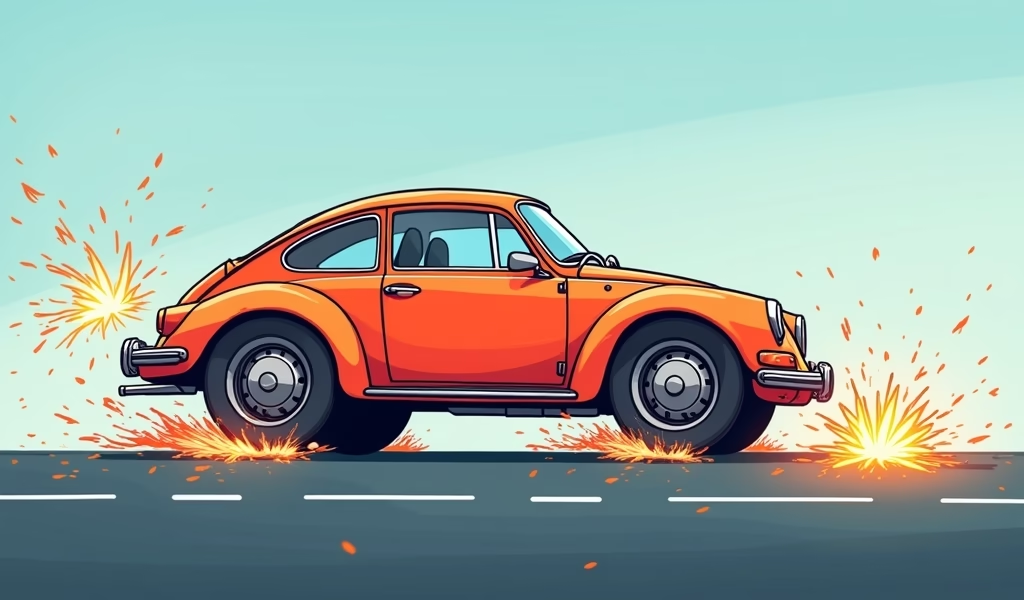
Like having an electronic co-pilot monitoring your wheels for slippage, traction control automatically prevents wheel spin by applying brake pressure or reducing engine power when sensors detect a loss of grip on slippery surfaces. This sophisticated safety technology not only enhances driving safety in challenging conditions but also delivers financial benefits through reduced tire wear, improved fuel efficiency, and accident prevention—working seamlessly alongside other vehicle systems to keep you safely on course.
Table of Contents
- Understanding Traction Control
- How Traction Control Works
- Benefits of Traction Control
- When to Use Traction Control
- When to Turn Traction Control Off
- Maintaining Your Traction Control System
- Cost Savings of Traction Control
- Evolution of Traction Control
- Conclusion
- Frequently Asked Questions
Understanding Traction Control
What is traction control? It’s essentially your car’s guardian angel when the rubber meets a slippery road. As a mechanic who’s spent over two decades under the hood, I’ve seen firsthand how this technology has evolved from a luxury feature to an essential safety system that prevents wheel spin and helps maintain vehicle control in challenging driving conditions.
Traction control is an electronic system designed to detect and prevent loss of traction (or “slipping”) of the wheels. When sensors detect that one or more wheels are spinning faster than they should—indicating a loss of grip—the system automatically applies brake pressure to those specific wheels or reduces engine power to help you maintain control. Think of it as having an experienced co-pilot constantly monitoring road conditions and making split-second adjustments to keep you safe.
Most modern vehicles come equipped with this technology, working alongside anti-lock braking systems to provide comprehensive safety on the road. The beauty of traction control is its simplicity from the driver’s perspective—it works automatically in the background, only stepping in when needed to prevent potential accidents.
How Traction Control Works
The inner workings of traction control might seem complex, but the basic principles are straightforward. The system uses the same wheel-speed sensors as your anti-lock braking system (ABS) to monitor the rotation speed of each wheel. When these sensors detect a wheel spinning faster than the others—a telltale sign of slippage—the traction control system springs into action.
Once activated, the system employs two main methods to regain traction:
- Brake control: Applying brake pressure to the slipping wheel(s), effectively transferring more power to the wheels with better grip
- Engine power management: Temporarily reducing engine power by adjusting the throttle or fuel injection to prevent the wheels from continuing to spin
Modern traction control systems can make these adjustments dozens of times per second, often so smoothly that you’ll barely notice the intervention. The integration with your vehicle’s computer systems allows for incredibly precise control, responding to road conditions faster than any human driver could.
One common misconception is that traction control prevents all skidding. While it significantly reduces the risk, it’s important to understand that physics still applies to driving. If you’re taking a corner too fast on an icy road, even the best traction control system has its limits. It’s a helpful assistant, not a miracle worker!

Benefits of Traction Control
The advantages of traction control extend far beyond just preventing wheel spin. As someone who’s helped countless drivers understand their vehicle’s safety features, I can tell you that traction control offers several key benefits that directly impact your driving experience and safety.
First and foremost, traction control significantly enhances safety by reducing the risk of losing control during acceleration, especially on slippery surfaces. Whether you’re dealing with rain, snow, ice, or loose gravel, this system helps keep your vehicle tracking in your intended direction rather than sliding sideways or spinning out.
Beyond safety, traction control offers tangible performance benefits as well:
- Improved fuel efficiency by preventing unnecessary wheel spin that wastes energy
- Reduced tire wear by minimizing friction from spinning wheels
- Enhanced acceleration on slippery surfaces by optimizing power distribution
- Lower stress on drivetrain components by preventing sudden power surges to the wheels
For everyday drivers, one of the most valuable aspects of traction control is the confidence it provides. Knowing your vehicle has this extra layer of protection allows you to focus on driving safely without constant worry about minor traction issues. This is especially important for new drivers or those who live in areas with frequently challenging road conditions.
In fact, traction control has proven so effective that it’s now considered one of the key safety systems in modern cars, working alongside features like stability control and ABS to form a comprehensive safety net. According to insurance industry research, vehicles equipped with these electronic stability systems have significantly lower crash rates than those without.
When to Use Traction Control
Generally speaking, you’ll want to keep your traction control system enabled during normal driving conditions. Most vehicles are designed with traction control active by default whenever you start the engine, and for good reason. The system doesn’t interfere with normal driving on dry pavement but stands ready to assist when conditions deteriorate.
Traction control proves especially valuable in these situations:
- Wet roads where hydroplaning is a risk
- Snowy or icy conditions when traction is minimal
- Gravel or loose dirt surfaces that can cause wheel slip
- Sudden acceleration when merging onto highways
- Driving in heavy rain or during storms
I’ve had many customers ask if traction control helps when braking. While traction control primarily manages acceleration, your anti-lock braking system (ABS) handles the braking aspect of traction management. Together, these systems provide comprehensive control in slippery conditions, working in tandem as part of your vehicle’s integrated safety features.
One scenario where traction control really earns its keep is winter driving. When you’re starting from a stop on an icy road, the system prevents the wheels from spinning uselessly, helping you get moving safely without sliding into trouble. For drivers in northern climates, this feature alone can prevent countless minor accidents and frustrating situations.
When to Turn Traction Control Off
While traction control is incredibly useful most of the time, there are specific situations where temporarily disabling it might actually be beneficial. As counterintuitive as it sounds, sometimes a bit of wheel spin is exactly what you need.
Here are some legitimate scenarios when turning off traction control makes sense:
- When stuck in deep snow, sand, or mud (controlled wheel spin can help “dig” your way out)
- When using snow chains (which can confuse traction control sensors)
- When starting uphill on very slippery surfaces (where a bit of momentum helps)
- During performance driving on a closed track (for experienced drivers only)
- When using a compact spare tire (follow your owner’s manual guidelines)
How do you deactivate it? In most vehicles, there’s a dedicated button marked “TC,” “TCS,” or with a skidding car symbol. Pressing this button temporarily disables the system until you restart the engine. Some advanced vehicles might have multiple traction settings allowing partial deactivation for specific conditions.
A word of caution: when you disable traction control, you’re taking full responsibility for managing wheel slip. This requires more attentive driving and gentler inputs on the accelerator. I’ve seen plenty of overconfident drivers end up in ditches after turning off their traction aids, so always proceed with care!
Maintaining Your Traction Control System
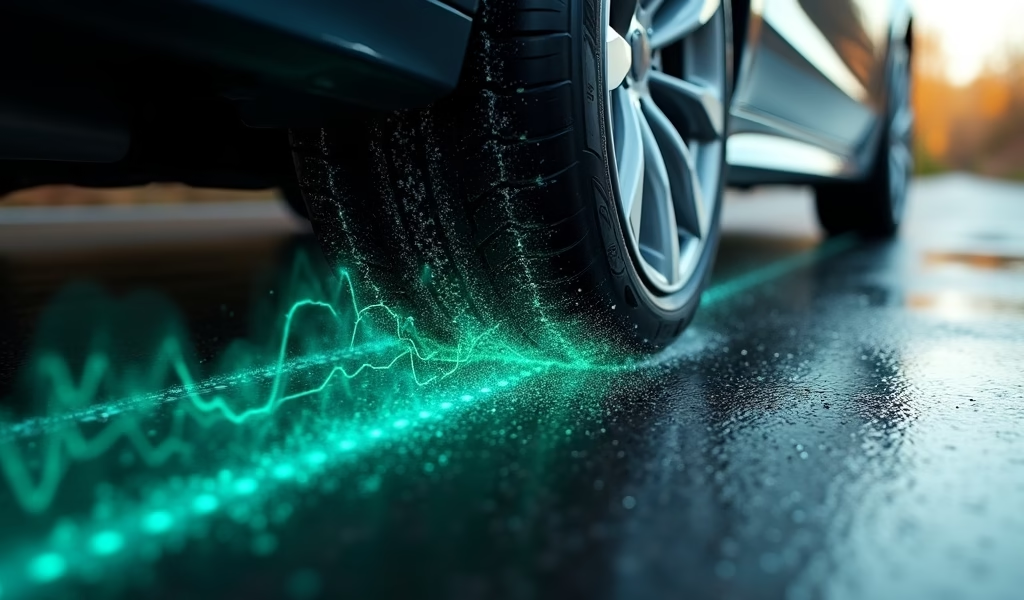
The good news is that traction control systems are generally quite reliable and require minimal specific maintenance. However, since they share components with other systems in your vehicle, proper overall maintenance ensures they’ll function correctly when you need them most.
Here’s what you should keep an eye on to ensure your traction control remains in top shape:
- Tire condition and pressure: Uneven wear or improper inflation can affect traction control effectiveness
- ABS sensors: Since traction control uses the same wheel speed sensors, maintaining your ABS system keeps both working properly
- Warning lights: Never ignore a traction control or ABS warning light on your dashboard
- Brake system: Regular brake maintenance ensures all components work together properly
- Battery health: Modern electronic systems need stable power to function correctly
During routine maintenance, a good mechanic will check your vehicle’s computer for any stored fault codes related to the traction control system. Sometimes problems can develop without immediately triggering a warning light, so professional diagnostic checks during your regular service intervals are valuable preventive measures.
If your traction control warning light comes on and stays on, it typically indicates a problem with the system. Common issues include faulty wheel speed sensors, wiring problems, or control module glitches. In most cases, these are relatively simple fixes that don’t break the bank but should be addressed promptly to maintain your vehicle’s safety systems.
Cost Savings of Traction Control
When we talk about vehicle safety features, the conversation often focuses on accident prevention rather than financial benefits. However, traction control delivers genuine cost savings that make it a wise investment beyond just safety considerations.
Let’s break down the economic advantages:
- Reduced accident risk means fewer repair bills and lower insurance claims
- Less tire wear from prevented wheel spin extends tire life by hundreds or even thousands of miles
- Improved fuel efficiency from optimized traction saves money at the pump
- Lower maintenance costs for drivetrain components that aren’t subjected to excessive stress
- Potentially lower insurance premiums (many insurers offer discounts for vehicles with advanced safety features)
While it’s difficult to put an exact dollar figure on these savings, the cumulative effect over the lifetime of your vehicle is substantial. Consider this: a single fender bender avoided could save you hundreds in deductible costs and potential premium increases, not to mention the value of your time dealing with repairs.
According to NHTSA research, electronic stability control systems (which include traction control) reduce single-vehicle crashes by approximately 26% for passenger cars and 48% for SUVs. When you translate these statistics into real-world scenarios, the financial benefits become clear—preventing even one moderate accident can offset the cost of the technology many times over.
Evolution of Traction Control
Traction control has come a long way since its introduction. Early systems from the 1970s and 1980s were relatively crude, often just cutting engine power completely when wheel slip was detected. While effective to some degree, these systems could feel intrusive and sometimes left drivers stranded with insufficient power in challenging conditions.
Today’s advanced traction control systems represent decades of refinement and innovation. Modern versions integrate with multiple vehicle systems for comprehensive control that’s both effective and virtually seamless to the driver. The technology now works in harmony with stability control, ABS, all-wheel drive systems, and even engine and transmission management to provide nuanced responses to traction challenges.
Some of the most impressive advancements include:
- Terrain-specific modes that optimize traction for snow, mud, sand, or pavement
- Predictive systems that anticipate traction needs based on driver inputs and road conditions
- Integration with navigation data to prepare for upcoming road surfaces
- Artificial intelligence algorithms that learn driver behavior and adapt accordingly
The future of traction control looks even more promising as vehicles become increasingly connected and autonomous. Next-generation systems will likely incorporate real-time weather data, communicate with infrastructure about road conditions, and share traction information with other vehicles on the road. These advancements will further enhance safety while continuing to reduce the cognitive load on drivers.
Conclusion
What is traction control? As we’ve explored throughout this article, it’s far more than just an electronic system that prevents wheel spin. It’s a sophisticated safety technology that has fundamentally changed how we interact with our vehicles, especially in challenging driving conditions.
Traction control serves as an invisible guardian, constantly monitoring your wheels and ready to step in within milliseconds when traction is compromised. The system not only enhances safety by preventing skids but also delivers tangible financial benefits through reduced wear and tear, improved fuel efficiency, and accident prevention.
While most drivers will keep their traction control enabled at all times, understanding when and how to temporarily disable it in specific situations gives you additional control when needed. Proper maintenance ensures the system will function correctly when you need it most, though thankfully these systems typically require minimal specific upkeep.
As vehicle technology continues to advance, we can expect traction control to become even more sophisticated, working seamlessly with other safety and performance systems. What began as a luxury feature has rightfully become standard equipment, saving countless lives and preventing innumerable accidents in the process.
So the next time you’re driving on a rain-slicked road and feel that subtle pulse as your traction control activates, take a moment to appreciate this remarkable technology working quietly in the background to keep you safe and save you money. It’s one of those automotive innovations that truly delivers on its promise.
Frequently Asked Questions
Does traction control help in snow?
Yes, traction control is especially effective in snowy conditions by preventing wheel spin when accelerating. It helps maintain directional control and improves your ability to get moving from a stop.
Can I drive with the traction control light on?
While you can technically drive with the traction control light on, it indicates either the system is actively working or there’s a malfunction. If the light stays on constantly, have your vehicle checked by a professional.
Will traction control stop me from sliding on ice?
Traction control helps reduce sliding during acceleration but doesn’t prevent all slides, especially while turning or braking on ice. For comprehensive control on ice, you also need proper winter tires and careful driving techniques.
Does traction control affect fuel economy?
Traction control typically improves fuel economy by preventing energy-wasting wheel spin. The system optimizes power delivery to maintain efficient forward motion rather than losing energy to spinning tires.
Is traction control the same as stability control?
No, though they work together. Traction control prevents wheel spin during acceleration, while stability control helps prevent sideways skids and maintains directional control in turns.