

Overview
Turns out your odometer anxiety is misplaced—modern cars can happily cruise past 200,000 miles if they’ve been properly maintained, making that 100k mark just a car’s awkward middle age phase. The article emphasizes that maintenance history trumps mileage numbers, and recommends focusing on the age-to-mileage ratio, researching model-specific reliability, considering driving conditions, and always getting a pre-purchase inspection when buying used vehicles.
Table of Contents
- Understanding Mileage in the Used Car Market
- What is Considered “Good Mileage” for a Used Car?
- Tip #1: Focus on Age-to-Mileage Ratio
- Tip #2: Maintenance History Trumps Mileage
- Tip #3: Research Model-Specific Reliability Patterns
- Tip #4: Consider the Type of Miles Driven
- Tip #5: Always Get a Pre-Purchase Inspection
- Conclusion
- Frequently Asked Questions
Understanding Mileage in the Used Car Market
After 25 years of turning wrenches and reviving engines others had written off, I’ve seen firsthand how mileage anxiety keeps good cars from finding new homes. When customers walk into my shop asking what’s good mileage for a used car, I usually respond with another question: “Would you rather have a 60,000-mile car that’s been neglected or a 120,000-mile vehicle that’s been meticulously maintained?”
The answer isn’t as straightforward as most buyers hope. Average drivers put about 12,000-15,000 miles on their vehicles annually, which gives us a baseline for what’s considered “normal” usage. A five-year-old car should ideally have between 60,000-75,000 miles on the odometer.
But here’s something the quick-talking salespeople won’t tell you: modern vehicles are engineered to last significantly longer than their predecessors. That 100,000-mile mark that used to send shivers down buyers’ spines? It’s merely middle age for most contemporary cars with proper care.
Today’s engines, transmissions, and major components are designed with better materials, tighter tolerances, and improved lubricants. When I started in this business, hitting 100K was an achievement worth celebrating. Now, I regularly service vehicles cruising comfortably past 200,000 miles with plenty of life left.
What is Considered “Good Mileage” for a Used Car?

If you’re hunting for a concrete number, I’d consider these ranges as general guidelines:
- Under 50,000 miles: Excellent (though sometimes suspiciously low for older models)
- 50,000-100,000 miles: Very good (often the sweet spot for value)
- 100,000-150,000 miles: Good (especially for reliable makes like Toyota or Honda)
- 150,000-200,000 miles: Fair (requires careful inspection but can still offer value)
- Over 200,000 miles: High (needs thorough evaluation but might be fine for certain models)
These numbers aren’t hard rules, though. A quality used car purchase depends on multiple factors beyond what the odometer displays. I’ve seen 40,000-mile lemons that needed engine rebuilds and 180,000-mile workhorses that ran like they just rolled off the assembly line.
According to Consumer Reports, modern vehicles can easily reach 200,000 miles with proper maintenance. Their data shows that following the manufacturer’s recommended service schedule is far more important than finding a low-mileage vehicle.
Now, let’s dive into my five proven tips for evaluating mileage on your next used car purchase.
Tip #1: Focus on Age-to-Mileage Ratio
The relationship between a vehicle’s age and its accumulated mileage tells a story that raw numbers alone can’t convey. This ratio provides crucial context about how the car has been driven and maintained.
Consider two 2018 models: one with 20,000 miles and another with 75,000 miles. The first averages just 4,000 miles annually—suspiciously low. Cars that sit unused often develop problems like dried seals, stagnant fluids, and battery issues. I’ve replaced more fuel pumps and cleared more gunked-up fuel systems in rarely-driven vehicles than I care to remember.
Meanwhile, the second car’s 15,000 miles per year suggests regular usage, which often means better mechanical health. Vehicles are designed to be driven—their lubrication systems, cooling components, and even suspension parts perform better with consistent use.
Here’s a quick formula I share with my customers: Divide the vehicle’s mileage by its age in years. The ideal range falls between 10,000-15,000 miles annually. Anything significantly lower or higher warrants additional investigation.
For example:
- A 3-year-old car with 45,000 miles = 15,000 miles/year (normal usage)
- A 3-year-old car with 15,000 miles = 5,000 miles/year (unusually low)
- A 3-year-old car with 90,000 miles = 30,000 miles/year (high usage)
Extremely low mileage isn’t always a red flag, but it should prompt questions about storage conditions and maintenance during periods of inactivity. Conversely, higher-than-average mileage might indicate highway driving, which is generally less stressful on vehicles than stop-and-go city traffic.
Tip #2: Maintenance History Trumps Mileage
If I had to choose between a 120,000-mile car with complete service records or an 80,000-mile vehicle with no maintenance history, I’d take the higher-mileage option every time. Nothing predicts a car’s future reliability better than how it’s been cared for in the past.
A comprehensive maintenance history reveals whether the previous owner followed the manufacturer’s recommended service schedule. Look for documentation of regular oil changes (every 5,000-7,500 miles for most vehicles), timing belt replacement (typically at 90,000-100,000 miles), transmission service, and cooling system maintenance.
When examining records, pay special attention to major service intervals. Modern cars have specific maintenance requirements at 30,000, 60,000, and 90,000 miles. These often include inspections and replacements of wear items like spark plugs, filters, fluids, and belts. Skipping these services can lead to accelerated wear and costly failures down the road.
Missing maintenance documentation doesn’t automatically disqualify a vehicle, but it should lower its value in your eyes. When service records aren’t available, I recommend checking:
- The condition of fluids (clean transmission fluid, fresh-looking coolant)
- Signs of recent part replacements (shiny components amid older parts)
- Evidence of regular oil changes (clean engine bay, non-sludged oil cap)
- Wear items that match the mileage (belts, hoses, tires)
Ask direct questions about maintenance history. A seller’s hesitation or vague answers about basic service items should raise concerns faster than a check engine light.
Tip #3: Research Model-Specific Reliability Patterns
Not all vehicles age equally. Some models sail past 200,000 miles with routine maintenance, while others develop chronic issues by 100,000. Understanding these patterns helps set realistic expectations for the specific vehicle you’re considering.
Toyota and Honda have earned legendary status for longevity. I’ve serviced Camrys and Accords with over 300,000 miles that still ran smoothly. Meanwhile, certain European luxury models might require more significant maintenance as they approach six-figure mileage.
Before shopping, research common issues and expected lifespan for your target models. Resources like CarComplaints.com aggregate owner experiences to reveal patterns of problems at specific mileage milestones. For example, you might discover that a certain model tends to develop transmission issues around 120,000 miles or that another has remarkably few reported problems even at high mileage.
Pay attention to “problem years” as well. Manufacturers occasionally release model years with design flaws or reliability issues that were corrected in subsequent versions. These troubled years often show up as clusters of complaints about specific components.
Model-specific forums and communities can be goldmines of information about real-world longevity. Enthusiast groups often document common issues and their fixes, maintenance tips, and what to expect as mileage increases. When someone has been driving the same model for 15+ years, their insights are worth their weight in gold.
This research might sound tedious, but I’ve seen it save buyers thousands in unexpected repairs. One hour of online investigation could mean the difference between purchasing a reliable companion or inheriting someone else’s headache.
Tip #4: Consider the Type of Miles Driven
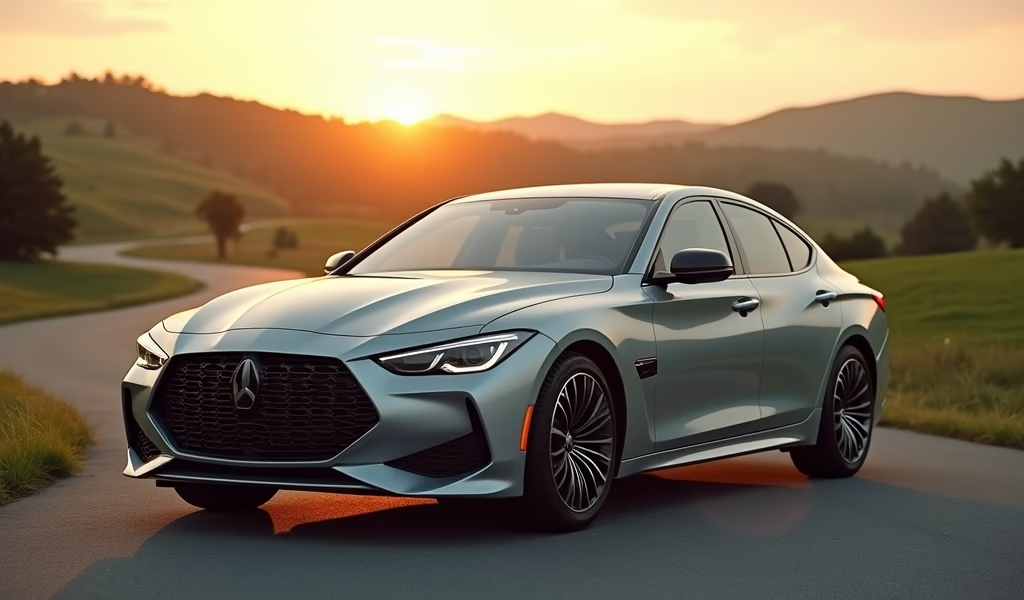
All miles aren’t created equal. The type of driving a vehicle has experienced impacts its condition far more than the raw odometer reading suggests.
Highway miles—characterized by consistent speeds and minimal braking—generally cause less wear than city driving. A vehicle that’s accumulated 100,000 miles primarily on open highways often shows less mechanical wear than one with 60,000 miles of stop-and-go urban commuting.
When I’m assessing a used vehicle, I look for these telltale signs of driving conditions:
- Brake wear: Excessive brake pad and rotor wear indicates city driving or aggressive habits
- Clutch condition (for manuals): City driving accelerates clutch wear
- Suspension components: Pothole-riddled urban routes damage bushings and shocks
- Stone chips and road rash: Highway driving typically leaves more front-end damage from debris
- Interior wear: Delivery vehicles or rideshare cars show distinctive wear patterns
Climate and geography matter too. Vehicles from coastal areas may have accelerated undercarriage corrosion from salt air, while those from regions with harsh winters often suffer from road salt damage. The dry heat of desert regions can deteriorate rubber components and interior plastics.
When possible, ask about the vehicle’s primary use and location history. A high-mileage car that served as a salesperson’s highway cruiser might be a better buy than a lower-mileage vehicle that endured years of brutal city commuting or food delivery service.
As Edmunds automotive experts point out, highway miles at steady speeds put significantly less strain on critical components like transmissions and brakes compared to the constant acceleration and deceleration of city driving.
Tip #5: Always Get a Pre-Purchase Inspection
No matter how promising a used vehicle appears or how convincing the seller seems, never skip a professional pre-purchase inspection. This is the most valuable $100-200 you’ll spend in the entire car-buying process.
I’ve performed thousands of these inspections over my career, and they regularly save buyers from expensive mistakes. A thorough inspection can reveal hidden issues that even careful test drives might miss—from developing transmission problems to subtle engine misfires that will worsen over time.
A proper pre-purchase inspection should include:
- Comprehensive mechanical assessment (engine, transmission, drivetrain)
- Electrical system evaluation
- Suspension and steering component inspection
- Undercarriage examination for leaks and damage
- Computer diagnostics to check for stored codes
- Road test under various conditions
- Fluid quality assessment
When scheduling an inspection, seek an independent mechanic familiar with the specific make and model—preferably one who won’t benefit from finding problems they can fix. Dealership service departments can be good resources, even for brands they don’t sell.
Ask the inspector to prioritize issues based on urgency and estimated repair costs. This information becomes valuable for negotiating the final price or deciding whether to walk away. Remember: no used car is perfect, but knowing what you’re getting into prevents unpleasant surprises.
Some sellers might resist a pre-purchase inspection request. This resistance should be a deal-breaker. A confident seller with nothing to hide will accommodate reasonable inspection requests, even if it means meeting at a mutually agreed service facility.
Conclusion
After 25+ years in the automotive trenches, I’ve learned that mileage alone tells only a fraction of a used car’s story. The 100,000-mile threshold that once marked a car’s twilight years has become merely middle age for well-engineered, properly maintained vehicles.
When evaluating a used car, look beyond the odometer. Focus on the age-to-mileage ratio to understand how the vehicle has been used. Prioritize maintenance history over raw numbers. Research model-specific reliability patterns to set appropriate expectations. Consider what type of miles the vehicle has accumulated. And always—without exception—get a professional pre-purchase inspection.
A well-maintained 150,000-mile vehicle often represents a better value than a neglected 80,000-mile alternative. By following these five proven tips, you’ll approach your next used car purchase with the confidence of someone who knows what really matters.
Remember: in the world of used cars, history and care trump mileage every time. The best deals aren’t necessarily the lowest-mileage options—they’re the vehicles that have been consistently maintained according to manufacturer recommendations, regardless of what the odometer displays.
Frequently Asked Questions
Is 100,000 miles too much for a used car?
Not necessarily. Modern vehicles regularly last 200,000+ miles with proper maintenance, making 100,000 miles merely middle-aged for many models.
What’s more important—low miles or recent model year?
Recent model year generally offers better technology and safety features, while low miles may mean less wear. The ideal balance depends on your priorities and budget.
How many miles is too many for a used car?
There’s no universal threshold, but exercise extra caution above 150,000-175,000 miles. Some models regularly exceed 300,000 miles while others develop significant issues much earlier.
Should I avoid high-mileage luxury cars?
Approach with caution, as luxury vehicles often have higher maintenance costs that increase with mileage. European luxury models particularly tend to require more expensive care as they age.
How can I verify the mileage is accurate?
Check for consistency across service records, title documentation, and the vehicle’s physical condition. Digital odometers are harder to tamper with than older mechanical versions, but a vehicle history report can help verify mileage progression.