
Overview
Think your car’s mileage is a ticking time bomb? Think again! This article debunks the myth that high mileage equals a doomed vehicle, explaining that modern cars can easily surpass 200,000 miles with proper maintenance, while offering ten essential maintenance tips including regular oil changes, fluid monitoring, and proper tire care to extend your vehicle’s lifespan.
Table of Contents
- Understanding Used Car Mileage
- Factors That Affect a Car’s Longevity Beyond Mileage
- 10 Essential Maintenance Tips for Extending Your Car’s Life
- Conclusion: Balancing Mileage and Maintenance
- Frequently Asked Questions
When shopping for a used car, mileage often becomes the first thing buyers focus on. It’s that magic number that supposedly tells you everything about a vehicle’s condition and remaining lifespan. But is 80,000 miles too much? Is 150,000 a deal-breaker? As a mechanic with 20 years under the hood, I can tell you that mileage is just one piece of a complex puzzle.
The truth is, modern vehicles can last much longer than their predecessors. With proper maintenance, many cars can easily surpass 200,000 miles while remaining reliable daily drivers. Whether you’re currently shopping for a pre-owned vehicle or trying to extend the life of your current ride, understanding what constitutes “good mileage” and how to properly maintain your investment can save you thousands in the long run.
Let’s pop the hood on the mileage myth and explore what really matters when assessing a used car’s condition, along with practical maintenance tips that will keep your vehicle running smoothly for years to come.
Understanding Used Car Mileage
The old rule of thumb that cars are “done” at 100,000 miles is about as outdated as cassette tapes and flip phones. Today’s vehicles are engineered to last significantly longer, making that once-dreaded six-figure milestone much less concerning than it used to be.
For context, the average driver puts approximately 12,000-15,000 miles on their vehicle annually. This means a five-year-old car should reasonably have between 60,000-75,000 miles on the odometer. Anything substantially lower might indicate the vehicle wasn’t driven regularly (which can cause its own issues), while significantly higher mileage suggests heavier-than-average use.
But here’s what many shoppers miss: a well-maintained car with 120,000 miles is often a better buy than a neglected vehicle with 60,000 miles. Think of mileage as a car’s age in human years—important, but hardly the complete picture of health.
What really makes the difference? Maintenance history. When evaluating a used car, service records should be treated like treasure. Regular oil changes, timely repairs, and consistent care are strong indicators that the previous owner valued the vehicle and took proper care of it. A comprehensive buying guide for used cars can help you navigate these considerations more thoroughly.
Factors That Affect a Car’s Longevity Beyond Mileage
Before you walk away from that higher-mileage vehicle or snap up a low-mileage “deal,” consider these critical factors that impact a car’s true condition:
Type of Miles Driven
Not all miles wear on a vehicle equally. Highway miles are much gentler on a car than stop-and-go city driving. A vehicle with 100,000 highway miles may actually have less wear and tear than one with 50,000 city miles. Why? Highway driving allows engines to operate at a consistent temperature with fewer stops and starts, reducing stress on the braking system and transmission.
Climate and Environmental Conditions
Cars in mild climates generally age more gracefully than those in extreme environments. Vehicles exposed to severe winters with road salt typically experience more underbody corrosion, while those in hot climates may suffer from accelerated deterioration of rubber components, upholstery, and paint. According to Consumer Reports, salt exposure can significantly reduce a vehicle’s lifespan if not properly managed.
Driver Habits
The way a car is driven dramatically affects its condition. Was the previous owner an aggressive driver who treated the accelerator like an on/off switch, or someone who drove conservatively? Hard acceleration, abrupt braking, and overloading can age a car prematurely, regardless of mileage.
Make and Model Reliability
Some vehicles are simply built to last longer than others. Brands with reputations for durability often have better long-term reliability. Research from IIHS and similar organizations can provide insight into which models tend to stay on the road longer with fewer issues.
Storage Conditions
A garage-kept vehicle typically experiences less weather-related wear than one that’s been parked outside for its entire life. UV damage, moisture exposure, and temperature fluctuations can all take a toll on exterior and interior components.
10 Essential Maintenance Tips for Extending Your Car’s Life
Whether you’ve just purchased a used car or want to maximize the lifespan of your current vehicle, these maintenance practices will help you get the most miles out of your investment:
1. Follow the Oil Change Schedule
Engine oil is truly the lifeblood of your vehicle. Modern cars typically need oil changes every 5,000-10,000 miles depending on the manufacturer’s recommendations and type of oil used. Synthetic oils generally allow for longer intervals between changes.
Don’t fall for the old “every 3,000 miles” rule—it’s outdated for most vehicles. Instead, follow your owner’s manual guidelines. However, if you frequently drive in extreme conditions (very hot, very cold, dusty environments) or make mostly short trips, you might need more frequent changes as these conditions put additional stress on your oil.
2. Monitor and Maintain Fluid Levels
Your car relies on several different fluids to function properly:
- Transmission fluid: Check every 30,000-60,000 miles and replace according to manufacturer specifications
- Coolant/antifreeze: Prevents overheating and freezing; typically needs replacement every 2-5 years
- Power steering fluid: Check regularly and top off as needed
- Brake fluid: Should be replaced every 2-3 years as it absorbs moisture over time
- Windshield washer fluid: Not critical to engine function but important for safety
Low fluid levels can lead to significant mechanical problems, so make checking them part of your regular maintenance routine.
3. Replace Air Filters Regularly
Your engine needs clean air to operate efficiently, and your cabin needs clean air for your comfort. Most engine air filters should be replaced every 15,000-30,000 miles, while cabin air filters typically need replacement every 15,000-25,000 miles. Driving in dusty conditions may necessitate more frequent changes.
A clogged air filter can reduce fuel efficiency by up to 10%, according to the U.S. Department of Energy, making this simple maintenance task a money-saver in the long run.
4. Practice Proper Tire Maintenance
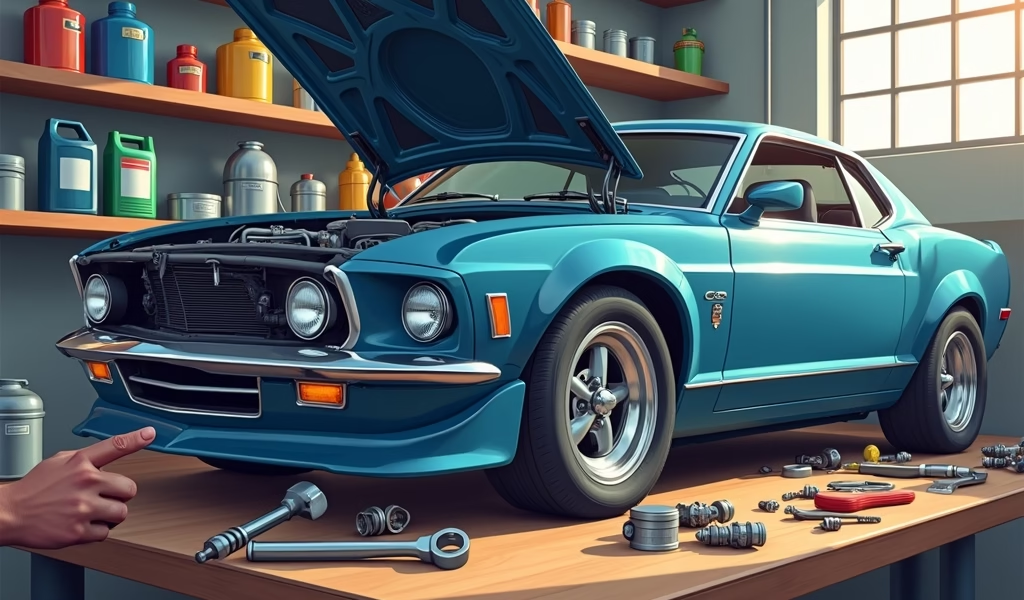
Your tires are the only part of your car that actually touches the road, making them critically important for both safety and performance. Check tire pressure monthly (including the spare) and before long trips. Proper inflation not only improves safety but can extend tire life by thousands of miles.
Rotate your tires every 6,000-8,000 miles to ensure even wear. Additionally, have your alignment checked annually or whenever you notice the car pulling to one side. Properly aligned and balanced tires will wear more evenly and last significantly longer.
5. Keep Up With Brake Maintenance
Your braking system isn’t something to neglect or postpone repairing. Have your brakes inspected at least twice a year or whenever you notice:
- Squealing or grinding noises when braking
- Vibration or pulsation in the brake pedal
- Longer stopping distances than usual
- The vehicle pulling to one side during braking
Replacing brake pads when needed (usually every 30,000-70,000 miles) is much less expensive than waiting until you damage the rotors or other components.
6. Don’t Skip Scheduled Tune-Ups
Modern vehicles need fewer tune-ups than older models, but they’re still important. During a tune-up, a mechanic will typically check or replace spark plugs, inspect ignition components, and test various systems. Following the manufacturer’s recommended tune-up schedule (usually every 30,000-100,000 miles, depending on the component) helps prevent performance issues before they start.
7. Address the Timing Belt/Chain
Many vehicles have a timing belt or chain that synchronizes the rotation of the engine’s camshaft and crankshaft. This component is critical—if it fails, it can cause catastrophic engine damage in many vehicles.
Most manufacturers recommend replacing timing belts every 60,000-100,000 miles. While this service isn’t cheap (typically $500-$1,000), it’s far less expensive than the engine replacement that might be necessary if the belt breaks.
8. Test and Maintain Your Battery
The average car battery lasts 3-5 years, but extreme temperatures can significantly shorten that lifespan. Have your battery tested annually after it reaches three years old, especially before winter in colder climates.
Keep battery terminals clean from corrosion (a mixture of baking soda and water works well), and make sure the battery is securely mounted. If your headlights dim when idling or your car struggles to start, your battery may be sending you warning signs.
9. Change Your Driving Habits
How you drive affects how long your car lasts. Practice these driving habits to extend your vehicle’s life:
- Allow the engine to warm up for 30-60 seconds before driving (longer in very cold weather)
- Avoid aggressive acceleration and hard braking
- Don’t “rev” a cold engine
- Avoid short trips that don’t allow the engine to reach operating temperature
- Don’t overload your vehicle beyond its recommended capacity
These small adjustments can significantly reduce wear and tear on critical components.
10. Keep It Clean
Regular washing and waxing does more than keep your car looking nice—it protects the finish from environmental damage. In regions where road salt is used, frequent underbody washing is essential to prevent corrosion. Additionally, keeping the interior clean prevents premature wear of upholstery and reduces the likelihood of mold or mildew growth.
Conclusion: Balancing Mileage and Maintenance
So what is “good” used car mileage? The answer isn’t simply a number—it’s a balance between reasonable mileage for the vehicle’s age, documented maintenance history, and the factors we’ve discussed that affect longevity.
A well-maintained vehicle with higher mileage often represents a better value than a neglected vehicle with lower miles. The key is to look beyond the odometer and assess the vehicle’s overall condition and care history.
By following the maintenance tips outlined above, you can significantly extend your vehicle’s useful life regardless of its current mileage. Today’s cars are built to last much longer than their predecessors, making proper maintenance more important than ever in determining how many miles you’ll ultimately get from your investment.
Remember: cars aren’t disposable items—they’re complex machines designed to provide years of service when properly maintained. With the right approach to care and maintenance, that used car with 80,000 or even 150,000 miles might just be getting started on its journey.
Frequently Asked Questions
Is 100,000 miles too much for a used car?
Not necessarily. Many modern vehicles can reliably reach 200,000-300,000 miles with proper maintenance. The overall condition and maintenance history are often more important than the actual mileage number.
How many miles is too many when buying a used car?
This varies by make, model, and maintenance history, but generally, vehicles approaching 200,000 miles may require more significant repairs soon. Research the specific model’s reliability record before making a decision.
What’s more important—age or mileage?
Both matter, but maintenance history trumps both. A well-maintained 10-year-old car with 150,000 miles may be more reliable than a neglected 5-year-old car with 60,000 miles.
How can I verify a car’s maintenance history?
Ask for service records from the seller and consider purchasing a vehicle history report from services like Carfax or AutoCheck. You can also have a trusted mechanic perform a pre-purchase inspection.
What’s the average lifespan of a car in miles?
Most modern vehicles can last 200,000+ miles when properly maintained. Some makes and models regularly exceed 300,000 miles, particularly Toyota, Honda, and Lexus vehicles according to reliability studies.