

Overview
Like giving your car’s power delivery system a refreshing shower, a transmission flush removes old fluid and debris from your entire transmission system, replacing it with fresh fluid to prevent costly damage and extend component life. Regular transmission maintenance (every 30,000-60,000 miles) might seem like an unnecessary expense at $150-250 per service, but it’s a bargain compared to transmission replacement costs of $1,800-7,000+ when neglect leads to failure.
Table of Contents
- What is a Transmission Flush?
- How Your Transmission Works: The Basics
- Why is a Transmission Flush Important?
- Transmission Flush vs. Fluid Change: What’s the Difference?
- When Should You Get a Transmission Flush?
- DIY or Professional Service: What’s Right for You?
- The Long-Term Cost Savings of Regular Transmission Maintenance
- Common Myths About Transmission Flushes
- Conclusion
- Frequently Asked Questions
What is a Transmission Flush?
A transmission flush is a comprehensive maintenance procedure that removes old, contaminated transmission fluid and replaces it with fresh fluid. Unlike a simple fluid change, a transmission flush uses specialized equipment to force out virtually all the old fluid from your transmission system, including fluid trapped in the torque converter and cooler lines. This process helps remove accumulated debris, metal particles, and varnish that can build up over time and potentially damage your transmission.
As a mechanic with over 15 years of experience, I’ve seen firsthand how a proper transmission flush can extend the life of this critical component. Your transmission is essentially your vehicle’s power delivery system – it’s what allows your engine’s power to reach the wheels in the most efficient way possible. When that system gets gunked up with old fluid and debris, it’s like trying to run a marathon with sand in your shoes – everything works harder and wears out faster.
The flush process typically involves connecting your transmission to a machine that cycles new fluid through while pushing out the old fluid. Think of it like a dialysis machine for your car – it circulates fresh fluid in while simultaneously removing the old, contaminated fluid. This thorough exchange helps ensure optimal transmission performance and can prevent costly repairs down the road.
How Your Transmission Works: The Basics
Before diving deeper into transmission flushes, let’s take a moment to understand what your transmission actually does. In simple terms, your transmission is responsible for transferring power from your engine to your wheels at the appropriate ratio. It’s like a sophisticated gear system that ensures your engine operates efficiently regardless of whether you’re starting from a stop, cruising on the highway, or climbing a steep hill.
Inside your transmission are numerous precision components – gears, clutches, bands, and valves – all bathed in transmission fluid. This fluid serves multiple critical purposes: it lubricates moving parts, cools the system by transferring heat away, helps transmit hydraulic pressure for shifting gears, and even helps clean the internal components.
Over time, this hard-working fluid breaks down. Heat cycles, friction, and normal wear and tear cause the fluid to lose its lubricating properties and protective additives. It can also become contaminated with tiny metal particles from normal component wear. When this happens, your transmission has to work harder, shifts can become rough or delayed, and components start wearing out faster – just like other essential fluids in your vehicle.

Why is a Transmission Flush Important?
Imagine never changing the oil in your deep fryer at home – eventually, those french fries would taste terrible and the fryer itself would start to break down. Your transmission fluid works in a similar way. A transmission flush is vital for several key reasons:
- Removes harmful debris and contaminants that can cause premature wear
- Replaces degraded fluid with fresh fluid containing active additives
- Helps maintain proper hydraulic pressure for smooth shifting
- Improves heat dissipation to prevent overheating
- Extends the overall lifespan of your transmission
According to AAA’s automotive experts, regular transmission maintenance can prevent many common transmission problems. I’ve seen transmissions last well beyond 200,000 miles with proper care, while neglected ones can fail before 100,000 miles. Given that a transmission replacement can cost anywhere from $1,800 to $3,500 or more, spending $150-$250 on a flush every 30,000-60,000 miles starts to look like a bargain.
Beyond the financial benefits, a properly functioning transmission improves your driving experience. Shifts become smoother, your vehicle accelerates more responsively, and in some cases, you might even see a slight improvement in fuel economy. Plus, you’ll avoid that dreaded feeling of being stranded on the roadside with transmission problems.
Transmission Flush vs. Fluid Change: What’s the Difference?
This is one of the most common questions I hear in the shop. A transmission fluid change and a transmission flush sound similar but are actually quite different procedures with different benefits and price points.
A standard transmission fluid change involves draining the fluid that’s in the pan at the bottom of the transmission, replacing the filter (if applicable), and refilling with fresh fluid. This typically removes about 40-60% of the old fluid, as much remains trapped in the torque converter, cooler lines, and various passages within the transmission.
A transmission flush, on the other hand, uses specialized equipment to force virtually all of the old fluid out while simultaneously replacing it with new fluid. This results in a nearly complete exchange – typically 90-95% of the old fluid is replaced. The flush also cleans areas that a simple fluid change can’t reach.
Here’s a quick comparison:
- Fluid Change: Less expensive ($80-$150), removes 40-60% of fluid, often includes filter replacement
- Transmission Flush: More expensive ($150-$250), removes 90-95% of fluid, more thorough cleaning, may not include filter replacement (should be done separately)
For regular maintenance on a transmission that’s in good condition, either option can work well as part of your essential car maintenance routine. However, if it’s been a long time since your last service or you’ve noticed any transmission issues, a full flush typically provides better results. Just make sure it’s done by a reputable shop using the correct equipment and procedures – more on that shortly.
When Should You Get a Transmission Flush?
Knowing when to flush your transmission can be tricky. Some manufacturers provide specific intervals in their maintenance schedules, while others claim their transmissions have “lifetime” fluid that never needs changing (spoiler alert: I’ve never met a mechanic who believes this). Here’s my practical advice based on years in the field:
- Follow your manufacturer’s recommended interval if one is provided (typically every 30,000-60,000 miles)
- For vehicles with “lifetime” fluid, consider a flush every 60,000-100,000 miles anyway
- Flush more frequently (every 30,000 miles) if you regularly tow heavy loads or drive in severe conditions
- Consider a flush when buying a used car with unknown maintenance history
Beyond scheduled maintenance, there are several warning signs that might indicate it’s time for a transmission flush:
- Transmission fluid appears dark, cloudy, or has a burnt smell
- You experience delayed or rough shifting
- The transmission slips between gears
- You notice unusual noises (humming, buzzing, or whining) from the transmission
- The vehicle surges or has difficulty maintaining speed
It’s worth noting that if your transmission is already experiencing significant problems, a flush might not fix the issues and could potentially make them worse by dislodging debris that was actually plugging leaks. In these cases, transmission specialists often recommend a more thorough inspection and possibly a different approach to repairs.
The best practice is to check your transmission fluid regularly. If it’s still bright red (not brown or black), doesn’t smell burnt, and your transmission is shifting properly, you’re probably in good shape. When in doubt, consult with a trusted mechanic who can help assess your specific situation.
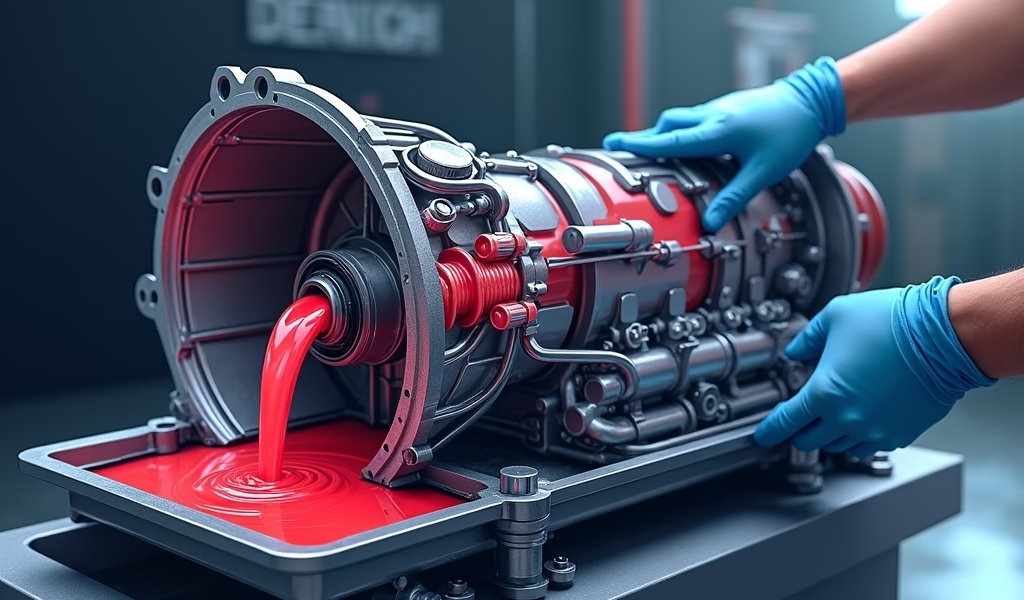
DIY or Professional Service: What’s Right for You?
When it comes to transmission maintenance, you have options. Let’s break down the DIY versus professional service approach so you can decide what makes sense for your situation, skill level, and budget.
The DIY Approach
While a true transmission flush requires specialized equipment that most DIYers don’t have, you can perform a transmission fluid change at home with basic tools. Here’s what you’ll need:
- Transmission fluid (specific to your vehicle’s requirements)
- New transmission filter and gasket (for many automatic transmissions)
- Drain pan
- Basic hand tools
- Jack and jack stands or ramps
- Torque wrench
The process involves safely raising the vehicle, removing the transmission pan, draining the fluid, replacing the filter and gasket, reinstalling the pan, and adding the correct amount of new fluid. For many vehicles, this is a reasonable DIY project if you have some mechanical experience and the proper tools.
The main advantages are cost savings (typically $50-100 compared to a shop) and the satisfaction of doing it yourself. The disadvantages are that you’re only replacing about half the fluid, and there’s potential for mistakes that could be costly.
Professional Service
Having a professional perform a transmission flush offers several advantages:
- Access to specialized flushing equipment that provides a more thorough fluid exchange
- Expertise in selecting the correct fluid type and amount for your specific transmission
- Professional inspection that might catch other issues before they become major problems
- Warranty on the work performed
- No need to dispose of old fluid yourself (an environmental consideration)
According to Consumer Reports, transmission work is one area where professional service often provides value beyond the cost. Professional transmission flushes typically range from $150-250 depending on your location, vehicle type, and the specific service provided.
My recommendation? If you’re comfortable with basic maintenance and understand that you’re doing a fluid change rather than a true flush, the DIY route can be satisfactory for regular maintenance. However, for vehicles with high mileage or any signs of transmission issues, a professional flush is usually the better choice.
The Long-Term Cost Savings of Regular Transmission Maintenance
Let’s talk dollars and cents. Regular transmission maintenance might seem like an unnecessary expense when your car is running fine, but the math strongly favors preventative care. Here’s why:
A transmission flush typically costs $150-250 every 30,000-60,000 miles. Over the life of a vehicle driven 150,000 miles, that might add up to $750 (assuming 3 flushes). Now compare that to the cost of transmission repair or replacement:
- Minor transmission repair: $500-1,200
- Major transmission repair: $1,200-2,500
- Transmission replacement: $1,800-3,500 for a remanufactured unit
- Dealership transmission replacement: $3,500-7,000+
The numbers speak for themselves. Even a single major transmission repair could cost more than all the maintenance you’d do over the life of your vehicle. Plus, there are other financial benefits to consider:
- Better fuel efficiency from a properly functioning transmission
- Higher resale value for a well-maintained vehicle
- Fewer unexpected breakdowns (which often happen at the most inconvenient times)
- Less downtime without your vehicle
I’ve seen countless customers over the years who skipped maintenance to save money, only to face much larger repair bills later. One customer with a Toyota Camry declined regular transmission services to save $200 every couple of years. At 125,000 miles, her transmission failed completely, resulting in a $2,800 replacement – money that could have covered transmission maintenance for the entire life of the vehicle with cash to spare.
The old saying “an ounce of prevention is worth a pound of cure” definitely applies to transmission maintenance. By spending a relatively small amount on regular maintenance, you’re likely to save significantly in the long run while enjoying a more reliable vehicle.
Common Myths About Transmission Flushes
The automotive world is full of myths and misconceptions, and transmission maintenance is no exception. Let’s clear up some common misunderstandings:
Myth 1: Transmission flushes cause transmission failure
This myth likely stems from situations where transmissions that were already failing received a flush as a last-ditch effort to fix the problem. When the transmission failed shortly afterward, the flush got blamed. In reality, a properly performed flush on a transmission without pre-existing issues is highly unlikely to cause problems. However, if a transmission is already slipping or showing serious signs of wear, a flush might dislodge debris that was actually helping to seal worn components.
Myth 2: “Lifetime” transmission fluid never needs to be changed
Several manufacturers now claim their vehicles have “lifetime” transmission fluid. While these modern fluids do last longer than older formulations, “lifetime” in this context usually means the expected warranty period, not the actual lifespan of the vehicle. Most transmission specialists recommend changing even “lifetime” fluid every 60,000-100,000 miles for maximum transmission longevity.
Myth 3: All transmission flushes are created equal
Not all flush services provide the same level of benefit. Some quick-lube shops use methods that are barely better than a simple fluid change. A proper flush should use equipment that connects to the transmission cooler lines and thoroughly exchanges the fluid. Always ask about the specific process a shop uses before booking a service.
Myth 4: You can judge fluid condition by color alone
While color is one indicator (fresh fluid is typically bright red, while degraded fluid turns darker), it’s not the only factor to consider. Smell, presence of particles, and how the transmission is performing are equally important factors. Some transmission fluids are naturally darker when new, so knowing your specific fluid type is important.
Myth 5: Adding additives is as good as changing the fluid
Transmission additives and “miracle fixes” in a bottle rarely deliver on their promises. While some additives have legitimate uses, they cannot reverse significant wear or replace the benefits of fresh fluid. Most transmission specialists advise against using additives unless specifically recommended by the manufacturer.
By understanding these myths, you can make more informed decisions about your vehicle’s transmission maintenance and avoid costly mistakes or unnecessary services.
Conclusion
A transmission flush is more than just another item on a maintenance checklist—it’s a crucial investment in your vehicle’s longevity and performance. By thoroughly removing old, contaminated fluid and replacing it with fresh fluid, you’re giving your transmission the care it needs to continue functioning smoothly for many miles to come.
Remember, your transmission works incredibly hard every time you drive, handling complex gear shifts while managing heat and pressure. The fluid inside is its lifeblood, and like any vital fluid, it needs regular renewal. Whether you opt for a professional flush service or tackle a DIY fluid change, regular attention to your transmission will pay dividends in reliability and prevent those heart-stopping repair bills that can reach into the thousands.
As a mechanic who’s seen the consequences of both proper maintenance and neglect, I can’t stress enough how often transmission problems could have been prevented with timely fluid services. Your vehicle is likely one of your most significant investments—protecting its critical components just makes good financial sense.
So check your maintenance schedule, inspect your fluid, and if it’s been a while since your last service, consider scheduling a transmission flush. Your car—and your wallet—will thank you for it.
Frequently Asked Questions
How much does a transmission flush cost?
A professional transmission flush typically costs between $150-250, depending on your location, vehicle type, and service provider. This is significantly less than transmission repairs, which can run into thousands.
How often should I get a transmission flush?
Most manufacturers recommend a transmission flush every 30,000-60,000 miles. If you drive in severe conditions or regularly tow heavy loads, consider more frequent service intervals.
Can I do a transmission flush myself?
A true transmission flush requires specialized equipment that most DIYers don’t have. However, you can perform a partial fluid change at home, which replaces about 40-60% of the fluid.
Will a transmission flush fix shifting problems?
If shifting problems are caused by degraded fluid, a flush might help. However, if internal mechanical issues already exist, a flush alone won’t fix them and could potentially make them worse.
Is a transmission flush necessary for new cars with “lifetime” fluid?
Despite manufacturer claims about “lifetime” fluid, most transmission specialists recommend changing this fluid every 60,000-100,000 miles. “Lifetime” typically refers to the warranty period, not the actual vehicle lifespan.