
Overview
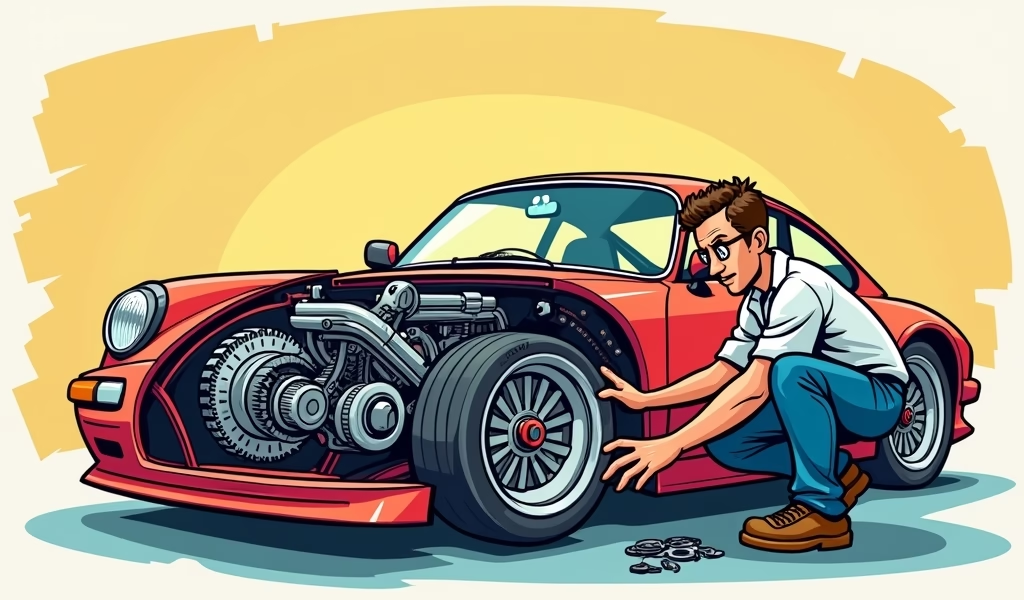
That mysterious rattle under your hood might be your timing chain—the critical component that synchronizes your engine’s internal movements and can lead to catastrophic damage when it fails. With proper maintenance (especially regular oil changes), attention to warning signs like unusual noises, and timely professional intervention, you can avoid the $800-$4,000 replacement cost and protect your engine from one of the most expensive potential failures modern vehicles face.
Table of Contents
- Understanding Timing Chains: Your Engine’s Critical Component
- What Is a Timing Chain? The Heartbeat of Your Engine
- Timing Chains vs. Timing Belts: Key Differences
- Warning Signs of Timing Chain Failure
- Timing Chain Maintenance: Protecting Your Investment
- Timing Chain Replacement: Costs and Considerations
- DIY vs. Professional Replacement: Making the Right Choice
- Conclusion: Protecting Your Engine’s Lifeline
- Frequently Asked Questions
Understanding Timing Chains: Your Engine’s Critical Component
That mysterious rattle under your hood might be more than just an annoying sound—it could be a warning sign that your timing chain is on the brink of failure. When it comes to catastrophic engine problems, few issues can empty your wallet faster than a broken timing chain. This crucial component silently keeps your engine’s internal dance perfectly choreographed, and when it fails, the results can be devastating—sometimes resulting in repair bills that exceed the value of your vehicle itself.
I’ve seen it countless times in my repair shop: drivers ignore a small rattle or slight performance issue, only to end up with an engine that’s essentially destroyed from the inside out. The good news? With some basic knowledge and preventative care, timing chain disasters are almost entirely avoidable. This guide will walk you through everything you need to know about this vital engine component, from identifying early warning signs to making smart maintenance decisions that can save you thousands of dollars.
Whether you’re hearing suspicious noises, planning for preventative maintenance, or simply want to understand what’s happening under your hood, this comprehensive breakdown will give you the information you need to protect your vehicle and your budget from unexpected timing chain calamities.
What Is a Timing Chain? The Heartbeat of Your Engine
At its core, a timing chain is exactly what its name suggests: a metal chain responsible for precise timing within your engine. Think of it as the conductor of your engine’s orchestra, ensuring that every component moves in perfect harmony. The timing chain connects two critical components—your crankshaft and camshaft(s)—and synchronizes their movement with microscopic precision.
Your crankshaft converts the up-and-down motion of pistons into rotational force, while your camshafts control the opening and closing of valves that let air and fuel in and exhaust gases out of the combustion chambers. This synchronization is absolutely critical for your engine’s proper operation. When the timing is off by even a few degrees, performance suffers dramatically. When it’s way off (or the chain breaks completely), catastrophic engine damage often follows.
Unlike many engine components that gradually degrade with minimal consequences, timing chains can go from “slightly worn” to “completely failed” in a surprisingly short time. In interference engines (which most modern vehicles have), a failed timing chain means the pistons and valves can collide, resulting in bent valves, damaged pistons, and even cracked cylinder heads—essentially turning your engine into an expensive paperweight.
According to the National Highway Traffic Safety Administration, engine mechanical problems contribute to thousands of roadside breakdowns annually, with timing component failures representing a significant percentage of these incidents.
Timing Chains vs. Timing Belts: Key Differences
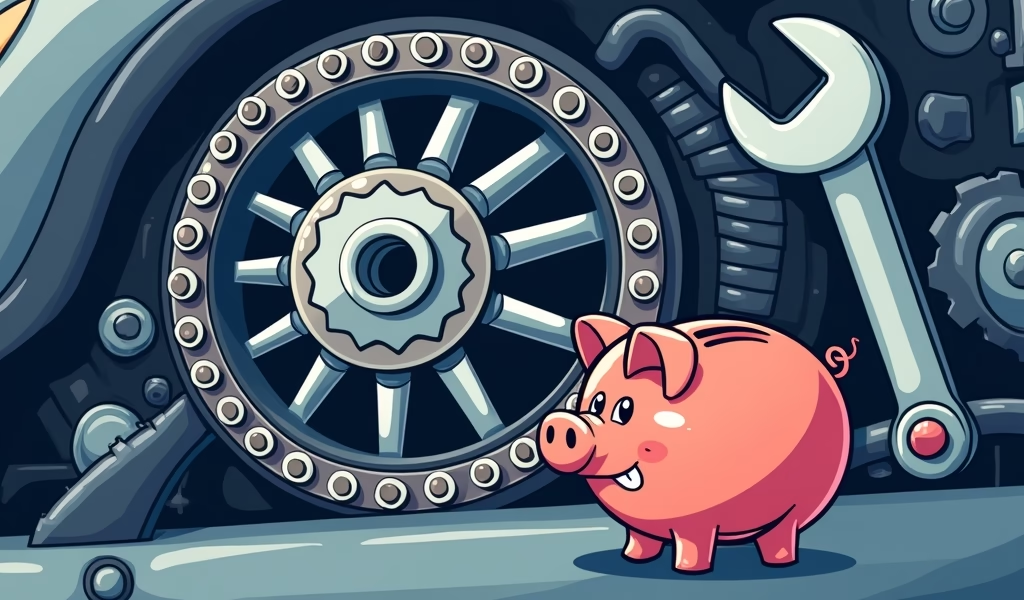
Many drivers confuse timing chains with timing belts, and while they perform the same function, there are crucial differences between these components. Timing chains are metal links (similar to a bicycle chain but much more robust) that typically last much longer than their rubber counterparts. Timing belts, on the other hand, are made of reinforced rubber and require regular scheduled replacement.
Timing chains generally offer several advantages over belts:
- Longer lifespan (often 150,000+ miles vs. 60,000-100,000 for belts)
- Greater durability under extreme conditions
- Less susceptibility to sudden failure
- No scheduled replacement interval in many vehicles
However, timing chains aren’t without drawbacks. They’re typically noisier than belts, more expensive to replace when they do fail, and require consistent oil changes for proper lubrication. Most modern vehicles use timing chains rather than belts, though there are plenty of exceptions across manufacturers.
As a general rule, many domestic vehicles and Japanese imports like Honda, Toyota, and Nissan typically use timing chains, while many European manufacturers have historically favored timing belts. However, this landscape has changed significantly in recent years as more manufacturers switch to timing chains for their longevity advantages. Your vehicle’s owner’s manual will specify which system your engine uses.
Warning Signs of Timing Chain Failure
The good news is that timing chains rarely fail without warning. Your vehicle will typically exhibit several symptoms when your timing chain begins to wear or stretch. Recognizing these warning signs early can be the difference between a manageable repair bill and a complete engine replacement.
Here are the most common indicators of timing chain problems:
- Metal rattling noise: The most obvious sign is a rattling or clattering sound from the front of the engine, particularly during cold starts. As the chain wears and develops slack, it can vibrate against guides or the timing cover.
- Check engine light: Modern vehicles monitor engine timing. When the timing begins to deviate, sensors detect the problem and trigger the check engine light. Common codes include P0008, P0009, P0016-P0019, and timing-related misfire codes.
- Poor engine performance: As timing chain wear progresses, you might notice decreased power, especially during acceleration, hesitation when pressing the gas pedal, or rough idling.
- Metal particles in oil: During oil changes, metal shavings in your oil can indicate a wearing timing chain or related components.
- Starting problems: In advanced cases, the engine may become difficult to start or fail to start altogether as timing slips beyond acceptable parameters.
The most dangerous aspect of timing chain problems is their unpredictable progression. Some vehicles might exhibit subtle signs for thousands of miles before failure, while others can go from a slight rattle to complete failure in a matter of days or even hours. This unpredictability makes addressing early warning signs absolutely critical for preventing catastrophic engine failure.
Dave Thompson, a certified master technician with 25 years of experience, explains: “I’ve seen timing chains that rattled for months before failing, and I’ve seen others that went from perfect operation to complete failure in less than 100 miles. The key is never ignoring those early warning signs—especially that distinctive cold-start rattle.”
Timing Chain Maintenance: Protecting Your Investment
Preventative maintenance is substantially less expensive than engine replacement. Here’s how to maximize your timing chain’s lifespan and avoid costly failures:
- Follow manufacturer oil change intervals religiously: This is the single most important factor in timing chain longevity. Oil lubricates the chain and prevents premature wear. For most vehicles, change oil every 5,000-7,500 miles.
- Use the correct oil grade and quality: Always use oil that meets or exceeds manufacturer specifications. The extra cost for premium synthetic oil can add tens of thousands of miles to your timing chain’s life and provides significant protection for your engine.
- Address check engine lights promptly: Don’t ignore warning lights. Many timing chain issues are detected early by engine sensors before they cause major damage.
- Listen for unusual noises: Be attentive to how your engine sounds, especially during cold starts. A new rattling noise that disappears as the engine warms up might be your first timing chain warning.
- Consider preventative replacement for high-mileage vehicles: If your vehicle has known timing chain issues or you plan to keep it long-term, consider replacing the timing chain preventatively around 100,000-120,000 miles.
Most timing chains are designed to last between 80,000 and 150,000 miles, though some will fail earlier and others can exceed 200,000 miles with proper care. According to research from Consumer Reports, regular maintenance can extend the life of major components like timing chains by 50-100% compared to neglected vehicles.
Timing Chain Replacement: Costs and Considerations
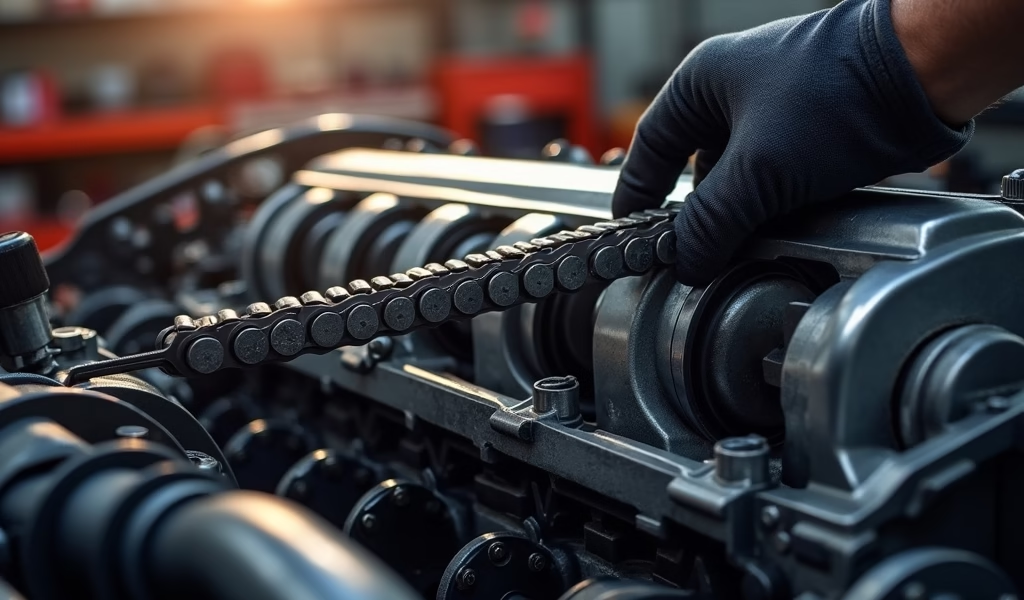
When timing chain replacement becomes necessary, it’s helpful to understand the financial impact. Replacement costs vary significantly depending on your vehicle make, model, and engine configuration:
- Economy cars: $800-$1,500
- Mid-size sedans and crossovers: $1,000-$2,000
- Luxury vehicles: $1,500-$3,000+
- Performance vehicles or complex engine designs: $2,000-$4,000+
The wide cost variation stems from differences in engine design and accessibility. Some engines have timing chains easily accessible from the front, while others require removing significant components or even the entire engine for access. V-configuration engines often have multiple timing chains, potentially doubling parts costs and increasing labor time.
A complete timing chain service should include:
- The chain itself
- Tensioners and guides
- Timing cover gasket
- Often the water pump (since access is already available)
- Front oil seals
- Sometimes camshaft phasers/actuators in variable valve timing engines
For context, a complete engine replacement following timing chain failure typically costs $4,000-$8,000—making preventative timing chain replacement a sound financial decision. Some extended warranties and vehicle service contracts cover timing chain replacement, so check your coverage if you suspect issues.
DIY vs. Professional Replacement: Making the Right Choice
Timing chain replacement falls firmly in the “advanced repair” category. While skilled home mechanics can tackle this job, it’s important to understand the complexity and risks involved before deciding whether to DIY or hire a professional.
For DIY enthusiasts, timing chain replacement requires:
- Thorough understanding of engine timing principles
- Experience with precision engine work
- Specialized timing tools specific to your vehicle
- Factory service manual with detailed procedures
- Torque wrench and other specialty tools
- Significant time commitment (8-20 hours depending on engine complexity)
Even minor mistakes during timing chain replacement can have catastrophic consequences. Being off by even a single tooth in the timing alignment can cause performance issues or severe engine damage in interference engines.
If you choose professional service, ask these important questions:
- What parts will be replaced beyond just the chain?
- Will OEM or aftermarket components be used?
- What warranty comes with the work?
- Is inspection of related components included?
- What’s the break-in procedure after replacement?
For most drivers, professional replacement by a qualified mechanic represents the safest option. The additional cost provides peace of mind and eliminates the risk of expensive mistakes that could compound the problem.
Conclusion: Protecting Your Engine’s Lifeline
Your vehicle’s timing chain truly is the heartbeat of your engine—when it’s healthy, everything runs smoothly. When it fails, the consequences can be both financially painful and logistically disruptive. The good news is that with proper maintenance and attention to early warning signs, most timing chain disasters are entirely preventable.
Remember these key takeaways:
- Regular oil changes with quality oil are your best defense against timing chain failure
- Never ignore rattling or clattering sounds from your engine
- Address check engine lights promptly
- Know whether your specific vehicle model has known timing chain issues
- Consider preventative replacement if you’re approaching high mileage
By taking these simple precautions, you can save thousands in repair costs and avoid the stress of unexpected breakdowns. Your timing chain may be hidden inside your engine, but giving it the attention it deserves pays dividends in vehicle longevity and reliability. Ultimately, a small investment in preventative maintenance can save you from one of the most expensive repairs in modern vehicles.
Frequently Asked Questions
How long do timing chains typically last?
Most timing chains last between 80,000 and 150,000 miles with proper maintenance. Some chains in well-maintained vehicles can exceed 200,000 miles, while those in poorly maintained engines may fail much earlier.
What happens if my timing chain breaks while driving?
If your timing chain breaks while driving, your engine will immediately shut down and potentially suffer severe internal damage. In interference engines, pistons and valves can collide, causing thousands of dollars in damage.
Is a timing chain better than a timing belt?
Timing chains typically last longer than timing belts and don’t require scheduled replacement at specific intervals. However, they’re more expensive to replace when they do fail and require consistent oil changes for proper lubrication.
Can I drive with a noisy timing chain?
Driving with a noisy timing chain is extremely risky as the chain could fail completely without warning. Once symptoms appear, have your vehicle inspected immediately to avoid potential engine damage.
How much does it cost to replace a timing chain?
Timing chain replacement typically costs between $800 and $3,000 depending on your vehicle make, model, and engine configuration. Luxury vehicles and complex engines generally fall at the higher end of this range.