
Overview
Just like the unsung hero in your engine bay, the serpentine belt quietly powers critical components including your alternator, power steering, and cooling system—lasting 60,000-100,000 miles before needing replacement. Regular inspection for squealing, cracks, or material loss can prevent the cascade of expensive problems that occur when this $75-$200 maintenance item fails, leaving you with no power steering, a dead battery, or worse, an overheated engine.
Table of Contents
- What Is a Serpentine Belt?
- Why Serpentine Belts Matter: The Heart of Your Accessory Systems
- Signs of Serpentine Belt Problems You Shouldn’t Ignore
- How Long Does a Serpentine Belt Last?
- DIY Serpentine Belt Inspection: What to Look For
- Serpentine Belt Replacement: Timing and Cost
- Preventative Maintenance Tips for Serpentine Belts
- Serpentine Belt vs. Timing Belt: Understanding the Difference
- Conclusion
- Frequently Asked Questions
What Is a Serpentine Belt?
A serpentine belt is a long, winding rubber belt that delivers power from your engine’s crankshaft to multiple accessories in your vehicle. Think of it as the workhorse that keeps crucial components like your alternator, power steering pump, air conditioning compressor, and water pump running smoothly. Unlike older cars that used multiple V-belts to power different components, modern vehicles typically use a single serpentine belt that snakes through various pulleys—hence the name “serpentine.”
This seemingly simple rubber component plays a critical role in your vehicle’s operation. Without a functioning serpentine belt, multiple systems in your car would fail simultaneously, potentially leaving you stranded. The serpentine belt is designed with ribs on one side that grip the pulleys, ensuring efficient power transfer from your car’s engine system to all the accessories it drives.
Made of reinforced rubber with multiple ribs running lengthwise, today’s serpentine belts are engineered to withstand extreme temperatures, moisture, and constant tension. The evolution from older V-belts to the serpentine design represented a significant advancement in automotive engineering, providing better efficiency, longer service life, and easier maintenance.
Why Serpentine Belts Matter: The Heart of Your Accessory Systems
Your serpentine belt might not get as much attention as your engine or transmission, but it’s the unsung hero that keeps multiple critical systems functioning. When you turn your steering wheel, flip on your air conditioning, or simply keep your battery charged, you’re relying on your serpentine belt to transfer the necessary power to these components.
Here’s what your serpentine belt typically powers:
- Alternator: Keeps your battery charged and powers all electrical components
- Power steering pump: Provides the hydraulic pressure that makes steering effortless
- Air conditioning compressor: Cools and dehumidifies the air inside your vehicle
- Water pump: Circulates coolant through your car’s cooling system to prevent overheating
- Air pump: Helps reduce emissions in some vehicles
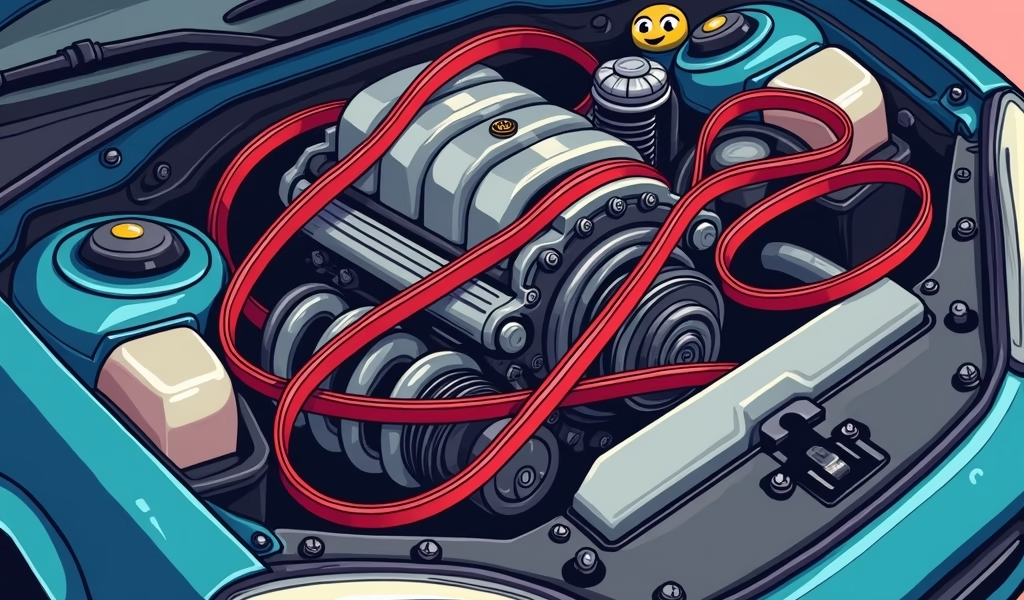
The genius of the serpentine belt design lies in its simplicity. One belt handles multiple jobs, reducing complexity and making maintenance more straightforward. The tensioner pulley—a spring-loaded device that maintains proper belt tension—ensures the belt maintains optimal contact with all pulleys, even as it naturally stretches with age.
If your serpentine belt fails, the consequences cascade quickly. Your power steering becomes immediately heavy, your alternator stops charging the battery, your engine can overheat due to a non-functioning water pump, and your air conditioning stops working. What might seem like a minor component can quickly cause a major headache—and potentially expensive repairs if the resulting problems aren’t addressed promptly.
Signs of Serpentine Belt Problems You Shouldn’t Ignore
Serpentine belts typically don’t fail without warning. Your vehicle will often give you clear signals that the belt is deteriorating and needs attention. Being attentive to these warning signs can save you from a breakdown and potentially expensive repairs.
One of the most common symptoms is a squealing noise, particularly when starting your car or during acceleration. This high-pitched sound occurs when the belt slips on the pulleys, often due to improper tension, wear, or contamination from oil or coolant leaks. Don’t dismiss this sound as a minor annoyance—it’s your car’s way of telling you something’s wrong.
Visual indicators are equally important. During your routine maintenance checks, look for cracks, fraying, or glazing (a shiny, hardened appearance) on the belt surface. Modern serpentine belts don’t show cracks as obviously as older designs, but you might notice missing chunks of rubber or exposed belt cords, which indicate advanced deterioration. As belt experts at Gates point out, material loss in the belt’s ribs is often the first sign of wear in newer EPDM (Ethylene Propylene Diene Monomer) belts.
Operational symptoms can also signal belt problems. If your power steering feels sluggish, your air conditioning performance drops, your battery warning light illuminates, or your engine begins to overheat, a failing serpentine belt might be the culprit. These issues arise because the belt can no longer effectively power the accessories it’s designed to drive.
Perhaps the most obvious sign is visible belt damage or, in worst-case scenarios, finding pieces of the belt in the engine bay—a clear indication that the belt has failed completely. At this point, your vehicle will likely have multiple system failures and may not be drivable until the belt is replaced.
How Long Does a Serpentine Belt Last?
Modern serpentine belts have come a long way from their predecessors. While older belts made from neoprene typically needed replacement every 50,000 miles, today’s EPDM belts can last significantly longer. Most manufacturers suggest a serpentine belt can remain serviceable for 60,000 to 100,000 miles. Some high-quality belts might even push beyond that, reaching 150,000 miles under ideal conditions.
However, these numbers aren’t guarantees. Various factors influence your belt’s lifespan, including your driving habits, climate conditions, and how well your vehicle’s belt system is maintained. Extreme temperatures—both hot and cold—can accelerate belt wear. Similarly, frequent short trips that don’t allow the engine to reach operating temperature can be harder on belts than consistent highway driving.
Environmental conditions play a significant role too. Vehicles in dusty environments or areas with severe weather may experience faster belt degradation. Likewise, cars operated in regions with high humidity or salt exposure (like coastal areas) might need more frequent belt replacements due to accelerated environmental aging.
Your vehicle’s mechanical condition also affects belt longevity. Misaligned pulleys, a failing tensioner, or leaking engine fluids that contaminate the belt can all dramatically shorten its useful life. That’s why a comprehensive inspection of the entire belt drive system—not just the belt itself—is crucial during routine maintenance.
Despite the impressive durability of modern belts, it’s worth remembering that preventative replacement is always less expensive and inconvenient than dealing with a belt failure on the road. Most professional mechanics recommend proactive replacement when your belt approaches the manufacturer’s suggested service interval, even if it hasn’t shown obvious signs of failure.
DIY Serpentine Belt Inspection: What to Look For
Checking your serpentine belt is a simple maintenance task you can perform between professional service appointments. All you need is a flashlight and about five minutes of your time. Begin by ensuring your engine is off and cool—serpentine belts can get extremely hot during operation.
When inspecting your belt, look for these key indicators of wear:
- Cracks or splits in the ribbed surface
- Fraying or missing chunks of rubber
- Glazing (a shiny, hardened appearance)
- Contamination from oil, coolant, or power steering fluid
- Excessive sidewall wear
- Rib separation or material loss in the grooves
Modern EPDM belts don’t show cracks as obviously as older neoprene belts. Instead, they tend to wear through material loss in the ribs, which can be harder to detect visually. A helpful technique is to run your finger perpendicular across the ribs—if they feel smooth rather than distinct, that’s a sign of significant wear.
Don’t forget to inspect the related components too. The tensioner pulley should move smoothly without excessive resistance or play. The idler pulleys should spin freely without noise. Any unusual sounds when the engine is running—particularly squealing, chirping, or slapping noises—warrant further investigation.
If you’re comfortable doing so, check the belt tension by pressing firmly on the longest exposed run of the belt. It should deflect slightly (about ½ inch) but feel firm. Many modern vehicles have automatic tensioners that maintain proper belt tension, but these can fail over time, so they deserve your attention too.
When in doubt, use the “SAFER” method promoted by automotive specialists: check for Signs of wear, Alignment issues, Friction damage, Environmental damage, and Reach the end of service life. This systematic approach helps ensure you don’t miss potential problems.
Serpentine Belt Replacement: Timing and Cost
Replacing your serpentine belt before it fails is one of the smartest preventative maintenance decisions you can make. The cost of planned replacement is significantly less than dealing with the potential cascade of problems that can occur when a belt breaks unexpectedly. But what should you expect to pay, and when should you schedule this service?
For most vehicles, serpentine belt replacement typically costs between $75 and $200. The belt itself is relatively inexpensive, usually ranging from $25 to $80 depending on your vehicle make and model. The remainder of the cost is labor, which varies based on your location and the complexity of your vehicle’s belt routing system. Some vehicles have easily accessible belts that can be replaced in 15-30 minutes, while others might require removing multiple components to gain access, increasing labor time and cost.
As for timing, manufacturers generally recommend replacement every 60,000 to 100,000 miles. However, as I mentioned earlier, it’s wise to have your belt inspected regularly after 60,000 miles, regardless of whether you’ve noticed symptoms of wear. Many mechanics recommend replacing the tensioner pulley at the same time as the belt, particularly in higher-mileage vehicles, as these components often wear out on a similar schedule.
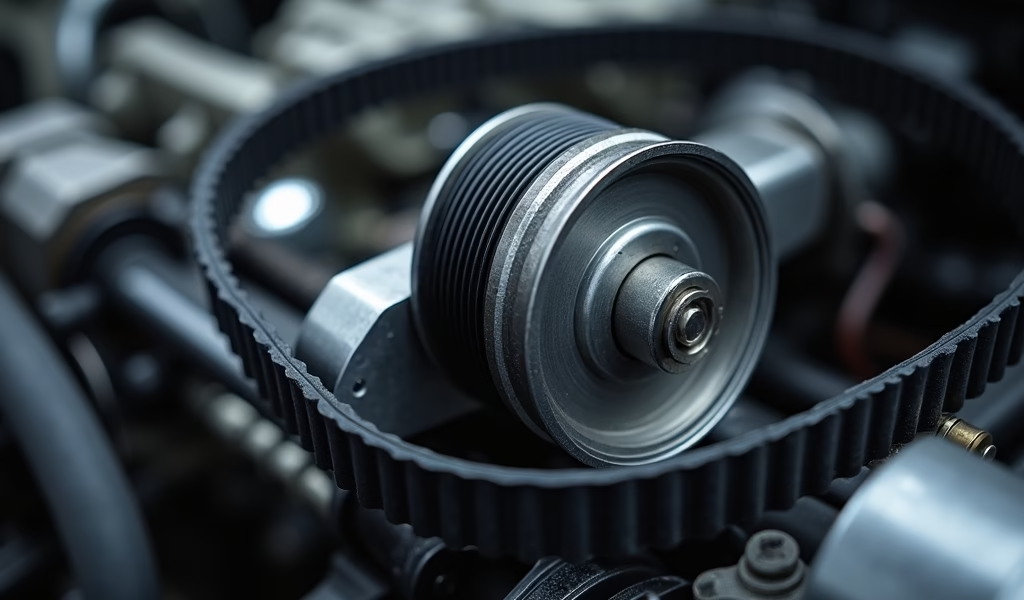
If you’re mechanically inclined, serpentine belt replacement can be a manageable DIY project on many vehicles. The key is to carefully document the belt routing before removal—take photos from multiple angles or refer to the routing diagram that’s often found under the hood or in your owner’s manual. Specialized tools like a tensioner pulley wrench might be necessary, but these can be rented from most auto parts stores.
Remember that the cost of replacement is minimal compared to the potential expense of damage caused by a failed belt. A broken serpentine belt can leave you stranded and potentially lead to overheating if it drives your water pump, which could result in much more significant engine damage. As with many aspects of car maintenance, an ounce of prevention is worth a pound of cure.
Preventative Maintenance Tips for Serpentine Belts
Maximizing your serpentine belt’s lifespan doesn’t require complex procedures, just consistent attention and a few preventative practices. First and foremost, include a visual inspection of your belt during routine maintenance like oil changes. This simple habit can catch developing issues before they become serious problems.
Keep the area around your serpentine belt clean and free from fluid contamination. Oil, coolant, and power steering fluid leaks can dramatically accelerate belt deterioration. If you notice fluid on your belt, address the source of the leak promptly—it’s often a sign of a failing seal or gasket that requires attention anyway.
Pay attention to alignment issues. Misaligned pulleys can cause uneven wear and premature failure. If you notice the belt tracking to one side of a pulley or hear unusual noises when the engine is running, have the system inspected by a professional. According to Consumer Reports, pulley misalignment is a common issue that many drivers overlook until it causes belt failure.
Consider your driving environment and habits. If you frequently drive in extreme temperatures, dusty conditions, or make primarily short trips, your belt may wear faster than average. In these cases, more frequent inspections and potentially earlier replacement might be warranted.
When replacing your serpentine belt, don’t cut corners on quality. Opt for OEM (Original Equipment Manufacturer) belts or premium aftermarket options from reputable manufacturers. The modest price difference between economy and premium belts is insignificant compared to the potential cost of premature failure.
Finally, remember that the tensioner and idler pulleys are part of the same system and have similar lifespans. Many mechanics recommend replacing these components simultaneously with the belt, particularly in higher-mileage vehicles. This comprehensive approach can prevent the frustration of installing a new belt only to have it damaged by a failing tensioner weeks later.
Serpentine Belt vs. Timing Belt: Understanding the Difference
Drivers often confuse serpentine belts with timing belts, but these are two distinct components with very different functions and replacement considerations. Understanding the difference is crucial for proper maintenance planning.
The serpentine belt, as we’ve discussed, drives external engine accessories like the alternator and power steering pump. It’s visible when you open the hood and wraps around multiple pulleys on the front of the engine. If a serpentine belt fails, your car typically becomes difficult to drive but doesn’t suffer immediate engine damage (unless it drives the water pump and causes overheating).
A timing belt, in contrast, is hidden behind covers and connects the crankshaft to the camshaft(s), ensuring that the engine’s valves open and close at the precisely correct time relative to piston movement. It’s a critical internal engine component. In interference engines, a timing belt failure can cause catastrophic engine damage as pistons collide with valves, potentially resulting in repairs that cost thousands of dollars.
Replacement intervals differ significantly between these belts. While serpentine belts typically last 60,000 to 100,000 miles, timing belts generally require replacement every 60,000 to 90,000 miles, depending on the manufacturer’s specifications. Timing belt replacement is also considerably more expensive, usually ranging from $300 to $1,000 because it requires more labor and often includes replacing related components like water pumps and tensioners.
It’s worth noting that many modern vehicles have replaced timing belts with timing chains, which generally last the lifetime of the engine without scheduled replacement. However, if your vehicle has a timing belt, adhering to the manufacturer’s replacement interval is absolutely essential to avoid potentially devastating engine damage.
Both belts are critical to your vehicle’s operation, but they serve different functions, have different replacement costs, and fail with different consequences. Knowing which type your vehicle has—and when each needs service—is an important part of responsible vehicle ownership.
Conclusion
Understanding what a serpentine belt is and how it functions is more than just automotive trivia—it’s essential knowledge that can help you avoid costly breakdowns and unexpected repairs. This humble rubber component plays a crucial role in your vehicle’s operation, powering multiple accessories that you rely on every time you drive.
By familiarizing yourself with the signs of serpentine belt wear, performing regular visual inspections, and adhering to recommended replacement intervals, you can prevent the cascade of problems that can occur when this belt fails. Remember that preventative maintenance is always less expensive and inconvenient than roadside repairs.
Modern serpentine belts are remarkably durable, often lasting 60,000 to 100,000 miles, but they’re not immortal. Environmental factors, driving habits, and mechanical conditions all influence their lifespan. When it’s time for replacement, the modest investment—typically between $75 and $200—provides exceptional value in terms of reliability and peace of mind.
Whether you choose to perform your own serpentine belt inspection and replacement or rely on professional service, staying proactive about this component will help ensure your vehicle remains reliable for years to come. After all, in the world of automotive maintenance, an informed driver is a prepared driver—and preparation is the best way to avoid those costly and inconvenient breakdowns that nobody wants to experience.
Frequently Asked Questions
What happens if my serpentine belt breaks while driving?
Your vehicle will lose power to multiple systems including power steering, alternator, and potentially the water pump. The car may become difficult to steer, the battery warning light will illuminate, and if you continue driving, the engine could overheat.
Can I drive with a squealing serpentine belt?
While you can drive short distances, a squealing belt indicates a problem that should be addressed promptly. The noise typically means the belt is slipping, worn, or improperly tensioned and could fail completely if ignored.
How difficult is it to replace a serpentine belt myself?
Difficulty varies by vehicle model. Many cars allow for DIY replacement with basic tools and 30-60 minutes of work. The key is to carefully document the belt routing before removal and use a tensioner tool to release the tension.
How much does serpentine belt replacement cost?
Typical replacement costs range from $75 to $200, including parts and labor. The belt itself usually costs $25-$80, while labor makes up the remainder depending on your vehicle’s complexity and local shop rates.
Will a cracked serpentine belt pass inspection?
Most state vehicle inspections will fail a car with a visibly damaged serpentine belt. Cracks, fraying, or excessive wear are considered safety concerns since belt failure can lead to loss of power steering and potential overheating.