

Overview
Like a first date that seemed promising but showed up with ten cats, a car’s mileage doesn’t tell the whole story—maintenance history, driving conditions, and vehicle make matter far more than the odometer reading. The article advises that while 30,000-80,000 miles represents the sweet spot for value, modern vehicles can easily exceed 200,000 miles with proper care, suggesting buyers focus on service records and pre-purchase inspections rather than fixating on mileage numbers.
Table of Contents
- Understanding Mileage on Used Cars
- What Is Considered “Good Mileage” for a Used Car?
- Beyond the Numbers: What Else Matters
- 5 Essential Maintenance Tips for Higher-Mileage Vehicles
- Conclusion
- Frequently Asked Questions
Understanding Mileage on Used Cars
When folks roll into my shop asking about good mileage for a used car, I tell them what I’ve learned from 25 years under the hood: mileage is just part of the story. The odometer reading is significant, but it’s more like a chapter in a book rather than the whole narrative.
Most vehicles in the United States accumulate between 12,000 and 15,000 miles annually. This gives us a helpful baseline when evaluating used vehicles. A 5-year-old car with 60,000 miles has been driven at average rates, while one showing 30,000 miles has seen considerably less road time.
Interestingly, extremely low mileage isn’t always advantageous. Vehicles need regular operation to maintain optimal functionality. Cars that sit dormant for extended periods often develop issues with seals drying out, fluids degrading, and components getting stiff from lack of use.
The type of miles matter tremendously. Highway miles put less stress on a vehicle than city miles. Why? Highway driving maintains consistent speeds with minimal braking and acceleration. In contrast, city driving involves frequent stops, starts, and idle time that accelerate wear on brakes, transmissions, and engines.
A 100,000-mile highway cruiser might be in significantly better condition than a 60,000-mile city car that’s endured countless short trips, traffic jams, and cold starts. When shopping for a pre-owned vehicle, understanding this distinction can help you make a wiser investment.

What Is Considered “Good Mileage” for a Used Car?
Based on my experience in the repair bay, here’s how I categorize mileage ranges when evaluating used vehicles:
Under 30,000 miles
These are practically new vehicles that have barely settled in. You’ll pay a premium for such low mileage, but modern break-in periods are typically complete by 5,000 miles. The vehicle should have many years of reliable service ahead, though I’d still check for signs of excessive sitting if it’s more than 2-3 years old.
30,000-70,000 miles
This sweet spot often represents the best value. These vehicles have already taken their biggest depreciation hit but still have most of their useful life ahead. Many original components like brakes, suspension parts, and fluids may still be in good working order.
70,000-100,000 miles
Once considered the danger zone, this range now represents tremendous value. Modern vehicles are engineered to last significantly longer than their predecessors. Many models are just hitting their stride at this point, provided they’ve had proper maintenance.
100,000-150,000 miles
Vehicles in this range can be excellent bargains for budget-conscious buyers. According to Consumer Reports, many modern vehicles can reach 200,000 miles with proper care. Expect to replace some major components in this range, but the initial purchase savings often outweigh repair costs.
Over 150,000 miles
These high-mileage veterans require careful evaluation. Some models routinely exceed 300,000 miles (particularly Toyota and Honda), while others become problematic after 150,000. At this stage, maintenance history becomes critically important.
The definition of “good mileage” varies substantially by vehicle make and model. Toyota Camrys and Honda Accords are renowned for their longevity, often reaching 250,000+ miles with basic maintenance. Meanwhile, some European luxury models might start showing age-related issues much earlier.
A 120,000-mile Toyota might present less risk than an 80,000-mile luxury vehicle from certain manufacturers. Research specific model reliability before making assumptions based solely on mileage numbers.
Beyond the Numbers: What Else Matters
After three decades of diagnosing vehicles, I can tell you that the maintenance history trumps mileage every time. A well-maintained 150,000-mile car often outperforms a neglected 60,000-mile vehicle in both reliability and longevity.
Complete service records are gold when evaluating a used car. Look for regular oil changes, timing belt replacements (if applicable), transmission services, and coolant flushes performed at manufacturer-recommended intervals. These records indicate an owner who invested in preventative maintenance rather than just crisis repairs.
The number of previous owners provides useful context. Multiple owners over a short period might indicate recurring problems or dissatisfaction. Single-owner vehicles typically offer more consistency in maintenance and care.
Even without complete documentation, you can spot signs of good maintenance:
- Clean engine bay without significant oil residue
- Consistent tire wear patterns
- Interior condition that matches the mileage expectation
- Fresh fluids that aren’t dark or burnt-smelling
- No dashboard warning lights
Climate impact can’t be overlooked. A vehicle from coastal areas may have rust concerns, while cars from extreme heat regions might show premature deterioration of rubber components and paint. According to a study by the National Association of Corrosion Engineers, vehicles in northern states exposed to road salt typically experience accelerated undercarriage wear regardless of mileage.
Accident history significantly affects a vehicle’s long-term reliability. Modern repair techniques are excellent, but a previously damaged vehicle may never quite return to original specifications. Tools like Carfax help identify accident history, but a thorough pre-purchase inspection remains invaluable.
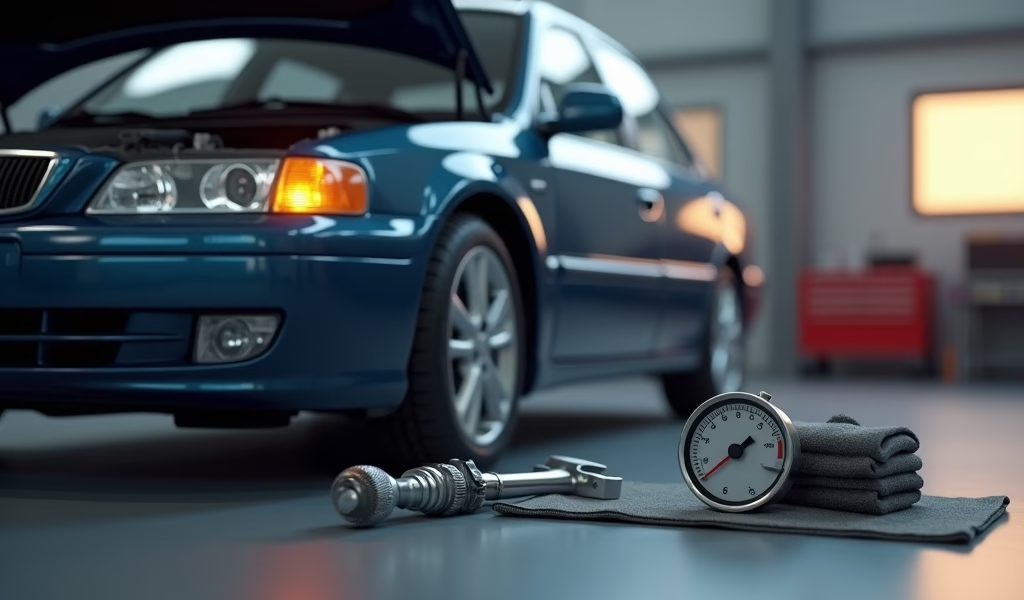
5 Essential Maintenance Tips for Higher-Mileage Vehicles
Over the years, I’ve seen countless vehicles reach impressive mileage milestones through diligent maintenance. If you’ve purchased or are considering a higher-mileage vehicle, these five maintenance strategies will help maximize its remaining service life.
1. Oil Changes and Fluid Maintenance
The lifeblood of any engine is its oil. With higher-mileage vehicles, I recommend more frequent oil changes—typically every 3,000-5,000 miles depending on driving conditions and oil type. Synthetic oil provides superior protection for engines with some wear, creating a better barrier between moving components.
Don’t neglect other vital fluids. Transmission fluid, coolant, brake fluid, and power steering fluid all require periodic replacement. As vehicles age, these fluids work harder and break down faster. Consider using specially formulated high-mileage fluids that contain additives to condition seals and reduce leaks.
2. Timing Belt/Chain Maintenance
Many engines use timing belts that require replacement at specific intervals (typically 60,000-100,000 miles). Neglecting this critical service can lead to catastrophic engine damage in “interference” engines where valves and pistons occupy the same space at different times in the combustion cycle.
Even timing chains, which theoretically last the vehicle’s lifetime, can stretch and require replacement in higher-mileage applications. Listen for unusual rattling noises from the engine’s front, especially during cold starts, which may indicate chain wear.
3. Transmission Care
Transmissions often become problematic in higher-mileage vehicles, but proper maintenance can extend their service life considerably. For automatic transmissions, fluid changes every 30,000-60,000 miles help remove metal particles and friction material that accumulate with normal wear.
Some mechanics debate whether to perform a simple fluid change or a complete flush on high-mileage transmissions. I typically recommend a simple drain and fill rather than a power flush for vehicles beyond 100,000 miles, as changing fluid dynamics can sometimes affect already-worn components.
4. Cooling System Maintenance
Engine overheating remains one of the most common causes of catastrophic failure in higher-mileage vehicles. Coolant breaks down over time, losing its corrosion-inhibiting properties and becoming more acidic. This can damage radiators, water pumps, and internal engine components.
Replace coolant every 30,000 miles or 2-3 years. Additionally, inspect hoses, belts, and the water pump for signs of leakage or deterioration. A cooling system pressure test can identify potential problems before they lead to roadside emergencies.
5. Proactive Part Replacement
With higher-mileage vehicles, I often recommend replacing certain components before they fail, particularly those that can cause collateral damage or leave you stranded. These include:
- Fuel pumps (typically last 100,000-150,000 miles)
- Alternators (typically last 100,000-150,000 miles)
- Water pumps (often replaced with timing belts)
- Radiator hoses (typically last 100,000 miles)
- Suspension components (usually begin wearing noticeably around 80,000-100,000 miles)
This preventative approach might seem costly initially, but it’s far less expensive than emergency repairs or the cumulative damage that can occur when components fail while driving. For instance, a $200 water pump replacement is vastly preferable to a $3,000 engine repair caused by overheating.
Conclusion
After decades in the repair business, I’ve come to see “good mileage” as more of a sliding scale than a fixed number. A well-maintained vehicle with 120,000 miles often represents better value than a neglected 60,000-mile alternative. The sweet spot typically falls between 30,000-80,000 miles, offering a balance of value and remaining useful life.
Modern vehicles are engineered to last well beyond 100,000 miles when properly cared for, with many models comfortably reaching 200,000 miles or more. Remember that maintenance history trumps the odometer reading every time.
Before purchasing any used vehicle, invest in a pre-purchase inspection by a qualified mechanic. This small expense—typically $100-$200—can save thousands in unexpected repairs and provide peace of mind about your investment.
By following the five maintenance tips outlined above, you can significantly extend the life of a higher-mileage vehicle. Remember that consistent, preventative care is always more economical than reactive repairs.
The used car market offers tremendous value for informed buyers who look beyond simple numbers. With proper research, thorough inspection, and ongoing maintenance, a higher-mileage vehicle can provide many years of reliable service without breaking the bank.
Frequently Asked Questions
Is 100,000 miles too much for a used car?
Not necessarily. Modern vehicles are built to last well beyond 100,000 miles with proper maintenance. Many models can reliably reach 200,000+ miles when cared for appropriately.
What’s the sweet spot for used car mileage?
The 30,000-80,000 mile range typically offers the best balance of value and remaining useful life. Vehicles in this range have depreciated significantly but still have plenty of reliable service ahead.
Should I avoid a car with 150,000+ miles?
It depends on the make, model, and maintenance history. Certain brands (Toyota, Honda) routinely exceed 200,000-300,000 miles with proper care. Always get a pre-purchase inspection for high-mileage vehicles.
Are highway miles better than city miles?
Yes, highway miles typically cause less wear and tear on vehicles. Highway driving maintains consistent speeds with minimal braking and acceleration, while city driving involves frequent stops, starts, and idle time that accelerate component wear.
Is extremely low mileage always good?
Not always. Vehicles that sit unused for extended periods can develop problems with dried seals, degraded fluids, and stiff components. A 10-year-old car with only 20,000 miles might have more issues than one driven regularly.