
Overview
Like unsung heroes of your vehicle, CV axles transfer power from transmission to wheels while allowing suspension movement and turning, with failure typically announced through telling clicks during turns or grease spots near your tires. Understanding these crucial components—from their inner workings to maintenance needs and repair options costing $150-600—can save you from unexpected breakdowns and help extend your vehicle’s smooth, reliable performance for up to 100,000 miles.
Table of Contents
- What is a CV Axle?
- How CV Axles Work
- Signs of CV Axle Failure
- Common Causes of CV Axle Damage
- Preventive Maintenance Tips
- Repair Options and Costs
- DIY Inspection Guide
- Conclusion
- Frequently Asked Questions
What is a CV Axle?
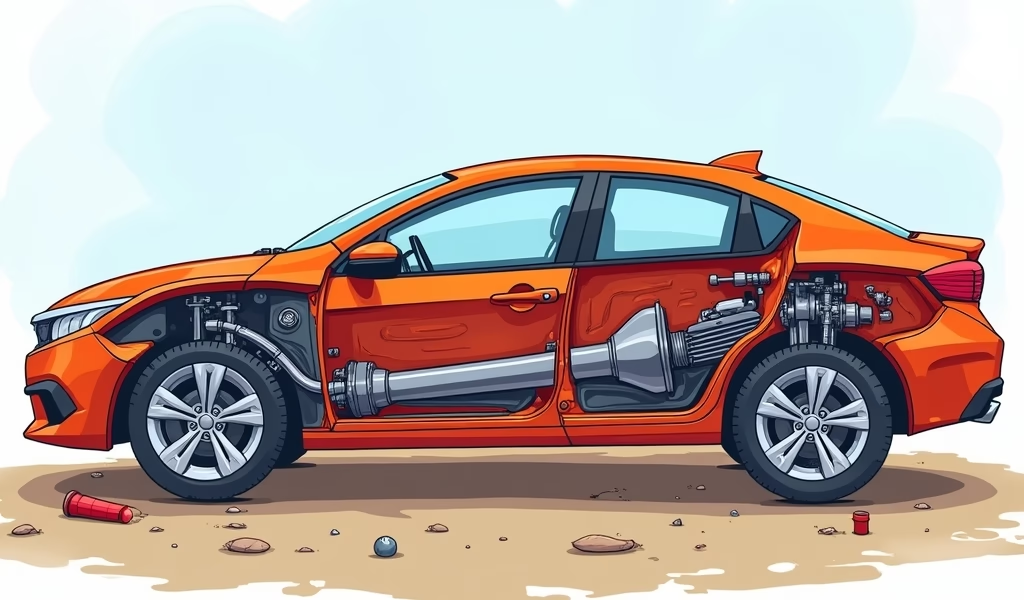
A CV axle, or Constant Velocity axle, is one of those unsung heroes of your vehicle that quietly performs a crucial job until something goes wrong. If you drive a front-wheel drive car, you have CV axles to thank for your smooth ride. They’re the components that transfer power from your transmission to your wheels while allowing for the up-and-down motion of your suspension and the turning of your wheels.
Think of CV axles as the middlemen in your car’s powertrain. They’re the flexible shafts that connect the differential (which splits engine power between the wheels) to the wheel hubs. Unlike older, simpler axle designs, CV axles are engineered to maintain a constant rotational speed regardless of angle—hence the name “Constant Velocity.”
Most modern vehicles use CV axles, especially those with front-wheel drive or all-wheel drive systems. They’ve become the industry standard because they deliver power smoothly even as suspension travel occurs and wheels turn. This engineering marvel prevents your car from lurching or binding during turns, giving you that smooth driving experience you’ve come to expect.
How CV Axles Work
Let’s pop the hood (figuratively speaking) and look at how these mechanical marvels actually work. A typical CV axle consists of an inner joint, an outer joint, and a shaft connecting them. Both joints contain a set of bearings or balls housed in a cage, all packed with special grease and protected by rubber boots—often called CV boots.
The inner CV joint (the one closer to the transmission) primarily allows for plunging motion—the in-and-out movement needed as the suspension moves up and down. Meanwhile, the outer joint (the one at the wheel) handles the much more dramatic angular movement needed when your wheels turn left or right.
What makes these joints special is their ability to transfer torque (rotational force) at a constant speed, even when operating at extreme angles. This is achieved through some clever engineering: the balls or bearings inside the joint follow paths that equalize the distance traveled, ensuring smooth power delivery at any angle.
According to automotive engineering research, modern CV joints can operate efficiently at angles up to 45-50 degrees, which is far more than older universal joints could manage without significant vibration. This capability is what allows your front-wheel drive vehicle to combine steering and power delivery through the same wheels.
Signs of CV Axle Failure
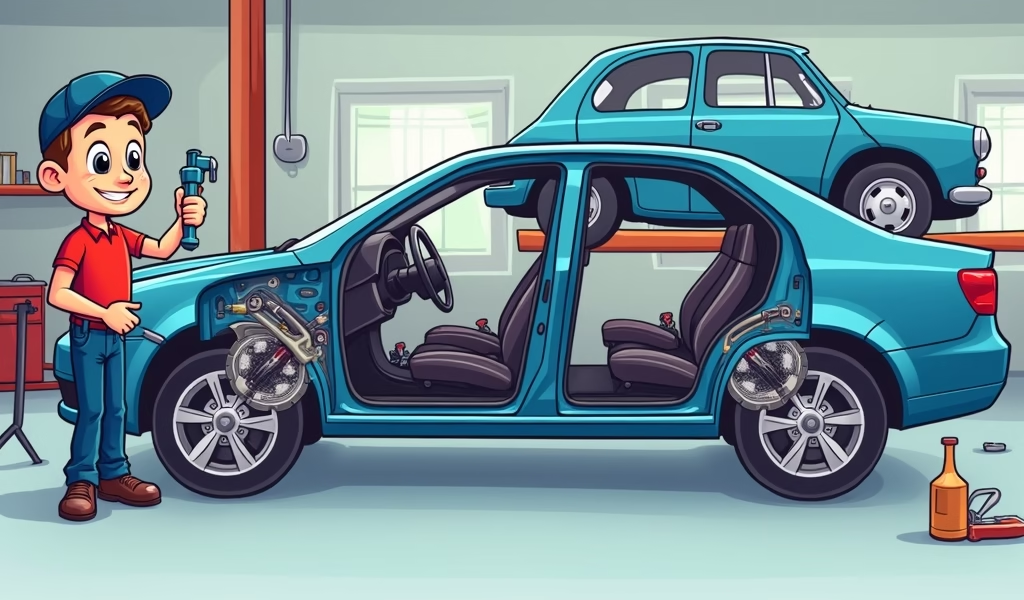
Your vehicle usually gives you clear warnings when a CV axle is beginning to fail. Recognizing these symptoms early can save you from a breakdown and potentially reduce repair costs. Here are the telltale signs to watch for:
- Clicking or popping noises when turning, especially during sharp turns
- Grease on the inside edge of your tires or along the undercarriage (indicating a torn CV boot)
- Vibrations that increase with speed
- A knocking sound during acceleration or deceleration
- Clunking when shifting from drive to reverse
That distinctive clicking during turns is perhaps the most recognizable symptom. It happens because the damaged joint can’t maintain smooth operation at the increased angles. Think of it like a door with a loose hinge—it works, but not without making noise.
Vibrations are another common indicator, often felt through the floorboard or steering wheel. These occur when the axle becomes bent or the joint wears unevenly, creating an imbalance as it rotates. The faster you go, the more noticeable these vibrations typically become.
If you’re spotting dark grease on the inner edge of your tire or wheel well, that’s a clear sign a CV boot has torn. This protective rubber covering keeps the special lubricating grease in and contaminants out. Once it tears, the clock starts ticking—dirt and moisture will get in, accelerating wear and eventually causing joint failure.
According to NHTSA data, drivetrain-related issues (including CV axle failures) account for a significant percentage of vehicle roadside assistance calls. Catching these symptoms early can prevent you from becoming part of that statistic.
Common Causes of CV Axle Damage
CV axles don’t typically fail without reason. Understanding what causes damage can help you take preventive measures. Here are the most common culprits:
- Torn or damaged CV boots exposing the joint to dirt and moisture
- Age-related wear and deterioration
- Excessive torque from aggressive driving or high-powered engine modifications
- Impact damage from road hazards or accidents
- Water infiltration from driving through deep water
- Improper previous repairs or poor-quality replacement parts
The most frequent starting point for CV axle problems is the protective boots. These rubber components face a tough life—they’re constantly exposed to road debris, temperature extremes, and need to flex with joint movement. Over time, they can crack, tear, or simply become brittle with age. Once compromised, they allow contaminants in, and the special grease out, leading to accelerated wear.
Your driving habits play a role too. Those who tend to accelerate aggressively, particularly from a standstill or while turning (like spinning tires around corners), put significantly more strain on their CV axles. The joints are engineered to handle normal forces, but excessive torque can accelerate wear or even cause immediate damage.
Environmental factors also contribute significantly. Vehicles in areas with harsh winters face additional challenges from road salt and freeze-thaw cycles that can accelerate deterioration of the rubber components. Similarly, off-road driving or regularly navigating rough roads with potholes can subject CV axles to impacts they weren’t designed to handle.
Preventive Maintenance Tips
An ounce of prevention is worth a pound of cure, especially when it comes to CV axles. Following these preventive maintenance practices can significantly extend their lifespan and help you avoid unexpected breakdowns:
- Regularly inspect CV boots for cracks, tears, or grease leakage (every oil change is ideal)
- Address small boot tears immediately before joint contamination occurs
- Avoid aggressive driving, especially rapid acceleration during turns
- Be cautious on rough roads and try to avoid deep potholes
- Don’t drive through water deeper than your wheel hubs if possible
- Consider preventive CV axle replacement at high mileage intervals (150,000+ miles) for critical vehicles
- Use quality parts if replacement becomes necessary
Visual inspections are your first line of defense. You don’t need special tools—just get down low with a flashlight and check those boots for any signs of damage or grease splatter. Many mechanics will include this in a standard inspection, but it never hurts to specifically ask them to check.
If you discover a torn boot early enough, you may be able to replace just the boot rather than the entire axle assembly. This is significantly less expensive, but timing is crucial. Once dirt and moisture contaminate the joint, boot replacement alone won’t solve the problem.
Your driving habits make a tremendous difference too. Gentle acceleration, especially when turning, reduces stress on CV joints. Similarly, being mindful of road conditions can prevent impact damage. As mechanics, we often see perfectly good vehicles come in with axle damage simply from hitting a single severe pothole at speed.
Repair Options and Costs
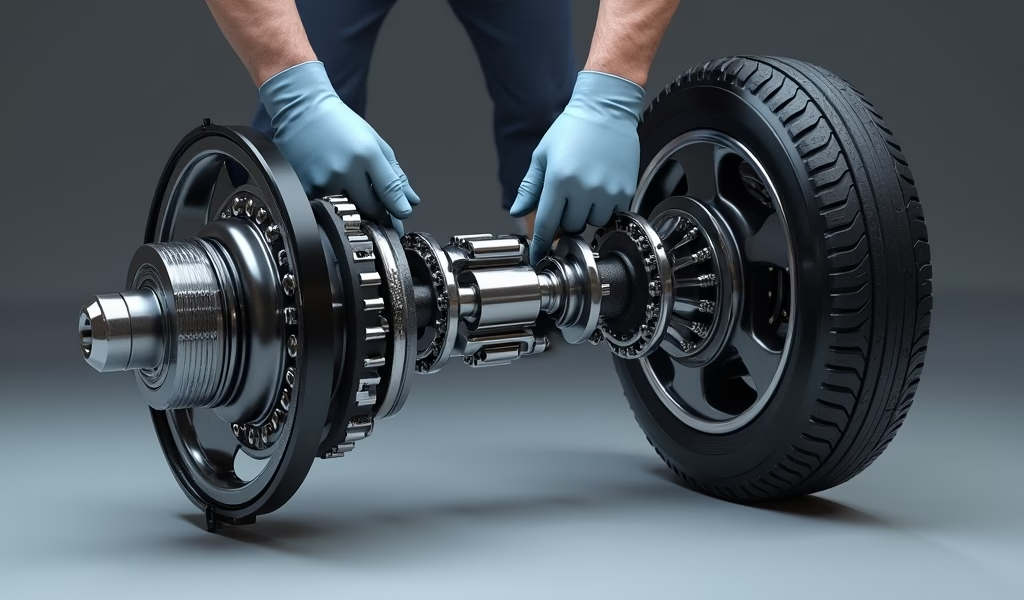
When CV axle issues arise, you’ll generally face three repair options: boot replacement, axle remanufacturing, or complete axle replacement. Let’s break down each approach:
Boot replacement is the most economical option, typically costing between $150-300 per side including parts and labor. This is only viable when caught early, before joint damage occurs. The process involves removing the axle, cleaning the joint, repacking it with fresh grease, and installing a new boot. It’s labor-intensive but saves the expense of new parts.
Some shops offer axle remanufacturing, where they’ll rebuild your existing axle with new components. This middle-ground option usually runs $250-400 per axle and may be a good compromise between quality and cost. However, availability varies by location and vehicle model.
Complete axle replacement is the most common repair and typically costs $350-600 per side for most consumer vehicles. This includes parts and labor, though costs can climb significantly for luxury or performance vehicles. While more expensive upfront, new or quality remanufactured axles often come with warranties and provide the most reliable solution.
If you’re comfortable with DIY repairs and have access to the right tools, you can save considerably on labor costs. Replacement axles for popular vehicles can be purchased for $100-200, making this a potential weekend project for the mechanically inclined. Just remember that proper torquing of components is critical for safety.
One important consideration: if one axle has failed due to age or wear (rather than impact), the opposite side likely isn’t far behind. Many mechanics, myself included, recommend replacing axles in pairs when the failure is wear-related. It might seem like an unnecessary expense now, but it often saves you a second repair visit (and associated labor costs) just months later.
DIY Inspection Guide
Even if you’re not planning to replace CV axles yourself, knowing how to inspect them can save you money and prevent unexpected breakdowns. Here’s a simple inspection process anyone can perform:
- Park on level ground with wheels straight and engage the parking brake
- Use a flashlight to examine the rubber boots on both ends of each axle
- Look for cracks, tears, or grease splatter on surrounding components
- Check for any abnormal play by grasping the axle and trying to move it (minimal movement is normal)
- Listen for clicking during a slow-speed turn in a parking lot
- Pay attention to vibrations during acceleration
The ideal time for inspection is during routine maintenance like oil changes when your vehicle is already elevated. If you don’t have access to a lift, you can perform a basic visual check by looking underneath with a flashlight, though you’ll have a limited view.
When examining the boots, pay special attention to the accordion-like folds where cracks often begin. Also check for any shiny spots of grease on nearby components or the inside of your wheels, which indicates a boot has been leaking. Fresh grease appears dark black, while older expelled grease often looks more brownish after collecting road grime.
For a more thorough check, you can jack up the car (always using proper safety equipment like jack stands) and rotate the wheel by hand. A healthy CV joint will turn smoothly without resistance or grinding sensations. This hands-on approach can reveal problems before they become audible during driving.
Remember that preventive maintenance is always less expensive than emergency repairs. If you notice any warning signs, consult with a trusted mechanic sooner rather than later. As research from the Automotive Service Association confirms, addressing minor issues before they escalate can save an average of 30% on overall repair costs.
Conclusion
Your vehicle’s CV axles may not be components you think about often, but they’re vital for the smooth, safe operation of your car. Understanding what a CV axle is, how it works, and the warning signs of failure empowers you to avoid costly breakdowns and extend the life of your vehicle.
The key takeaway here is proactive maintenance. Regular visual inspections, attentive driving habits, and prompt attention to minor issues like torn boots can save you hundreds of dollars and prevent the inconvenience of unexpected failures. Remember, that small clicking noise during turns isn’t something to ignore—it’s your car communicating that help is needed.
Whether you choose DIY maintenance or professional service, knowledge is your best tool. By familiarizing yourself with these crucial components, you’re taking an important step toward becoming a more informed vehicle owner and potentially saving significant money over your car’s lifetime.
So next time you’re getting an oil change or other routine service, take a moment to ask your mechanic about the condition of your CV axles. That simple question might just prevent you from being stranded on the roadside in the future.
Frequently Asked Questions
How long do CV axles typically last?
In normal driving conditions, CV axles typically last 80,000 to 100,000 miles. However, this can vary significantly based on driving habits, road conditions, and vehicle type.
Can I drive with a damaged CV axle?
While you can temporarily drive with early symptoms, a severely damaged CV axle can completely fail without warning. It’s unsafe to continue driving once you notice symptoms like clicking or vibrations.
How much does it cost to replace a CV axle?
Typical CV axle replacement costs range from $350-600 per side at a professional shop. DIY replacement using quality parts can reduce this to $100-200 per axle plus your time.
Can CV axles be repaired instead of replaced?
If only the boot is damaged and caught early, yes—just the boot can be replaced for $150-300. Once the joint itself is contaminated or damaged, complete replacement is usually necessary.
Are aftermarket CV axles as good as OEM?
Quality varies significantly among aftermarket brands. Premium remanufactured axles from reputable suppliers often provide reliability comparable to OEM parts at a lower price point.