
Overview
Just like your car whispering warnings, uneven tire wear signals underlying issues from misalignment, improper inflation, neglected rotation, suspension problems, or aggressive driving habits. Understanding these patterns not only extends tire life but also improves safety and fuel efficiency, potentially saving hundreds of dollars by preventing premature replacements and catching mechanical issues before they become costly repairs.
Table of Contents
- Understanding Uneven Tire Wear
- Signs You Have Uneven Tire Wear
- Common Causes of Uneven Tire Wear
- Wheel Alignment Issues
- Improper Tire Inflation
- Neglecting Tire Rotation
- Suspension Problems
- Driving Habits That Cause Uneven Wear
- Prevention Tips to Avoid Uneven Tire Wear
- When to Replace Unevenly Worn Tires
- How Preventing Uneven Wear Saves Money
- Conclusion
- Frequently Asked Questions
Understanding Uneven Tire Wear
Have you ever noticed your tires looking more worn on one side than the other? That’s what we call uneven tire wear, and understanding what causes uneven tire wear is crucial for every driver. As a mechanic with over 15 years of experience, I’ve seen countless tires prematurely sent to the tire graveyard simply because drivers didn’t catch the warning signs early enough.
Uneven tire wear isn’t just an aesthetic issue – it’s a warning sign from your vehicle that something needs attention. When your tires wear unevenly, it’s like your car is whispering (sometimes shouting) that there’s an underlying problem. This uneven wear pattern can compromise your safety, reduce fuel efficiency, and lead to costly repairs if ignored.
The good news? Most causes of uneven tire wear are preventable with proper maintenance and awareness. Throughout this guide, I’ll walk you through the common culprits behind irregular tire wear patterns and show you practical steps to extend your tires’ lifespan and save money in the process.
Signs You Have Uneven Tire Wear
Before we dive into causes, let’s make sure you can recognize the signs of uneven tire wear. The earlier you catch these symptoms, the easier (and cheaper) they are to address.
The “penny test” is a reliable method to check your tread depth, but it won’t tell the whole story about wear patterns. Instead, look for these specific signs:
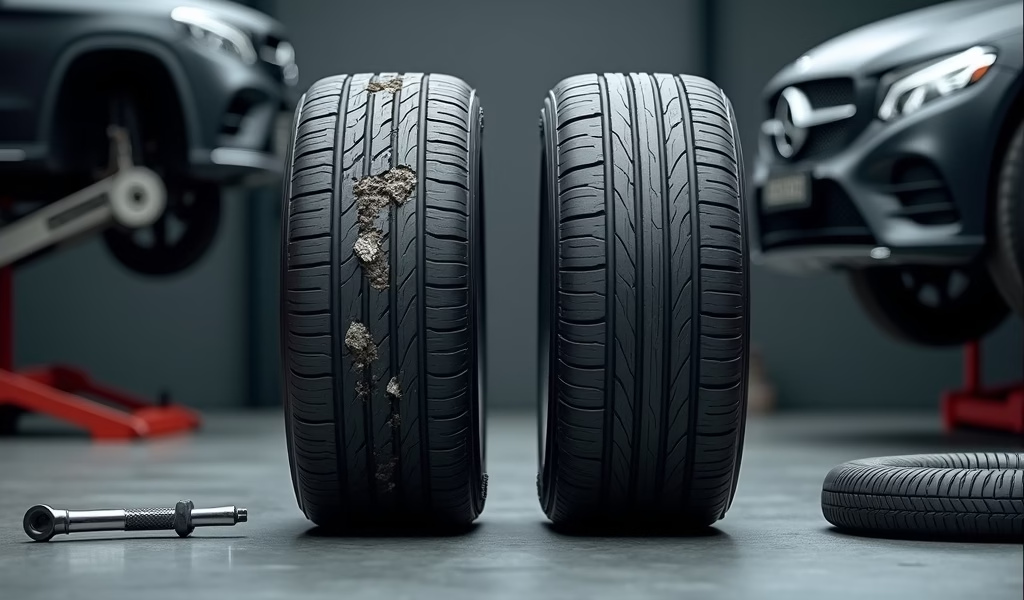
- Center wear: The middle of your tire is more worn down than the edges
- Edge wear: The outside edges show more wear than the center
- One-sided wear: One edge (inner or outer) shows more wear than the rest of the tire
- Cupping or scalloping: Dips or bald spots appear in random patterns
- Feathering: The tread blocks appear smooth on one side and sharp on the other
- Diagonal wear: Wear patterns that run at an angle across the tire
Beyond visual cues, your car might also tell you something’s wrong through its behavior. If you notice your vehicle pulling to one side, a steering wheel that vibrates, or unusual noise while driving, these could all indicate uneven tire wear. Many drivers also report decreased fuel economy when tire wear becomes irregular – your car works harder when tires aren’t making optimal contact with the road.
Remember, your tires support your entire vehicle and form the only point of contact between your car and the road. Their condition directly impacts your safety, so learning to spot these signs early is a valuable skill for any driver.
Common Causes of Uneven Tire Wear
Now that you know what to look for, let’s explore what causes uneven tire wear. While there are numerous potential culprits, five main issues account for the vast majority of cases I’ve encountered in my shop.
First, improper wheel alignment is perhaps the most common cause. When your wheels aren’t properly aligned, they don’t roll straight and true, causing certain parts of the tire to bear more weight than others. This typically results in wear on just one edge of the tire.
Second, incorrect tire inflation pressure creates predictable wear patterns. Overinflated tires bulge in the center, causing center wear, while underinflated tires sag at the edges, leading to wear along both sides. According to the National Highway Traffic Safety Administration, properly inflated tires can improve fuel efficiency by up to 3% and extend tire life by thousands of miles.
Third, neglecting regular tire rotations allows natural wear patterns to become exaggerated over time. Front and rear tires wear differently due to steering, braking, and weight distribution. Without rotation, these differences become more pronounced.
Fourth, worn or damaged suspension components can cause erratic tire wear. When shocks, struts, or other suspension parts aren’t functioning properly, your tires may bounce or lose consistent contact with the road.
Lastly, your personal driving habits play a significant role. Hard braking, aggressive cornering, and rapid acceleration all increase tire wear, often in irregular patterns. Even the roads you regularly drive on can influence wear patterns.
Let’s examine each of these causes in greater detail to help you identify and address them before they lead to serious tire damage.
Wheel Alignment Issues
Wheel alignment issues are one of the leading culprits behind uneven tire wear. Your car’s alignment consists of three main angles: camber, toe, and caster. When any of these measurements falls outside the manufacturer’s specifications, your tires will begin to wear unevenly.
Camber refers to the inward or outward angle of the tire when viewed from the front. Excessive positive camber (where the top of the tire leans outward) causes wear on the outer edge of the tire. Negative camber (top of the tire leaning inward) creates wear on the inner edge. This type of wear often happens gradually, which is why many drivers don’t notice it until significant damage has occurred.
Toe alignment refers to how much your tires turn inward or outward when viewed from above. Incorrect toe alignment causes a feathering wear pattern, where the tread blocks develop a smooth side and a sharp side. This feels rough when you run your hand across the tire in one direction and smooth in the other – similar to petting an animal against the grain of its fur.
Caster angle affects steering stability and is less commonly a direct cause of uneven wear, but it influences how the other alignment angles function during driving. Poor caster adjustment can lead to steering pull and indirectly contribute to uneven wear patterns.
What causes alignment to go out of spec? Several factors can throw off your wheel alignment, including:
- Hitting potholes or curbs
- Minor fender benders
- Normal wear and settling of suspension components
- Lowering or raising your vehicle
- Installing suspension modifications
Professional alignment checks are recommended at least once a year or whenever you notice your vehicle pulling to one side, uneven tire wear, or a steering wheel that doesn’t return to center properly after turns. Many shops offer free alignment checks, making this preventive measure both accessible and affordable.
Improper Tire Inflation
Proper tire inflation is perhaps the simplest yet most overlooked aspect of tire maintenance. The air inside your tires supports the entire weight of your vehicle, and even small deviations from the recommended pressure can dramatically affect wear patterns.
Overinflated tires bulge in the center, causing the middle section of the tread to bear more of the vehicle’s weight. This results in accelerated wear down the center of the tire while the edges remain relatively unworn. Besides causing premature tire replacement, overinflation reduces your tire’s contact patch with the road, potentially decreasing traction during braking and cornering.
Underinflated tires, on the other hand, sag at the sides, placing more pressure on the outer edges of the tread. This creates wear along both edges while the center remains relatively intact. Underinflation is particularly dangerous as it allows tires to flex more than designed, generating excess heat that can lead to tire failure or blowouts. It also significantly reduces fuel economy – according to the U.S. Department of Energy, you can lose about 0.2% in fuel efficiency for every 1 PSI drop below the recommended pressure.
Finding the correct pressure is easy, but it’s not the number molded on the tire sidewall. That figure represents the maximum pressure the tire can safely hold, not the recommended pressure for your vehicle. Instead, look for a sticker typically located on the driver’s side door jamb, glove box, or fuel door. This sticker provides the manufacturer’s recommended pressures for your specific vehicle, often with different values for front and rear tires.
To maintain proper inflation, check your tire pressure at least once a month and before long trips. Always check pressure when tires are cold (before driving or at least three hours after driving), as heat from driving temporarily increases pressure readings. A quality tire pressure gauge costs just a few dollars but can save hundreds in premature tire replacements.
Neglecting Tire Rotation
Tire rotation is one of those maintenance items that’s easy to postpone, but skipping it consistently leads to uneven tire wear that shortens tire life considerably. Each position on your vehicle causes tires to wear in different ways due to variations in weight distribution, driving forces, and suspension geometry.
Front tires typically experience more wear than rear tires, especially on front-wheel-drive vehicles where they handle both driving forces and steering duties. The outside edges of front tires often wear faster due to the forces exerted during turning. Rear tires generally wear more evenly, but they still develop their own wear patterns over time.
By regularly rotating your tires, you distribute these wear patterns across all four tires, ensuring they wear more evenly and last longer. Most manufacturers recommend rotating tires every 5,000 to 8,000 miles, though some extend this interval to 10,000 miles. I usually suggest matching your rotation schedule with your oil change schedule to make it easier to remember.
The correct rotation pattern depends on several factors, including whether you have directional or non-directional tires, and whether your vehicle is front-wheel, rear-wheel, or all-wheel drive. For most vehicles with non-directional tires, a cross-pattern works well – moving the front tires to the opposite sides of the rear and the rear tires straight to the front.
Directional tires (with tread designed to roll in only one direction) require a simpler front-to-back rotation on the same side. Your vehicle’s owner’s manual will specify the recommended pattern for your particular model.
Professional tire rotation typically costs between $20 and $50, but many shops offer it free with other services. Considering that a set of quality tires can cost $600 to $1,200, this small investment significantly extends your tire life and improves safety.
Suspension Problems
Your car’s suspension system does more than just provide a comfortable ride – it plays a crucial role in how your tires contact the road. When suspension components wear out or become damaged, they often cause distinctive uneven tire wear patterns.
Worn or damaged shocks and struts are common culprits. These components control the up-and-down motion of your wheels. When they deteriorate, your tires may bounce excessively, momentarily losing contact with the road surface. This creates a wear pattern called “cupping” or “scalloping” – a series of smooth spots or dips around the tire tread that look like cups or scallops.
Ball joints, control arms, and bushings also affect tire wear when they begin to fail. These components help maintain proper wheel alignment during driving. As they wear, they allow more movement than the suspension was designed for, causing the alignment to shift during driving. This often results in feathering or diagonal wear patterns across the tire.
Worn wheel bearings can cause another distinctive wear pattern – a smooth, shiny band that runs around the entire circumference of the tire. This happens because a failing wheel bearing allows the wheel to wobble slightly while rotating.
If you notice unusual noises when going over bumps, excessive bouncing after hitting road imperfections, or your car “nosediving” during braking, these could be signs of suspension issues that will eventually cause uneven tire wear. According to Car and Driver’s research, suspension components typically last between 50,000 and 100,000 miles, but this varies widely based on driving conditions and vehicle design.
Having your suspension inspected during regular maintenance can catch these issues before they lead to significant tire damage. Most reputable shops will check suspension components during routine services like oil changes or tire rotations.
Driving Habits That Cause Uneven Wear
Your driving style has a surprising impact on how your tires wear over time. While mechanical issues are often the primary culprits behind uneven tire wear, how you drive can either accelerate or mitigate these problems.
Aggressive acceleration creates excessive stress on your drive wheels, especially during the initial movement from a stop. This high-torque situation can cause rapid wear in the center of the tread pattern on your drive wheels. Similarly, hard braking concentrates wear on the front tires, particularly near the outside edges where weight transfers during stopping.
Taking corners at high speeds increases the lateral forces on your tires, wearing the shoulders of the tires that bear the most weight during turning. If you frequently drive on winding roads or make quick lane changes on highways, you may notice increased wear on the outer edges of your tires.
Even the routes you regularly drive impact tire wear. City driving with frequent stops and starts accelerates tire wear compared to highway cruising. Similarly, regularly driving on rough roads, gravel, or roads with numerous potholes not only increases wear but can cause impacts that throw off alignment or damage suspension components.
Driving with heavy loads or towing without adjusting tire pressure can also contribute to uneven wear patterns. Most vehicle manufacturers specify a different (usually higher) tire pressure recommendation when carrying maximum loads or towing.
To minimize the impact of driving habits on your tires:
- Practice smooth acceleration and gradual braking
- Take turns at moderate speeds
- Adjust your tire pressure when carrying heavy loads
- Be mindful of road conditions and avoid potholes when possible
- Consider rotating tires more frequently if you drive in ways that accelerate wear
Small adjustments to your driving style can add thousands of miles to your tire life while improving fuel economy and safety.
Prevention Tips to Avoid Uneven Tire Wear
Preventing uneven tire wear is far easier and less expensive than dealing with its consequences. Here are practical preventative measures to keep your tires wearing evenly and lasting longer:
Stick to a regular maintenance schedule. Create a calendar reminder for monthly tire pressure checks and seasonal maintenance. Most tire wear issues develop gradually, making regular inspections crucial for early detection.
Check your tire pressure monthly and before long trips. Temperature changes can significantly affect pressure – for every 10°F change in temperature, tire pressure changes by about 1 PSI. Always use a quality tire pressure gauge rather than relying on visual inspection.
Rotate your tires according to the manufacturer’s recommended schedule. This typically means every 5,000-8,000 miles, but check your owner’s manual for the specific interval for your vehicle. Some vehicles with performance-oriented suspensions may have unique rotation patterns.
Have your alignment checked annually and after significant impacts like hitting potholes or curbs. Many shops offer free alignment checks, making this a no-cost way to catch problems early.
Replace suspension components at recommended intervals. Don’t wait until they fail completely. Components like shocks and struts gradually lose effectiveness, affecting tire wear long before they break completely.
Keep your tires balanced. Tire balancing compensates for weight variations around the tire and wheel assembly. Unbalanced tires cause vibrations that can lead to uneven wear. Have your tires balanced whenever you have them mounted and rebalanced if you notice vibrations at certain speeds.
Pay attention to your car’s behavior. If your vehicle pulls to one side, the steering wheel vibrates, or you hear unusual tire noise, investigate promptly. These are often early warning signs of developing problems that will cause uneven wear.
Consider seasonal tire use if you live in an area with significant weather variations. Using winter tires in cold months and all-season or summer tires in warmer months can prevent the accelerated wear that occurs when using the wrong tire type for conditions.
When to Replace Unevenly Worn Tires
Sometimes, despite your best efforts, uneven tire wear occurs. When that happens, you need to make informed decisions about whether to continue using the tires or replace them.
As a general rule, tires should be replaced when the tread depth reaches 2/32 of an inch (the legal minimum in most states) or when wear indicators become visible. However, uneven wear complicates this assessment because some parts of the tire may reach this threshold while others still have adequate tread.
If the uneven wear is mild and the underlying cause has been corrected (such as an alignment issue), you may be able to continue using the tires until they reach the end of their useful life. However, several conditions warrant immediate replacement regardless of overall tread depth:
- Wear that exposes the tire’s internal structure or belts
- Severe cupping or scalloping that causes vibration or noise
- One-sided wear that extends more than halfway across the tread
- Any wear pattern that affects the tire’s handling characteristics
- Tread separation or bulges in the sidewall (replace immediately)
When replacing tires, it’s generally best to replace them in pairs (both front or both rear) or as a complete set. This ensures balanced handling and traction. If you’re replacing just two tires, the new tires should typically go on the rear axle, regardless of whether your vehicle is front-wheel, rear-wheel, or all-wheel drive. This placement helps maintain stability during emergency maneuvers and wet conditions.
Finally, when purchasing replacement tires, consider investing in quality tires with good wear ratings. The initial cost might be higher, but the longer lifespan and improved performance often make them more economical in the long run.
How Preventing Uneven Wear Saves Money
The financial impact of uneven tire wear extends far beyond the cost of replacement tires. Let’s break down the economics of proper tire maintenance versus neglect.
A typical set of quality all-season tires for a passenger car costs between $600 and $1,200 installed. With proper care, these tires should last approximately 50,000 to 70,000 miles. However, uneven wear can reduce this lifespan by 30% to 50%, forcing you to replace tires at 25,000 to 35,000 miles instead.
Now, consider the maintenance costs to prevent uneven wear: an alignment typically costs $75 to $200 and is needed roughly once a year. Tire rotations cost $20 to $50 every 5,000 to 8,000 miles (though many shops include this service free with oil changes). Monthly pressure checks cost nothing but a few minutes of your time.
Over the life of a set of tires, these preventive measures might cost $300 to $500 total. Compare that to the $600 to $1,200 cost of premature tire replacement, and the economics become clear – prevention saves money.
The savings extend beyond just tire costs. Properly maintained tires improve fuel efficiency by 1% to 3% compared to unevenly worn tires. For a vehicle that uses $2,000 in fuel annually, that’s a saving of $20 to $60 per year.
Additionally, uneven tire wear often indicates underlying issues with alignment or suspension that, if left unchecked, can lead to more expensive repairs. A $200 alignment is much less expensive than a $1,500 suspension overhaul that might become necessary if alignment issues are ignored long-term.
Perhaps most importantly, properly maintained tires provide better traction and shorter stopping distances. This reduced risk of accidents represents a potential savings that’s difficult to quantify but impossible to ignore.
Conclusion
Understanding what causes uneven tire wear is more than just mechanical knowledge – it’s a practical skill that enhances safety, saves money, and extends the life of your vehicle. As we’ve explored, the main culprits behind irregular tire wear include improper wheel alignment, incorrect tire pressure, neglected tire rotations, suspension issues, and even your driving habits.
The good news is that most of these causes are preventable with regular maintenance and attentiveness. By incorporating simple practices like monthly pressure checks, scheduled rotations, and annual alignment inspections, you can significantly extend your tires’ lifespan and improve your vehicle’s overall performance.
Remember that your tires are the only point of contact between your vehicle and the road. Their condition affects everything from fuel economy to handling, braking distance, and ride comfort. Investing a small amount of time and money in preventive maintenance pays dividends in both safety and cost savings.
The next time you’re washing your car, take an extra minute to inspect your tires for unusual wear patterns. That simple habit might just save you from costly repairs and ensure your vehicle performs at its best when you need it most. After all, in the world of automotive maintenance, an ounce of prevention truly is worth a pound of cure.
Frequently Asked Questions
How often should I check my tires for uneven wear?
Check your tires visually once a month and whenever you notice changes in how your vehicle handles. A more thorough inspection should happen during regular maintenance services or at least every 3 months.
Can I fix uneven tire wear without replacing the tires?
Minor uneven wear can sometimes be corrected if you address the underlying cause and have enough tread remaining. Severe cases typically require tire replacement as wear patterns can’t be reversed.
Does tire brand affect how evenly tires wear?
Quality tires from reputable manufacturers tend to wear more evenly and are more resistant to irregular wear patterns. They often use better rubber compounds and more sophisticated tread designs.
Can tire rotations cause uneven wear?
Properly performed rotations prevent uneven wear rather than cause it. However, using the wrong rotation pattern for your vehicle or tires can potentially worsen existing wear issues.
Is it safe to drive with unevenly worn tires?
Minor uneven wear may not pose immediate danger, but significant irregular wear compromises traction and can lead to unpredictable handling. Severely worn tires should be replaced immediately for safety reasons.