
Overview
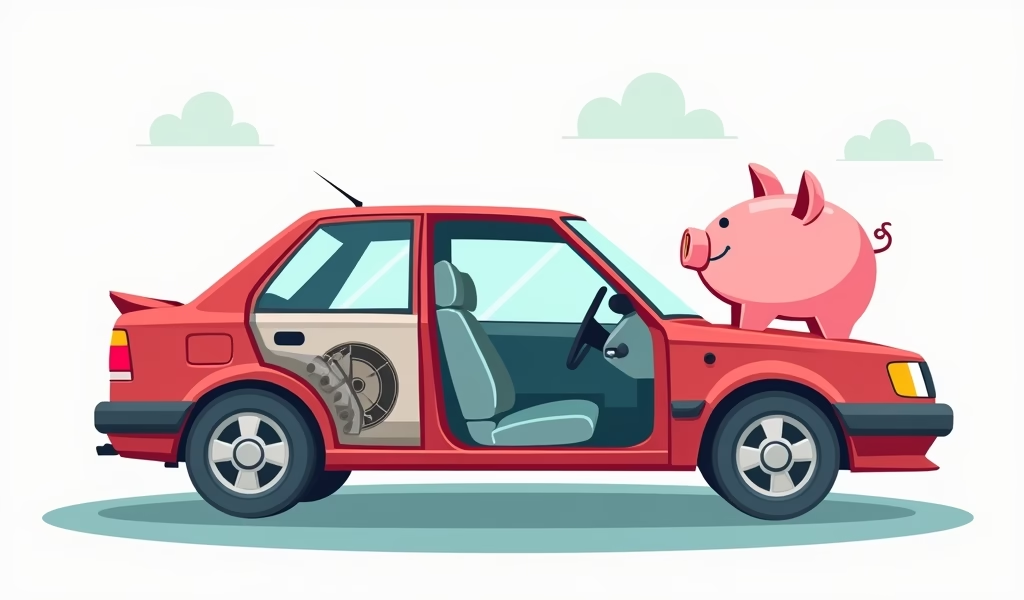
Like finding a shoe worn down only on one side, uneven brake wear signals underlying issues that can transform a $30 oil change into a $450 emergency repair when ignored. This comprehensive guide examines the seven primary causes of uneven brake wear—from stuck calipers to poor driving habits—while offering practical DIY inspection tips and preventative maintenance strategies that can save drivers thousands in long-term repair costs while ensuring optimal vehicle safety.
Table of Contents
- Understanding Uneven Brake Wear: A Mechanic’s Perspective
- Signs and Symptoms of Uneven Brake Wear
- 7 Common Causes of Uneven Brake Wear
- Cost Implications: Why Early Detection Matters
- Prevention Tips: Keeping Your Brakes Wearing Evenly
- DIY Inspection vs. Professional Service
- Conclusion: Saving Money Through Proactive Brake Care
- Frequently Asked Questions
Understanding Uneven Brake Wear: A Mechanic’s Perspective
When I see a customer’s vehicle roll into my bay with uneven brake wear, I immediately know they’re about to face an unexpected expense. It’s a common issue I encounter daily, yet most drivers remain unaware until it’s too late.
Uneven brake wear occurs when your brake pads don’t wear down at the same rate across all wheels or even across a single brake pad. This seemingly minor issue can lead to significant safety concerns and costly repairs if left unchecked.
Let me paint you a picture: Last week, Sarah came in for a routine oil change. During my standard courtesy inspection, I noticed her driver-side front brake pad was worn to less than 2mm, while the passenger side still had about 6mm remaining. What should have been a $30 oil change suddenly became a $450 brake job. Had she caught this issue earlier, a simple caliper service might have solved the problem for under $100.
Your vehicle’s braking system works on a straightforward principle – hydraulic pressure forces brake pads against rotors, creating friction that slows your car. Under normal conditions, this wear should be relatively even across all components. When it’s not, something in this system isn’t functioning correctly.
Understanding what causes uneven brake wear doesn’t just save you money – it’s essential for your safety on the road. According to the National Highway Traffic Safety Administration, brake-related issues contribute to approximately 22% of accidents caused by vehicle failures. That’s why I’m passionate about helping drivers identify and address these issues early.
Signs and Symptoms of Uneven Brake Wear
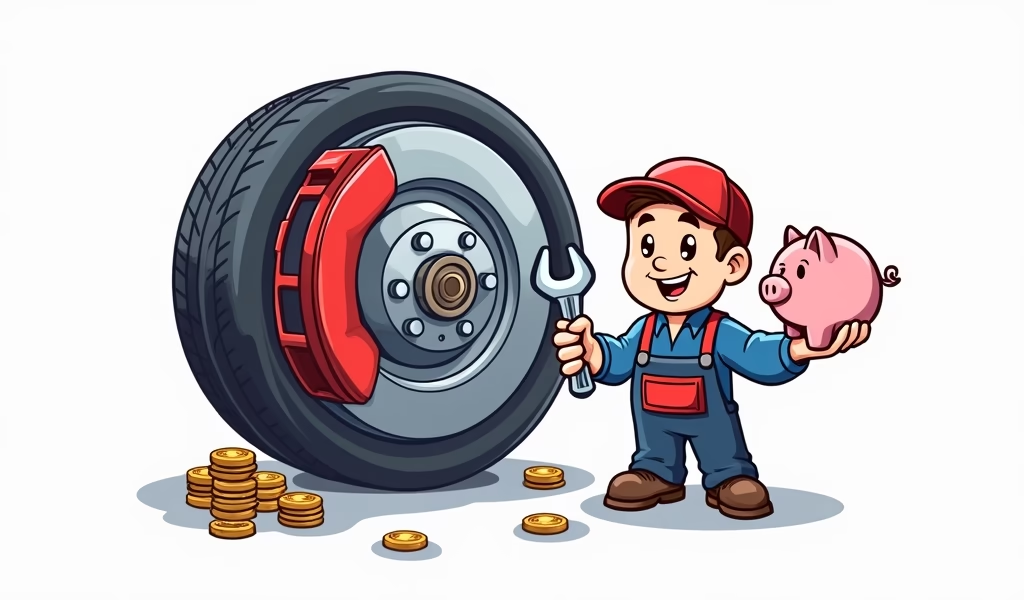
Your vehicle typically gives several warning signs when brakes are wearing unevenly. Recognizing these early can save you hundreds in repair costs and prevent dangerous driving situations.
The most obvious symptom is a pulling sensation when braking. If your vehicle drifts to one side during braking, it’s often because one side has more stopping power than the other. This imbalance creates uneven forces that literally pull your car in the direction of the stronger brake.
Strange noises are another telltale indicator. Squealing or grinding sounds during braking – especially if they occur only when turning in one direction – often signal uneven pad wear. These sounds happen when the wear indicator (a small metal tab) contacts the rotor or when you’ve worn completely through the pad material.
Visual clues can also help you spot trouble before it escalates. Look through your wheel spokes at the brake pads – they should have similar thickness on all wheels. Uneven brake dust accumulation is another hint; significantly more dust on one wheel compared to its counterpart on the other side suggests uneven application.
Pay attention to how your brake pedal feels under your foot. A pulsating or vibrating brake pedal typically indicates warped rotors, which often result from and contribute to uneven pad wear. This sensation occurs as the pad contacts the high and low spots on the warped rotor surface.
If you notice your vehicle requiring more regular maintenance than usual, uneven brake wear might be the culprit. This is especially true if you find yourself needing more frequent brake service than the typical 30,000-50,000 mile interval that quality brake components should last.
7 Common Causes of Uneven Brake Wear
After inspecting thousands of brake systems over my career, I’ve identified seven primary culprits behind uneven brake wear. Understanding these can help you prevent problems before they start.
1. Stuck or Seized Calipers
The most common cause I see in my shop is caliper issues. Your brake caliper houses pistons that press the brake pads against the rotor. When a caliper seizes or sticks, it may not release properly when you take your foot off the brake pedal. This causes constant contact between the pad and rotor, rapidly wearing down the affected pad.
Caliper issues typically stem from corrosion or moisture contamination in the brake fluid. Rubber seals within the caliper can deteriorate over time, allowing the piston to bind or move unevenly. According to data from the Auto Care Association, approximately 35% of vehicles over six years old have at least one partially seized caliper.
2. Faulty Caliper Slide Pins
Many brake calipers use slide pins that allow the caliper to “float” and apply even pressure to both sides of the rotor. When these pins become corroded or aren’t properly lubricated, the caliper can’t move freely. This results in one pad making more contact than the other, creating tapered wear where the pad wears unevenly from one end to the other.
3. Warped Brake Rotors
Rotors can warp from excessive heat (like riding your brakes down a mountain) or improper torquing of lug nuts. A warped rotor doesn’t provide a flat surface for the pad to contact, creating high spots that wear pads unevenly. This condition often manifests as a pulsating brake pedal and can cause pads to wear in patterns matching the rotor’s high spots.
4. Suspension Component Issues
Worn wheel bearings, control arm bushings, or ball joints can cause wheels to move out of their proper alignment relative to the brake components. This misalignment forces brake pads to contact rotors at awkward angles, creating uneven wear patterns. I often find suspension problems when investigating brake issues, as the two systems are intimately connected.
5. Brake Hardware Problems
The small clips, shims, and hardware that hold your brake pads in place play a crucial role in ensuring proper pad movement and positioning. When these components rust, break, or become bent, they can prevent pads from retracting properly or cause them to sit at an angle against the rotor. I always replace hardware when doing brake jobs – it’s inexpensive insurance against future problems.
6. Low-Quality or Mismatched Brake Components
Using different brake pad materials on the same axle or installing low-quality components can lead to inconsistent performance and wear. Quality pads from reputable manufacturers are formulated for even wear characteristics, while bargain options often lack the engineering to perform consistently under various conditions.
7. Driving Habits and Conditions
Your driving style significantly impacts brake wear. Frequent aggressive stops from high speeds generate extreme heat that can glaze pads and warp rotors. Similarly, driving in mountainous areas puts additional stress on brake components. Even carrying heavy loads primarily on one side of your vehicle can contribute to uneven wear over time.
Cost Implications: Why Early Detection Matters
Early detection of uneven brake wear isn’t just about safety – it’s a significant money-saver. Let me break down the typical costs you’re looking at depending on when you address the issue.
When caught early, uneven brake wear often requires only minor intervention. A caliper service including cleaning and lubricating slide pins typically costs $75-125 per caliper. Add a brake fluid flush for about $100, and you’re looking at under $250 to prevent major problems.
Wait too long, and the costs escalate quickly. A complete front brake job with new rotors, pads, and calipers runs $450-700 for most vehicles. If the issue has persisted long enough to damage rotors beyond machining tolerance, you’re adding another $150-300 to that bill.
The true cost difference becomes apparent over your vehicle’s lifetime. Consider this comparison for a vehicle you’ll own for 10 years:
- Proactive maintenance: $600-800 in preventative services
- Reactive repairs: $1,800-2,500 in major brake component replacements
That’s a difference of over $1,500 – not including the secondary costs like towing fees if you experience brake failure or lost time from unexpected repairs. Most drivers don’t realize that many common brake issues are preventable with regular inspections and maintenance.
Beyond direct repair costs, there’s also the matter of fuel economy. A dragging brake pad from a stuck caliper forces your engine to work harder, potentially reducing fuel economy by 1-2 MPG. For a vehicle driven 15,000 miles annually, that’s an extra $100-200 in fuel costs each year.
Even more costly is when uneven brake wear leads to a safety issue. A vehicle that pulls during braking or has compromised stopping power puts you at higher risk for accidents. The average collision deductible is $500, not including potential increases in insurance premiums following an accident.
Prevention Tips: Keeping Your Brakes Wearing Evenly
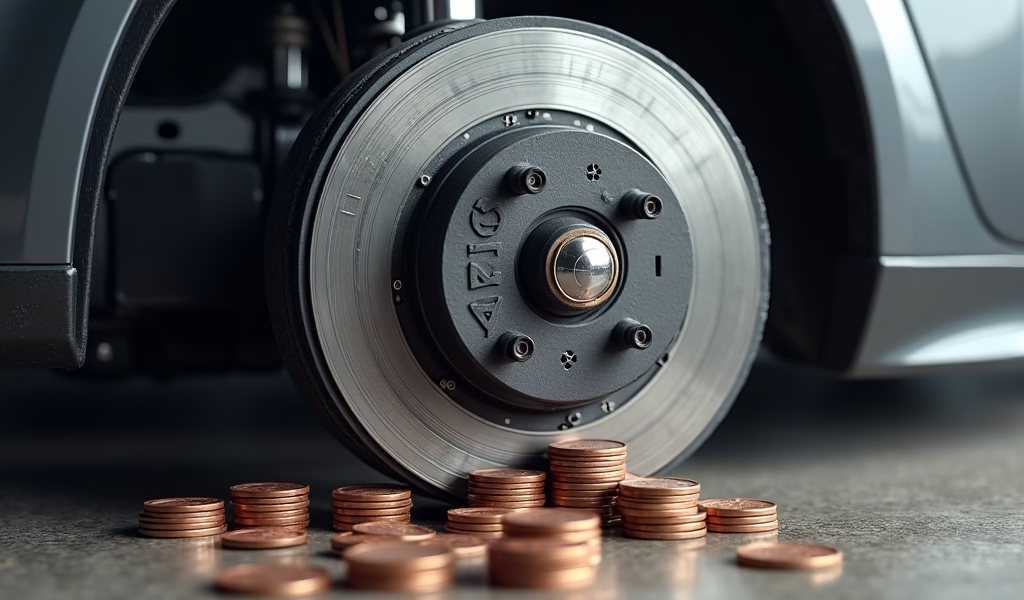
Preventing uneven brake wear doesn’t require advanced mechanical knowledge – just some consistency and attention to detail. Here are my top recommendations based on decades in the service bay:
Regular Brake Inspections
Have your brakes visually inspected with every oil change. This quick check takes minutes but can catch developing issues before they become expensive problems. A good technician will look for uneven pad wear, check for proper caliper movement, and examine rotors for scoring or warping.
Make it a habit to check your car maintenance checklist regularly, which should include brake inspection as a key component. This simple routine has saved my customers thousands over the years.
Maintain Clean, Fresh Brake Fluid
Brake fluid is hygroscopic – it absorbs moisture from the air. This moisture promotes internal corrosion and can cause caliper pistons to stick. Have your brake fluid flushed every 2-3 years or 30,000 miles, regardless of mileage. This service costs around $100 but prevents the most common cause of uneven brake wear.
You can check your brake fluid condition yourself by removing the master cylinder cap and looking at the fluid color. Fresh brake fluid is typically amber-colored and clear. If it’s dark brown or black, it’s time for a flush. NHTSA recommends regular brake fluid maintenance as a key safety practice.
Address Minor Issues Immediately
When you notice the first signs of uneven braking – whether it’s a slight pull when stopping or an occasional squeak – don’t wait. These minor symptoms rarely resolve themselves and almost always worsen over time. A $100 repair today often prevents a $500 repair next month.
Invest in Quality Parts
When replacement becomes necessary, don’t cut corners on brake components. Premium brake pads typically cost 30-50% more than economy options but last significantly longer and wear more predictably. The same goes for rotors and calipers – quality components from reputable manufacturers provide better performance and longevity.
According to research from the Insurance Institute for Highway Safety, vehicles with properly maintained braking systems have significantly lower rates of rear-end collisions – the most common type of vehicle accident.
Adjust Driving Habits
Your driving style directly impacts brake wear. Practice these habits to promote even wear:
- Avoid “riding” the brakes – keep your foot completely off the brake pedal when not actively slowing
- Use engine braking by downshifting when approaching stops
- Maintain proper following distance to avoid panic stops
- Distribute heavy loads evenly throughout your vehicle
DIY Inspection vs. Professional Service
While some brake maintenance requires professional tools and expertise, there’s plenty you can do yourself to monitor brake condition and catch uneven wear early.
What You Can Check at Home
Even without mechanical experience, you can perform basic brake inspections that catch many common issues:
- Visually inspect brake pads through wheel spokes using a flashlight
- Compare brake dust accumulation between wheels (should be relatively equal)
- Check for fluid leaks around wheels and brake lines
- Listen for unusual sounds during braking
- Pay attention to how the vehicle behaves during braking
For a more thorough inspection, you can remove the wheels if you’re comfortable doing so. This gives you a clear view of pad thickness, rotor condition, and caliper operation. Just ensure you’re using proper jack stands and safety equipment.
When to Call a Professional
Some brake issues require professional diagnosis and repair:
- Hydraulic system problems (soft pedal, leaks, fluid replacement)
- Caliper rebuilding or replacement
- Rotor resurfacing or replacement
- ABS system diagnostics
- When you notice significant pulling during braking
If you’re not confident in your mechanical abilities, don’t risk it with brakes. The safety implications are too significant. Most professional shops offer free brake inspections, making it easy to get expert eyes on your system.
Finding a Trustworthy Mechanic
Not all brake services are created equal. When seeking professional help, look for:
- ASE-certified technicians specializing in brake systems
- Shops that offer detailed inspections with photos or video
- Mechanics who explain issues rather than just presenting a bill
- Facilities that stand behind their work with warranties
A good brake technician won’t just replace parts – they’ll identify and address the underlying cause of uneven wear. This might mean spending more initially but saves substantially in the long run.
Conclusion: Saving Money Through Proactive Brake Care
Understanding what causes uneven brake wear puts you in control of your vehicle’s maintenance costs and safety. The difference between proactive and reactive brake care can amount to thousands of dollars over your vehicle’s lifetime.
Remember the key principles we’ve covered: regular inspections catch problems early, quality fluid maintenance prevents the most common causes of uneven wear, and addressing minor symptoms promptly prevents them from becoming major expenses.
Your brakes are arguably your vehicle’s most important safety system. Treating them with the attention they deserve isn’t just financially smart – it’s essential for protecting yourself and others on the road.
The next time you hear a squeak or feel a slight pull during braking, don’t tune it out. These early warning signs are your vehicle’s way of telling you something’s wrong before it becomes dangerous or expensive. A little attention today prevents big problems tomorrow.
Take action now by scheduling a brake inspection if it’s been more than six months since your last one. Your wallet – and possibly your safety – will thank you for it.
Frequently Asked Questions
What’s the most common cause of uneven brake wear?
Stuck caliper slide pins are the most frequent culprit. These components become corroded or lack proper lubrication, preventing the caliper from moving freely and causing one side of the brake pad to wear faster than the other.
How often should I check for uneven brake wear?
Inspect your brakes visually during each oil change (typically every 5,000-7,500 miles). Listen for unusual noises and pay attention to how your vehicle behaves during braking between inspections.
Can I drive with uneven brake pads?
It’s not recommended as it compromises your vehicle’s stopping ability and safety. Uneven brake wear can cause pulling to one side during braking and extend stopping distances, creating dangerous driving conditions.
Why do my front brakes wear faster than my rear brakes?
Front brakes handle approximately 70% of your vehicle’s stopping power due to weight transfer during braking. This normal condition causes front brakes to wear roughly twice as fast as rear brakes in most vehicles.
How much does it cost to fix uneven brake wear?
Costs vary based on the underlying cause and how early you catch the issue. Early intervention might cost $100-250 for caliper service and lubrication, while advanced problems requiring complete component replacement can run $450-700 per axle.