
Overview
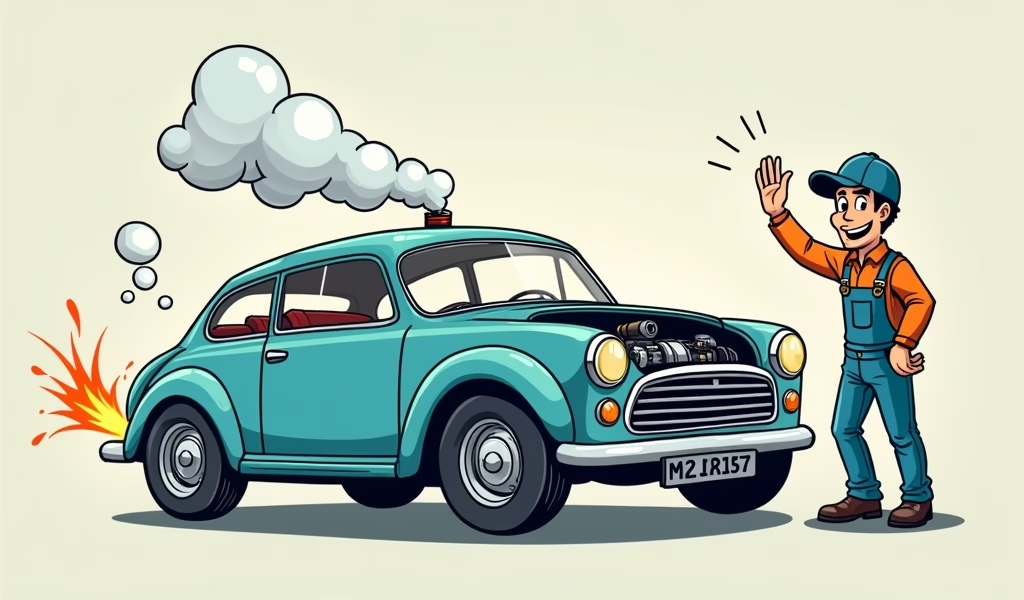
That alarming pop from your exhaust isn’t just embarrassing—it typically occurs when unburned fuel ignites in your exhaust system and signals potential issues ranging from simple spark plug replacements to serious engine problems. Understanding the seven main causes—from improper air-fuel mixtures to catalytic converter failures—can help you address the issue quickly, potentially saving thousands in repair costs and preventing more severe damage to your vehicle.
Table of Contents
- What Causes Exhaust Popping? The Complete Breakdown
- Understanding Your Exhaust System
- Common Symptoms of Exhaust Popping Issues
- 7 Main Causes of Exhaust Popping Noises
- How to Diagnose Exhaust Popping Problems
- Fixing Exhaust Popping: DIY vs. Professional Repairs
- Preventing Exhaust Popping Issues
- Cost Considerations for Exhaust Repairs
- Conclusion
- Frequently Asked Questions
What Causes Exhaust Popping? The Complete Breakdown
That startling “pop” or “bang” coming from your exhaust isn’t just embarrassing—it could be signaling serious issues under the hood. After 20 years in the shop, I’ve seen countless drivers ignore these warning sounds until they’re facing repair bills in the thousands.
Exhaust popping happens when unburned fuel makes its way into your exhaust system and ignites there instead of in the combustion chamber where it belongs. Think of it as miniature explosions happening where they shouldn’t.
While some performance enthusiasts actually modify their vehicles to create this effect (known as “burbles” or “crackles”), for most drivers, it’s an unwelcome surprise that signals something’s off with your engine’s combustion process or exhaust system.
In this guide, we’ll walk through everything from the simple fixes that might cost you under $20 to the more serious issues that could leave you stranded. Catching these problems early can mean the difference between a minor repair and an engine rebuild—I’ve seen it happen too many times to count.
Understanding Your Exhaust System
Before diving into what’s causing that annoying pop, let’s get familiar with what your exhaust system actually does. It’s more than just a pipe to direct fumes away from your car.
Your exhaust system starts at the engine’s cylinder head with the exhaust manifold, which collects exhaust gases from each cylinder. From there, gases flow through oxygen sensors, the catalytic converter (which reduces harmful emissions), the resonator (which fine-tunes the exhaust note), and finally through the muffler before exiting the tailpipe.
This system serves three critical functions: it reduces harmful emissions, controls noise levels, and—perhaps most importantly for performance—helps evacuate spent gases to improve engine efficiency. When working properly, your exhaust system enhances performance while keeping noise and pollution in check.
A healthy exhaust doesn’t just keep you legal and environmentally friendly—it directly impacts your fuel economy and engine longevity. According to EPA research, a properly functioning exhaust system is essential for maintaining optimal fuel efficiency and reducing your vehicle’s carbon footprint.
Common Symptoms of Exhaust Popping Issues
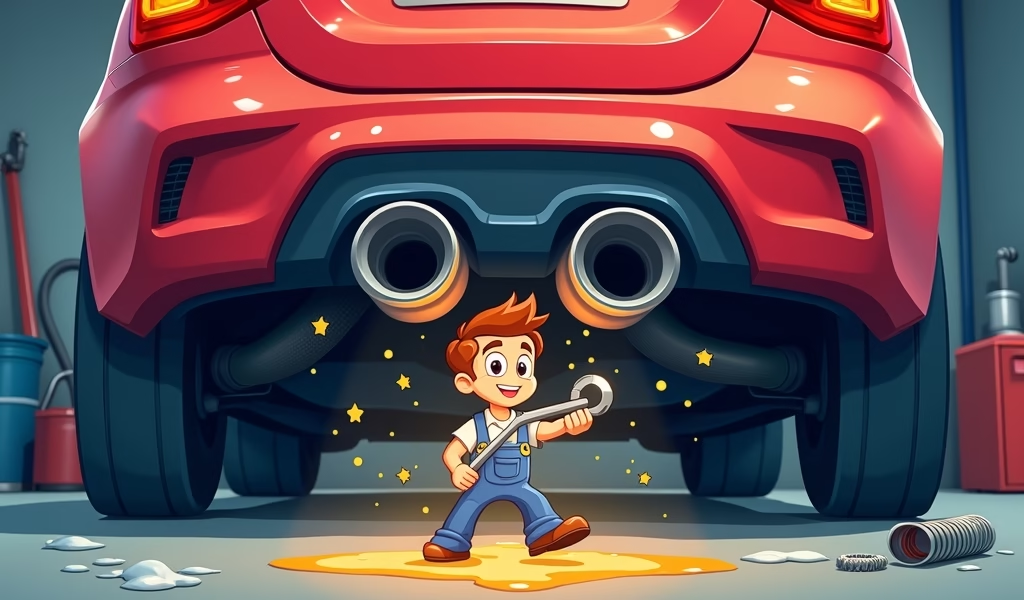
Exhaust popping rarely happens in isolation. Here are the telltale signs that usually accompany this problem:
- Loud banging sounds during deceleration
- Popping noises when you let off the gas
- Black smoke from the tailpipe (indicating unburned fuel)
- Check engine light illumination
- Decreased fuel economy
- Loss of power during acceleration
- Rough idling or stalling
The timing of these pops can tell you a lot about what’s causing them. Popping during acceleration often points to ignition system issues, while popping during deceleration frequently indicates a rich fuel mixture or vacuum leak.
I once had a customer ignore occasional pops for months—by the time he came in, his catalytic converter had melted internally from the constant mini-explosions, turning a $150 spark plug repair into a $1,200 job. Don’t make that mistake.
7 Main Causes of Exhaust Popping Noises
1. Improper Air-Fuel Mixture
The most common cause I see is an improper air-fuel ratio—either too rich (excess fuel) or too lean (excess air). Your engine is designed to operate with a specific mixture, typically around 14.7:1 air-to-fuel for gasoline engines. When this balance is off, unburned fuel can enter the exhaust system and ignite there.
Running rich often results from faulty oxygen sensors, dirty air filters, or fuel pressure problems. Running lean usually comes from vacuum leaks, clogged fuel injectors, or failing fuel pumps. Both conditions create that characteristic popping sound and can damage expensive components if left unchecked.
2. Ignition System Issues
Your spark plugs need to fire at precisely the right moment with adequate spark energy. When they don’t—due to wear, improper gap, or carbon fouling—combustion becomes incomplete. Worn plugs, damaged ignition coils, failing spark plug wires, or a malfunctioning distributor can all lead to misfires that cause exhaust popping.
These regular maintenance items are often overlooked until they cause problems. I’ve seen spark plugs worn down to nubs still in engines where the owner complained about poor performance for months!
3. Exhaust Leaks
Small cracks or holes in your exhaust manifold, pipes, or at connection points can cause two problems. First, they allow oxygen to enter the hot exhaust stream, which can ignite any unburned fuel. Second, they create pathways for exhaust gases to escape before reaching the catalytic converter or muffler.
Leaks near the manifold are particularly prone to creating popping sounds. They’re also potentially dangerous as they can allow carbon monoxide to enter the vehicle cabin.
4. Valve Timing Issues
Modern engines rely on precisely timed valve operation. When valve timing is off—due to a stretched timing chain, jumped timing belt, or worn variable valve timing components—the exhaust valves may open at the wrong time. This disrupts the combustion cycle and can lead to popping and backfires.
This issue usually requires professional diagnosis, as timing problems can mimic other issues and potentially cause serious engine damage if not corrected.
5. Aftermarket Modifications
Performance enthusiasts often install aftermarket modifications like cat-back exhausts, headers, or performance chips. Without proper tuning, these modifications can drastically alter your air-fuel mixture or timing, leading to those distinctive pops.
While some tuners deliberately program in a popping exhaust note (particularly on European sports cars), unintentional popping usually indicates the engine hasn’t been properly calibrated for the new components.
6. Catalytic Converter Issues
Your catalytic converter contains precious metals that complete the oxidation of unburned hydrocarbons. When the converter begins to fail or becomes clogged, it can’t properly process these compounds, resulting in popping noises.
In severe cases, internal damage to the catalyst substrate creates inconsistent exhaust flow that promotes backfiring. Replacing a damaged converter isn’t cheap—typically $500-1,500 depending on your vehicle—but ignoring the problem can lead to even costlier engine damage.
7. ECU/Engine Management Problems
Modern vehicles rely heavily on their Engine Control Unit (ECU) to precisely manage fuel injection, ignition timing, and other critical functions. Software glitches, sensor failures, or wiring problems can cause the ECU to make incorrect adjustments that result in popping.
Sometimes simply disconnecting your battery for 10-15 minutes can reset adaptive learning parameters and temporarily resolve minor issues, but persistent problems usually require professional diagnosis.
How to Diagnose Exhaust Popping Problems
Before throwing parts at the problem, let’s narrow down the likely causes:
DIY Diagnostic Steps
- Listen carefully to when the popping occurs (acceleration, deceleration, idle)
- Check for visible exhaust leaks or damage
- Inspect spark plugs for wear, fouling, or improper gap
- Examine air filter for excessive dirt
- Check for disconnected vacuum hoses or intake leaks
- Use an OBD-II scanner to check for error codes (even without a check engine light, there may be pending codes)
If you have access to basic tools, you can perform a simple vacuum test. With the engine at operating temperature and idling, connect a vacuum gauge to a vacuum port on the intake manifold. A steady reading between 17-21 inches of mercury is normal. Fluctuating readings suggest vacuum leaks or valve issues.
When to Seek Professional Help
Some issues require specialized equipment to diagnose properly:
- Fuel system pressure testing
- Compression and leak-down testing
- Exhaust gas analysis
- Oscilloscope testing of ignition components
- Advanced ECU diagnostics
Don’t hesitate to consult a professional if your DIY diagnosis doesn’t yield clear results. According to AAA research, addressing minor performance issues early can prevent an average of $1,200 in related repair costs down the road.
Fixing Exhaust Popping: DIY vs. Professional Repairs
Once you’ve identified the likely cause, it’s time to fix it. Here’s what you can tackle yourself versus what’s best left to the pros:
DIY-Friendly Fixes
- Replacing spark plugs and wires
- Changing air and fuel filters
- Cleaning mass airflow sensors (with proper cleaner only)
- Sealing minor exhaust leaks with heat-resistant exhaust tape or paste
- Reconnecting loose vacuum hoses
- Resetting the ECU (by disconnecting battery)
I always recommend referring to your vehicle’s service manual before attempting repairs. A $20 manual can save you hundreds in mistakes. Also, remember that modern vehicles have sensitive electronics—always disconnect the negative battery terminal before working on electrical components.
Professional Repairs
Some jobs require specialized tools or expertise:
- Fuel injection system repairs
- Catalytic converter replacement
- Major exhaust system work (welding or complete replacement)
- Valve timing adjustments
- ECU programming or reflashing
For these more complex issues, finding a reputable shop with experience in your specific make and model is crucial. Don’t be shy about asking for credentials, experience, and warranties on work performed.
Preventing Exhaust Popping Issues
An ounce of prevention is worth a pound of cure—especially with exhaust systems. Here’s how to avoid problems in the first place:
- Follow your manufacturer’s maintenance schedule for spark plug replacement
- Use fuel with the recommended octane rating
- Add fuel system cleaner occasionally (every 3-6 months)
- Replace air filters regularly
- Address check engine lights promptly
- Allow your engine to warm up before hard acceleration (especially in cold weather)
- If you modify your vehicle, invest in proper tuning
I’ve seen too many cars come in with catastrophic damage that could have been prevented with basic maintenance. That $30 tune-up you’ve been putting off could save you hundreds or even thousands down the road.
Paying attention to how your car sounds and responds is your first line of defense. Engines rarely fail without warning—they usually complain audibly first through noises like exhaust popping. Listen to what your car is telling you!
Cost Considerations for Exhaust Repairs
What should you expect to pay to fix exhaust popping? Here’s a realistic breakdown:
Common Repair Costs
- Spark plugs and wires: $50-200 DIY, $150-400 professional
- Oxygen sensors: $20-100 per sensor DIY, $150-300 professional
- Exhaust patching: $10-30 DIY, $100-300 professional
- Catalytic converter: $600-2,500 installed (higher for luxury vehicles)
- Complete exhaust system replacement: $300-1,200 depending on vehicle
- ECU diagnostics and reprogramming: $75-300
Labor rates vary significantly by region and shop type. Dealerships typically charge $100-150 per hour, while independent shops average $75-120. Specialty performance shops may charge even more.
When getting quotes, always ask what parts are being used (OEM vs. aftermarket) and what warranty is offered. A slightly higher upfront cost for quality parts often saves money in the long run.
Conclusion
That popping noise from your exhaust isn’t just an annoyance—it’s your vehicle crying out for attention. From simple fixes like replacing worn spark plugs to more complex issues involving your catalytic converter or engine management system, addressing the problem promptly can save you from expensive repairs down the road.
Remember that modern vehicles are sophisticated machines with interconnected systems. What starts as a minor issue with your air-fuel mixture can quickly escalate to catalytic converter damage if ignored. By understanding the common causes and warning signs of exhaust popping, you’re better equipped to communicate with your mechanic or tackle appropriate DIY repairs.
After two decades working on everything from classic carbureted engines to modern direct-injection powerplants, I’ve learned one universal truth: cars don’t fix themselves. That popping noise won’t go away on its own, and it will almost certainly get worse—and more expensive—with time.
Take care of your vehicle, listen to what it’s telling you, and don’t hesitate to seek professional help when needed. Your car (and your wallet) will thank you.
Frequently Asked Questions
Is it normal for my car to pop occasionally when I let off the gas?
Some moderate popping during deceleration can be normal, especially in performance or sports cars with factory tuning that creates this effect. However, frequent or loud popping is typically a sign of an underlying issue that should be addressed.
Can exhaust popping damage my catalytic converter?
Yes, persistent exhaust popping can damage your catalytic converter by repeatedly exposing it to mini-explosions of unburned fuel. This can cause the internal honeycomb structure to overheat, melt, or crack, requiring expensive replacement.
Will using higher octane gas fix my exhaust popping?
Higher octane fuel might reduce popping if your engine is experiencing pre-ignition or knock, but it rarely solves the underlying issue completely. It’s better to diagnose and fix the root cause rather than mask symptoms with premium fuel.
Why does my exhaust pop more in cold weather?
Engines typically run richer (more fuel) during cold starts to help with combustion, which can increase popping. Cold temperatures also cause metal components to contract, potentially creating or worsening exhaust leaks.
How much does it typically cost to fix exhaust popping?
Repair costs range from as little as $50 for DIY spark plug replacement to over $1,500 for catalytic converter replacement at a shop. The average repair falls between $200-600 depending on the root cause.