
Overview
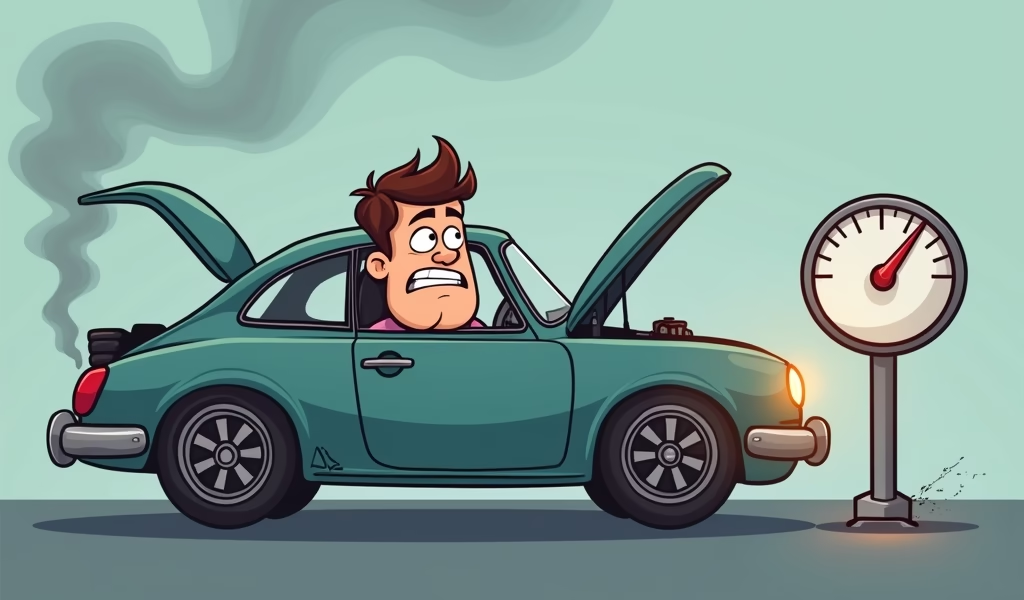
Like an engine with an elevated heartbeat, a high idle (above 1000 RPM when warmed up) signals underlying issues ranging from vacuum leaks and dirty throttle bodies to faulty sensors that should be addressed promptly. This guide walks readers through normal idle ranges, seven common causes of high RPM problems, step-by-step diagnostic approaches, DIY fixes for simple issues, and when professional help becomes necessary—ultimately helping drivers save money and prevent more serious engine damage.
Table of Contents
- Understanding Idle RPM: What’s Normal?
- Signs You Have a High Idle Problem
- 7 Common Causes of High RPM at Idle
- How to Diagnose High Idle Issues
- DIY Fixes for Common High Idle Problems
- When to Seek Professional Repairs
- Preventing Future High Idle Problems
- Conclusion
- Frequently Asked Questions
Understanding Idle RPM: What’s Normal?
Let me tell you something about engines – they’re a lot like people. They have a resting heart rate, and when that rate gets too high without good reason, it’s usually a sign something’s not quite right.
For most modern cars, normal idle speed typically sits between 600-1000 RPM when your engine is warmed up. Smaller 4-cylinder engines might idle closer to the higher end of that range, while larger V6 or V8 engines often settle into the lower end.
Your car’s idle is controlled by the Engine Control Module (ECM), which is essentially the brain of your vehicle. This computer constantly adjusts the air and fuel mixture to maintain the perfect idle – not too high, not too low. Just right.
When you start your car on a cold morning, you’ll notice the idle is higher than normal – often around 1500 RPM. This is completely normal! The computer temporarily increases idle speed to help warm up the engine faster and ensure it runs smoothly during this warm-up phase. After a few minutes, you should notice the idle gradually decreases to its normal range.
But when your engine continues to run at high RPM even after warming up, that’s when you should pay attention. It’s not just annoying – it’s your car’s way of telling you something’s wrong.
Signs You Have a High Idle Problem
How do you know if your idle is actually too high? Here are the telltale signs that something’s not right:
- Your tachometer consistently shows above 1000 RPM when the car is fully warmed up
- The engine sounds louder than normal when sitting at a stoplight
- You feel excessive vibration through the steering wheel or seat at idle
- Your car jerks slightly when shifting from Park to Drive
- You notice decreased fuel economy (a racing engine burns more fuel)
- The Check Engine light is illuminated on your dashboard
If you’re experiencing any of these symptoms, don’t ignore them. A high idle is rarely just an annoyance – it’s usually a symptom of an underlying issue that could lead to more serious problems down the road.
Let me be straight with you: addressing high idle problems early can save you hundreds, if not thousands, in repair costs. What might be a simple vacuum hose replacement today could turn into a catalytic converter replacement in a few months if left unchecked.

7 Common Causes of High RPM at Idle
In my 20+ years working on vehicles, I’ve seen high idle problems caused by numerous issues. Here are the most common culprits I encounter in my shop:
1. Vacuum Leaks
Vacuum leaks are probably the most common cause of high idle issues I see. Your engine operates with a delicate balance of air and fuel, and any unmetered air entering the system throws off this balance.
Think of your engine’s air intake system as a network of straws that should only let air in at specific, controlled points. When one of these “straws” develops a crack or comes loose, air sneaks in where it shouldn’t. Your engine’s computer detects this extra air and tries to compensate by adding more fuel, resulting in higher RPMs.
Common vacuum leak locations include:
- Cracked vacuum hoses (especially those brittle with age)
- Loose or damaged intake manifold gaskets
- Faulty brake booster connections
- PCV (Positive Crankcase Ventilation) system leaks
- Deteriorated throttle body gaskets
2. Faulty Idle Air Control Valve
The Idle Air Control (IAC) valve is like the bouncer controlling how much air gets into your engine when the throttle plate is closed. When you take your foot off the gas pedal, the throttle plate closes, and the IAC valve ensures just enough air passes through to keep the engine running at the proper idle speed.
If the IAC valve sticks open or becomes gummed up with carbon deposits, too much air enters the engine, causing the idle speed to increase. The computer tries to maintain the correct idle, but with a faulty IAC valve, it can’t regulate properly.
Using a quality engine diagnostic app can help identify problems with your IAC valve before they become serious.
3. Carbon Buildup on the Throttle Body
Over time, carbon deposits from fuel vapor and oil can accumulate inside your throttle body, particularly around the throttle plate. These deposits can prevent the throttle plate from closing completely when you take your foot off the gas pedal.
When the throttle plate can’t fully close, excess air flows into the engine, causing a high idle. Think of it like trying to turn off a garden hose with a stiff or dirty valve – you can’t quite get it to shut off completely, and water keeps flowing.
This issue is especially common in modern direct-injection engines, which tend to develop carbon buildup more quickly than older fuel-injected systems.
4. Faulty Mass Airflow Sensor (MAF)
The Mass Airflow Sensor measures how much air is entering your engine. This critical information helps your car’s computer determine exactly how much fuel to inject for optimal combustion.
When the MAF sensor gets dirty or fails, it may send incorrect readings to the computer. If it underreports the actual airflow, the computer may compensate by increasing idle speed to get what it thinks is adequate air into the engine. It’s like your car is constantly trying to correct a problem that doesn’t actually exist.
A failing MAF sensor often causes erratic idle behavior, not just consistently high idle. You might notice the idle fluctuating up and down or changing dramatically when you turn on accessories like your air conditioner.
5. Defective Coolant Temperature Sensor
Your engine’s idle speed is partially determined by its temperature. When cold, the engine needs a higher idle to run smoothly. As it warms up, the idle speed gradually decreases.
If the coolant temperature sensor fails or sends incorrect readings to the computer, your car might think the engine is colder than it actually is. As a result, it maintains a high “cold start” idle speed even when the engine is fully warmed up.
This problem is more common in older vehicles but can still occur in newer models. The most telling sign is when your temperature gauge shows normal operating temperature, but your engine continues to idle high as if it were cold.
6. EGR Valve Issues
The Exhaust Gas Recirculation (EGR) valve helps reduce emissions by routing a portion of exhaust gases back into the combustion chamber. When this valve gets stuck open or develops carbon buildup, it can cause irregular airflow that results in a high idle.
A stuck EGR valve often causes other symptoms alongside high idle, including rough running, hesitation during acceleration, and even stalling. In some vehicles, a problematic EGR valve triggers the Check Engine light with specific error codes that point directly to this component.
7. Throttle Position Sensor Problems
The Throttle Position Sensor (TPS) tells your car’s computer exactly how far open the throttle plate is. When this sensor malfunctions, it might incorrectly report that you’re pressing the gas pedal when you’re not.
A faulty throttle position sensor can cause all sorts of driveability issues, including high idle, hesitation, and surging. Unlike some other problems that cause consistent high idle, TPS issues often result in an idle that fluctuates unpredictably.
How to Diagnose High Idle Issues
Before you start throwing parts at your car hoping to fix that high idle, let’s talk about how to properly diagnose the problem. A systematic approach will save you time and money in the long run.
Start with the basics: Get yourself a quality OBD-II scanner. Even an inexpensive one can read the error codes stored in your car’s computer. These codes won’t always point directly to the problem, but they provide valuable clues about where to look first.
Here’s a simple step-by-step approach I recommend to my customers:
- Visual Inspection: Start by checking for obvious issues like disconnected or cracked vacuum hoses. Pay special attention to hoses connected to the intake manifold, brake booster, and PCV system.
- Check for Vacuum Leaks: With the engine running, spray a light mist of carb cleaner around suspected leak areas. If the engine RPM changes when you spray a particular area, you’ve found a leak. (Be careful not to spray near hot components or open flames!)
- Inspect the Throttle Body: Remove the air intake duct and look at the throttle plate and surrounding areas. Heavy carbon deposits indicate a cleaning is needed.
- Test the IAC Valve: With the engine running and warm, gently tap the IAC valve with the handle of a screwdriver. If the idle changes significantly, the valve may be sticking.
- Check Sensor Readings: Using a car data monitor app or scanner with live data capabilities, check the readings from the MAF sensor, coolant temperature sensor, and TPS to see if they’re reporting reasonable values.
When diagnosing idle issues, remember that sometimes multiple problems can occur simultaneously. For example, a vacuum leak might have developed because a hose hardened due to excess engine heat from a separate cooling system issue.
DIY Fixes for Common High Idle Problems
Many high idle issues can be fixed right in your driveway with basic tools. Here are some DIY fixes for the most common problems:
Cleaning the Throttle Body
A dirty throttle body is one of the easiest problems to fix:
- Make sure the engine is cool before starting.
- Disconnect the negative battery terminal for safety.
- Remove the air intake duct to access the throttle body.
- Spray throttle body cleaner on a clean rag (not directly into the throttle body).
- Gently clean around the throttle plate and inside the throttle body housing.
- Be careful not to damage the throttle position sensor or push the throttle plate too forcefully.
- Reconnect everything and start the engine. It might run rough for a minute as it adapts.
This simple cleaning can often resolve high idle issues and improve overall performance. It’s a maintenance task I recommend doing every 30,000 miles or so.
Replacing Vacuum Hoses
If you’ve found cracked or damaged vacuum hoses:
- Purchase the correct diameter vacuum hose (usually 3/16″ or 1/4″ for most applications).
- Remove one hose at a time, cutting the new hose to the same length.
- Ensure the new hose is seated securely on both ends.
- Repeat for each damaged hose, working methodically to avoid confusion.
Vacuum hoses are inexpensive, but they play a crucial role in engine performance. Consider replacing all vacuum hoses if your vehicle is more than 10 years old, as rubber naturally deteriorates over time.
Cleaning the MAF Sensor
A dirty MAF sensor can cause all sorts of idle problems:
- Locate the MAF sensor (usually between the air filter box and throttle body).
- Disconnect the electrical connector and remove the sensor (typically secured by screws).
- Spray MAF sensor cleaner (not regular carburetor cleaner!) onto the sensing elements.
- Do not touch the sensitive wire elements inside the sensor.
- Allow the sensor to dry completely before reinstalling.
MAF sensor cleaning should be done carefully, as the sensing elements are delicate. If cleaning doesn’t resolve the issue, replacement may be necessary.
For many newer vehicles, improving car performance can be as simple as regularly cleaning sensors like the MAF to ensure they provide accurate readings to the computer.
When to Seek Professional Repairs
While many high idle issues can be addressed by a confident DIYer, some problems require professional attention. Here’s when to put down the wrench and pick up the phone to call your mechanic:
Computer-Related Issues
If your high idle problem stems from the Engine Control Module (ECM) or requires reprogramming, you’ll need professional help. These computer-related issues typically require specialized equipment and software that isn’t available to the average car owner.
Signs that you might have a computer issue include:
- Multiple systems malfunctioning simultaneously
- Problems that started after a battery replacement or electrical work
- Error codes that specifically reference the ECM or PCM
Internal Engine Problems
Sometimes high idle can be a symptom of more serious internal engine issues, such as intake manifold gasket failures or EGR passage problems. These repairs often require extensive disassembly and specialized tools.
According to Car and Driver research, major engine repairs can cost between $1,000 and $3,000 at professional shops, making accurate diagnosis crucial before proceeding.
If You’ve Tried Everything Else
If you’ve gone through all the DIY diagnostic steps and repairs without resolving the issue, it’s time to consult a professional. Sometimes, high idle problems can result from a combination of factors or an obscure issue that requires professional diagnostic equipment to identify.
A skilled mechanic can save you money in the long run by quickly pinpointing the exact cause of your high idle problem rather than having you replace parts unnecessarily through trial and error.
Preventing Future High Idle Problems
An ounce of prevention is worth a pound of cure, especially when it comes to your car’s engine. Here are some proactive steps you can take to prevent high idle issues from developing:
Regular Maintenance Schedule
Follow your vehicle manufacturer’s recommended maintenance schedule. This typically includes:
- Regular oil changes with the correct viscosity oil
- Air filter replacement (dirty air filters can affect airflow readings)
- Spark plug replacement at recommended intervals
- Fuel system cleaning to prevent injector clogging
Periodic Throttle Body Cleaning
Even if you’re not experiencing idle issues, cleaning your throttle body every 30,000 miles can prevent carbon buildup from affecting idle performance. It’s an easy, inexpensive maintenance task that can save you from bigger problems down the road.
Quality Fuel Matters
Using higher-quality fuel from reputable stations can reduce carbon deposits throughout your engine. Many top-tier gasoline brands include additional detergents that help keep your fuel system clean, protecting components like injectors and valves that can affect idle quality when dirty.
Address Check Engine Lights Promptly
When that dreaded Check Engine light illuminates, don’t ignore it! Many times, addressing these warning signs early can prevent them from developing into more serious issues that affect idle quality and overall performance.
The American Automobile Association reports that drivers who ignore check engine lights often end up spending hundreds more on repairs than those who address them promptly.
Conclusion
A high idle might seem like a minor annoyance, but it’s often your car’s way of waving a red flag that something needs attention. From vacuum leaks to dirty throttle bodies to faulty sensors, the causes are numerous but fortunately, many are relatively simple and inexpensive to fix – especially when caught early.
By understanding what causes high RPM at idle and knowing how to diagnose common problems, you’re already ahead of the game. Whether you decide to tackle the repairs yourself or seek professional help, addressing idle issues promptly can save you from costly breakdowns and extend the life of your engine.
Remember that your car’s idle is its resting heartbeat – when that heartbeat is racing for no reason, it’s time to play doctor. With the knowledge you’ve gained from this guide, you’re well-equipped to keep your engine purring contently at just the right speed.
Frequently Asked Questions
What is considered a high idle RPM?
For most passenger vehicles, anything consistently above 1000 RPM when the engine is fully warmed up is considered high. Normal idle speed typically ranges from 600-1000 RPM depending on the vehicle.
Can a bad oxygen sensor cause high idle?
Yes, a faulty oxygen sensor can cause high idle by sending incorrect air-fuel mixture data to your engine’s computer. This can trick the computer into adjusting the idle speed inappropriately.
Will a high idle cause damage to my engine?
Yes, prolonged high idle can cause increased wear on engine components and reduced fuel efficiency. It also typically indicates an underlying issue that could lead to more serious problems if left unaddressed.
How much does it typically cost to fix high idle problems?
Costs vary widely depending on the cause, from as little as $20 for DIY vacuum hose replacement to $500+ for professional MAF sensor or IAC valve replacement. Diagnostic fees at professional shops typically range from $80-150.
Is it safe to drive with high idle RPM?
You can usually drive safely with a high idle, but it’s not recommended for extended periods. The underlying issue could worsen and potentially leave you stranded if the problem progresses to affect other aspects of engine operation.