
Overview
That brick-wall feeling when you press your brake pedal isn’t just annoying—it’s your vehicle’s distress signal pointing to potential issues with the power brake booster, master cylinder, or hydraulic system that require prompt attention. The article provides a thorough breakdown of how your braking system works, common causes of hard brake pedals, warning signs to watch for, diagnostic steps you can take, guidance on DIY versus professional repairs, preventative maintenance tips, and expected repair costs to help you address the issue safely and effectively.
Table of Contents
- That Sinking Feeling: When Your Brake Pedal Turns Hard
- How Your Brakes Actually Work
- Common Causes of a Hard Brake Pedal
- Warning Signs You Shouldn’t Ignore
- Simple Diagnostic Steps You Can Take
- DIY vs. Professional Repairs: Know Your Limits
- Preventative Maintenance Tips
- What to Expect: Repair Costs Breakdown
- Conclusion
- Frequently Asked Questions
That Sinking Feeling: When Your Brake Pedal Turns Hard
We’ve all been there – that moment of confusion when you press your brake pedal and instead of the familiar, smooth resistance, your foot meets what feels like a brick wall. A hard brake pedal isn’t just annoying; it’s downright concerning when the system responsible for stopping your vehicle suddenly behaves differently.
A properly functioning brake pedal should feel firm but responsive, with a predictable amount of travel that lets you modulate stopping power with precision. When that feel changes, your confidence behind the wheel takes a hit – and for good reason. Your braking system is your vehicle’s most critical safety feature.
What causes hard brake pedal problems? In most cases, it’s related to issues with the power brake booster, master cylinder, or hydraulic system – but determining the exact culprit requires understanding how these systems work together. Left untreated, these problems not only compromise your safety but can lead to cascading failures and much more expensive repairs down the road.
How Your Brakes Actually Work
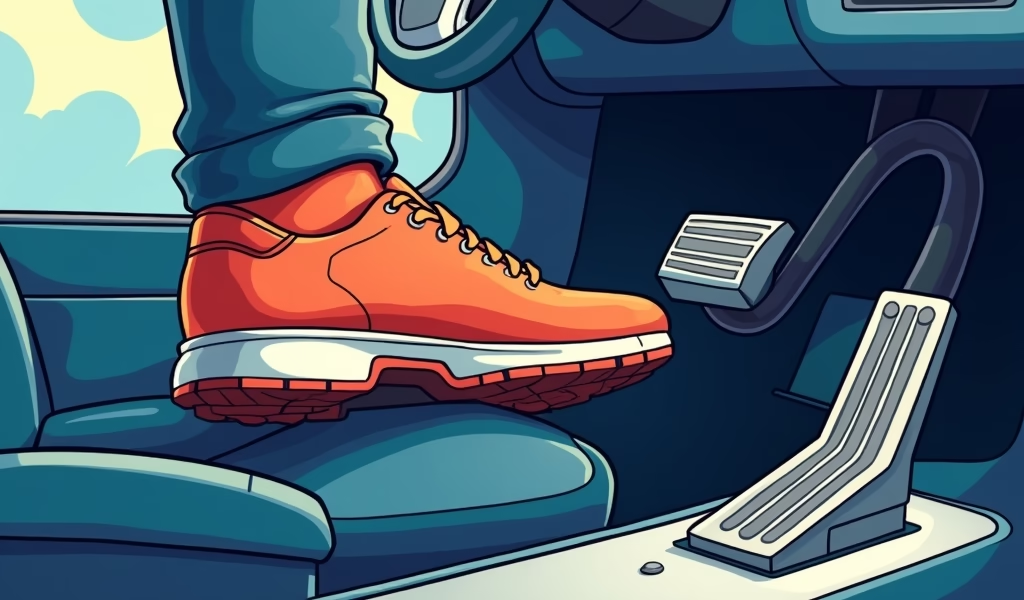
Before diving into what’s gone wrong, let’s talk about how your brakes function when everything’s right. Think of your brake system as a sophisticated force multiplier – it takes the modest pressure from your foot and amplifies it into enough force to stop a multi-ton vehicle.
The magic starts when you press the pedal. That physical movement activates the brake booster (sometimes called a power booster), which uses vacuum pressure from your engine to multiply the force you’re applying. Imagine trying to squeeze juice from an orange with your bare hand versus using a mechanical juicer – that’s the difference the booster makes.
This amplified force then pushes a piston in the master cylinder, which pressurizes brake fluid in the hydraulic system. The pressurized fluid travels through brake lines to your wheel cylinders or calipers, which convert this hydraulic pressure back into mechanical force that presses your brake pads against the rotors (or shoes against drums in older vehicles).
When all these components work in harmony, your brake pedal feels consistent and predictable. But when any part of this chain fails, that’s when you might encounter that stubborn, unyielding pedal that brings you to this article.
Common Causes of a Hard Brake Pedal
When your brake pedal suddenly feels like you’re pressing against concrete, several culprits could be responsible. Let’s break down the most common causes:
1. Vacuum Booster Failure
Your brake booster is like the power steering of your brake system – without it, you’d need incredible leg strength to stop effectively. When this component fails, your pedal immediately becomes much harder to press. The booster relies on engine vacuum, so problems often manifest as:
- A pedal that’s easier to press when the engine is off than when it’s running (exactly the opposite of normal operation)
- A gradual increase in pedal firmness over time as the booster deteriorates
- A hissing sound when you press the brakes (indicating a vacuum leak)
- Inconsistent pedal feel from one stop to the next
The vacuum booster typically fails when internal diaphragms crack, vacuum lines leak, or check valves stop functioning properly. On vehicles with newer hydraulic brake boosters, pump failure or fluid leaks can cause similar symptoms.
2. Master Cylinder Issues
The master cylinder is the heart of your hydraulic brake system. When its internal seals deteriorate, it can’t properly pressurize the brake fluid, resulting in a hard pedal. Symptoms of master cylinder problems include:
- Brake pedal that slowly sinks to the floor when held down
- Inconsistent braking performance
- Brake fluid leaking at the master cylinder or reservoir
- Different braking performance between front and rear brakes
Master cylinder issues often create a pedal that feels normal initially but changes character during application – a key diagnostic clue for mechanics.
3. Brake Fluid Problems
Your brake system depends on properly maintained hydraulic fluid to transmit force efficiently. Several fluid-related issues can cause a hard pedal:
- Air in the brake lines – Even tiny air bubbles can compress (unlike liquid), creating spongy pedals initially that can progress to hard pedals as pressure is lost
- Contaminated fluid – Over time, brake fluid absorbs moisture and collects contaminants that can change its viscosity and performance characteristics
- Low fluid levels – When fluid drops below critical levels, the system may draw in air or fail to build proper pressure
According to Federal Motor Carrier Safety Administration research, proper brake fluid maintenance is one of the most overlooked yet critical aspects of vehicle safety.
4. Mechanical Restrictions
Sometimes the issue isn’t hydraulic but mechanical in nature:
- Frozen or seized calipers/wheel cylinders that resist movement
- Restricted brake lines from damage or internal corrosion
- Malfunctioning ABS components that interfere with normal brake operation
- Brake pad hardware that’s become corroded or damaged
These mechanical issues often develop gradually, giving attentive drivers time to address them before complete failure occurs.
Warning Signs You Shouldn’t Ignore
A hard brake pedal rarely appears in isolation. Pay attention to these warning signs that indicate your brake problem requires immediate attention:
- Warning lights illuminated on your dash (brake, ABS, or even check engine lights)
- Unusual noises when braking – grinding, squealing, or clicking sounds
- Increased stopping distances – if your vehicle takes longer to stop than usual
- Vehicle pulling to one side during braking
- Brake pedal that gradually changes character during a single braking event
- Brake pedal that pulsates or vibrates abnormally
These symptoms aren’t just inconveniences – they’re your vehicle’s way of telling you something is seriously wrong. Ignoring these warning signs puts you, your passengers, and other road users at risk.
The relationship between a hard pedal and these symptoms provides valuable diagnostic information. For instance, a hard pedal combined with a hissing sound often points to vacuum booster issues, while a hard pedal that gradually softens when held down suggests master cylinder problems.
Simple Diagnostic Steps You Can Take
Before heading to a mechanic, several simple checks can help you identify the likely cause of your hard brake pedal:
Engine-Off vs. Engine-On Test
This simple test helps identify vacuum booster problems:
- With the engine off, pump the brake pedal 3-4 times to deplete any stored vacuum.
- Hold firm pressure on the pedal (it should feel hard now).
- Start the engine while maintaining pressure on the pedal.
- In a properly functioning system, the pedal should drop slightly and become easier to press as the vacuum booster activates.
- If the pedal doesn’t change or becomes harder, your booster likely has issues.
Brake Fluid Inspection
Pop the hood and check your brake fluid reservoir:
- Fluid level should be between the MIN and MAX marks.
- Brake fluid should be clear with a slight amber tint – not dark brown or black.
- No visible particles or contamination should be floating in the fluid.
- The cap and reservoir should be clean, with no signs of fluid leakage.
Low fluid levels or dark, discolored fluid indicates problems that need addressing. Bleeding your brakes might be necessary if air has entered the system.
Visual Inspection of Components
Even without mechanical expertise, you can spot these obvious issues:
- Look for wet spots around the master cylinder, brake lines, and at each wheel.
- Check that the vacuum line connected to the brake booster isn’t cracked or disconnected.
- Inspect brake lines for any visible damage, kinks, or rust.
- Look for brake fluid leakage on the ground beneath your parked vehicle.
These visual checks won’t always pinpoint the exact issue, but they can help narrow down possibilities and provide valuable information when you speak with a mechanic.
DIY vs. Professional Repairs: Know Your Limits
Some brake system maintenance falls within the capabilities of a confident DIYer, while other repairs should be left to professionals. Here’s a realistic breakdown:
Suitable for DIY Enthusiasts
- Checking and topping off brake fluid
- Basic visual inspections of components
- Bleeding brakes with a helper (if you have the proper tools and knowledge)
- Replacing worn brake pads and rotors (with proper guidance and tools)
Even these simpler tasks require careful attention to detail and safety procedures. Never cut corners when working on braking systems.
Leave to the Professionals
- Master cylinder replacement or rebuilding
- Brake booster replacement
- Complete system bleeding after major component replacement
- ABS system diagnostics and repairs
- Brake line replacement or repair
According to NHTSA recommendations, brake system work requires specialized knowledge and tools to ensure safety. Modern vehicles, with their complex integrated systems, make DIY brake work increasingly challenging.
Remember: Your braking system directly impacts your safety and the safety of everyone around you. When in doubt, consult a professional.
Preventative Maintenance Tips
The best way to avoid a hard brake pedal is through regular, preventative maintenance. Follow these guidelines to keep your brake system in top shape:
Regular Fluid Maintenance
- Have your brake fluid changed every 2-3 years or 30,000 miles, whichever comes first.
- Check fluid levels monthly, especially if you notice any changes in brake feel.
- Use only the brake fluid type specified by your vehicle manufacturer (DOT 3, DOT 4, etc.).
Brake fluid absorbs moisture over time, which can corrode internal components and alter braking performance. Fresh fluid is one of the most cost-effective preventative measures you can take.
Comprehensive Brake Inspections
- Have your entire brake system inspected annually or at every other oil change.
- Pay attention to how your brakes feel and sound during normal driving.
- Address minor issues before they become major problems.
- Have brake hardware (caliper slides, pins, etc.) lubricated during pad replacements.
Think of these inspections like dental check-ups – they catch small problems before they become painful and expensive emergencies.
Drive Mindfully
- Avoid riding your brakes on long downhill stretches.
- Practice smooth stops rather than abrupt panic braking when possible.
- Be aware of how your vehicle’s brakes normally feel so you can detect changes.
- Allow your brakes to cool after extended heavy use (like mountain driving or towing).
How you drive has a profound impact on brake system longevity. Gentler braking habits extend component life and help maintain consistent pedal feel.
What to Expect: Repair Costs Breakdown
When budgeting for brake system repairs, costs vary widely depending on your vehicle make, model, and the specific issue. Here’s what you might expect to pay:
Brake Booster Replacement
Typically ranges from $300-$700, including parts and labor. European vehicles and those with hydraulic boosters tend to be on the higher end. The labor-intensive nature of accessing the booster, which is typically mounted on the firewall, drives much of this cost.
Master Cylinder Replacement
Generally costs $200-$500 for most vehicles. The part itself is relatively affordable ($70-$200), with labor making up the balance. Following replacement, proper bleeding is critical to ensure system performance.
Brake Fluid Flush
A complete professional flush costs $80-$200 depending on your location and vehicle. This maintenance service provides excellent value considering the protection it offers to your entire brake system.
Factors That Influence Cost
- Vehicle make and model (domestic vs. import, standard vs. luxury)
- Whether OEM or aftermarket parts are used
- Your geographic location and local labor rates
- Whether additional components need replacement simultaneously
- The complexity of your vehicle’s braking system (standard vs. ABS vs. advanced driver assistance systems)
Always get written estimates from at least two reputable shops before authorizing expensive brake work. While price shopping is sensible, extremely low estimates should raise red flags – proper brake work requires time and quality parts.
Conclusion
A hard brake pedal isn’t just an inconvenience – it’s your vehicle’s way of alerting you to potentially serious safety issues. By understanding the common causes – from vacuum booster failure to master cylinder problems to fluid issues – you can better communicate with your mechanic and make informed decisions about necessary repairs.
Remember that preventative maintenance is always less expensive than emergency repairs. Regular brake fluid changes, system inspections, and attentive driving will help you avoid most brake pedal issues before they start.
When problems do arise, don’t gamble with safety. While some basic maintenance might fall within DIY territory, complex brake system repairs are best handled by trained professionals with the proper tools and expertise. Your braking system is your vehicle’s most important safety feature – it deserves proper care and attention.
Listen to what your brake pedal is telling you. That unexpected firmness under your foot isn’t just annoying – it’s important information that could prevent a much more serious situation down the road. Address brake issues promptly, maintain your system regularly, and you’ll enjoy the confidence that comes with reliable, predictable stops for many miles to come.
Frequently Asked Questions
Can I drive my car if the brake pedal is hard?
It’s not recommended to drive with a hard brake pedal as it indicates a potentially serious braking system failure. If you must drive to a repair shop, go slowly, leave extra stopping distance, and avoid high-traffic areas.
How much does it cost to fix a hard brake pedal?
Repair costs typically range from $200-$700 depending on the cause. Simple brake fluid flush services start around $100, while master cylinder or brake booster replacements fall on the higher end of the spectrum.
Can low brake fluid cause a hard brake pedal?
Yes, low brake fluid can cause a hard pedal as the system struggles to build proper hydraulic pressure. Check your brake fluid reservoir level as one of the first diagnostic steps.
Will the brake warning light come on if my pedal is hard?
Not necessarily, as the brake warning light typically indicates low fluid level or parking brake engagement. A hard pedal caused by booster failure may not trigger any dashboard warnings.
How often should brake fluid be replaced to prevent hard pedal issues?
Most manufacturers recommend changing brake fluid every 2-3 years or 30,000 miles. Regular fluid maintenance is one of the most effective ways to prevent brake system problems.