
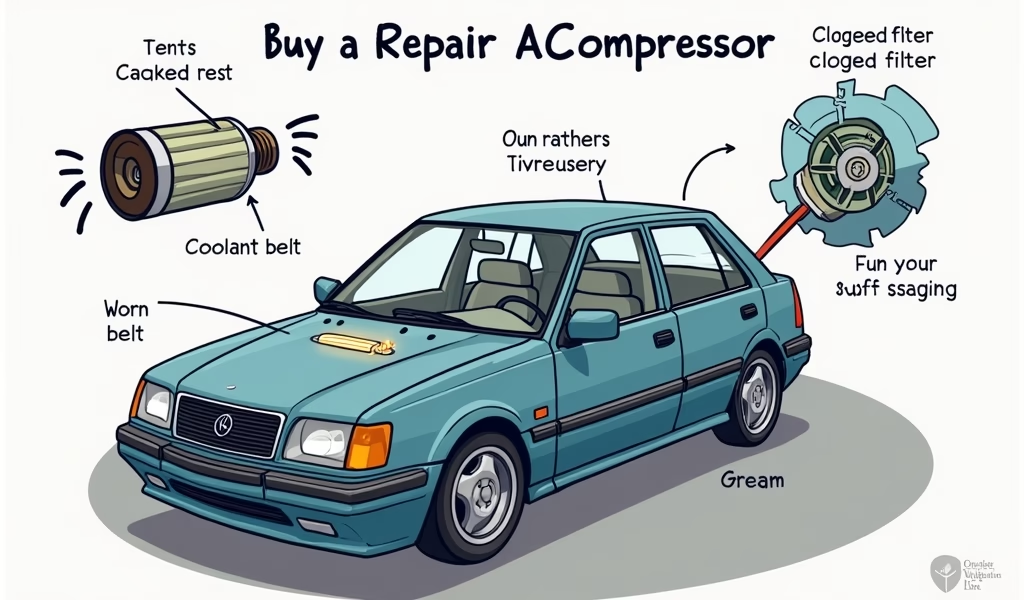
Overview
Like your heart pumping blood, your car’s AC compressor pressurizes refrigerant to keep you cool during sweltering summer drives—but refrigerant leaks, electrical failures, contamination, and poor maintenance can lead to its premature demise. Understanding the warning signs and performing regular maintenance can save you from sweating through both your shirt and a $1,500 repair bill, as most compressor failures develop gradually and are preventable with proper care.
Table of Contents
- Understanding AC Compressors: The Heart of Your Vehicle’s Cooling System
- Common Causes of AC Compressor Failure
- Refrigerant Issues: The Silent Killer
- Electrical Problems That Lead to Compressor Failure
- Contamination in the AC System
- Preventative Maintenance: Saving Your Compressor and Your Wallet
- DIY Checks to Catch Problems Early
- Repair vs. Replace: Making the Smart Financial Decision
- Conclusion
- Frequently Asked Questions
Understanding AC Compressors: The Heart of Your Vehicle’s Cooling System
Your car’s AC compressor is basically the beating heart of the entire cooling system. It’s the workhorse that pressurizes refrigerant and keeps that refreshing cold air flowing on sweltering summer days. Without a functioning compressor, you’re stuck with nothing but hot air—literally.
I’ve been fixing AC systems for over 15 years, and I can tell you that compressor failures rarely happen without warning. These components are designed to last the better part of a decade, but various factors can cut that lifespan short. Understanding what causes AC compressor failure can save you from sweating through your shirt and from an unexpected repair bill that might make you sweat even more.
Think of your AC compressor as a mini engine. It has moving parts, requires lubrication, and operates under pressure. When any of these elements goes out of whack, problems start. The good news? Many compressor issues can be prevented with some basic knowledge and routine care.
Common Causes of AC Compressor Failure
In my years under the hood, I’ve noticed patterns in what kills AC compressors. Some failures are due to normal wear and tear, while others result from neglect or poor maintenance habits. Let’s break down the most common culprits:
- Low refrigerant levels causing the compressor to overheat
- Electrical failures in the clutch, relay, or wiring
- Contamination from moisture or debris in the system
- Insufficient lubrication leading to internal component damage
- Age and regular wear on seals and bearings
- Overworking the system in extreme temperatures
The tricky part is that these issues often snowball. A small refrigerant leak might not seem serious at first, but it can lead to your compressor running dry and eventually seizing. Similarly, that slight grinding noise you’ve been ignoring could be the early warning sign of a bearing failure that will ultimately destroy the entire unit.
Most compressors don’t fail overnight. They give warning signs—strange noises, reduced cooling efficiency, or that burning smell coming through your vents. Paying attention to these signals is your first line of defense against a complete breakdown.
Refrigerant Issues: The Silent Killer
Refrigerant problems are the number one cause of premature compressor death I see in my shop. Your AC system is designed to operate with a specific amount of refrigerant—too little or too much, and you’re asking for trouble.
When refrigerant levels drop due to a leak, the compressor has to work harder to circulate what little remains. This creates excess heat and friction. Imagine running a marathon without enough water—your body would overheat and eventually shut down. Your compressor reacts the same way.
These leaks typically occur at connection points, hoses, the condenser, or the evaporator. Sometimes they’re obvious—a puddle under your car or oil stains around fittings. Other times, they’re so slow you’d never notice until your AC starts blowing warm air on a 95-degree day.
According to EPA guidelines, modern refrigerants like R-134a and R-1234yf are less harmful to the environment than older types, but they’re more expensive to replace. This makes regular system maintenance checks even more economical in the long run.
One client brought in a two-year-old sedan with a dead compressor. The culprit? A tiny leak that had slowly drained the system. By the time the AC stopped working entirely, the compressor had been running almost dry for months, causing irreversible damage. A $50 leak repair could have prevented a $1,200 compressor replacement.
Electrical Problems That Lead to Compressor Failure
The electrical system controlling your AC compressor is surprisingly complex. The compressor clutch engages and disengages based on signals from your climate control system, and any hiccup in this communication can spell disaster.
Failed relays, blown fuses, bad pressure switches, and damaged wiring can all prevent the compressor from operating correctly. Sometimes the compressor isn’t actually bad—it’s just not getting the signal to turn on or off when it should.
The clutch itself is often a failure point. It’s constantly engaging and disengaging as you use your AC, and this mechanical action creates wear. When the clutch starts slipping, the compressor might run intermittently or not at all.
I once had a customer convinced they needed a new compressor because their AC would work for 15 minutes, then blow warm. After some testing, we found the real issue was a faulty high-pressure cut-off switch that was shutting down the system when it got too hot. A $30 part saved them from a much costlier repair.
Modern vehicles use computerized control modules that can sometimes throw false codes or misdiagnose compressor issues. This is where professional diagnostic equipment becomes valuable—it can determine whether your compressor is truly failing or if there’s an electrical gremlin in the system.
Contamination in the AC System
Your AC system is sealed for a reason—it hates contamination. Moisture, air, debris, and even the wrong type of oil can wreak havoc on a compressor’s internal components. These contaminants can cause corrosion, create acids, or physically damage the precision parts inside.
Moisture is particularly problematic as it combines with refrigerant to form corrosive acids. These acids eat away at metal components and can destroy your compressor from the inside out. Air in the system can cause similar problems by creating higher-than-normal operating pressures.
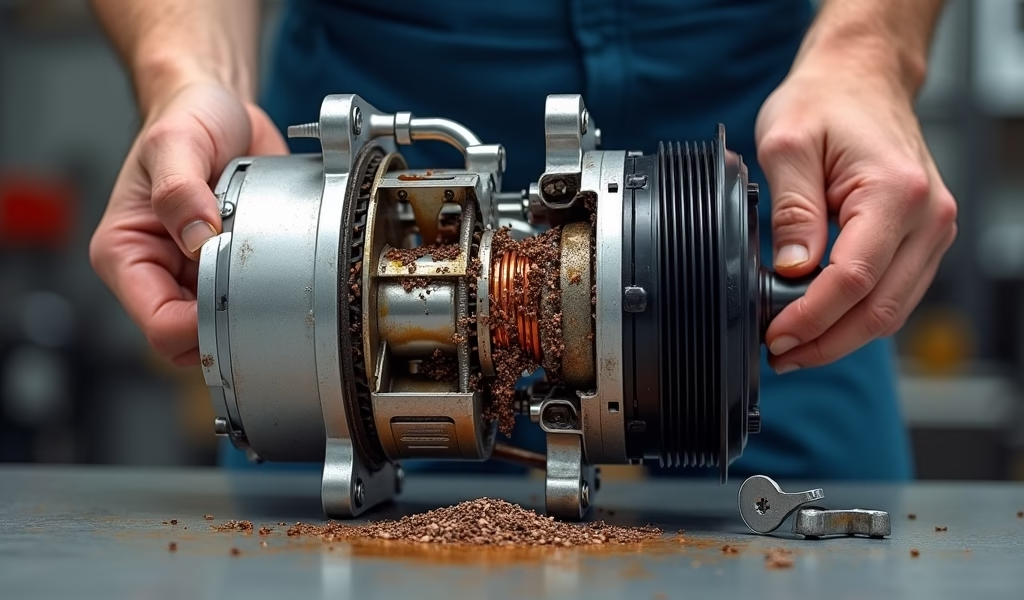
I’ve taken apart compressors that looked like they were filled with black sludge—the result of contamination breaking down the lubricating oil. Once this happens, metal-on-metal contact causes rapid wear, and before long, you’re shopping for a replacement.
Using the wrong tools or improper service procedures is often the culprit here. DIY recharge kits might seem convenient, but they can introduce contaminants if not used exactly as directed. This is one area where professional maintenance really pays for itself.
Proper evacuation of the system using a vacuum pump before recharging is essential. This removes moisture and air that would otherwise contaminate your fresh refrigerant. Skipping this step is like putting dirty oil in a clean engine—you’re just asking for problems down the road.
Preventative Maintenance: Saving Your Compressor and Your Wallet
The good news in all this? Most compressor failures are preventable with regular maintenance. I always tell my customers that AC service isn’t just about comfort—it’s about protecting a significant investment in your vehicle.
Here’s what I recommend to keep your compressor healthy and your repair costs low:
- Run your AC for at least 10 minutes once a week, even in winter (this keeps seals lubricated)
- Have your system inspected annually, preferably before the hot season hits
- Address strange noises or reduced cooling performance immediately
- Keep your condenser clean and free of debris (it’s usually in front of your radiator)
- Replace the cabin air filter regularly to reduce strain on the entire system
- If your car is older, consider having the system flushed and recharged every few years
These simple steps can add years to your compressor’s life. Many vehicles I service with 200,000+ miles still have their original compressors because their owners followed these basic maintenance practices.
The cost comparison is eye-opening. A routine AC service might run you $150-300, while a full compressor replacement can easily exceed $1,000-1,500 depending on your vehicle. Prevention truly is the more economical approach to AC system care.
According to Consumer Reports, skipping routine maintenance is one of the costliest mistakes vehicle owners make, with AC system repairs ranking among the most expensive.
DIY Checks to Catch Problems Early
While some AC issues require professional tools and expertise, you can perform several simple checks yourself to catch potential problems before they escalate. Here’s what to look for:
- Listen for unusual noises when the AC is running (grinding, squealing, or rattling)
- Check for visible leaks under the car or around AC components
- Monitor cooling performance—a gradual decline often indicates developing problems
- Observe whether the compressor clutch is engaging (the center of the pulley should spin when AC is on)
- Feel for excessive vibration from the compressor area when the system is running
One simple test I teach my customers is the “temperature drop test.” Use a cooking thermometer to measure the air temperature at the center vent with the AC running full blast. On a warm day, you should see at least a 30-40 degree drop from the outside temperature. Anything less could indicate an undercharged system or compressor issues.
Visual inspection can also reveal a lot. Pop the hood and look at the compressor and surrounding components. Oil stains, damaged wiring, or corroded connections are all red flags that warrant attention.
Remember, the goal isn’t to diagnose the exact problem yourself but to identify when something isn’t right. Early detection can mean the difference between a minor repair and a major overhaul.
Repair vs. Replace: Making the Smart Financial Decision
When your compressor does fail, you’ll face a crucial decision: repair the existing unit or replace it entirely. This isn’t always straightforward, and several factors should influence your choice.
First, consider your vehicle’s age and value. Investing $1,200 in a new compressor for a car worth $3,000 might not make financial sense. Conversely, if you plan to keep your vehicle for years to come, a quality replacement could be the most economical long-term solution.
Sometimes, rebuilding a compressor is an option. This involves replacing worn internal components while reusing the housing and other salvageable parts. It’s typically cheaper than a new unit but may not last as long or come with the same warranty protection.
When replacement is necessary, you’ll choose between OEM (Original Equipment Manufacturer) and aftermarket parts. OEM parts match what came with your vehicle and generally offer the best reliability and fit. Aftermarket options vary widely in quality—some are excellent alternatives at lower prices, while others may lead to premature failure.
Don’t forget about related components. When a compressor fails catastrophically, it often sends debris throughout the system. In these cases, I strongly recommend replacing the accumulator/dryer and expansion valve while flushing the entire system. Skipping these steps often leads to a second failure shortly after repair.
One customer saved $200 by declining a system flush after a compressor failure. Three months later, they were back with another dead compressor—debris from the first failure had damaged the new unit. The lesson? Complete repairs done right the first time are almost always cheaper in the long run.
Conclusion
Understanding what causes AC compressor failure isn’t just about technical knowledge—it’s about saving money and avoiding unnecessary headaches. Most compressors don’t fail without reason, and many of those reasons are preventable with proper care and attention.
By recognizing the warning signs, performing basic maintenance, and addressing small issues before they become major problems, you can extend your compressor’s life significantly. When problems do arise, having knowledge about the likely causes helps you make informed decisions about repairs.
Remember, your AC system is a complex network of components working together. The compressor may be the heart of the system, but it relies on everything else functioning properly. Taking a holistic approach to AC maintenance is the surest way to stay cool without breaking the bank.
Next time you turn on that cold air on a hot day, appreciate the engineering marvel working hard under your hood—and give it the care it deserves to keep it running strong for years to come.
Frequently Asked Questions
How long should an AC compressor last?
With proper maintenance, most AC compressors last 8-10 years or about 150,000 miles. Regular system checks and addressing minor issues promptly can extend this lifespan considerably.
Can I drive with a failed AC compressor?
Yes, you can drive with a failed compressor as it doesn’t affect engine performance or safety. However, if the compressor has seized or the belt system is shared, it may need immediate attention to prevent further damage.
How much does it cost to replace an AC compressor?
Replacement costs typically range from $800-1,500 depending on your vehicle make and model. This includes parts, labor, refrigerant, and sometimes additional components that should be replaced simultaneously.
Will a car pass inspection with a bad AC compressor?
In most states, a failed AC compressor won’t cause your vehicle to fail inspection. Emissions testing and safety inspections generally don’t include climate control system checks.
Can I recharge my AC system myself to fix compressor issues?
DIY recharging may temporarily restore cooling if the only issue is low refrigerant. However, if the compressor has mechanical damage or if leaks exist, a simple recharge won’t solve the underlying problem and could cause further damage.