
Overview
Just like your heart keeps your body functioning, your vehicle’s water pump circulates coolant to prevent engine overheating, with most requiring replacement between 60,000-100,000 miles or whenever the timing belt is serviced. Ignoring this crucial maintenance interval can lead to catastrophic engine damage costing thousands in repairs, while proactive replacement—whether DIY for accessible pumps or professional service for timing belt-driven systems—typically runs $300-750 and provides protection against breakdowns, temperature fluctuations, and those dreaded roadside steam shows.
Table of Contents
- Understanding Your Vehicle’s Water Pump
- The Importance of Timely Water Pump Replacement
- Recommended Water Pump Replacement Intervals
- Warning Signs Your Water Pump Is Failing
- Water Pump Replacement Costs
- Preventative Maintenance Tips
- DIY vs. Professional Replacement
- Conclusion
- Frequently Asked Questions
Understanding Your Vehicle’s Water Pump
The water pump replacement interval is a crucial maintenance consideration that every vehicle owner should understand. This vital component circulates coolant throughout your engine, preventing it from overheating and suffering catastrophic damage. As a mechanic with over 15 years of experience, I’ve seen countless engines ruined by neglected water pumps, and I’m here to help you avoid that fate.
Think of your water pump as your engine’s heart. Just like your heart pumps blood to keep your body functioning, your water pump circulates coolant to maintain optimal engine temperature. It’s typically driven by your timing belt, serpentine belt, or timing chain depending on your vehicle’s design, and it works tirelessly whenever your engine is running.
The pump consists of an impeller (a wheel with blades), housing, and a sealed bearing assembly. When functioning properly, it pulls coolant from the radiator and pushes it through the engine block and cylinder head. After absorbing heat, the coolant returns to the radiator where it cools down before starting the journey again. This continuous cycle is essential for your car’s cooling system to function effectively.
The Importance of Timely Water Pump Replacement
Following the recommended water pump replacement interval isn’t just another maintenance item to check off—it’s an investment in your vehicle’s longevity. When a water pump fails, the consequences can be swift and severe, often leaving you stranded and facing a much larger repair bill than the cost of preventative replacement.
Water pump failure typically leads to engine overheating. Without coolant circulation, heat rapidly builds up in your engine, potentially causing warped cylinder heads, cracked engine blocks, or blown head gaskets. These repairs can cost thousands of dollars compared to a few hundred for a timely water pump replacement.
Many modern vehicles have timing belt-driven water pumps. In these designs, mechanics strongly recommend replacing both components simultaneously, even if the water pump appears to be functioning properly. The labor overlap is substantial, as accessing the water pump often requires removing the timing belt. Replacing a still-functional water pump during scheduled timing belt service is much more economical than paying for the same labor twice if you defer the water pump replacement.
Recommended Water Pump Replacement Intervals
The water pump replacement interval varies significantly depending on your vehicle’s make, model, and year. While there’s no one-size-fits-all answer, I can offer some reliable guidelines based on my years of professional experience.
For most vehicles, manufacturers recommend replacing the water pump every 60,000 to 100,000 miles. However, some high-quality water pumps in premium vehicles can last up to 150,000 miles under optimal conditions. Your owner’s manual provides the most accurate recommendation for your specific vehicle, so that should be your first reference point.
Vehicles with timing belt-driven water pumps typically follow the timing belt replacement schedule, which is commonly between 60,000 and 90,000 miles. As mentioned earlier, these components are usually replaced together due to the significant labor overlap. According to the Car Care Council, this proactive approach can save vehicle owners considerable money in the long run.
For cars with serpentine belt-driven water pumps, the replacement interval might be longer—often between 90,000 and 120,000 miles. These designs are typically easier to access, making replacement somewhat less labor-intensive.
Certain factors can shorten your water pump’s lifespan, including:
- Frequent short trips (which cause more heating/cooling cycles)
- Extreme climate conditions
- Use of incorrect or poor-quality coolant
- Prior engine overheating incidents
- Poor overall maintenance practices
If you’ve purchased a used vehicle and don’t know when the water pump was last replaced, consider its mileage and err on the side of caution. For vehicles approaching or exceeding 100,000 miles without a documented water pump replacement, scheduling this service soon would be a prudent decision as part of your car maintenance routine.
Warning Signs Your Water Pump Is Failing
While following the recommended water pump replacement interval is ideal, sometimes your vehicle will give you warning signs that the pump is failing before reaching that milestone. Being alert to these symptoms can help you avoid being stranded or facing catastrophic engine damage.
Coolant leaks are often the first indication of water pump trouble. Look for puddles of green, orange, pink, or blue fluid beneath your parked vehicle, especially near the front. These leaks typically occur from the water pump’s weep hole or gasket as the seals deteriorate with age.
A whining or grinding noise coming from the front of your engine can indicate water pump bearing failure. This sound typically changes with engine speed and may be most noticeable when the engine is cold. Don’t ignore these noises—they rarely resolve themselves and usually worsen over time.
Engine overheating is a critical warning sign that shouldn’t be ignored. While overheating can stem from various cooling system issues, a failing water pump is a common culprit. If your temperature gauge rises into the red zone or you see steam from under your hood, pull over immediately to prevent engine damage.
Fluctuating engine temperature readings can also signal an intermittently failing water pump. If your temperature gauge moves erratically while driving, particularly at highway speeds, have your cooling system inspected promptly.
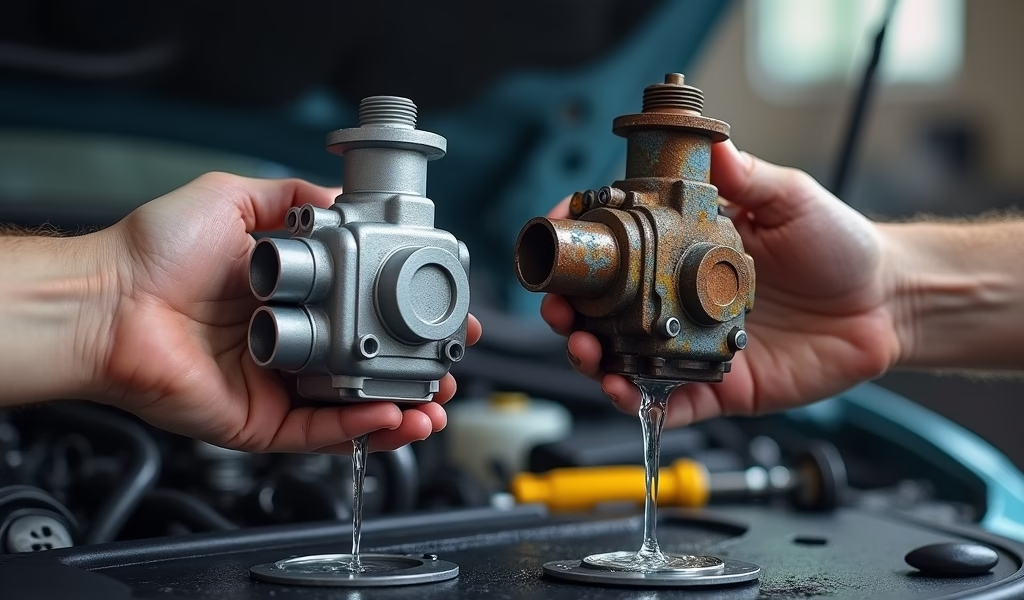
Visible corrosion or mineral buildup on your water pump indicates coolant leakage and potential imminent failure. During routine maintenance visits, ask your mechanic to visually inspect the water pump if it’s accessible without major disassembly.
Water Pump Replacement Costs
Understanding the costs associated with water pump replacement can help you budget appropriately and recognize the value of this preventative maintenance. The total expense varies widely based on your vehicle’s make and model, your geographic location, and whether you choose a dealership, independent shop, or DIY approach.
For most mainstream vehicles, water pump replacement typically costs between $300 and $750 at an independent repair shop. This includes both parts and labor. Luxury or performance vehicles often command higher prices, sometimes exceeding $1,000 due to more expensive components and complex disassembly requirements.
Labor represents the majority of the cost in many cases. Some water pumps are easily accessible and can be replaced in 1-2 hours, while others—particularly those driven by timing belts or located inside the engine—may require 4-8 hours of labor. At average shop rates of $100-150 per hour, this labor cost adds up quickly.
The water pump itself typically costs between $50 and $200 for most vehicles, with premium or OEM (Original Equipment Manufacturer) pumps at the higher end of that range. While it might be tempting to save money with the cheapest option, I strongly recommend using quality parts from reputable manufacturers. The small upfront savings rarely justify the risk of premature failure.
When the water pump is driven by the timing belt, you’ll likely see a combined replacement quote. While this increases the immediate cost (typically to $600-1,200), it’s far more economical than paying for the labor twice. Many shops offer timing belt “kits” that include the water pump, tensioners, and sometimes additional components at a package price.
Preventative Maintenance Tips
While respecting your vehicle’s water pump replacement interval is crucial, certain preventative maintenance practices can help maximize your water pump’s lifespan and potentially extend the time between replacements. These simple habits can save you money and inconvenience down the road.
Regularly checking your coolant level and condition is your first line of defense. Low coolant levels force your water pump to work harder and can lead to overheating. Inspect your coolant reservoir monthly and top it off as needed with the manufacturer-recommended coolant type. Remember to only check the coolant level when the engine is cool to avoid burns.
Following your vehicle’s recommended coolant flush and replacement schedule is equally important. Over time, coolant breaks down and becomes acidic, which can damage your water pump’s impeller and seals. Most manufacturers recommend coolant replacement every 30,000 to 50,000 miles, though some long-life coolants can last up to 100,000 miles.
Keep an eye on your vehicle’s temperature gauge during regular driving. Being aware of your engine’s normal operating temperature helps you spot abnormalities early. If you notice the needle creeping higher than usual, especially during highway driving or hot weather, have your cooling system checked before more serious problems develop.
Addressing belt problems promptly can also protect your water pump. The belt that drives your water pump—whether it’s a serpentine belt or timing belt—should be inspected regularly for cracks, glazing, or wear. A failing belt can damage your water pump or cause it to stop functioning entirely.
Consider these additional essential car maintenance tips to extend your water pump’s life:
- Use only the manufacturer-specified coolant type and concentration
- Fix small coolant leaks promptly before they affect the water pump
- Avoid running your engine while low on coolant
- Allow your engine to warm up properly in cold weather
- Consider a protective coolant additive recommended by professional cooling system experts
DIY vs. Professional Replacement
When faced with water pump replacement, many car enthusiasts wonder if this is a project they can tackle themselves. While DIY replacement is possible for some vehicles, it’s important to realistically assess the complexity of the job and your own mechanical abilities before deciding.
DIY water pump replacement can save you $200-500 in labor costs, which is certainly appealing. However, this saving comes with significant caveats. The accessibility of water pumps varies dramatically between vehicle models. Some are relatively straightforward to access and replace, while others require removing multiple components, special tools, and precise timing belt reinstallation.
If your water pump is driven by a serpentine belt and mounted on the front of the engine, it might be a reasonable DIY project for someone with intermediate mechanical skills and proper tools. These configurations typically don’t require timing belt removal, making the job less risky.
However, for timing belt-driven water pumps, I generally recommend professional installation. Incorrect timing belt reinstallation can cause catastrophic engine damage upon startup. According to AAA’s automotive experts, this risk often outweighs the potential cost savings, especially for those without specific experience in timing belt service.
If you decide to attempt DIY replacement, invest in a quality service manual specific to your vehicle, not just general guides. Allow significantly more time than professional estimates suggest—what takes a professional 2 hours might take a DIY-er 6-8 hours on the first attempt. Also, ensure you have all necessary replacement parts, coolant, gaskets, and specialized tools before beginning.
Professional replacement offers several advantages: expertise, proper tools, warranty coverage, and time savings. Many shops also perform a cooling system pressure test after installation to verify there are no leaks—a critical step that’s difficult to replicate at home without specialized equipment.
Conclusion
Understanding your vehicle’s water pump replacement interval is more than a maintenance detail—it’s an essential aspect of responsible vehicle ownership. By following manufacturer recommendations and staying alert to warning signs, you can avoid the cascading problems that stem from water pump failure.
Replacing your water pump according to schedule might feel unnecessary when everything seems to be working fine, but it’s precisely this proactive approach that separates vehicle owners who enjoy years of reliable service from those frequently facing roadside breakdowns and costly repairs.
Remember that the relatively modest cost of scheduled water pump replacement pales in comparison to the potential expense of engine overheating damage. Your vehicle’s cooling system deserves the same attention as more visible maintenance items like oil changes and tire rotations.
Whether you choose professional service or DIY replacement, the key is not to defer this critical maintenance item. Your engine’s health—and your wallet—will thank you for respecting the recommended water pump replacement interval.
Frequently Asked Questions
How long does a water pump typically last?
Most water pumps last between 60,000 and 100,000 miles under normal conditions. Premium vehicles with high-quality components may see water pumps last up to 150,000 miles in some cases.
Can I drive with a failing water pump?
Driving with a failing water pump is extremely risky and not recommended. It can lead to engine overheating and potentially catastrophic damage within minutes of failure.
How much does it cost to replace a water pump?
Water pump replacement typically costs between $300 and $750 for most mainstream vehicles at independent repair shops. Luxury or performance vehicles may cost $1,000 or more.
Should I replace my water pump and timing belt together?
Yes, if your water pump is driven by the timing belt, replacing both components simultaneously is strongly recommended. The labor overlap makes this much more economical than separate replacements.
What happens if my water pump fails completely?
Complete water pump failure leads to immediate engine overheating as coolant circulation stops. This can result in warped cylinder heads, cracked blocks, blown head gaskets, and even total engine failure.