
Overview
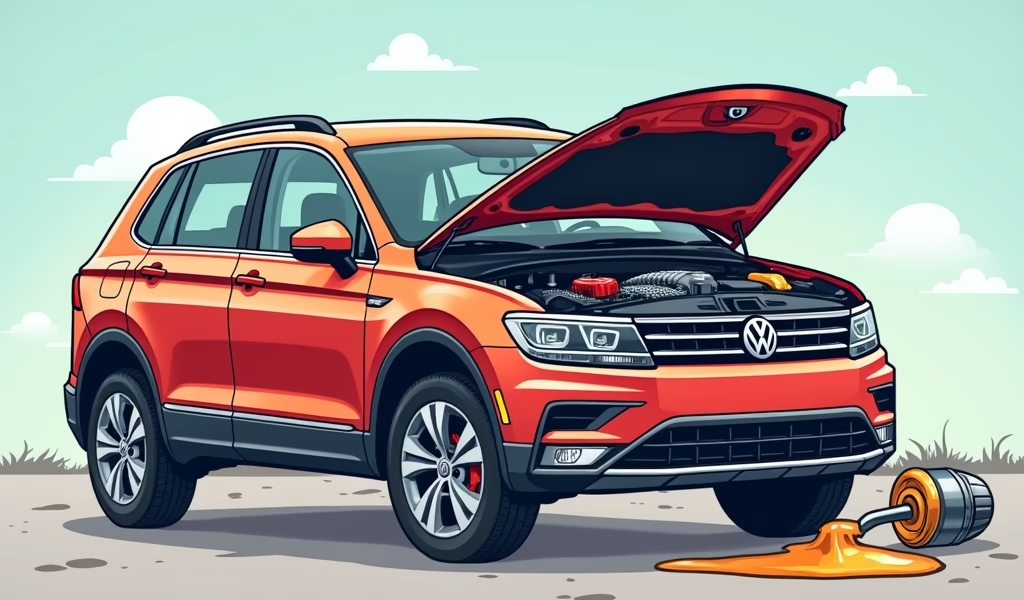
That red puddle under your Volkswagen Tiguan isn’t just annoying—it’s your transmission’s cry for help that could save you from a $3,000+ repair bill if caught early. This guide walks Tiguan owners through identifying transmission leak symptoms, understanding DIY-friendly versus professional repairs, and implementing proper maintenance practices to prevent leaks and extend transmission life.
Table of Contents
- Spotting Transmission Leaks in Your Volkswagen Tiguan
- Understanding Your Tiguan’s Transmission System
- Warning Signs That Shouldn’t Be Ignored
- Common Causes of Tiguan Transmission Leaks
- DIY vs. Professional Repairs: What You Can Handle
- Preventing Transmission Leaks: Maintenance Tips
- Repair Costs: What to Expect
- Conclusion
- Frequently Asked Questions
Spotting Transmission Leaks in Your Volkswagen Tiguan
That dreaded moment when you spot a puddle underneath your Volkswagen Tiguan can send your heart racing. Transmission fluid leaks are particularly concerning – they’re not just messy, they can lead to catastrophic transmission failure if ignored. I’ve been fixing these issues for over 15 years, and trust me, catching a transmission leak early can save you thousands.
What makes a Volkswagen Tiguan transmission leak particularly troublesome is that these sophisticated German-engineered vehicles use specialized transmission systems that don’t take kindly to running low on fluid. Unlike engine oil that burns off normally, transmission fluid doesn’t disappear unless there’s a leak. That means any drop in fluid level indicates a problem that needs attention.
The good news? Most transmission leaks start small. That tiny red puddle might look scary, but with prompt attention, you can often fix the issue before it develops into a $3,000+ transmission rebuild. Throughout this guide, I’ll walk you through identifying, diagnosing, and addressing transmission leaks in your Tiguan – empowering you to make informed decisions that protect both your vehicle and your wallet.
Understanding Your Tiguan’s Transmission System

Your Volkswagen Tiguan likely comes equipped with one of two main transmission types: the 6-speed Tiptronic automatic (found in most older models) or the more sophisticated 7-speed Direct Shift Gearbox (DSG) in newer models. The DSG is essentially a type of automatic transmission that operates differently than conventional automatics, using a dual-clutch system for lightning-fast gear changes.
Both transmission systems rely heavily on specialized fluid to function correctly. This fluid doesn’t just lubricate – it cools internal components, provides hydraulic pressure for shifting gears, prevents corrosion, and transmits power. Without sufficient fluid, your transmission essentially begins to cook itself from the inside.
The most common leak points in a Tiguan transmission include:
- Pan gasket (where the transmission pan attaches)
- Input and output shaft seals
- Transmission cooler lines and connections
- Valve body seals (particularly in DSG transmissions)
- Selector shaft seals
These components are constantly exposed to extreme heat cycles, pressure variations, and mechanical stress. Over time, rubber seals harden and shrink, gaskets compress, and metal components expand and contract – all creating potential escape routes for your transmission fluid.
According to transmission maintenance experts at Edmunds, most modern transmissions hold between 4-12 quarts of fluid, with Tiguan DSG systems typically containing around 7 quarts. That means even a slow leak can eventually drain enough fluid to cause problems if left unchecked.
Warning Signs That Shouldn’t Be Ignored
Catching a transmission leak early can save you from a world of trouble. Here are the telltale signs your Tiguan’s transmission might be leaking:
Visual Clues
Transmission fluid has a distinctive appearance and smell that sets it apart from other vehicle fluids. Fresh transmission fluid is typically bright red to dark pink and has a sweet, somewhat chemical smell. As it ages, it darkens to a brownish-red. If you see this type of fluid under your Tiguan, particularly toward the center or front-center of the vehicle, you’re likely looking at a transmission leak.
I always tell my customers to place a piece of clean cardboard under their vehicle overnight if they suspect a leak. This helps determine both the color and the location of the leak source.
Performance Issues
Your Tiguan will often tell you something’s wrong long before you see a puddle forming. Pay attention to these early warning signs:
- Delayed engagement when shifting from park to drive
- Hesitation during acceleration
- Rough or jerky gear changes
- Unusual whining or buzzing noises, especially during shifts
- Slipping sensation (engine revs but vehicle doesn’t accelerate proportionally)
- Unexpected shifts to neutral while driving
These symptoms occur because low fluid levels prevent proper hydraulic pressure, which is essential for clean gear engagement. Think of it like trying to use hydraulic brakes with air in the lines – things just don’t work smoothly.
Dashboard Warnings
Modern Tiguans have sophisticated monitoring systems that may alert you before problems become severe:
- Check engine light (particularly with transmission-related codes)
- Transmission temperature warning
- “Transmission fault” message on newer models
- Limp mode activation (severely restricted performance)
Don’t ignore these electronic warnings – they’re designed to prevent catastrophic damage. I’ve seen too many customers who dismissed a check engine light only to face a $3,000+ transmission rebuild a few weeks later.
Common Causes of Tiguan Transmission Leaks
Understanding why your Tiguan’s transmission is leaking helps target the right fix. Here are the most common culprits I encounter in my shop:
Pan Gasket Failure
The transmission pan gasket is the most frequent leak source in Tiguans, particularly in models with 60,000+ miles. This thin gasket creates a seal between the transmission case and the removable pan that holds your fluid reserve. Heat cycles cause the gasket material to harden and shrink over time, eventually allowing fluid to seep through. The good news? This is among the more affordable transmission repairs.
Damaged Pan
The transmission pan itself sits in a vulnerable position underneath your vehicle. Road debris, aggressive off-roading, or even a poorly placed jack can dent or crack this component. Even minor deformation can prevent the gasket from sealing properly.
Cooler Line Issues
Transmission cooler lines carry hot fluid to your radiator or separate transmission cooler for cooling. These lines connect to the transmission with fittings that can loosen over time, especially with the vibration and temperature fluctuations vehicles experience. Additionally, the rubber sections of these lines can deteriorate with age and exposure to engine heat.
According to Consumer Reports’ automotive testing team, cooler line failures are particularly common in vehicles regularly subjected to stop-and-go traffic, where transmissions run hotter than during highway cruising.
Worn Output Shaft Seal
This critical seal prevents fluid from leaking where the transmission connects to the driveshaft. It’s under constant stress from rotation and temperature changes. When it fails, the leak often appears at the rear of the transmission case. This repair typically requires more technical skill as it involves removing components to access the seal.
Age-Related Deterioration
The reality is that all automatic transmissions develop leaks eventually. Rubber seals naturally harden and shrink with age, and the Tiguan’s sophisticated transmission system has dozens of these seals. Most Tiguans begin developing minor seepage around 60,000-90,000 miles, with more noticeable leaks appearing by 100,000 miles, even with proper maintenance.
DIY vs. Professional Repairs: What You Can Handle

Not all transmission repairs require a professional mechanic. Let’s break down what you can tackle yourself and when to call in the experts:
DIY-Friendly Repairs
If you’re reasonably handy and have basic tools, these repairs are within reach:
- Transmission fluid checks: The easiest preventative measure. Many Tiguans have a dipstick for checking fluid level and condition, though some newer models require a more complex checking procedure.
- Transmission pan gasket replacement: With proper preparation and patience, replacing a leaking pan gasket is manageable for a DIYer. You’ll need a torque wrench, gasket scraper, transmission fluid drain pan, and of course, the correct replacement gasket and fluid.
- External sensor replacement: Some transmission issues stem from faulty external sensors rather than actual leaks. These are often accessible without major disassembly.
For a basic pan gasket replacement, you’ll need about 3-4 hours, basic hand tools, and roughly $60-100 in parts (gasket kit, fluid, and filter). Just remember that proper torque specification is critical – overtightened pan bolts can strip threads or damage the pan.
When to Call a Professional
Some repairs are best left to experienced mechanics, especially with complex systems like the DSG transmission:
- Internal seal leaks: If the leak is coming from deep within the transmission case, professional help is advisable.
- Output shaft seal replacement: While theoretically DIY-possible, this job requires special tools and expertise to prevent damage.
- Mechatronic unit issues: DSG transmissions have a sophisticated control unit called the mechatronic unit. Problems here require specialized diagnostic equipment.
- Multiple or unidentified leak sources: When you can’t pinpoint the exact leak location or have multiple leaks, professional diagnosis saves time and prevents mistakes.
Always weigh the complexity of the repair against your skill level, available tools, and comfort with transmission work. Even as a professional, I sometimes refer customers to transmission specialists for particularly complex issues.
Preventing Transmission Leaks: Maintenance Tips
The best repair is the one you never need. Here’s how to keep your Tiguan’s transmission healthy and leak-free:
Follow the Correct Service Schedule
Volkswagen officially recommends transmission service at these intervals:
- DSG transmissions: Fluid and filter change every 40,000 miles
- Tiptronic automatics: Fluid and filter change every 60,000 miles
However, I strongly recommend servicing your Tiguan’s transmission every 40,000 miles regardless of type, especially if you frequently drive in stop-and-go traffic, tow anything, or live in areas with extreme temperatures. Fresh fluid maintains proper lubrication properties and helps flush out wear particles that can damage seals.
Use the Correct Fluid
This is absolutely critical. Volkswagen transmissions require specific fluid formulations:
- DSG transmissions need Volkswagen G 052 182 fluid (sometimes referenced as VW TL 52 182)
- Conventional automatics typically use VW G 055 025 A2 fluid
Using incorrect fluid can damage seals, cause shifting issues, and void your warranty. Generic “universal” transmission fluids aren’t suitable for these sophisticated German transmissions. I’ve seen too many transmissions damaged by incorrect fluid choices – this isn’t the place to cut corners.
Develop These Driving Habits
How you drive significantly impacts transmission longevity:
- Allow a brief warm-up period before driving in cold weather
- Avoid aggressive acceleration and rapid shifting between Drive and Reverse
- Come to a complete stop before shifting between Drive and Reverse
- Don’t “ride the brakes” while driving (keeping your foot lightly on the brake while accelerating)
- Use the parking brake on hills rather than relying on the transmission to hold the vehicle
These simple habits reduce the thermal and mechanical stress on your transmission’s internal seals and components.
Regular Inspection
Make it a habit to glance under your Tiguan occasionally, especially after it’s been parked overnight. The earlier you catch a leak, the simpler and less expensive the repair typically is. A monthly check takes seconds but can save thousands in repair costs.
Repair Costs: What to Expect
If you do discover a transmission leak, here’s what you might expect to pay for repairs:
Common Repair Cost Ranges
- Transmission pan gasket replacement: $250-450
- Cooler line replacement: $200-500
- Output shaft seal replacement: $350-700
- Complete transmission reseal: $800-1,500
- Full transmission rebuild (worst case): $2,800-4,500
These prices vary significantly based on your location, whether you choose a dealership or independent shop, and your specific Tiguan model year. Dealership service typically runs 30-40% higher than independent shops but may offer advantages in terms of factory parts and specialized knowledge.
Dealer vs. Independent Shop
Here’s a typical price comparison for a pan gasket replacement:
- Volkswagen dealership: $350-450 (includes OEM parts and fluid)
- Independent European specialist: $280-380 (similar quality parts)
- General repair shop: $220-320 (may use aftermarket parts)
While dealerships charge premium rates, they also have technicians specifically trained on Volkswagen transmissions and access to the latest technical service bulletins. For complex issues with DSG transmissions, this specialized knowledge can be worth the extra cost. For simpler repairs like pan gaskets, independent shops often provide excellent value.
Parts Cost Breakdown
If you’re considering DIY repairs, here’s what parts typically cost:
- Transmission pan gasket kit: $20-50
- Transmission fluid (per liter): $15-30 (DSG fluid costs more)
- Transmission filter: $25-60
- Pan bolts (if needed): $2-3 each
Remember that Volkswagen transmissions require specific fluids – using the correct specification is non-negotiable if you want your repair to last.
Conclusion
Transmission leaks in your Volkswagen Tiguan don’t have to spell disaster for your vehicle or your bank account. By understanding the warning signs, taking preventative maintenance seriously, and addressing small problems before they become major ones, you can keep your Tiguan’s sophisticated transmission system running smoothly for many miles to come.
Remember that the most expensive repair is almost always the one you postpone. That small transmission fluid spot in your garage today could be a complete transmission failure in a few months if ignored. Regular inspections, proper fluid changes, and prompt attention to minor leaks are your best defense against costly transmission repairs.
Whether you choose the DIY route for simple fixes or trust a professional for more complex issues, addressing transmission leaks promptly is one of the smartest investments you can make in your Volkswagen Tiguan’s longevity.
Frequently Asked Questions
How much does it cost to fix a transmission leak in a Volkswagen Tiguan?
Repair costs range from $250-450 for a simple pan gasket replacement to $2,800-4,500 for a complete transmission rebuild. The exact cost depends on the leak source, your location, and whether you choose a dealership or independent shop.
Can I drive my Tiguan with a transmission fluid leak?
You can drive short distances with a minor leak, but should address the issue promptly. Severe leaks causing puddles or performance issues require immediate attention to prevent catastrophic transmission damage.
How do I know if my Volkswagen Tiguan has a transmission leak?
Look for red or brownish fluid puddles under your vehicle, especially toward the center or front-center. Performance symptoms include delayed engagement, rough shifting, slipping sensations, or unusual noises during gear changes.
Is a transmission leak in a Tiguan covered under warranty?
New Tiguans include a 4-year/50,000-mile factory warranty that covers transmission leaks. Certified Pre-Owned vehicles typically include extended powertrain coverage, but standard warranty coverage excludes normal wear items like seals and gaskets beyond certain mileage points.
How often should I change transmission fluid in my Tiguan?
Volkswagen recommends changing DSG transmission fluid every 40,000 miles and conventional automatic fluid every 60,000 miles. For maximum protection, I recommend 40,000-mile intervals for all Tiguan transmissions, especially for vehicles driven in severe conditions.