
Overview
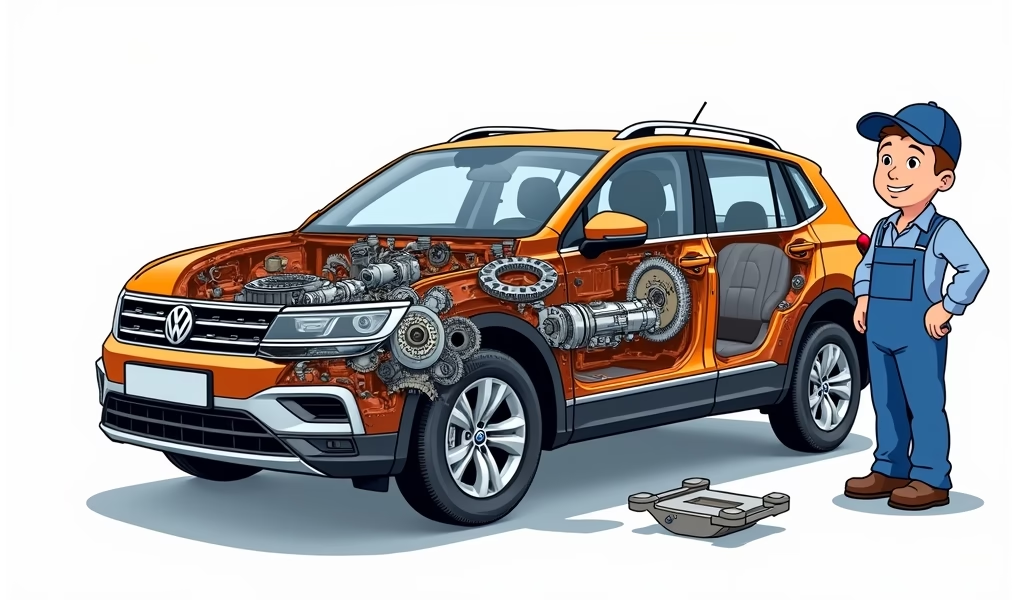
Just like interpreters for your car’s power, the Volkswagen Taos’s sophisticated transmissions—either the quick-shifting 7-speed DSG or smooth 8-speed automatic—require vigilant maintenance to avoid turning from engineering marvels into expensive headaches. Regular fluid changes, prompt attention to warning signs like unusual shifting behavior or strange noises, and understanding the specific maintenance needs of your transmission type can extend its lifespan to 200,000+ miles while avoiding the steep $3,500-7,000 replacement cost.
Table of Contents
- Understanding Your Taos Transmission
- Warning Signs of Transmission Trouble
- Common Causes of Transmission Failure
- Preventive Maintenance Strategies
- Transmission Lifespan and Warranty Coverage
- Professional vs DIY Maintenance
- Emergency Response to Transmission Issues
- Cost Considerations
- Conclusion
- Frequently Asked Questions
Understanding Your Taos Transmission
The Volkswagen Taos comes equipped with two distinct transmission options that affect how your vehicle performs. As a mechanic who’s had these systems on my lift countless times, I can tell you they’re engineering marvels when maintained properly—and expensive headaches when neglected.
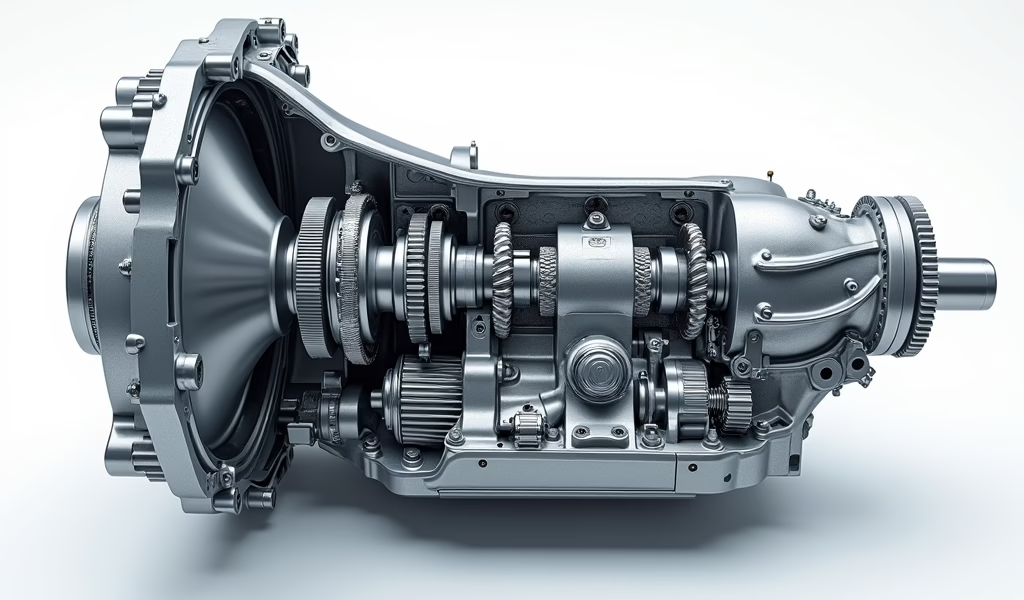
Front-wheel-drive models feature Volkswagen’s sophisticated 7-speed DSG (Direct-Shift Gearbox), a dual-clutch system that pre-selects gears for lightning-quick shifts. If you’ve got an all-wheel-drive Taos, you’re working with a traditional 8-speed automatic that delivers smooth, reliable power transfer in various conditions.
Think of your transmission as the interpreter between your engine’s raw power and your wheels. Without it functioning properly, that powerful engine is just making noise. The transmission ensures your Taos operates efficiently at any speed, whether you’re creeping through a parking lot or cruising at highway speeds.
What makes these transmissions special is their adaptive learning capability—they actually adjust to your driving style over time. This is why transmission issues can sometimes develop gradually, making them easy to miss until they become serious problems.
Warning Signs of Transmission Trouble

Your Taos will typically give you several warning signs before a major transmission failure occurs. Catching these early can save you thousands in repair costs.
The most obvious indicator is unusual shifting behavior. If your Taos hesitates before engaging a gear, takes longer than usual to shift, or you feel a noticeable “clunk” when changing gears, your transmission is sending you an SOS. Pay particular attention when accelerating from a stop—that’s when most problems become noticeable.
Strange noises are another telltale sign. While DSG transmissions naturally make some mechanical sounds, any new whining, buzzing, or grinding noises warrant immediate attention. These sounds often indicate internal components are wearing out or making improper contact.
Fluid leaks are a visual indicator you shouldn’t ignore. Transmission fluid is typically reddish and has a distinctive sweet smell when fresh. If you spot puddles under your parked Taos, get it checked out immediately.
The check engine or transmission warning light is your vehicle’s direct way of saying “help me.” Modern transmissions are computer-controlled, and the system constantly monitors performance. When parameters fall outside normal ranges, warning lights illuminate. Don’t ignore this dashboard communication—even if your Taos seems to be driving normally.
Volkswagen Taos-Specific Issues
The Taos has some unique transmission quirks worth noting. In colder climates, some owners report delayed engagement when first starting their vehicles, particularly with the DSG transmission. This typically resolves once the fluid warms up.
Another Taos-specific concern involves transmission service intervals. The DSG requires fluid and filter changes every 40,000 miles—half as frequently as many comparable vehicles. Missing this service can lead to premature failure.
Volkswagen has also released several transmission software updates for the Taos that improve shift quality and address minor performance issues. If your vehicle hasn’t received these updates, you might experience occasional hesitation or jerky shifts, especially in stop-and-go traffic.
Common Causes of Transmission Failure
In my years fixing transmissions, I’ve noticed certain patterns that lead to failure. Many of these are completely avoidable with proper awareness.
Fluid degradation is perhaps the most common culprit. Transmission fluid doesn’t just lubricate—it cools, cleans, and provides the hydraulic pressure necessary for operation. As it ages, it loses these critical properties. Using incorrect fluid types can accelerate this degradation process drastically.
Heat is transmission enemy number one. Towing beyond your Taos’s capacity, aggressive driving, and stop-and-go traffic all generate excessive heat that breaks down fluid and damages internal components. Even one episode of severe overheating can significantly shorten your transmission’s lifespan.
Driving habits play a huge role in transmission longevity. Shifting from reverse to drive before coming to a complete stop creates tremendous internal shock, as does “power braking” (holding the brake while pressing the accelerator). These habits might seem harmless, but they create cumulative damage over time.
Neglected maintenance is the final nail in the transmission coffin. Skipping recommended fluid changes or ignoring early warning signs allows small problems to cascade into catastrophic failures.
The Ripple Effect
When transmission problems develop, they rarely stay contained. A failing transmission puts additional strain on your engine, can damage your differential, and even affects your vehicle’s electrical system through increased resistance.
This is why addressing transmission issues promptly is so important—what starts as a $300 repair can quickly balloon into a $3,000 replacement if ignored. The mechanical connections throughout your drivetrain mean problems in one area inevitably spread to others.
Preventive Maintenance Strategies
Preventing transmission problems is far less expensive than fixing them. Here’s my battle-tested maintenance approach for keeping your Volkswagen Taos transmission running smoothly for years.
First and foremost: follow the manufacturer’s fluid change intervals religiously. For DSG transmissions, that means new fluid and filter every 40,000 miles. For the 8-speed automatic, change fluid every 60,000 miles under normal conditions, or 30,000 miles under severe conditions (extreme temperatures, mountainous terrain, frequent towing).
Use only VW-approved transmission fluids. I’ve seen too many transmissions ruined by generic fluids that didn’t meet manufacturer specifications. The few dollars saved on fluid cost can lead to thousands in repairs. Volkswagen designs their transmissions to work with specific fluid properties that generic options often lack.
Monitor your driving habits. The Taos’s trip computer can help you track average speed and stop frequency, giving you insight into how hard your transmission is working. If you notice your driving patterns fall into the “severe” category, adjust your maintenance schedule accordingly.
Consider a transmission cooler if you frequently tow or drive in mountainous regions. These affordable accessories can significantly extend transmission life by maintaining optimal operating temperatures. Transfer case maintenance is also crucial for AWD models to ensure proper power distribution.
Address minor issues before they become major ones. That slight hesitation or occasional hard shift won’t fix itself—it will gradually worsen until complete failure occurs. Early intervention can often be resolved with a simple fluid change or electronic adjustment rather than major mechanical repairs.
Seasonal Considerations
Your transmission faces different challenges throughout the year. In winter, allow your vehicle to warm up for 30-60 seconds before driving to let transmission fluid reach optimal viscosity. In summer heat, avoid extended idling which can overheat transmission fluid when the cooling system isn’t receiving adequate airflow.
After driving through deep water, check your transmission fluid for signs of contamination. Water intrusion can cause serious internal damage if not addressed quickly.
Transmission Lifespan and Warranty Coverage
With proper maintenance, your Volkswagen Taos transmission should last 150,000 to 200,000 miles. I’ve seen well-maintained DSG transmissions exceed 250,000 miles, while neglected ones fail before 100,000.
The type of driving you do significantly impacts longevity. Highway miles are gentler on transmissions than city driving, as fewer shift cycles mean less wear. Environmental factors like extreme temperatures and road conditions also play a role in how long your transmission will last.
Volkswagen provides a 4-year/50,000-mile bumper-to-bumper limited warranty that includes the transmission. The powertrain warranty (which specifically covers the transmission) extends to 4 years or 50,000 miles, whichever comes first.
If you’re buying a used Taos, the warranty may still be transferable. Check with your local Volkswagen dealer to verify the remaining coverage. Extended warranties are also available that can cover your transmission for up to 10 years, though these vary in coverage details and cost.
Warranty Considerations
It’s worth noting that transmission warranties typically become void if the vehicle shows evidence of abuse or if maintenance records don’t demonstrate adherence to recommended service intervals. Keep detailed records of all transmission services, including receipts and work orders.
Even minor modifications to your vehicle can impact warranty coverage. Aftermarket tuning devices or software modifications that alter shift patterns or increase power output may void transmission coverage, even if they didn’t directly cause the failure.
Professional vs DIY Maintenance
As someone who works on transmissions daily, I understand the appeal of DIY maintenance. However, modern transmissions—particularly the DSG in the Taos—require specialized equipment for proper service.
For basic maintenance, checking for leaks and monitoring fluid condition are tasks most owners can handle. Look for fluid leaks after parking and pay attention to fluid color if visible—healthy fluid is clear red, while darkened or burnt-smelling fluid indicates problems.
Fluid changes on the Taos transmissions require specialized equipment. The DSG transmission needs precise fluid level measurement and special filling procedures. The 8-speed automatic requires proprietary scan tools to monitor temperature during filling. Attempting these services without proper equipment often leads to incorrect fluid levels—a common cause of transmission damage.
When considering professional service, dealerships have factory training and equipment but typically charge premium rates. Independent transmission specialists often offer comparable service at lower prices, especially for routine maintenance. Ask about their experience specifically with Volkswagen DSG and 8-speed automatic transmissions before committing.
Clutch adjustment frequency is different with DSG transmissions compared to manual transmissions, as the system handles this electronically. This is one reason professional diagnosis is particularly valuable for DSG-equipped Taos models.
Finding a Qualified Shop
Not all repair facilities are equipped to properly service modern transmissions. Look for shops with Volkswagen-specific training and diagnostic equipment. Ask if they have the VAS scan tool or equivalent that can access all transmission control modules in your Taos.
A quality shop will perform a thorough evaluation before recommending repairs, including scanning for diagnostic trouble codes and performing a road test to verify concerns. Be wary of shops that immediately recommend major repairs without proper diagnostics.
Emergency Response to Transmission Issues
If you experience transmission failure while driving, knowing how to respond can prevent further damage and keep you safe. First, try to safely pull over as soon as possible. Continuing to drive with a malfunctioning transmission can turn a repairable issue into a complete failure.
If your Taos starts slipping between gears or refuses to engage a gear, activate your hazard lights and find a safe place to stop. Avoid high-traffic areas if possible, as transmission failures can sometimes happen suddenly and completely.
Once stopped, don’t repeatedly try to engage gears or rev the engine. These actions can cause additional damage. Instead, let the vehicle cool down for at least 15-20 minutes, as overheating is a common cause of temporary transmission issues.
After cooling, check for obvious fluid leaks. A significant leak might explain sudden transmission problems and would warrant immediate towing rather than continued driving. If no external issues are visible and you’re close to home or a repair facility, driving slowly and gently might be possible, but towing is the safest option.
Keep the transmission limp mode in mind—modern transmissions enter a self-preservation mode when they detect serious problems, limiting functionality to prevent catastrophic damage. If your Taos is in limp mode (limited to one or two gears, no reverse, etc.), respect this protection mechanism and seek immediate assistance.
Cost Considerations
Understanding potential costs helps you budget appropriately for transmission maintenance and repairs. Preventive maintenance is always more economical than reactive repairs.
Regular DSG transmission service runs between $300-450 at most shops, including fluid and filter. The 8-speed automatic fluid change typically costs $200-350. While these aren’t insignificant expenses, they’re a fraction of repair costs.
Minor repairs like solenoid replacements or sensor issues typically range from $300-800 including parts and labor. These components often fail before major mechanical issues develop, making them important “early warning” repairs worth addressing promptly.
Major repairs like valve body replacement or torque converter issues range from $1,200-2,500 depending on your location and whether you choose dealer service or an independent shop.
Complete transmission replacement is the most expensive option, typically running $3,500-7,000 for a factory remanufactured unit installed. Aftermarket rebuilt transmissions may cost less but often come with shorter warranties and may not include all the updated components found in factory units.
Value Considerations
When facing expensive transmission repairs, consider your Taos’s overall condition and value. For newer vehicles with significant remaining value, quality repairs make financial sense. For older, high-mileage vehicles with multiple issues, transmission replacement might exceed the vehicle’s value, making trade-in a more logical choice.
Extended warranties can provide peace of mind, but carefully review coverage details. Many third-party warranties have significant exclusions or require considerable owner contribution for transmission repairs.
Conclusion
Your Volkswagen Taos transmission is a sophisticated system that deserves proper care and attention. By understanding how it works, recognizing warning signs, and following manufacturer-recommended maintenance schedules, you can significantly extend its lifespan and avoid costly repairs.
Remember that most transmission failures don’t happen overnight—they develop gradually through neglect or abuse. The good news is this means you have multiple opportunities to intervene before catastrophic failure occurs. Regular fluid changes, addressing minor issues promptly, and driving mindfully will keep your Taos shifting smoothly for many years.
The investment in preventive maintenance might seem unnecessary when everything’s working fine, but it’s insignificant compared to the cost of major repairs or replacement. Think of transmission maintenance as an insurance policy that pays dividends in reliability, performance, and long-term value retention.
Whether you have the sporty DSG or smooth 8-speed automatic, both transmissions are engineered for durability when properly maintained. With the knowledge from this guide, you’re now equipped to make informed decisions about your Volkswagen Taos transmission care and ensure many trouble-free miles ahead.
Frequently Asked Questions
How often should I change the transmission fluid in my Volkswagen Taos?
For DSG-equipped models, change fluid and filter every 40,000 miles. The 8-speed automatic in AWD models requires fluid changes every 60,000 miles under normal conditions, or 30,000 miles under severe conditions.
Is it normal for my Taos transmission to make clicking noises?
Slight clicking or mechanical sounds, particularly from the DSG transmission, are normal during operation. However, loud grinding, clunking, or persistent noises should be inspected by a professional.
Why does my Taos hesitate when I accelerate from a stop?
Minor hesitation, especially when cold, is normal for both transmission types. Persistent hesitation may indicate transmission fluid issues, electronic control problems, or the need for a software update.
Can I tow with my Volkswagen Taos without damaging the transmission?
The Taos has a limited towing capacity of approximately 2,000 pounds depending on configuration. Exceeding this limit or towing without a properly installed hitch can damage the transmission through overheating.
How much does it cost to replace a Volkswagen Taos transmission?
Complete transmission replacement typically costs between $3,500-7,000 including parts and labor. Remanufactured units tend to be less expensive than new factory transmissions but come with comparable warranties.