

Overview
Forget those “lifetime” transmission fluid claims—your car’s nervous system needs regular fluid changes every 30,000-60,000 miles unless you enjoy turning a $300 maintenance service into a $5,000 transmission replacement. The article emphasizes that proactive transmission service based on your actual driving conditions (not just manufacturer minimums) prevents major failures, maintains performance, and saves thousands in repairs while extending your vehicle’s lifespan.
Table of Contents
- Understanding Transmission Service Intervals
- The Importance of Regular Transmission Service
- Warning Signs Your Transmission Needs Attention
- Manufacturer Recommendations vs. Reality
- Factors Affecting Your Transmission Service Interval
- DIY vs. Professional Transmission Service
- Cost Comparison: Regular Service vs. Major Repairs
- Best Practices for Transmission Longevity
- Conclusion
- Frequently Asked Questions
Understanding Transmission Service Intervals
Your transmission service interval is one of the most critical yet frequently overlooked aspects of vehicle maintenance. As a transmission specialist with over 15 years of experience, I’ve seen countless preventable repairs that could have been avoided with timely service. The transmission is essentially your vehicle’s nervous system – translating the engine’s power into motion while allowing you to control speed and direction.
Most modern vehicles require transmission service every 30,000 to 60,000 miles, but this range varies significantly based on your specific vehicle, driving habits, and environment. Unlike oil changes that have become routine for most drivers, transmission maintenance often falls through the cracks until problems arise.
The cost of neglect can be staggering. A typical transmission fluid change might cost $100-300, while a full transmission replacement can run anywhere from $1,500 to $5,000 or more. This stark difference highlights why understanding and following your vehicle’s transmission service interval is not just good practice – it’s financial wisdom.
The Importance of Regular Transmission Service
Regular transmission service is about more than just changing fluid – it’s a comprehensive approach to extending your transmission’s lifespan. During a proper service, technicians remove harmful contaminants, replace worn filters, and inspect critical components for early signs of wear.
Transmission fluid degrades over time, losing its lubricating properties and ability to cool components effectively. Even if your vehicle has what manufacturers call “lifetime fluid,” remember that “lifetime” refers to the warranty period, not the vehicle’s actual potential lifespan. In reality, no transmission fluid lasts forever.
Beyond preventing major mechanical failures, regular service offers tangible benefits you’ll notice immediately. These include smoother shifting, improved fuel economy, and enhanced overall performance. Many drivers report that their vehicle feels “like new” after a transmission service, particularly if it’s been delayed beyond the recommended interval.
By learning basic car maintenance like checking transmission fluid levels and condition, you can catch issues before they escalate. Think of transmission service as an investment rather than an expense – one that pays dividends through reliability and longevity.
Warning Signs Your Transmission Needs Attention
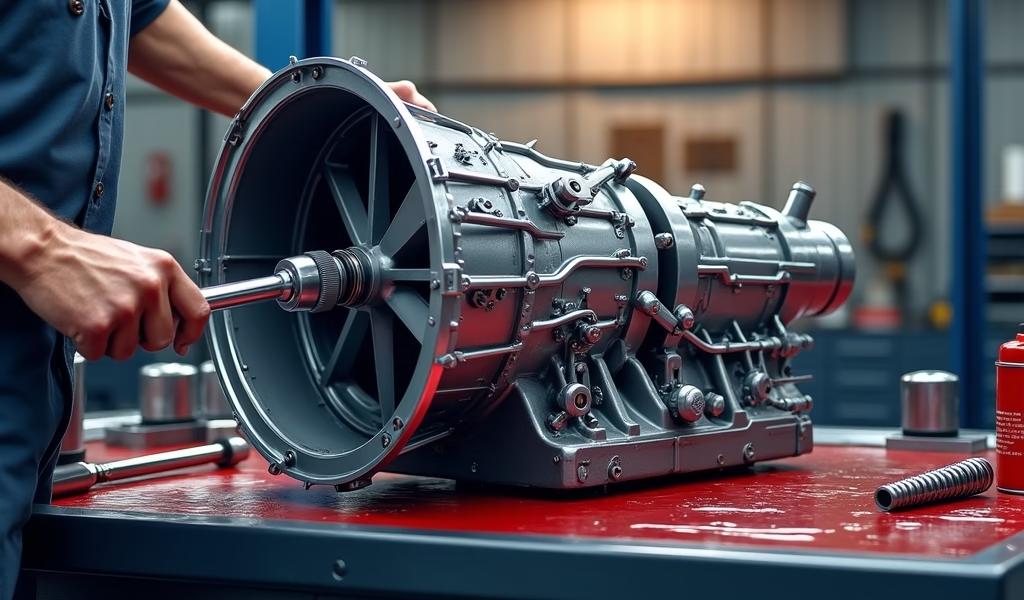
Your vehicle will often communicate transmission issues before catastrophic failure occurs. Learning to recognize these warning signs can save you thousands in repair costs. Here are the most common indicators that your transmission needs immediate attention:
- Delayed or rough shifting between gears
- Unusual noises (whining, buzzing, or clunking) when in neutral
- Burning smell from under the hood
- Leaking red or brown fluid underneath your parked vehicle
- Dashboard warning lights (specifically check engine or transmission temperature)
- Vehicle surging forward unexpectedly
- Transmission slipping or engine revving without corresponding acceleration
If you experience any of these symptoms, don’t wait for your next scheduled service. Continuing to drive with these warning signs can transform a simple fluid change into a complete transmission rebuild. I’ve seen countless customers ignore subtle shifting changes only to face much costlier repairs weeks later.
Transmission fluid that appears dark brown or has a burnt smell indicates significant internal wear. Clean transmission fluid should be bright red or clear with a reddish tint. Once it turns dark or develops a burnt odor, internal damage has likely already begun.
According to AAA’s automotive maintenance experts, addressing transmission issues early can prevent up to 90% of major transmission failures. That’s why being proactive about these warning signs is so crucial for your vehicle’s longevity and your wallet’s health.
Manufacturer Recommendations vs. Reality
Manufacturer service schedules are starting points, not absolute rules. While your owner’s manual might recommend transmission service at 100,000 miles or claim to have “lifetime” fluid, these guidelines often reflect ideal driving conditions that few of us actually experience.
In reality, transmission service intervals should be adjusted based on how you use your vehicle. If you frequently drive in stop-and-go traffic, tow heavy loads, or operate in extreme temperatures (hot or cold), your transmission works harder and requires more frequent maintenance. What mechanics call “severe service” conditions actually apply to most urban and suburban drivers.
I’ve had numerous conversations with customers confused by the discrepancy between what their dealer told them and what their transmission actually needs. The truth is that more frequent service is almost always better for your transmission’s health, regardless of what the minimum recommendations suggest.
A good rule of thumb is to reduce the manufacturer’s recommended interval by 25-30% if you regularly experience any of these conditions:
- Daily commuting in heavy traffic
- Regular short trips (less than 10 miles)
- Extreme temperature environments (below freezing or above 90°F)
- Towing or hauling heavy loads
- Driving on dusty, muddy, or unpaved roads
- Frequent mountain driving
Many manufacturers have actually revised their service recommendations in recent years, moving away from extremely long intervals after seeing higher-than-expected transmission failure rates. This trend supports what independent mechanics have advocated for years: more frequent service leads to longer transmission life.
Factors Affecting Your Transmission Service Interval
Multiple factors influence how often your transmission requires service. Understanding these can help you develop a maintenance schedule that truly protects your investment rather than simply following a one-size-fits-all recommendation.
Driving habits have perhaps the most significant impact. Aggressive acceleration, constant shifting between drive and reverse, and holding the vehicle on hills using the transmission rather than the brakes all increase heat and wear. Heat is your transmission’s worst enemy – for every 20°F increase in operating temperature above normal, the transmission’s lifespan can be reduced by half.
Vehicle type and design also matter considerably. Some transmissions are simply engineered with tighter tolerances and higher-quality materials. CVT (Continuously Variable Transmissions) typically require more frequent service than traditional automatics, while manual transmissions often have different service needs entirely.
Environmental factors play a crucial role as well. Extreme temperatures, high humidity, salty air in coastal regions, and dusty conditions can all accelerate fluid degradation. Vehicles in Phoenix, Arizona will generally need more frequent transmission service than identical models in more temperate climates.
Your transmission service interval should also account for the vehicle’s age and mileage. As transmissions age, seals harden and components wear, making fresh, clean fluid even more critical. This is why essential car maintenance becomes increasingly important as your vehicle accumulates miles.
DIY vs. Professional Transmission Service
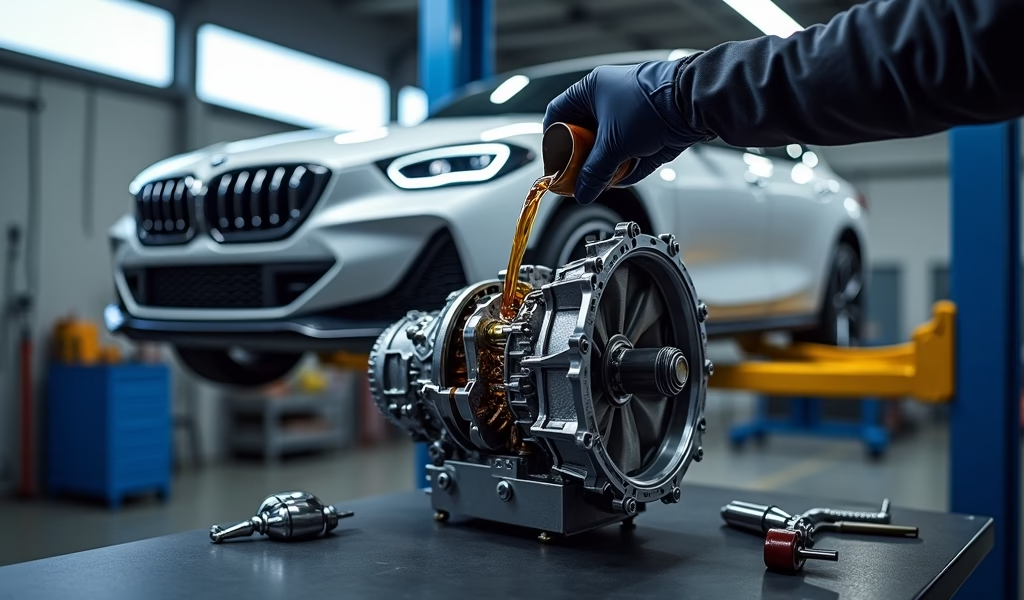
While many vehicle owners successfully handle oil changes at home, transmission service presents a different level of complexity. A complete transmission service involves more than simply draining and refilling fluid – it requires specialized equipment, technical knowledge, and often model-specific procedures.
A professional transmission service typically includes:
- Complete fluid exchange (not just a drain and fill)
- Transmission pan removal and cleaning
- Filter replacement
- Pan gasket replacement
- Inspection of internal components
- Computer system check and potential adjustments
- Road testing to ensure proper operation
The DIY approach, while less expensive upfront, often misses critical elements of this process. Simple drain-and-fill procedures typically replace only 30-40% of the old fluid, leaving contaminants circulating through the system. Additionally, without proper equipment, it’s difficult to ensure the correct fluid level – a critical factor in transmission performance.
That said, there are maintenance tasks that diligent owners can perform between professional services. Regularly checking fluid levels and condition, inspecting for leaks, and paying attention to shifting performance can help identify issues before they become serious. Learning how to maintain your car properly includes understanding these basic transmission checks.
If you’re determined to handle transmission service yourself, invest in model-specific information from sources like AllData DIY, which provides factory service information. Remember that modern transmissions often require precise temperature-dependent fluid level checks and specific fluid types that can’t be substituted without consequences.
Cost Comparison: Regular Service vs. Major Repairs
The financial mathematics of transmission maintenance is compelling. Let’s break down the numbers to illustrate why following your transmission service interval is one of the most economically sound decisions you can make for your vehicle.
A typical transmission service costs between $150-$400 depending on your vehicle type and location. For our example, let’s use an average cost of $250 per service. If you maintain a 40,000-mile service interval on a vehicle you plan to keep for 200,000 miles, you’ll invest approximately $1,250 in transmission maintenance over the vehicle’s lifetime.
Now, compare this to transmission replacement costs:
- Rebuilt transmission: $1,500-$3,500
- Remanufactured transmission: $2,500-$4,500
- Factory new transmission: $4,000-$8,000+
- Additional labor costs: $500-$1,200
- Potential rental car or lost work costs: Variable
Even at the low end of these estimates, transmission replacement costs at least three times more than lifetime maintenance. At the higher end, particularly for luxury vehicles or those with specialized transmissions, the cost can be ten times higher than preventive maintenance.
Moreover, these figures don’t account for the inconvenience factor. Major transmission repairs typically leave your vehicle unavailable for 3-5 days, while maintenance service is usually completed within a few hours.
Research from the Consumer Reports reliability studies shows that vehicles with documented regular transmission service history have 60% fewer transmission-related issues in higher mileage ranges compared to those with sporadic service records.
Best Practices for Transmission Longevity
Beyond following your transmission service interval, several practices can significantly extend your transmission’s lifespan. These habits cost nothing but can save you thousands in the long run.
Start by allowing your vehicle to warm up before driving, especially in cold weather. Modern vehicles don’t need extended warm-up periods, but giving your car 30-60 seconds before driving allows transmission fluid to circulate properly. Similarly, avoid hard acceleration until the transmission has reached operating temperature.
Practice gentle driving habits. Jackrabbit starts, aggressive shifting, and heavy acceleration place additional strain on transmission components. Smooth, progressive acceleration and deceleration reduce wear and heat generation within the transmission.
When stopped on inclines, use your brakes rather than the “hold” technique with the transmission. Holding position by balancing the gas and transmission creates excess heat and wear on clutch packs and bands.
If you tow or haul heavy loads, consider adding an auxiliary transmission cooler. These inexpensive additions (typically $100-200 installed) can dramatically reduce operating temperatures and extend transmission life in high-stress applications.
For vehicles with manual transmissions, avoid “riding” the clutch or using it to hold position on hills. These habits cause premature clutch wear and can damage other transmission components.
Finally, remember that transmission service is most effective when performed preventively – not reactively. Waiting until you notice problems often means damage has already occurred. The best practice is always to service slightly before you reach the recommended transmission service interval.
Conclusion
Your transmission service interval isn’t just another maintenance item to check off—it’s a crucial investment in your vehicle’s longevity and your financial well-being. Throughout this article, we’ve seen how regular transmission service prevents expensive repairs, maintains optimal performance, and extends the useful life of your vehicle.
The contrast is stark: spend a few hundred dollars periodically on preventive maintenance or risk thousands in major repairs when neglect leads to failure. By understanding your specific vehicle’s needs, recognizing warning signs early, and adjusting service intervals based on your driving conditions, you gain control over your vehicle’s health and your maintenance budget.
Remember that manufacturer recommendations are minimum guidelines, not optimal targets. Tailoring your transmission service schedule to your actual driving conditions will always yield better long-term results. And while professional service provides the most comprehensive care, staying vigilant between services helps catch potential issues before they escalate.
Your transmission is one of your vehicle’s most complex and expensive components. Treating it with care through regular service isn’t just smart maintenance—it’s peace of mind on every journey. Take this knowledge forward, implement a proactive transmission maintenance strategy, and enjoy thousands of trouble-free miles ahead.
Frequently Asked Questions
How often should I change my transmission fluid?
Most manufacturers recommend every 30,000-100,000 miles, but severe driving conditions warrant service every 30,000-50,000 miles. Check your owner’s manual and consider reducing that interval by 25% if you drive in stop-and-go traffic, extreme temperatures, or tow regularly.
Can changing transmission fluid damage an older transmission?
Changing fluid in a neglected high-mileage transmission can sometimes reveal existing issues as debris is disturbed. This correlation isn’t causation – the service exposes problems that were already developing, not creates them.
What’s the difference between a transmission flush and a fluid change?
A fluid change replaces 30-40% of fluid by draining what’s in the pan and adding new fluid. A flush uses machine-assisted pressure to replace nearly 100% of the fluid, providing more complete contamination removal.
Is “lifetime” transmission fluid really good for the lifetime of the vehicle?
“Lifetime” typically refers to the warranty period, not the vehicle’s potential lifespan. Most transmission specialists recommend servicing these transmissions every 60,000-100,000 miles for extended vehicle life.
How much does transmission service typically cost?
Basic transmission service ranges from $150-$400 depending on vehicle type and your location. Specialized transmissions in luxury or performance vehicles may cost more due to specific fluid requirements and more complex procedures.