

Overview
Just like that friend who always has your back in tough situations, your vehicle’s transfer case quietly distributes power to all four wheels when you need it most—but neglect its maintenance and you might find yourself stranded exactly when 4WD matters most. Regular fluid changes every 30,000-60,000 miles, prompt attention to warning signs like unusual noises or leaks, and knowing when to seek professional help can prevent catastrophic failures, saving you thousands in repairs while ensuring your 4WD system works flawlessly through snow, mud, and whatever else your adventures throw your way.
Table of Contents
- What Is a Transfer Case?
- Importance of Transfer Case Maintenance
- Warning Signs of Transfer Case Problems
- Maintenance Schedule: When to Service Your Transfer Case
- DIY Maintenance Tips
- Professional Service: When to Get Help
- Preventing Transfer Case Damage
- Repair vs. Replacement: Making the Right Choice
- Conclusion
- Frequently Asked Questions
What Is a Transfer Case?
Imagine your vehicle’s transfer case as the unsung hero of your 4WD system. It’s the component that takes power from your transmission and distributes it to both your front and rear axles. Without it, your 4-wheel drive or all-wheel drive system simply wouldn’t function.
I’ve been working on these beauties for over 20 years, and I still appreciate their elegant engineering. Located behind your transmission, this gear-filled case contains either chains or gears (depending on your vehicle) that split engine power between your axles when you need that extra traction.
Transfer cases come in two main flavors: part-time and full-time. Part-time systems let you switch between 2WD and 4WD, while full-time systems constantly deliver power to all wheels. Some fancy ones even offer selectable low-range gearing for serious off-roading or heavy towing.
The beauty of proper vehicle maintenance really shows with transfer cases. Take care of them, and they’ll last the lifetime of your vehicle. Neglect them, and you might find yourself stranded exactly when you need 4WD the most.
Importance of Transfer Case Maintenance
Let me tell you something I’ve seen hundreds of times in my shop: a customer tows in their truck after it suddenly lost 4WD capability during a snowstorm or off-road adventure. The culprit? A neglected transfer case that finally gave up the ghost at the worst possible moment.
Regular transfer case maintenance isn’t just about preventing inconvenient breakdowns—it’s about avoiding catastrophic failures that can leave you with repair bills in the thousands. The fluid inside your transfer case lubricates gears and bearings while cooling critical components. When that fluid breaks down or becomes contaminated, excessive wear begins almost immediately.
Consider this: a simple fluid change might cost you around $100-200 every 30,000 miles, but a complete transfer case replacement? You’re looking at $1,500-3,000 depending on your vehicle. The math speaks for itself.
Beyond the financial aspect, proper maintenance ensures your 4WD system works when you need it most—during hazardous driving conditions when your safety might depend on it. As a mechanic who’s helped countless stranded drivers, I can tell you that preventative care is always the smarter choice.
Warning Signs of Transfer Case Problems
Your vehicle will usually give you some warning signs before a transfer case fails completely. Pay attention to these signals, and you might save yourself from an expensive repair or a dangerous situation.
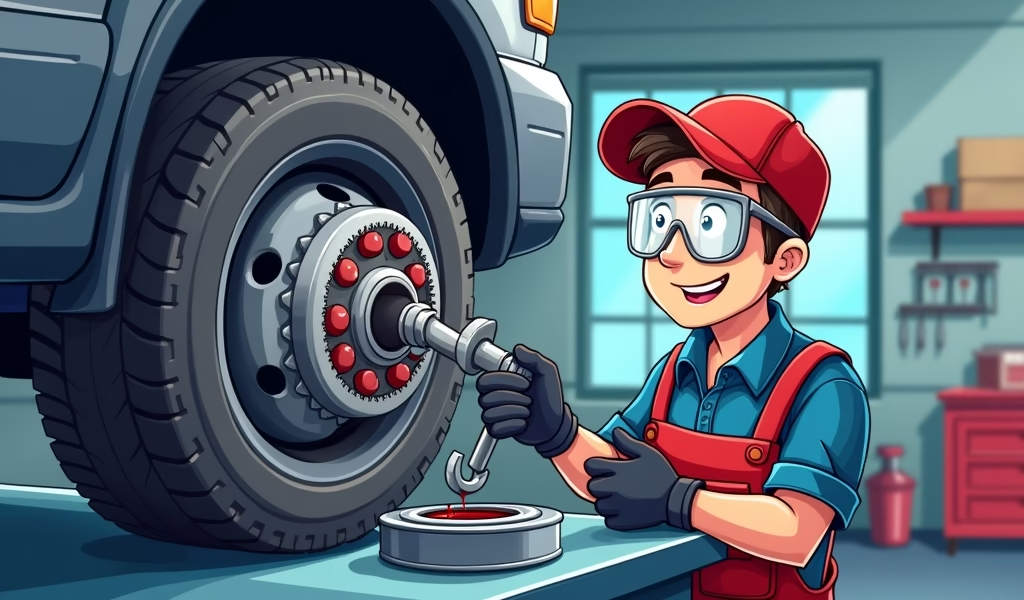
Unusual noises are often the first indicator. Listen for grinding, humming, or whining sounds, particularly when in 4WD mode. These typically indicate worn bearings, damaged gears, or chain problems inside the case. Don’t dismiss these sounds as “normal”—they’re your vehicle’s cry for help!
Fluid leaks beneath your vehicle are another dead giveaway. Transfer case fluid is typically reddish or brownish and will appear under the middle section of your vehicle. Even small leaks should be addressed immediately, as they can quickly lead to fluid starvation and internal damage.
Having trouble shifting into or out of 4WD? This could indicate worn components inside your transfer case or issues with the linkage mechanism. Modern vehicles with electronic 4WD systems might display warning lights on your dashboard—never ignore these warnings.
Vibrations that occur only in 4WD mode often point to transfer case problems, particularly if they change with vehicle speed. And if your vehicle unexpectedly drops out of 4WD, especially during demanding conditions, your transfer case likely needs immediate attention.
According to the National Highway Traffic Safety Administration, drivetrain failures contribute to numerous accidents annually, particularly in adverse weather conditions. Don’t wait until you’re in a difficult situation to address these warning signs.
Maintenance Schedule: When to Service Your Transfer Case
I’ve found that most vehicle owners simply don’t know when to service their transfer case—and that’s not their fault! This critical component often gets overlooked in basic maintenance discussions.
Most manufacturers recommend changing transfer case fluid every 30,000 to 60,000 miles. However, this interval should be shortened if you frequently engage in off-roading, towing heavy loads, or driving in extreme conditions. In these cases, I typically advise my customers to service their transfer case every 15,000 to 30,000 miles.
It’s also wise to inspect your transfer case whenever your vehicle is on a lift for other services. A quick visual check for leaks or damage takes just minutes but can spot developing issues before they become serious.
If you’ve recently been through deep water while off-roading, you should check your transfer case fluid immediately. Water contamination is a common cause of premature failure, and changing the fluid promptly can prevent expensive damage.
For vehicles that aren’t frequently used in 4WD mode, I recommend engaging the system at least monthly to keep components lubricated and functioning properly. This essential maintenance tip prevents seals from drying out and internal components from seizing.
Remember: your owner’s manual contains manufacturer-specific recommendations for your particular vehicle. These guidelines should be your baseline for maintenance, though driving habits and conditions may necessitate more frequent service.
DIY Maintenance Tips
If you’re comfortable working on your vehicle, changing transfer case fluid is a reasonable DIY job. Here’s how to tackle it:
- Gather your supplies: the correct fluid (check your manual), a drain pan, new gasket if required, basic hand tools, and gloves.
- Ensure your vehicle is level and secure on jack stands—never rely solely on a jack!
- Locate the drain and fill plugs on your transfer case. They’re typically hexagonal plugs on the side or bottom of the case.
- Remove the fill plug first (this ensures you can refill the case before finalizing the job).
- Place your drain pan under the drain plug, then remove it carefully. The fluid will flow out.
- Once drained completely, clean the drain plug and replace it, torquing to specification.
- Using a pump or funnel, add the new fluid through the fill hole until it just begins to spill out.
- Replace the fill plug and torque to specification.
While you’re under there, take a moment to inspect the entire transfer case for leaks or damage. Pay special attention to the seals around input and output shafts, as these are common leak points.
For modern vehicles with electronic 4WD systems, you might need a scanning tool to properly check system function. The Financial Consumer Agency of Canada notes that DIY maintenance can save significant money, but only if you have the correct tools and knowledge.
One final tip from my years in the shop: document your maintenance. Keep a log of when you service your transfer case and what fluid you used. This information becomes invaluable for troubleshooting and maintaining your vehicle’s value.
Professional Service: When to Get Help
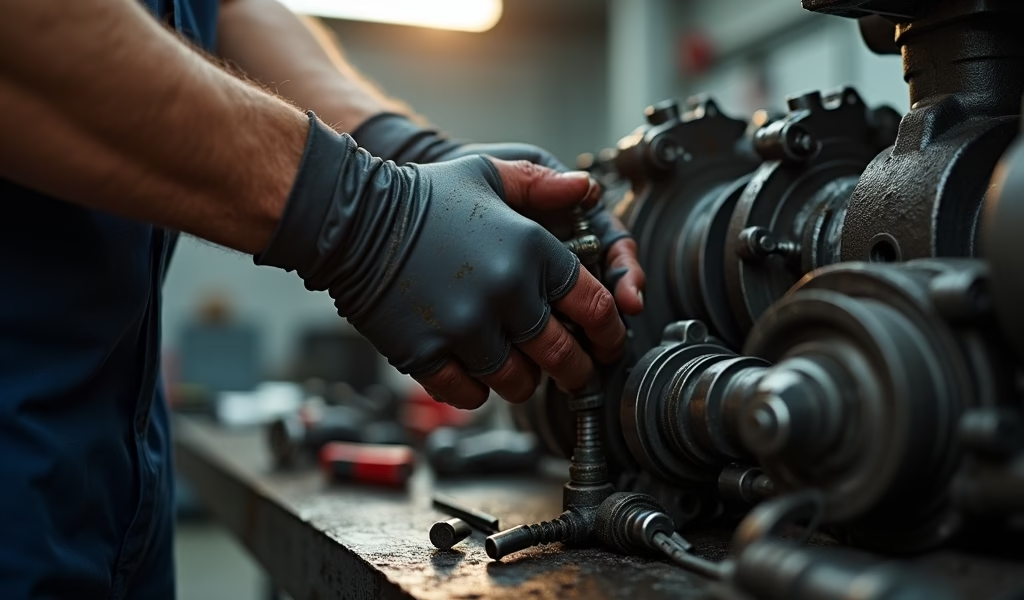
While basic fluid changes are DIY-friendly, there are definitely times when you should leave transfer case work to the professionals. Let me share when I think it’s worth paying for expert help.
If you’re experiencing any of the warning signs we discussed earlier—unusual noises, difficulty shifting, vibrations, or leaks that don’t resolve with a simple fluid change—it’s time to visit a professional. These symptoms often indicate internal problems that require disassembly and specialized knowledge to diagnose and repair.
Vehicles with electronic 4WD systems should generally be serviced by professionals who have the diagnostic equipment to properly troubleshoot these complex systems. The days of purely mechanical transfer cases are mostly behind us, and many modern vehicles integrate the transfer case control with the vehicle’s computer systems.
When selecting a shop, look for specialists in drivetrain or 4WD systems rather than general repair facilities. Ask about their experience with your specific vehicle make and model. A good shop will explain their diagnostic process and provide a detailed estimate before beginning work.
If you’re facing a complete transfer case replacement, this is definitely professional territory. The process involves supporting the transmission, disconnecting driveshafts, and precisely aligning components during reassembly. Improper installation can cause vibrations, premature wear, and even catastrophic failures.
Remember that learning how to maintain your car includes knowing when to call in the experts. Sometimes the most cost-effective approach is paying for professional service rather than risking a DIY repair gone wrong.
Preventing Transfer Case Damage
An ounce of prevention is worth a pound of cure—especially when it comes to transfer cases. Let me share some insider tips for avoiding damage in the first place.
First and foremost, use the correct fluid. I can’t stress this enough! Modern transfer cases often require specific synthetic fluids, and using the wrong type can cause seal deterioration and internal damage. Always check your owner’s manual or consult with a specialist before adding fluid.
Learn the proper way to engage and disengage your 4WD system. Most vehicles should be stopped or moving under 5 mph when shifting between 2WD and 4WD. Forcing the system to engage while moving too quickly can shear teeth off gears or damage chains.
Be cautious with aftermarket modifications. Larger tires, lift kits, and performance chips can place additional strain on your transfer case. If you modify your vehicle, consider upgrading your transfer case fluid to a higher-performance option and shortening your service intervals.
Avoid rapid acceleration and “showing off” in 4WD mode. Those YouTube videos of trucks doing donuts in mud or sand might look fun, but they’re murder on drivetrain components. Smooth, controlled driving will extend the life of your transfer case significantly.
Finally, if you frequently drive in deep water or mud, consider installing a transfer case breather extension. This inexpensive modification raises the breather vent above water level, preventing water from being sucked into your case during water crossings.
According to research from Edmunds, regular fluid checks are among the most neglected but important maintenance tasks. Make checking your transfer case fluid part of your routine maintenance schedule.
Repair vs. Replacement: Making the Right Choice
When faced with transfer case problems, you’ll often need to decide between repairing your existing unit or replacing it entirely. Having guided many customers through this decision, I can offer some practical advice.
For minor issues like leaking seals, worn shift forks, or linkage problems, repair is usually the most economical option. These repairs typically cost between $200-600 and address specific problems without replacing the entire unit.
However, when internal components like chains, gears, or bearings fail, replacement often makes more sense. The labor cost to disassemble and rebuild a transfer case often approaches the cost of a remanufactured unit, which typically comes with a warranty.
When considering replacement, you have three options:
- New: Most expensive but comes with full manufacturer warranty
- Remanufactured: Good balance of quality and cost; usually includes upgraded components that address common failure points
- Used: Least expensive but highest risk; condition is often unknown
In my experience, remanufactured transfer cases offer the best value for most drivers. They’re typically rebuilt to meet or exceed original specifications, often with improvements that address known weaknesses in the original design.
A good rule of thumb: if repair costs exceed 60-70% of replacement costs, replacement is usually the better long-term investment, especially for vehicles with over 100,000 miles. And if you’re keeping the vehicle for the long haul, the peace of mind from a warranty-backed replacement is often worth the additional cost.
Conclusion
Proper transfer case maintenance isn’t just about avoiding an expensive repair bill—it’s about ensuring your 4WD system works flawlessly when you need it most. Whether you’re navigating a snowy commute or tackling weekend off-road adventures, a well-maintained transfer case provides the capability and confidence your vehicle was designed to deliver.
By following the maintenance schedule, being attentive to warning signs, and making informed decisions about service, you can extend the life of your transfer case significantly. Remember that preventive maintenance is always less expensive and inconvenient than emergency repairs.
Take it from someone who’s seen countless avoidable failures: a little attention to your transfer case pays big dividends in vehicle reliability and performance. Make it part of your regular maintenance routine, and your 4WD system will reward you with years of trouble-free operation.
The next time you’re underneath your vehicle for an oil change, take a moment to check your transfer case. That simple act of maintenance might just prevent you from becoming one of those unfortunate souls stranded on the side of the road during the next big storm.
Frequently Asked Questions
How often should I change my transfer case fluid?
Most manufacturers recommend changing transfer case fluid every 30,000 to 60,000 miles. If you frequently drive in severe conditions or use 4WD often, consider changing it every 15,000 to 30,000 miles instead.
What are the first signs of transfer case problems?
The earliest warning signs typically include unusual noises (grinding or whining), difficulty shifting into or out of 4WD, and fluid leaks beneath the middle of your vehicle. Never ignore these symptoms as they often indicate developing issues.
Can I drive with a damaged transfer case?
It’s not recommended as continued driving may cause more extensive damage to your vehicle’s drivetrain. If your transfer case is damaged, limit driving to reaching a repair facility and avoid using 4WD if possible.
What type of fluid does my transfer case need?
Transfer cases require specific fluids that vary by vehicle manufacturer and model. Always check your owner’s manual for the correct fluid specification, as using the wrong fluid can cause serious damage.
How much does transfer case repair typically cost?
Minor repairs like seal replacement typically cost $200-600, while complete replacement ranges from $1,500-3,000 depending on your vehicle model and whether you choose new, remanufactured, or used components. Labor typically accounts for about 40% of the total cost.