

Overview
Who knew that your lead foot and trunk full of “just in case” junk were secretly conspiring with your neglected spark plugs to drain your wallet at the pump? This article provides essential maintenance strategies for maximizing fuel efficiency in used cars, including regular oil changes, proper tire pressure, engine tune-ups, smooth driving habits, and consistent monitoring of performance metrics.
Table of Contents
- Understanding Fuel Efficiency in Used Cars
- Choosing Top MPG Used Cars: What to Look For
- Regular Maintenance: The Foundation of Fuel Efficiency
- Tire Care and Pressure: The Unsung Heroes of MPG
- Engine Tune-Ups: Keeping Your MPG at Its Peak
- Driving Habits That Maximize Fuel Economy
- How to Monitor Your Car’s Fuel Performance
- Conclusion: Maintaining Efficiency for the Long Haul
- Frequently Asked Questions
Understanding Fuel Efficiency in Used Cars
Looking for top MPG used cars isn’t just about saving money at the pump—it’s about making a smart investment in your daily transportation. After 25 years turning wrenches and diagnosing fuel efficiency issues, I can tell you that the right maintenance approach can transform even a moderately efficient used car into a genuine gas-sipper.
Fuel efficiency isn’t some mysterious quality that only new cars possess. It’s the result of well-designed systems working in harmony—and more importantly, being properly maintained. When you’re shopping for a used car with great MPG potential, you’re looking at the intersection of good engineering and good care.
The average driver doesn’t realize that a well-maintained 10-year-old Honda Civic can sometimes outperform a neglected 3-year-old hybrid on real-world efficiency. That’s because choosing the right used car is only half the battle—how you maintain it determines whether it lives up to its efficiency potential.
Choosing Top MPG Used Cars: What to Look For
Before diving into maintenance tips, let’s talk about what makes certain used cars efficiency champions. The marketplace is filled with options, but a few models consistently deliver exceptional fuel economy even after years on the road.
When shopping for top MPG used cars, consider these proven performers:
- Toyota Prius (any generation, but especially 2010 and newer)
- Honda Civic (particularly the 8th and 9th generations)
- Mazda3 with SkyActiv technology (2012 and newer)
- Volkswagen TDI models (despite the emissions scandal, their efficiency is undeniable)
- Ford Fusion Hybrid (2013 and newer)
- Chevrolet Cruze Eco or Diesel variants
- Hyundai Elantra (2011 and newer)
Beyond the make and model, there are specific features to prioritize. Direct injection engines, continuously variable transmissions (CVTs), and aerodynamic body designs all contribute to better fuel economy. According to EPA’s fuel economy database, these features can improve efficiency by 5-15% compared to older technologies.
Remember to check for the presence of original efficiency features. Sometimes previous owners remove or modify components like air dams, underbody panels, or aerodynamic wheel covers that were designed to improve MPG. A complete vehicle history report can also reveal if the car has been well-maintained from day one.
Regular Maintenance: The Foundation of Fuel Efficiency
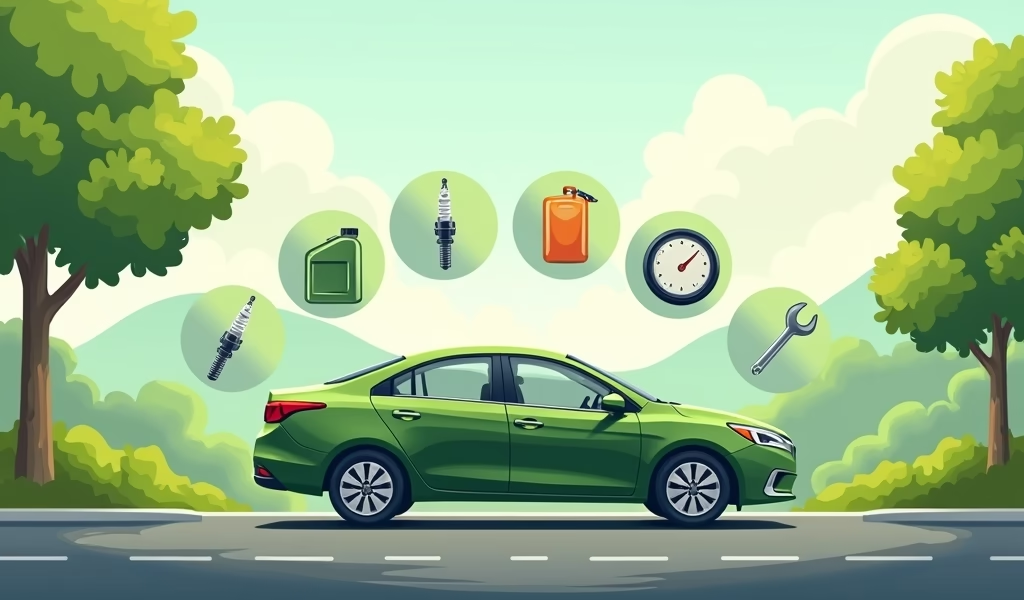
The single most important factor in maintaining high MPG in used cars is consistent, scheduled maintenance. I’ve seen countless vehicles lose 15-20% of their fuel efficiency simply because owners neglected basic upkeep. Let’s break down the essentials:
Oil Changes: More Critical Than You Think
Fresh, clean oil reduces internal engine friction, which directly impacts fuel consumption. For older vehicles, consider switching to synthetic oil—it flows better at startup and maintains its viscosity longer. In my shop, I’ve seen MPG improvements of 2-3% just from switching to synthetic in higher-mileage vehicles.
Don’t just change the oil—change the oil filter too. A clogged filter forces the engine to work harder, drinking more fuel in the process. Follow your vehicle’s recommended change interval, but for older vehicles with 100,000+ miles, I often suggest changing oil every 5,000 miles rather than stretching to the maximum interval.
Air Filter Maintenance
Your engine breathes through its air filter. A clogged filter is like trying to run a marathon while breathing through a straw. According to Department of Energy research, replacing a severely clogged air filter can improve fuel economy by up to 10% in older vehicles with carbureted engines.
For fuel-injected engines (most cars since the late 1980s), the improvement is smaller but still significant—typically 2-3%. Check your air filter every 15,000 miles, but inspect it more frequently if you drive on dusty roads or in high-pollution areas.
Tire Care and Pressure: The Unsung Heroes of MPG
If there’s one maintenance aspect that most drivers overlook, it’s proper tire care. Underinflated tires create increased rolling resistance—essentially, your engine has to work harder to push the car forward. For every 1 PSI drop in pressure across all four tires, you can lose about 0.2% in fuel economy. That might seem small, but if you’re running 10 PSI low (which I see regularly in my shop), that’s a 2% efficiency loss right there.
Check your tire pressure at least monthly, and always when the tires are cold. The recommended pressure is usually found on a sticker inside the driver’s door jamb, not on the tire sidewall (that’s the maximum pressure, not the recommended one).
Beyond pressure, tire selection matters enormously for top MPG used cars. When it’s time to replace tires, consider these factors:
- Low rolling resistance tires can improve fuel economy by 1-4%
- Proper wheel alignment reduces drag and uneven tire wear
- Rotate tires every 5,000-7,500 miles to ensure even wear
- Balancing tires reduces vibration and improves efficiency
One trick I recommend to my efficiency-minded customers: keep a log of when you check tire pressure. This habit alone often leads to more consistent maintenance overall, which benefits your MPG in multiple ways.
Engine Tune-Ups: Keeping Your MPG at Its Peak
Modern cars don’t need the frequent tune-ups that vehicles required decades ago, but regular attention to key engine components can preserve and even improve your fuel economy. For top MPG used cars, these tune-up elements matter most:
Spark Plugs and Ignition System
Worn spark plugs can decrease fuel efficiency by up to 30% in extreme cases. Even mildly worn plugs might cost you 2-3 MPG. Most modern vehicles use long-life platinum or iridium plugs that last 60,000-100,000 miles, but don’t push beyond the recommended replacement interval.
When replacing plugs, consider upgrading to iridium if your car came with standard platinum plugs. The efficiency improvement is subtle but real, especially in vehicles with higher mileage. While you’re at it, have the ignition coils inspected—failing coils are a common cause of misfire and poor fuel economy in vehicles over seven years old.
Oxygen Sensors
The oxygen (O2) sensors help your engine’s computer determine the proper fuel mixture. As these sensors age, they respond more slowly, often causing the engine to run rich (using excess fuel). According to automotive research, a faulty O2 sensor can reduce fuel economy by up to 40%.
Most vehicles have multiple O2 sensors, and they typically last 60,000-100,000 miles. If your check engine light is on and you’re experiencing poor fuel economy, have the sensors tested—it’s often a quick fix with substantial MPG benefits.

Driving Habits That Maximize Fuel Economy
Even the best-maintained vehicle won’t deliver top MPG if driven aggressively. After years of analyzing fuel economy problems, I’ve noticed that driving habits often impact efficiency more than maintenance in many cases. Here’s how to drive for maximum efficiency:
Smooth Acceleration and Braking
Jackrabbit starts and hard braking are MPG killers. Accelerate moderately and look ahead to anticipate stops, allowing natural deceleration whenever possible. Think of your gas pedal as connected to your wallet—the harder you press, the more dollars flow out.
For hybrid vehicles, this approach is even more important, as smooth driving helps maximize regenerative braking benefits. I’ve seen drivers improve their real-world MPG by 15-20% simply by adopting gentler acceleration habits.
Speed Management
Highway efficiency peaks for most vehicles between 55-65 mph. Above 65 mph, aerodynamic drag increases exponentially, dramatically reducing fuel economy. Driving 75 mph instead of 65 mph typically reduces efficiency by 10-15%, while pushing to 80+ mph can reduce it by 25% or more.
Use cruise control on highways to maintain consistent speeds, but be aware that on hilly terrain, some older cruise control systems will consume more fuel than a careful human driver who plans for hills.
Reduce Idling and Unnecessary Weight
Modern engines don’t need extended warm-up periods. Thirty seconds is usually sufficient before driving gently. Extended idling consumes fuel while going nowhere—a gallon of gas can disappear during an hour of idling.
Similarly, every 100 pounds of unnecessary weight reduces fuel economy by about 1%. Clean out your trunk and remove roof racks when not needed. Those who drive with a trunk full of “just in case” items are literally paying for it at every fill-up.
How to Monitor Your Car’s Fuel Performance
You can’t improve what you don’t measure. For those serious about maintaining top MPG in used cars, tracking your vehicle’s performance is essential. Here’s my professional advice on monitoring:
Manual Tracking Methods
The simplest approach is to reset your trip odometer at each fill-up, then divide miles driven by gallons added at the next fill-up. Record this in a small notebook kept in your glove compartment, along with the date and fuel price. This old-school method reveals patterns over time that digital systems often miss.
For more detailed tracking, note the weather conditions and type of driving (city/highway mix). After a few months, you’ll have valuable data showing how different conditions affect your efficiency.
Digital Tools and OBD Scanners
For tech-savvy drivers, consider a Bluetooth OBD-II scanner that connects to smartphone apps like Torque Pro or Dash. These tools provide real-time MPG data and can help identify when specific components begin affecting efficiency. Modern electric vehicles and hybrids often have built-in efficiency monitors that provide detailed feedback on driving patterns.
Some apps also track your acceleration habits and provide gentle reminders to drive more efficiently. In my experience, customers who use these tools typically improve their real-world MPG by 5-10% simply through the awareness they create.
Warning Signs of Efficiency Problems
Be alert for these indicators that your fuel economy is suffering:
- Check engine light (especially if flashing)
- Rough idle or hesitation during acceleration
- Significant or sudden drops in measured MPG
- Unusual exhaust odors or smoke
- Engine running hot or cooling system issues
Address these warning signs promptly. Fuel efficiency problems tend to worsen over time, and delayed repairs often lead to more extensive (and expensive) issues down the road.
Conclusion: Maintaining Efficiency for the Long Haul
Maintaining top MPG in used cars isn’t complicated, but it does require consistent attention and care. The seven maintenance tips we’ve covered—regular oil changes, air filter maintenance, tire care, engine tune-ups, driving habit adjustments, and performance monitoring—form a comprehensive approach that can add years of efficient service to your vehicle.
Remember that fuel efficiency is a system-wide achievement, not the result of any single maintenance task. Each small improvement compounds, potentially adding up to 20-30% better fuel economy compared to a neglected vehicle.
The most efficient vehicles are those that receive ongoing care rather than occasional major overhauls. By implementing these tips consistently, you’ll not only save money at the pump but also extend the life of your vehicle and reduce your environmental footprint.
Whether you’re driving a dedicated high-MPG model or working to maximize efficiency in a conventional vehicle, these proven maintenance strategies will help you get the most miles from every gallon. And in today’s world of fluctuating fuel prices, that’s a victory worth celebrating.
Frequently Asked Questions
Which used car models consistently deliver the best MPG?
The Toyota Prius, Honda Civic, and Mazda3 with SkyActiv technology consistently rank among the top MPG used cars. These models maintain their efficiency well beyond 100,000 miles when properly maintained.
How often should I change the oil to maintain peak fuel efficiency?
For most top MPG used cars, follow the manufacturer’s recommendation, typically every 5,000-7,500 miles. Vehicles with over 100,000 miles may benefit from more frequent changes, around every 5,000 miles.
Can aftermarket modifications improve my used car’s fuel economy?
Most aftermarket “fuel-saving” devices provide minimal benefits and may void warranties. Focus on proven methods like quality synthetic oils, proper tire inflation, and regular maintenance instead.
Do fuel additives really improve MPG in older vehicles?
Most fuel additives provide minimal MPG benefits despite bold claims. Quality fuel system cleaners used every 15,000 miles may help maintain efficiency by keeping injectors clean, but regular usage rarely justifies the expense.
How much can driving habits really affect my fuel economy?
Driving habits can impact fuel economy by up to 30% regardless of vehicle type or condition. Gentle acceleration, anticipating stops, and maintaining steady speeds are the most effective driving techniques for maximizing MPG.