

Overview
Forget white-knuckle rides and dancing like a drunk sailor on the highway—this article outlines five essential fixes for proper sway control in vehicles: maintaining shock absorbers, upgrading sway bars, ensuring correct tire pressure and alignment, distributing weight properly, and installing aftermarket sway control devices when needed. These adjustments not only enhance driving comfort but are crucial for vehicle safety, especially when cornering or towing, with recommendations on which tasks are DIY-friendly versus those requiring professional expertise.
Table of Contents
- Understanding Sway Control: What It Is and Why It Matters
- Signs Your Vehicle Needs Sway Control Adjustment
- Fix #1: Shock Absorber Inspection and Replacement
- Fix #2: Adjusting or Upgrading Sway Bars
- Fix #3: Proper Tire Pressure and Alignment
- Fix #4: Weight Distribution Techniques
- Fix #5: Installing Aftermarket Sway Control Devices
- DIY vs. Professional Adjustment: What You Need to Know
- Maintenance Tips for Long-lasting Sway Control
- Conclusion
- Frequently Asked Questions
Understanding Sway Control: What It Is and Why It Matters
Sway control adjustment might sound like technical jargon, but it’s actually a crucial aspect of your vehicle’s performance that affects both safety and comfort. As someone who’s spent decades under the hood, I can tell you that proper sway control makes the difference between a smooth journey and a white-knuckle ride.
At its core, sway control refers to your vehicle’s ability to minimize side-to-side movement, especially during turns, lane changes, or when driving in windy conditions. This system works as part of your car’s suspension system, stabilizing your vehicle and keeping it level even when external forces try to knock it off balance.
Think of sway control as a good dance partner – it anticipates movement and counterbalances it before you even realize what’s happening. The primary components involved include shock absorbers, sway bars (also called anti-roll bars), springs, and bushings. When these parts work in harmony, you get that planted, confident feel on the road.
Poor sway control doesn’t just make for an uncomfortable ride; it presents real safety concerns. A vehicle that sways excessively is more prone to rollovers in emergency situations and can be downright dangerous when towing. According to NHTSA data, vehicle stability issues contribute to thousands of accidents annually, many of which could be prevented with proper maintenance.
Signs Your Vehicle Needs Sway Control Adjustment
Your car has ways of telling you when sway control needs attention, and they’re usually pretty obvious once you know what to look for. The most immediate sign is excessive body roll during cornering – that feeling where you and your passengers lean dramatically toward the outside of the turn.
Notice your vehicle swaying side to side after hitting a bump? That’s another telltale indicator. A properly functioning suspension should absorb that energy and quickly return to a stable position, not bounce around like a boat on choppy water.
Uneven tire wear patterns, especially along the edges of your tires, often point to sway control issues. When your vehicle can’t maintain proper geometry through turns, certain parts of your tires bear excessive weight, leading to premature wear in those areas.
Pay attention to handling during windy conditions too. If moderate crosswinds have your vehicle feeling unstable or require constant steering corrections, your sway control components likely need some attention. Similarly, if towing even light loads makes your vehicle feel unsteady, don’t ignore it – that’s your car practically shouting for help.
Perhaps the most concerning sign is a “floating” sensation at highway speeds, where the car feels disconnected from the road. This indicates serious sway control problems that compromise your car’s safety features and should be addressed immediately.
Fix #1: Shock Absorber Inspection and Replacement
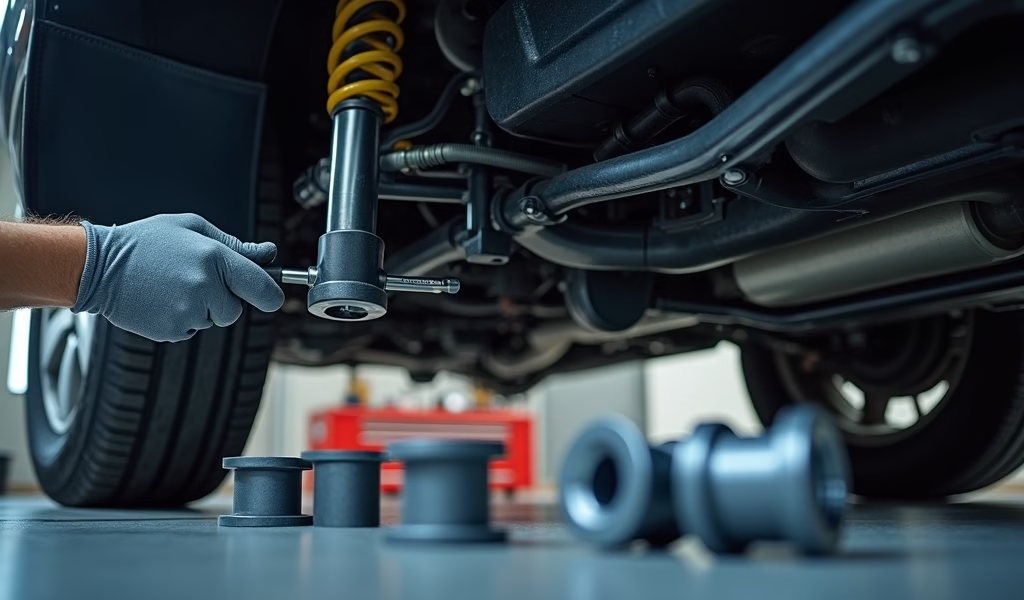
Let’s start with the workhorses of your suspension system: shock absorbers. These hydraulic marvels control the rate at which your suspension compresses and rebounds, playing a crucial role in sway control. When they start to fail, you’ll definitely feel the difference.
First, perform a visual inspection. Look for obvious signs of damage such as fluid leaks (oily residue on the shock body), dents, or bent mounting points. While you’re at it, check the bushings at each end of the shock for cracks or deterioration – these rubber components often fail before the shock itself.
The bounce test, while not scientifically precise, gives a decent indication of shock health. Push down hard on each corner of your vehicle and release. A properly functioning shock should allow the car to rebound just once before settling. If it continues bouncing like a pogo stick, those shocks are ready for retirement.
When replacing shocks, consider upgrading to performance-oriented options if you frequently drive on winding roads or tow loads. Many aftermarket shocks offer adjustable damping, allowing you to fine-tune your sway control based on driving conditions. Brands like Bilstein, KYB, and Monroe offer excellent options for most vehicles at various price points.
Remember that shocks typically wear out gradually over time, making the decline in performance easy to miss. Most mechanics recommend replacement every 50,000-100,000 miles, but this varies based on your driving habits and road conditions. If you can’t remember the last time yours were replaced and you’re experiencing sway issues, this is likely your culprit.
Fix #2: Adjusting or Upgrading Sway Bars
Sway bars (anti-roll bars) are specifically designed to combat body roll and are arguably the most direct way to improve sway control. These simple yet ingenious steel bars connect the left and right sides of your suspension, resisting the tendency of your vehicle to lean during cornering.
If your vehicle came equipped with adjustable sway bars, you’re in luck. Check the end links and bushings where the bar connects to the frame and suspension components. Deteriorated bushings dramatically reduce sway bar effectiveness, but they’re relatively inexpensive and straightforward to replace.
For those with non-adjustable factory sway bars, upgrading to aftermarket options offers substantial improvements. Thicker bars provide more resistance to roll, while adjustable models let you fine-tune the handling balance between understeer and oversteer. Companies like Eibach, H&R, and Addco produce quality options for most popular vehicles.
When installing new sway bars, pay careful attention to the bushings and mounting points. Use the specified lubricant on polyurethane bushings, and ensure all hardware is torqued to manufacturer specifications. Improper installation can lead to unwanted noises and premature component failure.
Keep in mind that while stiffer sway bars improve handling, they can sometimes reduce ride comfort, especially on rough roads. Finding the right balance depends on your priorities. Performance-minded drivers might prefer the flatter cornering of stiffer bars, while those seeking comfort might opt for moderately upgraded bars that split the difference.
Fix #3: Proper Tire Pressure and Alignment
Don’t underestimate the impact of properly inflated tires on sway control. Tires are, after all, your only connection to the road, and their condition significantly affects how your vehicle handles sideways forces.
Start by checking your tire pressure against the manufacturer’s specifications (usually found on a sticker inside the driver’s door jamb). Underinflated tires flex excessively during cornering, creating a spongy, unpredictable feel, while overinflated tires reduce contact patch size and can make your vehicle skittish over uneven surfaces.
Beyond pressure, inspect your tires for uneven wear patterns that might indicate alignment issues affecting sway control. Excessive wear on inner or outer edges points to camber problems, while feathering across the tread suggests toe misalignment. Both conditions compromise your vehicle’s stability during directional changes.
A professional alignment isn’t just about preventing premature tire wear – it’s fundamental to proper sway control. During alignment, a technician adjusts the angles of your wheels to factory specifications, ensuring optimal handling characteristics. Some performance-oriented drivers opt for alignment settings with additional negative camber for improved cornering stability, though this typically accelerates tire wear.
Consider tire type and construction as well. Performance tires with stiffer sidewalls resist lateral flex better than comfort-oriented options, directly improving sway control. If you’re experiencing excessive body roll with properly maintained suspension components, upgrading to tires with reinforced sidewalls could provide the improvement you’re seeking.
Fix #4: Weight Distribution Techniques
Weight distribution plays a surprisingly significant role in sway control, especially for vehicles that carry variable loads. Even the most well-maintained suspension system can struggle when weight isn’t properly balanced.
For everyday driving, be mindful of how you load your vehicle. Place heavier items as low as possible and toward the center of the vehicle rather than at the extremities. In SUVs and crossovers, avoid piling luggage to the ceiling in the cargo area, as this raises the center of gravity and exacerbates swaying tendencies.
When towing, proper tongue weight is critical. As a rule of thumb, aim for tongue weight to be 10-15% of your total trailer weight. Too little tongue weight creates a dangerous pendulum effect where the trailer sways and potentially drags the tow vehicle with it. Too much tongue weight overloads your rear suspension, reducing front-end traction and steering response.
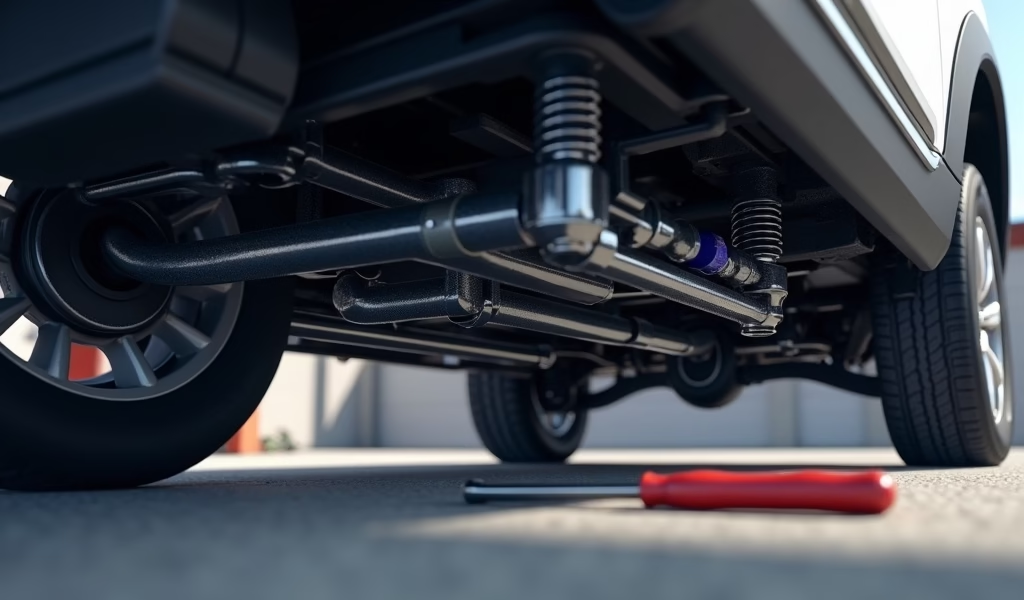
For consistent haulers, consider load-leveling solutions. These range from simple helper springs to sophisticated air suspension systems that maintain proper ride height regardless of cargo. By keeping your vehicle level, these systems ensure that your sway control components work as designed even when heavily loaded.
Remember that even temporary weight shifts affect handling. A full roof rack, for instance, raises your center of gravity substantially and makes your vehicle more susceptible to crosswinds and body roll. When carrying rooftop cargo, reduce your speed accordingly and be prepared for the altered handling characteristics.
Fix #5: Installing Aftermarket Sway Control Devices
For those who regularly tow trailers, dedicated sway control devices provide an extra layer of stability beyond what your vehicle’s suspension can offer. These specialized tools work at the hitch connection point to minimize the transmission of lateral forces between your vehicle and trailer.
Friction sway controls are the most basic and affordable option. They work by creating resistance to lateral movement at the hitch through adjustable friction pads. While not as sophisticated as other options, they provide noticeable improvement for light to medium-weight trailers and can be adjusted based on road conditions.
Dual cam sway controls offer more sophisticated management of trailer movement. These systems use spring-loaded cams that increase resistance progressively as sway increases, providing a more natural and proportional correction than friction-based systems. They’re particularly effective for larger trailers and windy conditions.
Weight distribution hitches often incorporate sway control functions and address two problems simultaneously. By distributing the trailer’s tongue weight across all axles of both the tow vehicle and trailer, they maintain proper suspension geometry while minimizing sway. Brands like Equal-i-zer and Blue Ox are highly regarded in this category, as noted by towing safety experts.
For the ultimate in trailer stability, electronic sway control systems integrate with your vehicle’s stability control. These systems can detect the onset of trailer sway and automatically apply individual brakes to bring everything back in line before the driver even notices a problem. While expensive, they provide peace of mind for those towing valuable cargo in challenging conditions.
DIY vs. Professional Adjustment: What You Need to Know
Deciding whether to tackle sway control adjustments yourself or seek professional help depends on your mechanical aptitude, tools, and the specific components involved.
DIY-friendly tasks include checking and adjusting tire pressure, inspecting sway bar bushings for wear, and installing basic friction sway controls for trailers. These jobs require minimal specialized tools and present low risk if performed correctly. Most home mechanics can also handle shock absorber replacements with a decent socket set, jack, and jack stands, though spring compression can be dangerous without proper tools.
Tasks better left to professionals include wheel alignments, installation of complex sway control systems, and any modifications that affect your vehicle’s fundamental suspension geometry. These jobs require specialized equipment and expertise to ensure safe, effective results. Improper alignment, for instance, can lead to dangerous handling characteristics and accelerated tire wear.
If you’re unsure about your abilities, consider a compromise approach. Many shops will install customer-supplied parts for a labor fee, allowing you to research and purchase quality components while leaving the installation to experts. This can be particularly cost-effective for suspension upgrades, where markup on parts at repair shops can be substantial.
Remember that modifications affecting suspension height or geometry may impact other systems like ABS and traction control. Modern vehicles use complex sensors that assume certain suspension relationships, and significant changes may require professional recalibration to maintain proper function.
Maintenance Tips for Long-lasting Sway Control
Maintaining your sway control components doesn’t have to be complicated. With regular attention, you can extend their lifespan and ensure consistent performance.
Start with periodic inspections. Every oil change, take a few minutes to check your suspension components for signs of wear or damage. Look for leaking shocks, cracked bushings, or loose hardware. Catching issues early prevents cascading failures where one worn component damages others.
Keep suspension components clean, particularly if you drive in areas where road salt is used. Salt accelerates corrosion of metal components and deterioration of rubber bushings. A thorough undercarriage rinse after driving on salted roads pays dividends in component longevity.
Lubricate moving parts according to your vehicle’s maintenance schedule. Many modern suspensions use “lifetime” lubricants, but older vehicles may have grease fittings on sway bar bushings and other components that benefit from periodic attention.
Address strange noises promptly. Clunks, squeaks, or rattles from your suspension often indicate worn components that affect sway control. These sounds rarely resolve themselves and typically worsen over time, potentially leading to more expensive repairs if ignored.
Finally, adjust your driving habits to reduce strain on sway control components. Avoiding potholes, reducing speed on rough roads, and taking corners at reasonable speeds all contribute to longer component life and better performance when you need it most.
Conclusion
Proper sway control adjustment isn’t just about a comfortable ride – it’s fundamental to your vehicle’s handling characteristics and safety. By understanding the five proven fixes we’ve covered – shock absorber maintenance, sway bar adjustments, proper tire care, weight distribution techniques, and aftermarket sway control devices – you’ve taken significant steps toward ensuring your vehicle delivers the stable, confident ride it was designed to provide.
Remember that these systems work together as an integrated whole. A single worn component can compromise the performance of otherwise perfect parts. That’s why a systematic approach to diagnosis and maintenance yields the best results.
Whether you’re looking to improve everyday handling, preparing for a family road trip, or maximizing safety while towing, the principles remain the same: keep your suspension components in good repair, ensure proper alignment and tire condition, and be mindful of how weight affects your vehicle’s dynamics.
With these insights and techniques, you’re well-equipped to enjoy a smoother, safer driving experience. Your passengers will thank you, your cargo will arrive undisturbed, and you’ll experience the confidence that comes from a vehicle that responds predictably in all conditions.
Frequently Asked Questions
How often should sway control components be inspected?
Visually inspect sway control components every 10,000 miles or during routine oil changes. More frequent checks are recommended if you regularly drive on rough roads or tow heavy loads.
Can I adjust sway control on my own, or do I need a professional?
Basic adjustments like checking tire pressure and inspecting for worn components can be done at home. More complex tasks like alignment or installing specialized sway control devices are best left to professionals.
Will upgrading my sway bars affect my vehicle’s warranty?
Aftermarket suspension modifications may affect your warranty coverage for related components. Check with your manufacturer or dealer before making substantial modifications to your suspension system.
How do I know if my shock absorbers need replacement?
Look for signs like excessive bouncing after bumps, fluid leaks on the shock body, or uneven tire wear patterns. Most shock absorbers should be replaced every 50,000-100,000 miles, depending on driving conditions.
Does proper sway control improve fuel economy?
Indirectly, yes. A vehicle with proper sway control maintains better aerodynamics through corners and requires fewer steering corrections on the highway. These factors can contribute to slightly improved fuel efficiency, especially during highway driving.