

Overview
Forget those Instagram-worthy engine bay photos—the unsung hero of your vehicle maintenance might be that forgotten hole where your spare tire sulks in darkness. This seven-treatment guide outlines a complete rust prevention strategy for your spare tire well, including thorough cleaning, chemical treatments, protective coatings, and regular maintenance to prevent structural damage and maintain your vehicle’s value.
Table of Contents
- Why Protecting Your Spare Tire Well Matters
- Understanding How Rust Forms in Your Spare Tire Well
- Treatment 1: Thorough Cleaning and Drying
- Treatment 2: Rust Converter Application
- Treatment 3: Primer Application
- Treatment 4: Protective Paint Coating
- Treatment 5: Rubberized Undercoating
- Treatment 6: Moisture Control Methods
- Treatment 7: Regular Maintenance Schedule
- Conclusion
- Frequently Asked Questions
Why Protecting Your Spare Tire Well Matters
When it comes to vehicle maintenance, the spare tire well often sits at the bottom of most drivers’ priority lists. We understand—it’s out of sight, making it easy to forget. But this hidden area of your vehicle deserves attention because once rust takes hold in your spare tire well, it can spread silently and cause significant damage to your car’s structural integrity.
The spare tire well is particularly vulnerable to rust because of its location at the bottom of your trunk. Water, road salt, and debris can find their way into this area through small cracks or during rainy weather. Since many spare tire wells don’t come with factory protection, they’re essentially bare metal waiting for corrosion to begin.
As professional mechanics, we’ve seen countless vehicles with severe rust damage that started in the spare tire well and spread to other critical components. Protecting this area isn’t just about maintaining your vehicle’s appearance—it’s about preserving its safety and value. A rusted spare tire well can compromise your car’s structural integrity, lead to costly repairs, and significantly reduce its resale value.
Understanding How Rust Forms in Your Spare Tire Well
Before we dive into prevention methods, let’s understand why your spare tire well is a rust hotspot. Rust, or iron oxide, forms when iron or steel comes into contact with oxygen and moisture. This chemical reaction is accelerated by salt, which is why vehicles in coastal regions or areas where roads are salted in winter are particularly susceptible.
Your spare tire well creates the perfect environment for rust formation. It’s typically made of bare metal that lacks the protective coatings found on the exterior of your vehicle. When moisture gets trapped in this enclosed space—whether from rain, car washes, or even condensation—it creates ideal conditions for oxidation to occur.
The design of most spare tire wells doesn’t help matters. These recessed areas often have drainage holes that can become clogged with debris, trapping moisture rather than allowing it to escape. Additionally, the rubber seal around your trunk may deteriorate over time, allowing water to seep in during heavy rainfall or car washes.
According to corrosion experts at NACE International, vehicles can lose structural integrity due to prolonged exposure to moisture in hidden areas like spare tire wells. This makes preventative measures not just a cosmetic concern, but a safety priority as well.

Treatment 1: Thorough Cleaning and Drying
The foundation of any rust prevention strategy starts with a clean surface. Before applying any protective treatments to your spare tire well, we need to ensure it’s completely clean and dry.
Begin by removing the spare tire, tools, and any other items stored in the well. This gives you full access to the entire area. You’ll likely find accumulated dirt, debris, and possibly standing water that needs to be addressed.
Here’s our step-by-step cleaning process:
- Use a shop vacuum to remove loose debris and standing water
- Apply an automotive degreaser to break down any oil or grime
- Scrub thoroughly with a stiff brush, paying special attention to corners and crevices
- Rinse with clean water, being careful not to use excessive amounts
- Dry completely using microfiber towels
- Follow up with a heat gun or hair dryer on low setting to ensure no moisture remains
If your spare tire well already shows signs of rust, you’ll need to remove it before proceeding with preventative treatments. For light surface rust, we recommend using a wire brush or 80-120 grit sandpaper to physically remove the oxidation. For more stubborn rust, an oscillating tool with a sanding attachment can make the job easier.
Remember that thorough drying is crucial. Any moisture left behind will compromise the effectiveness of the treatments we’re about to apply. We always recommend allowing an additional 24 hours of air drying after heat drying to ensure the metal is completely moisture-free.
Treatment 2: Rust Converter Application
Once your spare tire well is clean and completely dry, the next step in our rust prevention strategy is applying a quality rust converter. This treatment is especially important if you’ve found and removed some surface rust, as it helps ensure that no microscopic rust particles remain active.
Rust converters work by chemically transforming iron oxide (rust) into a stable compound that prevents further corrosion. The active ingredients in most converters include tannic acid or phosphoric acid, which react with rust to create an inert, protective layer that adheres tightly to the metal surface.
When applying rust converter to your spare tire well, we recommend following these steps:
- Ensure good ventilation in your work area
- Wear protective gloves and eye protection
- Apply the converter using a foam brush for even coverage
- Focus on areas that showed previous rusting
- Allow the product to fully cure according to manufacturer instructions (typically 24 hours)
A good rust converter application will turn any remaining rust from its typical reddish-brown color to a dark purple or black. This color change indicates that the chemical reaction has successfully neutralized the rust. The resulting surface provides an excellent foundation for the primer and protective coatings we’ll apply in subsequent treatments.
According to research published in Progress in Organic Coatings, properly applied rust converters can significantly extend the service life of metal components by creating a stable barrier between the metal and environmental moisture.
Treatment 3: Primer Application
After the rust converter has fully cured, we move on to applying a high-quality automotive primer. This step is crucial for creating a strong bond between the metal surface and your final protective coating. When working on a spare tire well, we always opt for a primer specifically designed for automotive use, as these formulations provide superior adhesion and corrosion resistance.
For optimal results, we recommend using a self-etching primer. This specialized formula contains mild acids that microscopically etch the metal surface, creating a stronger mechanical bond than standard primers. Self-etching primers are particularly valuable when working with the bare metal typically found in spare tire wells.
Follow these steps for proper primer application:
- Mask off surrounding areas to prevent overspray
- Shake the primer can vigorously for at least one minute
- Apply thin, even coats rather than one heavy coat
- Hold the can 8-10 inches from the surface while spraying
- Allow each coat to flash (become tacky) before applying the next
- Apply 2-3 coats for complete coverage
- Allow the primer to cure fully (usually 24 hours) before moving to the next treatment
Proper application technique makes a significant difference in the primer’s effectiveness. We always use smooth, overlapping strokes to ensure even coverage without runs or sags. Remember that several thin coats will provide better protection than one thick coat, which might crack or peel over time.
The primer creates a critical barrier that seals the metal from moisture while providing an ideal surface for your topcoat to adhere to. Taking the time to apply primer properly now saves significant headaches down the road when it comes to maintaining your vehicle’s condition.
Treatment 4: Protective Paint Coating
With the primer fully cured, we’re ready to apply a protective paint coating to your spare tire well. This layer provides both physical protection against moisture and an aesthetic finish that makes future inspection easier.
For spare tire wells, we typically recommend using either:
- A high-quality automotive enamel paint
- A specialized truck bed liner paint
Automotive enamel offers excellent durability and moisture resistance while maintaining a factory-like appearance. Truck bed liner, on the other hand, provides superior impact resistance and a textured surface that can help prevent items stored in your spare tire well from sliding around. Both options work well—your choice depends on your specific priorities.
When applying your protective coating, follow these professional techniques:
- Work in a clean, dust-free environment whenever possible
- Apply in temperatures between 65-75°F (18-24°C) for optimal results
- Use smooth, even strokes that overlap by about 50%
- Apply 2-3 thin coats rather than one thick coat
- Allow proper drying time between coats (follow manufacturer recommendations)
- Let the final coat cure completely before returning items to the spare tire well
The color choice for your protective coating is largely personal preference, but we often recommend a light color for spare tire wells. Light colors make it easier to spot any water accumulation or new rust formation during future inspections, allowing you to address problems early before they spread.
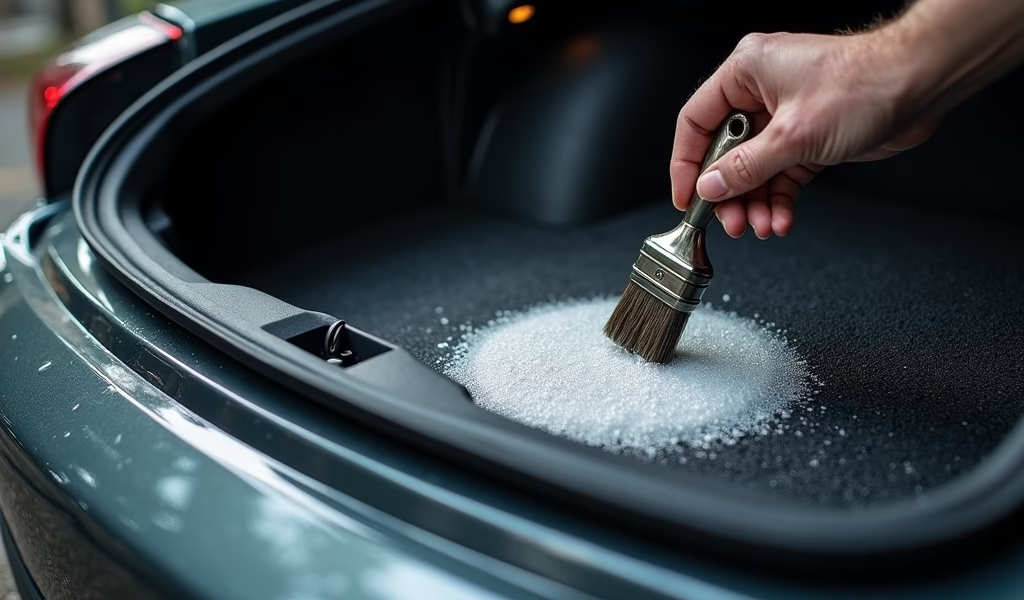
Treatment 5: Rubberized Undercoating
For maximum protection against moisture and road debris, we often recommend applying a rubberized undercoating as an additional barrier for your spare tire well. This specialized coating creates a thick, flexible layer that helps dampen sound, resist impact damage, and provide superior waterproofing.
Rubberized undercoating is particularly valuable for vehicles that frequently travel on gravel roads or in harsh weather conditions. The flexible nature of this coating allows it to expand and contract with temperature changes without cracking, making it ideal for year-round protection.
When applying rubberized undercoating to a spare tire well, we follow these professional techniques:
- Ensure all previous coatings are completely cured
- Warm the undercoating product to room temperature for easier application
- Apply using a spray gun for even coverage (aerosol cans work for small areas)
- Focus on building up protection in corners and seams where moisture tends to collect
- Apply multiple thin layers rather than one thick coat
- Allow 24-48 hours for complete curing before returning the spare tire
One of the benefits of rubberized undercoating is its ability to self-heal minor scratches and abrasions. This makes it particularly suitable for the spare tire well, which often sees tools and other items moved in and out. The coating’s rubbery texture also provides a non-slip surface that helps keep your spare tire and tools in place during driving.
While professional-grade undercoating products typically provide the best results, several consumer-friendly options are available that deliver excellent protection when properly applied. Look for products specifically formulated for automotive use, as these will resist automotive fluids and road contaminants better than general-purpose coatings.
Treatment 6: Moisture Control Methods
Even with the best protective coatings, controlling moisture in your spare tire well remains essential for long-term rust prevention. We recommend implementing several moisture control strategies to keep this area dry and rust-free.
First, ensure that your trunk seals are in good condition. These rubber gaskets prevent water from entering your trunk during rain or car washes. Inspect them regularly for cracks, tears, or compression that might allow moisture to seep in. Applying a rubber conditioner to these seals twice yearly helps maintain their flexibility and sealing ability.
Next, check and clear the drainage holes in your spare tire well. Most vehicles have small drainage ports designed to allow water to escape, but these can become clogged with debris over time. Use a piece of wire or a small screwdriver to gently clear these openings, being careful not to damage the surrounding metal.
For additional moisture control, consider these effective methods:
- Place desiccant packets in your spare tire well to absorb ambient moisture
- Use a trunk liner or rubber mat to catch moisture before it reaches the metal
- Install a moisture barrier between your spare tire and the well
- Consider aftermarket drain plug solutions if your vehicle has persistent water issues
We’ve found that periodically placing moisture-absorbing products in the trunk can significantly reduce humidity levels. Silica gel packets, rechargeable dehumidifiers, or even cat litter in a cloth bag can effectively pull moisture from the air before it condenses on metal surfaces.
During seasonal vehicle detailing sessions, make it a habit to thoroughly dry your spare tire well and check for any signs of moisture intrusion. Early detection of water issues can prevent rust from gaining a foothold in this vulnerable area.
Treatment 7: Regular Maintenance Schedule
The final and perhaps most important treatment in our rust prevention strategy is establishing a regular maintenance schedule for your spare tire well. Even the best protective treatments require periodic inspection and maintenance to ensure long-lasting protection.
We recommend creating a simple maintenance calendar that includes these key activities:
- Monthly: Visual inspection for moisture or rust development
- Quarterly: Remove spare tire and thoroughly clean the well
- Bi-annually: Check and clear drainage holes
- Annually: Evaluate protective coatings and touch up as needed
- Every 2-3 years: Consider reapplying protective coatings
During your inspections, pay particular attention to areas where different materials meet, such as where the spare tire well connects to the trunk floor or around mounting brackets. These junction points are often the first places where protective coatings may fail and rust can begin to form.
Keep a small supply of touch-up materials on hand for quick repairs. A small bottle of matching paint, some primer, and a few disposable brushes allow you to immediately address any scratches or chips in your protective coating before moisture can reach the metal beneath.
Consider creating a simple log to track your maintenance activities. This record can be valuable for both your own reference and as documentation of proper care should you decide to sell your vehicle. Prospective buyers often appreciate seeing evidence of thorough maintenance, particularly for areas like the spare tire well that demonstrate attention to detail.
Remember that prevention is always easier and less expensive than repair. A few minutes of inspection every month can save you from costly body work and structural repairs down the road.
Conclusion
Protecting your spare tire well from rust isn’t just about maintaining your vehicle’s appearance—it’s about preserving its structural integrity and value. By implementing the seven treatments we’ve outlined, you’re taking proactive steps to prevent a common but serious issue that affects many vehicles as they age.
Remember that rust prevention is most effective when approached as a comprehensive system. Each treatment builds upon the previous one to create multiple layers of protection against moisture and corrosion. From thorough cleaning to regular maintenance, each step plays a vital role in keeping your spare tire well rust-free.
We encourage you to view these treatments as an investment in your vehicle’s longevity. The time and materials required are minimal compared to the cost of repairing structural rust damage once it takes hold. Plus, a well-maintained spare tire well contributes to higher resale value and demonstrates to potential buyers that the vehicle has received careful attention throughout its life.
By following our professional advice, you’re not just preventing rust—you’re preserving your vehicle’s safety, reliability, and value for years to come. That’s something every driver can appreciate, regardless of whether you’re maintaining a daily driver or preserving a prized collector’s vehicle.
Frequently Asked Questions
How often should I inspect my spare tire well for rust?
We recommend checking your spare tire well monthly for signs of moisture or rust development. This quick visual inspection only takes a minute but can catch problems early.
Can I use regular spray paint instead of automotive paint on my spare tire well?
Regular spray paint isn’t recommended as it lacks the moisture resistance and flexibility of automotive-grade paints. Automotive paints are specifically formulated to withstand the unique conditions found in vehicles.
What’s the best way to dry my spare tire well after it gets wet?
Remove the spare tire, use absorbent towels to soak up standing water, then use a hair dryer or heat gun on low setting to thoroughly dry the area. Allow additional air drying time before replacing the spare tire.
Will these treatments void my vehicle warranty?
These treatments typically won’t void your warranty as they’re considered normal maintenance procedures. However, it’s always best to check your specific warranty terms or consult with your dealer if you have concerns.
Is it worth treating an older vehicle’s spare tire well if rust has already started?
Absolutely! Treating existing rust can prevent it from spreading to structural components. Even in older vehicles, stopping rust progression can significantly extend the vehicle’s useful life.