

Overview
Like underwear for your car’s sensitive bits, skid plates need their own TLC to keep protecting your vehicle’s vulnerable underbelly from rocks, debris, and road hazards. The article outlines seven essential maintenance treatments for skid plates, including regular cleaning, rust prevention coatings, edge guards, undercoating, specialized paints, sacrificial anodes, and ceramic coatings—all designed to extend their protective lifespan and prevent costly repairs to critical vehicle components.
Table of Contents
- Understanding Skid Plates
- Treatment #1: Regular Cleaning and Inspection
- Treatment #2: Rust Prevention Coatings
- Treatment #3: Polyurethane or Rubber Edge Guards
- Treatment #4: Undercoating Applications
- Treatment #5: Specialized Skid Plate Paints
- Treatment #6: Sacrificial Anodes for Metal Plates
- Treatment #7: Professional Ceramic Coatings
- Conclusion
- Frequently Asked Questions
If you’ve ever driven off-road or hit an unexpected obstacle on the highway, you might owe your engine’s survival to your vehicle’s skid plate. Skid plate coverage is essential for protecting vital components underneath your vehicle, but these protective shields need their own maintenance too. In my 25 years as an automotive technician, I’ve seen too many vehicles suffer expensive damage that could have been prevented with proper skid plate care.
Skid plates act as your vehicle’s underbelly armor, defending crucial components from rocks, debris, and road hazards. Without proper maintenance, these protective barriers can deteriorate, leaving your engine, transmission, and other vital parts vulnerable to potentially catastrophic damage. The good news? Some simple preventative treatments can keep your skid plates in fighting form for years to come.
Understanding Skid Plates
Before diving into treatments, let’s understand what we’re protecting. Skid plates are protective shields installed on the underside of vehicles to guard vulnerable components from impacts and debris. They’re especially important for off-road vehicles but provide valuable protection for any vehicle.
Skid plates typically come in four main materials:
- Steel plates: Extremely durable but heavy, adding to vehicle weight and potentially reducing fuel efficiency
- Aluminum plates: A good balance of strength and weight, offering solid protection without excessive weight penalty
- Composite plates: Modern high-tech options that provide good protection at reduced weight
- Plastic plates: Lightweight and inexpensive, offering basic protection primarily from debris rather than impacts
These protective shields typically cover several critical areas:
- Engine oil pan
- Transmission
- Transfer case
- Fuel tank
- Differential
- Steering components
Neglected skid plates can fail when you need them most. Watch for these warning signs that indicate your skid plate coverage needs attention:
- Visible cracks or dents
- Rust or corrosion
- Loose mounting hardware
- Unusual rattling noises from beneath your vehicle
- Missing sections (surprisingly common after off-road excursions)
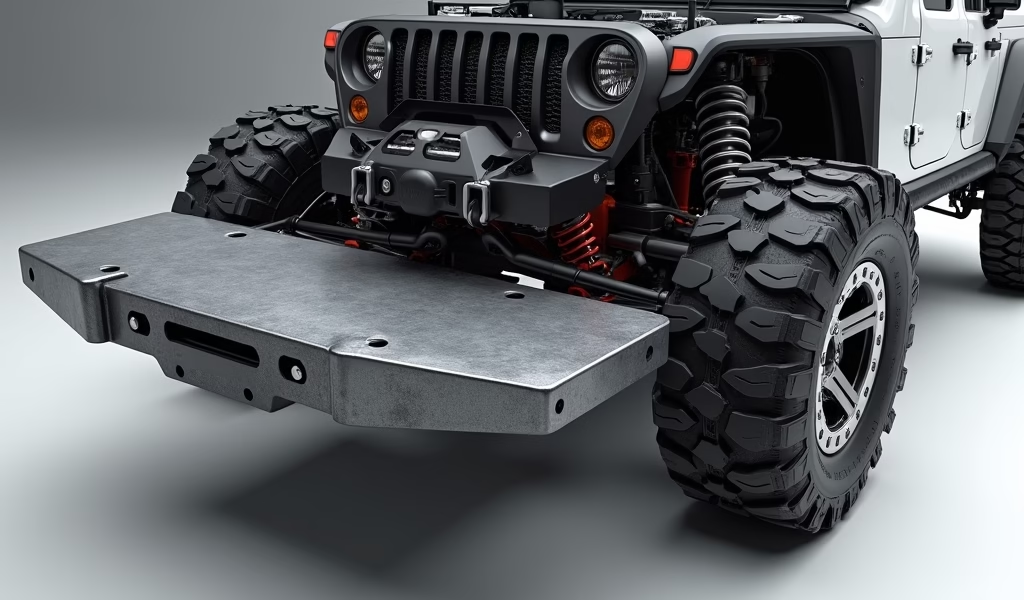
Treatment #1: Regular Cleaning and Inspection
The simplest yet most overlooked skid plate maintenance is regular cleaning. Accumulated mud, salt, and debris trap moisture against your skid plates, accelerating corrosion. This is particularly problematic in regions where road salt is used extensively during winter months.
I recommend this cleaning regimen to my customers:
- Wash underneath your vehicle monthly, more frequently during winter or after off-road adventures
- Use a pressure washer when possible, focusing on removing packed debris from corners and crevices
- Apply automotive degreaser for stubborn grime, especially around mounting points
- Ensure plates are completely dry after washing—trapped moisture accelerates corrosion
While you’re cleaning, perform this quick inspection checklist:
- Check mounting bolts for tightness (loose plates can cause more damage than no plates at all)
- Look for hairline cracks, especially around mounting points
- Examine edges for deformation or severe wear
- Verify all protective covers remain intact and functional
This basic maintenance can extend your skid plate’s life significantly while giving you the opportunity to catch minor issues before they become major problems. As I tell my customers, “Ten minutes under your vehicle now might save you thousands of dollars later.”
Treatment #2: Rust Prevention Coatings
It’s ironic—the very thing protecting your vehicle needs protection itself. Rust inhibitors create a barrier between metal skid plates and the elements that want to return them to their natural, oxidized state.
In my garage, we recommend several effective rust inhibitor options:
- Spray-on inhibitors: Products like Fluid Film, CRC, or WD-40 Specialist create a protective layer that repels moisture
- Wax-based coatings: Provide longer-lasting protection but require more thorough application
- Lanolin-based products: Environmentally friendlier options that still offer excellent protection
For best results, follow this application process:
- Thoroughly clean and dry the skid plate
- Remove any existing rust with a wire brush or sandpaper
- Apply the inhibitor according to manufacturer directions
- Focus extra attention on edges and mounting holes—these areas are particularly vulnerable
- Reapply every 3-6 months, or after particularly challenging driving conditions
For vehicles operating in coastal areas or regions with heavy road salt usage, I recommend more frequent applications. The small cost of rust prevention products is nothing compared to replacing a skid plate—or worse, the components it’s meant to protect.
Treatment #3: Polyurethane or Rubber Edge Guards
While the flat surfaces of skid plates take plenty of abuse, it’s often the edges that suffer the most damage. Edge guards act like bumpers, absorbing impacts that would otherwise deform your plates. In my experience, this simple addition can double the effective lifespan of metal skid plates.
Installation is straightforward even for DIY enthusiasts:
- Measure and cut edge guards to fit your specific skid plate dimensions
- Clean edges thoroughly with isopropyl alcohol to ensure proper adhesion
- Apply a high-strength automotive adhesive suitable for your plate’s material
- Press firmly and allow to cure according to adhesive instructions
- Check adhesion periodically, especially after rough terrain adventures
When selecting edge guard materials, consider these options:
- Polyurethane offers excellent impact resistance and longevity
- EPDM rubber provides good flexibility and weather resistance
- Silicone options work well in extreme temperature environments
Look for UV-resistant materials if your vehicle spends significant time in the sun. The slight increase in cost for premium materials pays dividends in longevity. I’ve seen quality edge guards last for years even on vehicles that regularly tackle challenging terrain.
Treatment #4: Undercoating Applications
Undercoating is like giving your entire undercarriage a protective force field. While primarily applied to the vehicle body, extending this protection to your skid plates creates a unified defense system that guards against corrosion and dampens sound and vibration.
There are two approaches to undercoating:
Professional Application:
- More consistent coverage
- Access to higher-grade materials
- Proper preparation (often the most critical step)
- Typically carries a warranty
DIY Application:
- Cost savings
- Convenience of doing it on your schedule
- Ability to focus on specific vulnerable areas
For DIY enthusiasts, I recommend these products:
- Rubberized undercoating for sound dampening and protection
- Polyurethane-based coatings for superior durability
- Oil-based products for better penetration into seams and crevices
Most undercoatings should be reapplied every 2-3 years, though this varies based on your driving conditions. If you regularly traverse water crossings or drive in areas with heavy salt usage, you’ll benefit from more frequent applications.
When applying undercoating to skid plates, pay special attention to mounting points and edges where moisture can become trapped. These areas are often the first to develop corrosion issues that can compromise the integrity of your protection system.
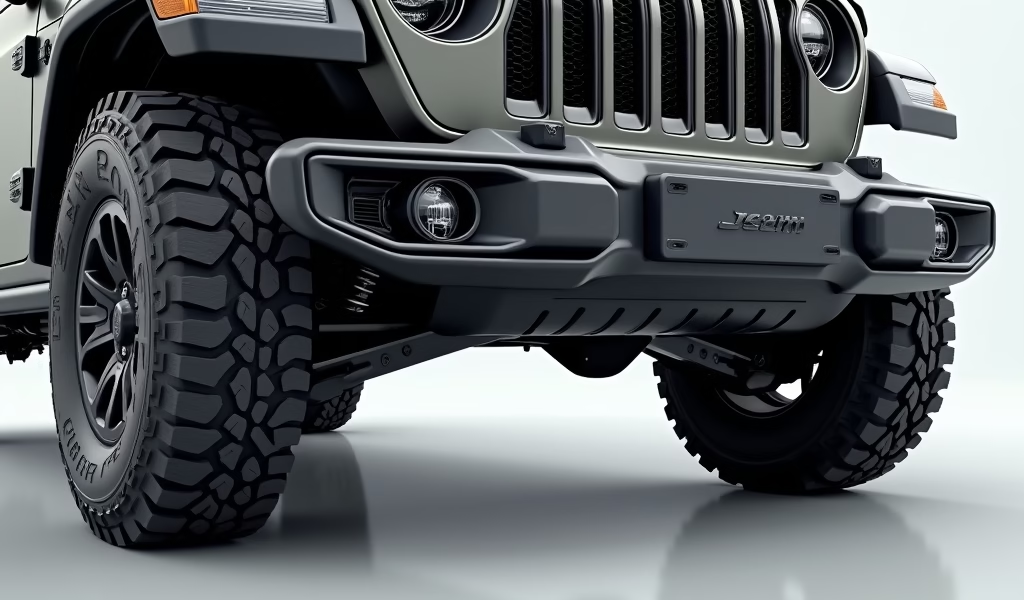
Treatment #5: Specialized Skid Plate Paints
Standard paints would fail quickly when subjected to the conditions your skid plates endure. Specialized formulations designed for high heat, impact resistance, and flexibility are essential for lasting protection.
After testing dozens of products over my career, these top-tier options consistently perform best:
- High-temperature engine enamel: Withstands heat from nearby exhaust components
- Truck bed liner paint: Offers excellent impact resistance and texture
- Industrial equipment paint: Formulated for machinery that takes regular abuse
For the best application results:
- Remove the skid plate if possible (this produces far better results than painting in place)
- Sand or media blast to create a clean surface for adhesion
- Apply a self-etching primer specifically designed for metal
- Add multiple thin coats rather than one thick layer
- Allow full curing time according to manufacturer specifications
To maintain your painted protection, touch up chips promptly before rust can take hold. Small interventions prevent major failures later—a principle that applies to most vehicle maintenance. A properly applied specialized coating can last several years even in challenging conditions, making it one of the most cost-effective treatments available.
One of my off-road customers applies a fresh coat of truck bed liner to his skid plates annually, and despite monthly rock crawling adventures, his original plates have lasted over a decade with minimal damage. That’s protection that pays for itself many times over.
Treatment #6: Sacrificial Anodes for Metal Plates
This might sound like advanced chemistry, but the principle is simple: sacrificial anodes are pieces of more reactive metal (typically zinc or magnesium) that corrode first, sparing your more valuable metal components. It’s a technique borrowed from marine applications that works beautifully for vehicle protection.
Galvanic corrosion occurs when dissimilar metals come into contact in the presence of an electrolyte (like salty water). By attaching a more reactive metal to your skid plate, you ensure it corrodes instead of your protection system.
Implementation is straightforward:
- Identify appropriate attachment points on your skid plate
- Select zinc (for most environments) or magnesium (for saltwater exposure) anodes
- Ensure good metal-to-metal contact
- Check anodes every six months
- Replace when approximately 50% consumed
This method is particularly valuable for vehicles operating in coastal areas or regions with heavy road salt use. According to corrosion specialists, properly implemented sacrificial anodes can reduce corrosion rates by up to 90% in vulnerable components.
While this approach requires some monitoring and periodic replacement of the anodes, the protection it provides to expensive skid plates (and by extension, the components they guard) makes it a worthwhile investment for many vehicles, especially those used in corrosive environments.
Treatment #7: Professional Ceramic Coatings
Ceramic coatings represent the cutting edge of protection technology. While they’ve been protecting exterior paint for years, their application to undercarriage components is relatively new and incredibly effective.
These advanced coatings provide multiple benefits:
- Exceptional chemical resistance against oils, fuels, and road contaminants
- Hydrophobic properties that actively repel water and moisture
- Heat resistance for components near exhaust systems
- Reduced friction that helps debris slide off rather than accumulate
- UV protection to prevent material degradation
Professional ceramic coating of skid plates typically costs between $200-500 depending on vehicle size and number of plates. While not inexpensive, when weighed against the cost of replacement plates or damage to the components they protect, the math becomes compelling.
With proper maintenance, these coatings can last 3-5 years, making them one of the longest-lasting protection options available. I’ve seen ceramic-coated skid plates return from off-road adventures looking almost untouched while conventional plates on similar vehicles showed significant wear.
For those who use their vehicles in demanding conditions or who plan to keep their vehicles long-term, ceramic coatings offer insurance against costly repairs that’s hard to beat. The hydrophobic properties alone make a tremendous difference in corrosion resistance, especially in wet or snowy regions.
Conclusion
Your vehicle’s skid plates are the first line of defense in a hostile world of rocks, debris, and unexpected road hazards. By implementing some or all of these seven treatments, you’re ensuring these silent guardians remain battle-ready when you need them most.
For maximum protection, I recommend combining approaches based on your vehicle usage and environment. For example, regular cleaning and rust inhibitors are essential for everyone, while sacrificial anodes make the most sense for coastal regions or areas with heavy road salt use.
Remember that skid plates protect some of the most expensive components in your vehicle. The engine, transmission, and fuel system repairs that become necessary when protection fails can easily run into thousands of dollars. By contrast, even the most comprehensive skid plate maintenance program costs only a fraction of that amount.
Take a moment today to check your vehicle’s undercarriage protection. A small investment in preventative care now can save you from a major repair bill later. Your future self—and your wallet—will thank you.
Frequently Asked Questions
How often should I inspect my vehicle’s skid plates?
Inspect skid plates at least quarterly and after any off-road adventures or encounters with road debris. Monthly checks are recommended if you regularly drive on rough terrain or in harsh conditions.
Can I install skid plates myself, or should I have a professional do it?
Many aftermarket skid plates come with detailed installation instructions and can be installed by DIY enthusiasts with basic mechanical skills. Factory or complex multi-piece systems might require professional installation to ensure proper fitment and protection.
Are plastic skid plates worth having, or should I upgrade to metal?
Plastic skid plates provide adequate protection from debris and minor impacts for regular on-road driving. For off-road use or if you frequently travel on rough roads, upgrading to aluminum or steel plates offers significantly better protection.
How do I know if my vehicle came with skid plates from the factory?
Check your vehicle’s undercarriage for metal or plastic panels covering components like the engine oil pan, transmission, or fuel tank. Your owner’s manual should also list skid plates under standard equipment or optional features for your specific model.
Will adding skid plates affect my vehicle’s fuel economy?
Metal skid plates add weight which can slightly reduce fuel economy, typically by 1-2% depending on the material and coverage area. The protection benefits generally outweigh this minor efficiency penalty, especially for off-road or all-terrain vehicles.