
Overview
Rock sliders aren’t just fancy metal tubes that make your 4×4 look tough—they’re your vehicle’s bodyguards that need proper care to avoid failing when you’re halfway up a boulder. This article outlines five essential maintenance tips: regular cleaning and inspection, rust prevention, hardware tightening, impact damage assessment, and seasonal maintenance adjustments to ensure your rock sliders provide reliable protection during off-road adventures.
Table of Contents
- Understanding Rock Slider Protection
- Tip 1: Regular Cleaning and Inspection
- Tip 2: Rust Prevention and Treatment
- Tip 3: Hardware Checks and Tightening
- Tip 4: Impact Damage Assessment
- Tip 5: Seasonal Maintenance Considerations
- Conclusion
- Frequently Asked Questions
Understanding Rock Slider Protection
Rock slider protection represents one of the most crucial investments for any serious off-road enthusiast. As a mechanic who’s spent 15 years repairing trail damage, I’ve seen firsthand how quality sliders can save thousands in repairs and keep your vehicle on the trails instead of in the shop.
Rock sliders serve as your vehicle’s first line of defense against trail obstacles, protecting vulnerable rocker panels and lower door sections from impacts that would otherwise crumple sheet metal and compromise structural integrity. Unlike running boards designed primarily for looks and easy entry, proper rock sliders are engineered to take hits and distribute impact forces across mounting points.
The best rock sliders are typically constructed from heavy-duty steel tubing (usually 1.75″ to 2″ diameter with wall thickness between 0.120″ and 0.250″) and mount directly to your vehicle’s frame for maximum strength. Some premium models incorporate additional design elements like angled approaches that help slide your vehicle over obstacles rather than allowing direct impacts.
But here’s what many overlook: even the toughest rock slider protection requires proper maintenance to perform reliably year after year. The harsh conditions of off-roading create unique wear patterns and potential failure points that demand attention.
Tip 1: Regular Cleaning and Inspection
The foundation of proper rock slider maintenance starts with regular cleaning and thorough inspection. This isn’t just about keeping your rig looking sharp – it’s about preventing premature failure.
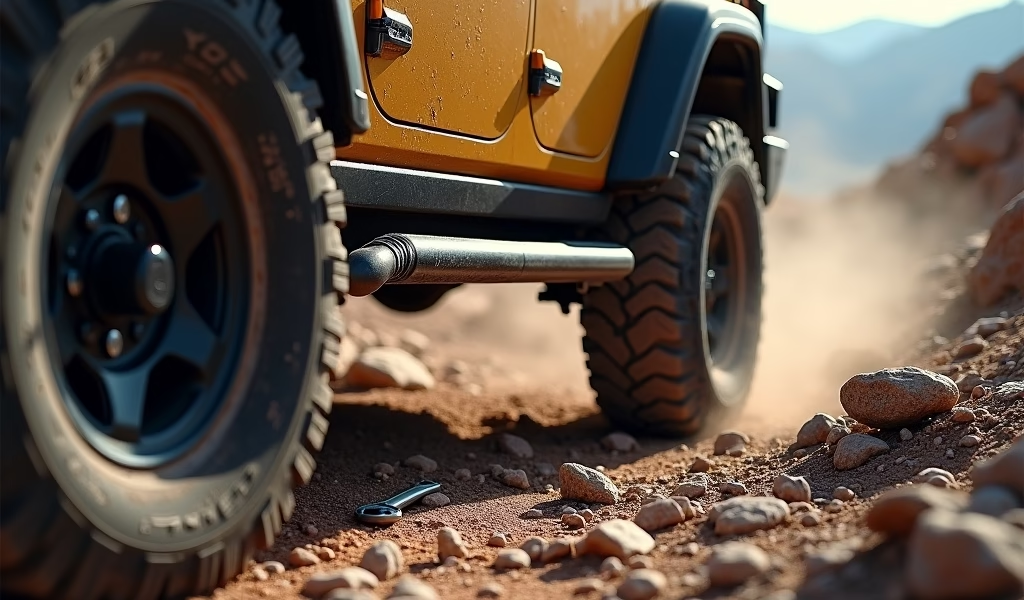
After each trail run, take time to thoroughly clean your sliders. Mud, debris, and water trapped against metal surfaces create ideal conditions for corrosion, especially in areas where protective coatings may have been compromised during off-road use. Use a pressure washer when possible, paying special attention to:
- Mounting brackets and bolt areas
- Weld joints and seams
- Inner surfaces that face the vehicle body
- End caps and plugged tube sections
Once clean, perform a hands-on inspection of your entire slider assembly. Run your fingers along welds and look for any hairline cracks that might indicate stress points. Check that mounting brackets remain solidly attached to both the slider tube and the vehicle frame.
Pay particular attention to signs of movement or shifting. Quality rock sliders should feel as solid as the day they were installed. Any play or looseness suggests mounting hardware issues that require immediate attention before they worsen.
Make this cleaning and inspection process part of your regular post-trail routine. As off-road experts recommend, developing consistent maintenance habits extends the life of all your vehicle’s protection components.
Tip 2: Rust Prevention and Treatment
Rust represents the silent killer of rock slider protection. Given their location and function, sliders face constant exposure to moisture, road salt, mud, and abrasion – a perfect recipe for oxidation.
Prevention should be your primary strategy. For powder-coated or painted sliders, address any chips or scratches immediately. These vulnerable spots allow moisture to reach the bare metal beneath. I recommend keeping a matching touch-up paint pen in your trail kit for quick on-the-spot repairs.
For sliders with bare metal finishes or those with significant coating damage, consider applying a quality rust preventative coating. Products like Fluid Film or Boeshield T-9 create a protective barrier that repels moisture while penetrating small crevices where corrosion typically begins.
Pay special attention to these high-risk areas:
- Mounting bolt holes and hardware
- Welded joints and seams
- Areas where the slider contacts the vehicle body
- Tube ends and drain holes
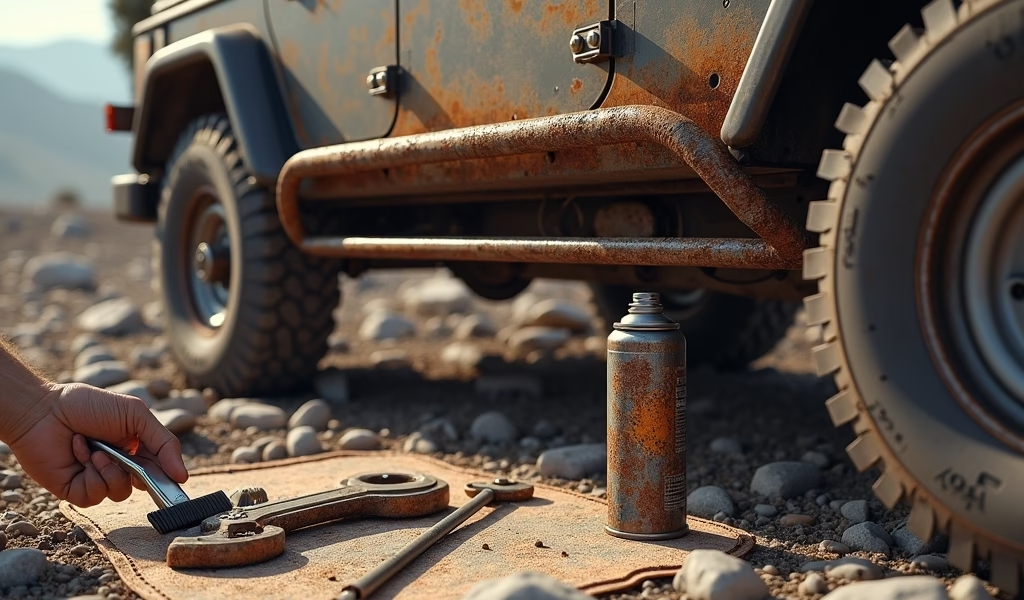
If you discover rust during inspection, address it immediately. For surface rust, a wire brush or sandpaper can remove the oxidation before it penetrates deeper. Follow with a rust converter product that chemically transforms remaining rust into a stable compound before applying your protective coating.
For sliders with significant rust damage, don’t take chances. Compromised structural components can fail at the worst possible moment on the trail. Consider replacement or professional repair if rust has affected more than just the surface. Remember that finding quality replacement parts online requires some research but ensures your vehicle remains properly protected.
Tip 3: Hardware Checks and Tightening
The mounting hardware holding your rock sliders in place experiences extreme stress during off-road use. Constant vibration, flex, and direct impacts can gradually loosen even properly torqued bolts. This creates a dangerous situation where sliders might shift or completely detach during critical moments.
Establish a regular schedule for checking and re-torquing all slider mounting hardware. For casual weekend warriors, monthly checks should suffice. For those hitting challenging trails frequently, inspect hardware before and after each outing.
Here’s my recommended hardware check process:
- Visually inspect all accessible bolts for obvious looseness or damage
- Use a properly calibrated torque wrench to check each fastener
- Follow manufacturer specifications for torque values (typically 35-45 ft-lbs for most M10 and M12 slider bolts)
- Replace any hardware showing signs of stretching, thread damage, or corrosion
- Apply thread locker to any replacement hardware (blue medium-strength for components you’ll need to service again)
Pay special attention to the condition of mounting plates and brackets. These components often take the brunt of impact forces and can develop hairline cracks that aren’t immediately visible. Use a bright flashlight during inspection and look for any signs of metal fatigue or deformation around mounting points.
For vehicles used in particularly challenging terrain, consider upgrading to Grade 8 (or 10.9 metric) hardware if not already equipped. The minimal cost difference provides significant strength advantages in high-stress applications. Some serious off-roaders even opt for carrying spare mounting hardware in their trail kit for emergency repairs.
Tip 4: Impact Damage Assessment
Rock sliders earn their keep by taking impacts that would otherwise damage your vehicle’s body and frame. After significant trail contact, it’s essential to properly assess the condition of your sliders and address any damage.
Start by examining the entire slider for signs of deformation. Minor bending of the outer tube is generally acceptable and expected – that’s what they’re designed to do. However, significant bends, especially near mounting points, require closer inspection.
Look for these critical warning signs:
- Cracks or breaks in welded joints
- Bent or deformed mounting plates
- Evidence that the slider has shifted position relative to the vehicle
- Door operation issues that weren’t present before impact
- Unusual noises or movement when applying pressure to the slider
Don’t ignore these indicators – damaged sliders can compromise your vehicle’s protection and potentially create new hazards. For example, a slider that’s pushed inward might restrict door opening, creating a dangerous situation in an emergency.
For moderate damage, consult with an experienced off-road fabrication shop about repair options. Simple tube replacement or reinforcement might restore full functionality. For severe damage, especially if mounting points have been compromised, complete replacement is typically the safest option.
Remember that rock sliders aren’t just about protection – they’re about driver confidence. When you know your vehicle’s vulnerable areas are properly shielded, you can focus on navigating challenging terrain rather than worrying about expensive body damage. This is especially important for those who enjoy 4WD capabilities in technical terrain.
Tip 5: Seasonal Maintenance Considerations
Environmental conditions dramatically affect rock slider maintenance requirements. Adapting your care routine to seasonal changes helps prevent premature wear and failure.
For winter driving, the combination of road salt, moisture, and freezing temperatures creates particularly challenging conditions for metal components. Increase cleaning frequency and apply additional corrosion protection before winter begins. After driving on salted roads, rinse the underside of your vehicle, paying special attention to sliders and their mounting points.
In summer months, especially in humid regions, check for moisture trapped in slider tube sections. Many quality sliders incorporate small drain holes, but these can become clogged with mud or debris. Ensure these drain points remain clear to prevent internal corrosion that might go unnoticed until significant damage occurs.
For desert environments, the combination of heat, UV exposure, and abrasive sand creates different challenges. Inspect any rubber or plastic end caps for deterioration, as these components often break down first in high-heat conditions. The fine dust characteristic of desert trails can also work its way into mounting hardware, accelerating wear through abrasion.
When transitioning between seasons, perform a comprehensive maintenance check that includes:
- Complete cleaning and detailed inspection
- Fresh application of appropriate protective coatings
- Hardware check and torque verification
- Assessment of any seasonal trail damage
This approach to seasonal off-road maintenance ensures your rock slider protection remains fully functional year-round, regardless of environmental challenges.
Conclusion
Proper rock slider protection maintenance isn’t just about preserving your investment – it’s about ensuring these critical components perform when you need them most. The difference between properly maintained sliders and neglected ones becomes painfully apparent at exactly the wrong moment on the trail.
By incorporating these five maintenance tips into your regular vehicle care routine, you’ll significantly extend the life of your rock sliders while maximizing the protection they provide. Regular cleaning, rust prevention, hardware checks, impact assessment, and seasonal adjustments form a comprehensive approach that addresses all major failure points.
Remember that quality rock sliders represent one of the best protective investments for any off-road vehicle. Their ability to shield vulnerable rocker panels and door sills from expensive damage depends entirely on proper installation and ongoing maintenance.
Whether you’re crawling rocks in Moab or simply adding protection for occasional forest service roads, these maintenance practices will keep your sliders ready for whatever challenges lie ahead. Your vehicle, your wallet, and your peace of mind will all benefit from this proactive approach to rock slider care.
Frequently Asked Questions
How often should I inspect my rock sliders?
Perform visual inspections after each off-road trip and complete hardware checks monthly. Increase frequency to weekly checks if you regularly tackle challenging terrain.
Can I install rock sliders myself or should I use a professional?
DIY installation is possible with proper tools and mechanical skills, but professional mounting ensures correct fitment and torque specifications. Consider professional installation for sliders requiring welding or complex bracket systems.
What’s the difference between rock sliders and running boards?
Rock sliders are heavy-duty protective devices mounted directly to the frame for impact resistance, while running boards primarily assist entry/exit. Running boards typically can’t withstand trail impacts and may create clearance issues off-road.
Will rock sliders affect my vehicle’s ground clearance?
Quality rock sliders are designed to maintain or improve clearance compared to factory components. Some designs actually increase clearance at critical points while providing superior protection.
How much weight do rock sliders add to my vehicle?
Typical steel rock sliders add 50-80 pounds per pair depending on design and material thickness. This additional weight is negligible for most off-road applications and provides substantial protection benefits.