
Overview
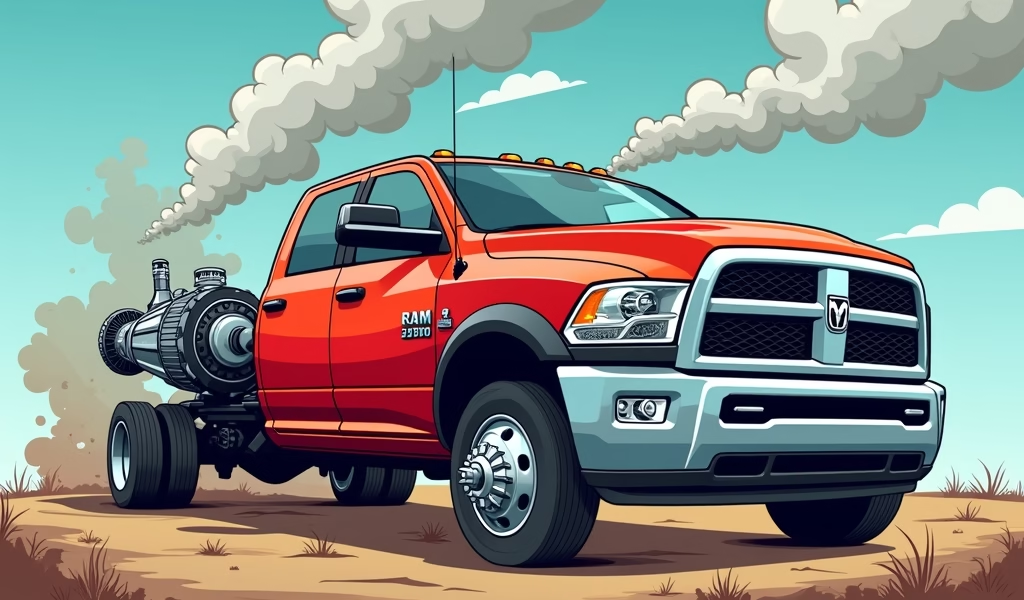
That sinking feeling when your Ram 3500 revs but barely moves signals transmission slipping—a problem that, if caught early through recognizing symptoms like delayed engagement or burning smells, can save you thousands in repair costs. With proper maintenance including regular fluid changes every 30,000-60,000 miles, auxiliary cooling for heavy towing, and avoiding common mistakes like using incorrect fluid, your Ram 3500’s transmission can reliably reach 200,000+ miles even under demanding conditions.
Table of Contents
- Understanding Ram 3500 Transmissions
- Warning Signs of Transmission Slipping
- Common Causes of Ram 3500 Transmission Issues
- How Long Should Your Ram 3500 Transmission Last?
- Preventative Maintenance Strategies
- When to Repair or Replace Your Transmission
- Transmission Service Costs
- DIY vs. Professional Service
- Avoiding Common Transmission Mistakes
- Safety Considerations
- Conclusion
- Frequently Asked Questions
There’s nothing quite like that sinking feeling when you’re hauling a heavy load uphill and suddenly your Ram 3500’s engine revs but the truck barely moves. If you’ve experienced this heart-dropping moment, you’ve likely encountered transmission slipping – a warning sign that shouldn’t be ignored.
For Ram 3500 owners, transmission issues aren’t just inconvenient – they can be financially devastating, especially when towing heavy loads or operating in challenging conditions. These heavy-duty trucks are workhorses, but even the toughest transmissions have their limits.
The good news? With over 30 years of transmission repair experience, I can tell you that catastrophic failures rarely happen without warning signs first. By recognizing early symptoms and taking prompt action, you can potentially save thousands in repair costs and avoid being stranded at the worst possible moment.
Understanding Ram 3500 Transmissions
The Ram 3500’s transmission is a marvel of engineering, designed to handle enormous torque while maintaining reliability. Most newer models feature automatics, with several variants used over the years:
The 68RFE is common in 6.7L Cummins diesel models, while the AS69RC appears in newer heavy-duty applications. For the most demanding work, Ram offers the AISIN AS69RC, renowned for its robustness when paired with high-output diesel engines. Older models might feature the G56 six-speed manual, though these are increasingly rare.
What makes the Ram 3500’s transmission special is its ability to handle extreme torque from powerful diesel engines while managing heat during heavy-duty applications. This engineering is why properly equipped Ram 3500s can tow over 30,000 pounds – but it’s also why problems can hit your wallet hard when they occur.
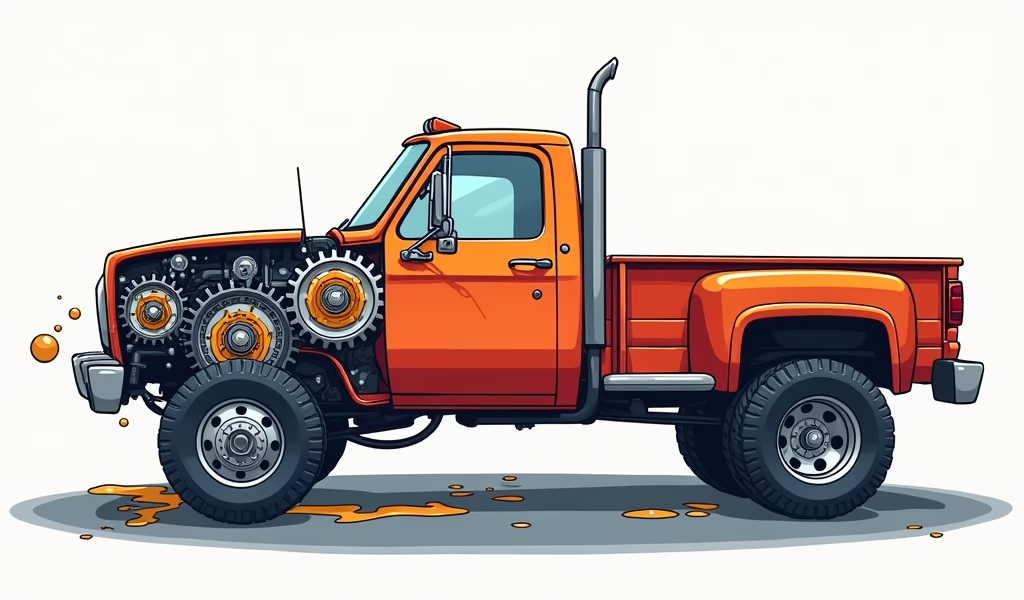
Your truck’s transmission doesn’t just shift gears – it’s the crucial link between your engine’s raw power and the wheels. Through a complex system of gears, clutches, bands, and hydraulics, it ensures your truck delivers the right amount of power whether you’re climbing a steep mountain pass with a heavy trailer or just cruising down the highway.
Warning Signs of Transmission Slipping
After diagnosing hundreds of Ram transmissions, I’ve found these telltale symptoms consistently indicate transmission problems:
Delayed engagement is often the first sign – when shifting from park to drive, you’ll notice a distinct pause before the transmission engages. This delay typically worsens as problems develop.
Perhaps the most alarming symptom is unexpected neutral shifting while driving. This dangerous situation occurs when internal components are severely worn and can leave you stranded in traffic.
High RPM with minimal acceleration is classic slipping – your engine revs higher than normal without a corresponding speed increase. This happens because power isn’t efficiently transferring to the wheels.
A burning smell while driving indicates overheating transmission fluid, often described as similar to burning paper. This odor intensifies during heavy towing or climbing grades and should never be ignored.
Listen for whining, buzzing, or clunking sounds during gear changes. Ram 3500s with transmission issues often develop a characteristic whine during acceleration that becomes increasingly noticeable.
Modern Ram trucks have sophisticated monitoring systems that can detect problems before they become obvious. Don’t ignore that check engine light – it could be saving your transmission.
Many Ram 3500 owners report a distinctive shuddering feeling during the 1-2 or 2-3 shift, particularly under load. This is often an early warning sign of torque converter issues, which are relatively common in these trucks when regularly used for heavy towing.
Common Causes of Ram 3500 Transmission Issues
Understanding what causes transmission slipping helps prevent problems before they start:
Low or burnt transmission fluid is often the simplest cause of slipping. The Ram 3500’s large transmission requires proper fluid levels to handle heat generated during high-torque applications. I’ve seen countless transmissions damaged simply because fluid levels weren’t maintained.
Worn clutch plates or bands occur over time, especially with heavy use. In automatic transmissions, worn clutch plates can’t properly grip, leading to slipping between gear changes. This wear accelerates dramatically when towing heavy loads.
Solenoid problems are electrical components that control fluid flow within the transmission. When they malfunction, gear shifting becomes erratic. Ram 3500 owners frequently encounter solenoid issues after 100,000+ miles.
Torque converter issues often manifest as slipping, especially under load. The lockup clutch within the converter is a known wear item in heavily-used Ram trucks. This component is particularly stressed during towing operations.
Valve body malfunctions can occur when passages become clogged or valves stick. This critical component directs hydraulic fluid throughout the transmission. Valve bodies are particularly susceptible to issues when fluid change intervals are neglected.
Exceeding towing capacity creates tremendous heat and stress that accelerates wear. While the Ram 3500 is built for serious work, regularly pushing beyond its limits significantly shortens transmission life. According to transmission repair specialists, operating just 20°F above normal temperature can cut transmission life in half.
Software or TCM issues can cause erratic shifting behavior that mimics mechanical problems. Some model years have had TCM software updates specifically addressing shifting concerns. These electronic issues can sometimes be resolved without major mechanical work.
How Long Should Your Ram 3500 Transmission Last?
With proper maintenance, many Ram 3500 transmissions reach 200,000+ miles, but several factors influence longevity:
Under normal use with regular maintenance, expect 150,000-250,000 miles from your transmission. However, heavy towing can significantly reduce this range. I’ve seen well-maintained trucks with minimal towing history still running strong at 300,000 miles.
Frequent heavy towing, particularly near maximum capacity, can cut transmission life by 30-50%. The additional heat generated during sustained towing is particularly hard on transmission components. If you regularly tow heavy loads, investing in supplemental cooling becomes essential.
City driving with frequent stops and starts causes more wear than highway cruising. Similarly, mountainous terrain with constant grade changes puts additional stress on your transmission compared to flat terrain.
Certain model years have known issues. The 2003-2007 Ram 3500s with the 48RE transmission behind the Cummins diesel had notable reliability concerns. Later models with the 68RFE (2007.5-2018) showed improved longevity but still experienced issues under heavy use. The AISIN option available in later models has generally proven more robust for severe duty applications.
Perhaps the biggest factor in transmission life is maintenance history. Trucks with documented regular fluid changes typically outlast those with neglected maintenance by 50,000-100,000 miles or more. This single factor has more impact than almost any other on long-term reliability.

Preventative Maintenance Strategies
An ounce of prevention is worth a pound of cure – especially when that “cure” could cost thousands. Here’s my professional advice for keeping your Ram 3500’s transmission healthy:
Ram officially recommends transmission fluid and filter changes every 60,000 miles under normal use. However, if you regularly tow heavy loads or operate in severe conditions (extreme temperatures, dusty environments, frequent short trips), I strongly recommend shortening this to 30,000-45,000 miles.
The factory transmission cooler is adequate for moderate use, but if you frequently tow near capacity, adding an auxiliary transmission cooler is essential. This single upgrade can dramatically extend transmission life by keeping operating temperatures in the optimal range. I’ve installed countless auxiliary coolers for customers, and they’re one of the best investments for longevity.
Always replace the transmission filter with every fluid change. The filter captures debris that would otherwise circulate through and damage precision components. Using OEM or high-quality aftermarket filters makes a noticeable difference in protection.
Develop proper towing habits: start slowly when hauling heavy loads, avoid lugging the engine in too high a gear, and use tow/haul mode when appropriate. These practices reduce transmission strain and heat buildup. The differential service schedule should also be followed when regularly towing.
Use only the correct transmission fluid type. Ram 3500s require specific transmission fluids – typically ATF+4 for most applications, though some AISIN transmissions use a different specification. Using the wrong fluid can cause premature wear and shifting problems. As noted by Motor Trend experts, modern transmissions are designed for specific fluid chemistry.
Have the transmission pan dropped and inspected for metal particles during fluid changes. Excessive metal debris is an early warning sign of internal wear that might otherwise go undetected until significant damage occurs. This visual inspection has saved many transmissions from catastrophic failure.
Don’t overlook your transfer case maintenance, as problems here can cascade into transmission issues. The interconnected nature of your drivetrain means each component affects others.
When to Repair or Replace Your Transmission
Despite your best maintenance efforts, sometimes replacement becomes inevitable. Here’s how to recognize when that time has come and what options you have:
Metal debris throughout the transmission, significant internal damage visible during inspection, or recurring problems despite repairs typically indicate replacement is needed. When these signs appear, further repair attempts often become throwing good money after bad.
You’ll face a choice between rebuilding or replacement. A rebuild involves disassembling your existing transmission, replacing worn parts, and reassembling. A replacement means installing an entirely different unit (new or remanufactured). Rebuilds can be less expensive but take longer; replacements get you back on the road faster but often cost more.
Factory remanufactured transmissions offer consistency and reliability but at premium prices. Aftermarket rebuilds vary dramatically in quality – some surpass OEM specifications with improved components, while others cut corners. I’ve seen both excellent and terrible aftermarket options, so research reputation carefully before choosing.
Pay close attention to warranty terms. Factory transmissions typically come with 3-year/100,000-mile warranties. Aftermarket warranties vary from 12 months/12,000 miles to lifetime coverage. Always get warranty details in writing, including who handles labor costs for potential warranty work.
When facing replacement, many owners use the opportunity to upgrade with stronger components for increased durability. Popular upgrades include improved torque converters, higher-capacity clutch packs, and enhanced valve bodies. These modifications can significantly improve durability, especially for trucks used primarily for towing.
Transmission Service Costs
Budgeting appropriately helps avoid unpleasant surprises. Here’s what you can realistically expect to pay for various transmission services:
A basic transmission fluid and filter change typically runs $250-350 at a dealership, or $150-200 at an independent shop. DIY cost is approximately $100-150 for quality fluid and a genuine filter.
Solenoid replacement or valve body repairs generally cost $500-1,200 depending on labor rates and parts availability. These mid-level repairs often provide excellent value when addressing specific issues.
Internal repairs requiring partial disassembly, such as clutch pack replacement, typically range from $1,500-2,500. These repairs make sense when the transmission is otherwise in good condition.
For complete transmission replacement, expect to pay $3,500-5,000 for a rebuilt transmission installation at an independent shop. Dealership replacements with factory remanufactured units can exceed $6,000-7,500. AISIN transmissions generally cost 15-25% more than 68RFE units.
If your truck is still relatively new, extended warranty coverage specifically for the powertrain might be worth considering. Costs vary widely but typically range from $1,500-3,000 depending on coverage length and deductible.
Labor rates vary significantly by region. Urban areas typically command higher prices than rural areas, with differences of 20-30% common even within the same state. Finding a reputable independent transmission specialist often provides the best balance of quality and value.
DIY vs. Professional Service
Some maintenance tasks are DIY-friendly, while others demand professional expertise. Here’s my guidance after decades in the field:
DIY-friendly tasks include checking fluid level and condition, changing transmission fluid and filter (on models with drain plugs), and installing auxiliary transmission coolers. These projects require basic mechanical skills and save significant money over shop rates.
For fluid changes, you’ll need a transmission fluid pump, drain pan, filter wrench, torque wrench, and the correct transmission fluid. Access to a scanner to reset adaptive learning can also be helpful after service. Total investment in tools is typically under $100 if you don’t already have them.
Internal repairs, diagnosis of complex shifting problems, computer programming, and complete rebuilds should be left to professionals with specialized equipment and expertise. The complexity of modern transmissions means even experienced mechanics can miss critical details without transmission-specific training.
When choosing a transmission specialist, look for shops that focus primarily on transmissions rather than general repair facilities. Ask about their experience specifically with Ram diesel trucks, as these transmissions have unique characteristics. A quality transmission shop will have specialized testing equipment and extensive experience with your specific model.
Before authorizing work, ask about their diagnostic process, what specific parts will be replaced, warranty terms, and whether they use OEM or aftermarket components. A quality shop welcomes these questions and provides clear answers without technobabble or evasion.
Avoiding Common Transmission Mistakes
Even well-intentioned owners sometimes make errors that can significantly shorten transmission life. Avoid these common pitfalls I’ve seen repeatedly over the years:
Ignoring early warning signs is perhaps the most costly mistake. That slight hesitation or occasional hard shift won’t fix itself. Small problems almost invariably become major ones if left unaddressed. When your transmission starts talking to you, listen!
Using incorrect transmission fluid ranks high on the mistake list. The specific fluid type matters tremendously. Using generic “universal” transmission fluid instead of the specified ATF+4 (or other recommended fluid) can cause shifting problems and accelerated wear within weeks of the change.
Overloading beyond towing capacity is tempting with these capable trucks. The Ram 3500’s impressive capabilities lead many owners to exceed ratings “just this once.” Remember that towing ratings include safety margins for component longevity – regularly exceeding them dramatically increases failure risk.
Neglecting cooling system maintenance creates hidden problems. Transmission and engine cooling systems are interconnected. A partially clogged radiator or failing water pump can indirectly cause transmission overheating, even with perfect transmission maintenance.
Skipping recommended service intervals saves money in the short term but costs dramatically more long-term. “If it’s not broken, don’t fix it” is perhaps the worst advice for transmissions. Regular fluid changes remove contaminants before they can cause damage.
Improper towing techniques create unnecessary strain. Starting too fast, using cruise control on steep grades while towing, and failing to use tow/haul mode all create excessive transmission stress. Learn proper towing techniques for your specific truck and load configuration.
Safety Considerations
If you suspect transmission problems, safety should be your primary concern:
In emergency situations, try to maintain control of the vehicle while signaling and moving safely to the shoulder if your transmission fails while driving. Once stopped, turn on your hazard lights and place warning triangles if available.
When parking with a suspected transmission issue, avoid inclines where possible. Use wheel chocks and the parking brake as additional security since a failing transmission might not fully engage park. This simple precaution has prevented many accidents.
If breakdown occurs, always specify that your vehicle requires a flatbed tow truck rather than a hook-and-chain or wheel-lift tow. Improper towing can cause additional transmission damage that might turn a repairable issue into a complete replacement.
Consider these warning signs that make driving unsafe: complete loss of certain gears, unpredictable engagement, or the inability to maintain consistent speed. These conditions make continued driving dangerous – not just for your truck but for you and others on the road.
Conclusion
Your Ram 3500’s transmission represents one of the most complex and expensive components in your truck. By understanding how it works, recognizing early warning signs, and following a disciplined maintenance schedule, you can significantly extend its service life and avoid the substantial expense of premature replacement.
The key takeaway? Prevention is always less expensive than cure. Regular fluid and filter changes, proper towing practices, and attention to operating temperatures will pay dividends through years of reliable service. When problems do arise, addressing them promptly before they escalate can often mean the difference between a minor repair and a complete rebuild.
If you’re currently experiencing any symptoms we’ve discussed – delayed engagement, slipping, unusual noises, or warning lights – don’t wait for the problem to worsen. Have your truck evaluated by a qualified transmission specialist as soon as possible. The investment in early diagnosis could save you thousands in repair costs and prevent the inconvenience of unexpected breakdowns.
Remember that your Ram 3500 is built for serious work, but even the most robust transmissions have limits. With proper care and attention, your transmission can provide hundreds of thousands of miles of reliable service, keeping your workhorse truck doing what it does best.
Frequently Asked Questions
How much does it cost to fix a slipping transmission in a Ram 3500?
Minor repairs like solenoid replacement typically cost $500-1,200, while complete rebuilds or replacements range from $3,500-7,500 depending on the transmission type and service location. Costs are significantly higher for AISIN transmissions compared to 68RFE units.
Can I still drive with a slipping transmission?
While you might be able to limp to a repair facility, continuing to drive with a slipping transmission will almost certainly cause additional damage. Each minute of operation with slipping components creates debris that circulates throughout the transmission, potentially turning a minor repair into a complete replacement.
What’s the best transmission fluid for a Ram 3500?
Most Ram 3500 transmissions require ATF+4 fluid, though some AISIN transmissions use a different specification. Always consult your owner’s manual for the correct fluid type and never substitute with “universal” transmission fluids.
How often should I change my Ram 3500 transmission fluid?
Ram recommends every 60,000 miles under normal conditions, but every 30,000-45,000 miles if you regularly tow heavy loads or operate in severe conditions. Regular fluid changes are the single most effective way to extend transmission life.
Is an auxiliary transmission cooler worth installing?
For owners who regularly tow or live in hot climates, an auxiliary transmission cooler is one of the most cost-effective protection measures available. Quality units cost $150-200 plus installation and can potentially extend transmission life by tens of thousands of miles.