
Overview
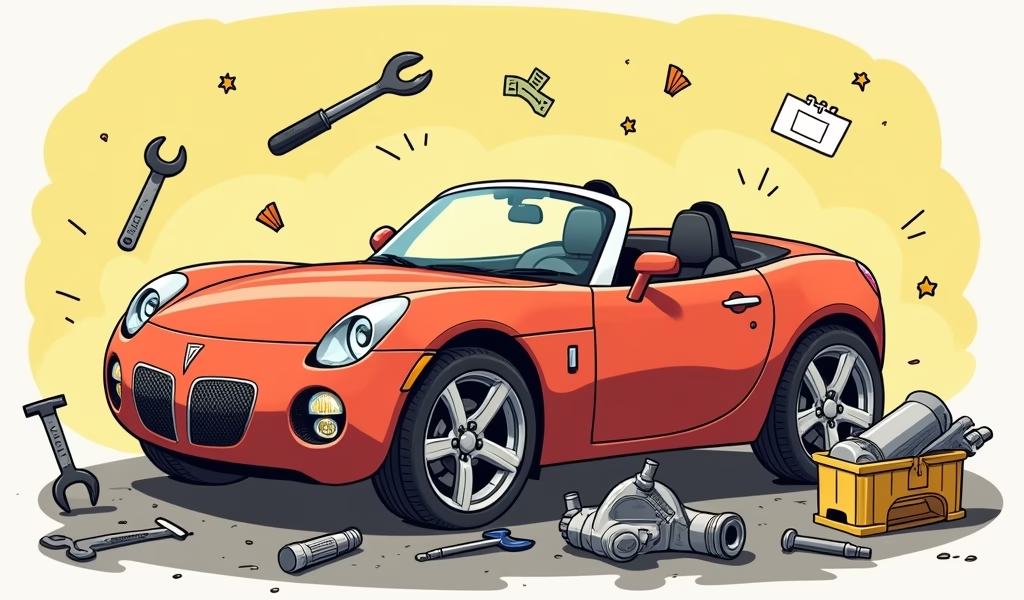
Just like their spirited drivers, Pontiac Solstice transmissions have their own personalities—with the Aisin AR-5 manual and GM 5L40-E automatic options each requiring specific maintenance to prevent common issues like worn synchronizers or fluid degradation. Through regular fluid changes, early attention to warning signs, and proper driving habits, owners can extend transmission life well beyond 100,000 miles and avoid the steep $2,500-4,500 repair bills that plague neglected Solstices.
Table of Contents
- Understanding Pontiac Solstice Transmissions
- Common Transmission Problems
- Warning Signs to Watch For
- Preventative Maintenance
- DIY Transmission Checks
- Professional Repair Options
- Cost Breakdown
- Extending Transmission Life
- Conclusion
- Frequently Asked Questions
Understanding Pontiac Solstice Transmissions
The Pontiac Solstice, produced between 2006 and 2009, came equipped with two primary transmission options that define its driving experience. As a mechanic who’s worked on countless Solstice models over the years, I can tell you these transmissions have their own unique personalities – and quirks.
The more common configuration was the Aisin AR-5 5-speed manual transmission, favored by driving enthusiasts for its direct feel and engaging driving experience. The less common option was the GM 5L40-E 5-speed automatic transmission, which sacrificed some sportiness for everyday convenience.
Both transmissions are robust when properly maintained, but they weren’t overbuilt like some performance car components. The manual transmission provides crisp shifts when in good condition, while the automatic delivers smooth gear changes that complement the roadster’s character.
What makes these transmissions special in the Solstice is their integration with the car’s rear-wheel-drive layout and balanced weight distribution. When operating correctly, they’re virtually transparent – allowing you to focus on the joy of driving rather than mechanical concerns.
However, as these cars age, their transmissions are reaching critical service points. Many Solstices on the road today have accumulated 80,000+ miles, placing them squarely in the territory where transmission service intervals become crucial to prevent expensive failures.
Common Transmission Problems
After servicing hundreds of Solstices over the years, I’ve noticed several recurring transmission issues that seem to affect these charming roadsters more than others in their class.
For manual transmission Solstices, the most common complaint involves second-gear synchronizers. These precision components help match gear speeds during shifting, and they tend to wear prematurely in the Solstice. You’ll notice this as grinding when shifting into second gear, especially when the car is cold. It’s not immediately dangerous, but it will worsen over time.
Clutch hydraulic systems also present recurring problems. The slave cylinder, mounted inside the transmission bell housing, can develop leaks that contaminate the clutch disc and reduce engagement. The repair requires transmission removal, making it considerably more expensive than similar repairs on other vehicles.
Warning Signs to Watch For
Your Solstice will typically give you several warning signs before a catastrophic transmission failure occurs. Being attentive to these signals can save you thousands in repairs.
For automatic transmissions, pay attention to delayed engagement when shifting from park to drive or reverse. This hesitation should last no more than a second or two. If it’s taking longer, your transmission fluid may be degrading or your valve body could be developing issues.
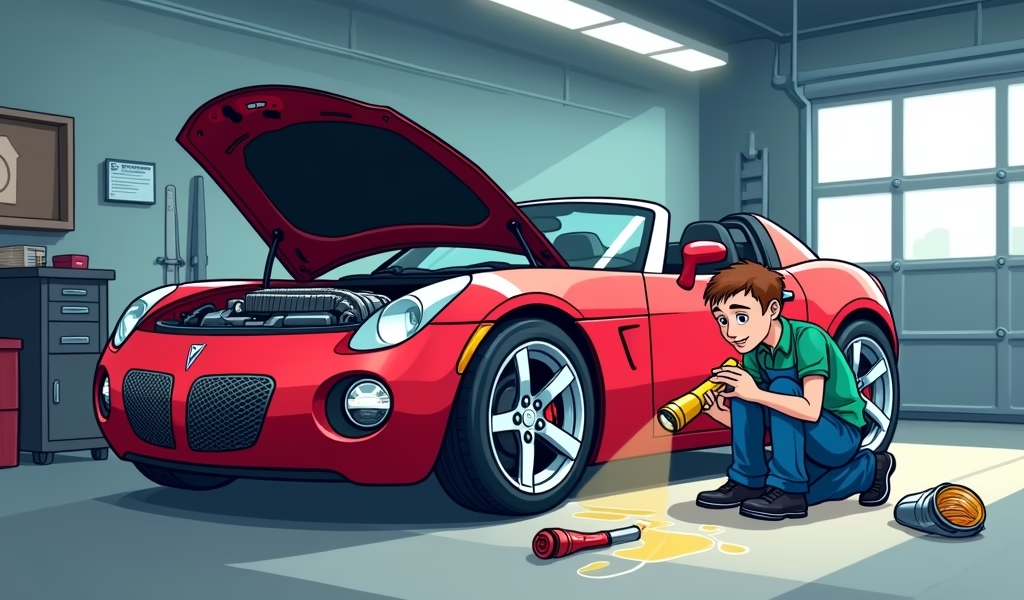
Another clear warning sign is transmission fluid leaks. The Solstice’s transmissions should remain completely sealed systems, so any red or brown fluid appearing underneath your vehicle indicates a developing problem. Even small leaks deserve immediate attention – they never resolve themselves and will eventually lead to fluid starvation.
For manual transmission Solstices, difficulty shifting into certain gears (particularly first and second) can indicate synchro wear or clutch adjustment issues. If you’re experiencing increasing resistance when moving the shifter, or if it occasionally “locks out” of a gear, these are early warning signs of internal wear.
Strange noises tell a clear story about transmission health. Whining sounds during acceleration often indicate gear or bearing wear, while grinding during shifts points to synchronizer issues. Clunking when engaging drive or reverse suggests mount deterioration or internal component problems.
Perhaps the most serious warning sign is erratic shifting or slipping out of gear while driving. If your Solstice suddenly jumps into neutral or another gear while underway, this requires immediate professional attention. Not only is it a mechanical concern, but it creates a significant safety hazard.
Preventative Maintenance
The single most effective way to avoid costly Pontiac Solstice transmission repairs is through diligent preventative maintenance. Unlike some modern vehicles that claim to have “lifetime” transmission fluid, the Solstice benefits tremendously from regular fluid services.
For automatic transmissions, I recommend changing the fluid and filter every 30,000 miles or two years, whichever comes first. This interval should be reduced to 20,000 miles if you frequently drive in stop-and-go traffic, hot weather, or engage in spirited driving. Fresh fluid maintains proper hydraulic pressure and lubrication that prevents premature wear.
Manual transmission Solstices should have their transmission fluid checked every 30,000 miles and changed if it shows signs of contamination or discoloration. The manual transmission fluid should be a clear amber color – if it’s dark brown or has a burnt smell, it’s time for a change.
Beyond fluid services, inspect transmission mounts and the shift linkage regularly. Deteriorated mounts allow excessive movement that stresses internal components, while proper linkage adjustment ensures complete gear engagement. These simple checks take minutes but can prevent major mechanical failures.
Another crucial maintenance item is the clutch adjustment frequency for manual transmissions. The Solstice’s hydraulic clutch system benefits from occasional bleeding to remove air bubbles that reduce clutch performance. This service is particularly important for vehicles that sit unused for extended periods.
DIY Transmission Checks
Even if you’re not mechanically inclined, there are several simple checks you can perform to monitor your Solstice’s transmission health.
For automatic transmissions, checking the fluid level and condition requires the engine to be running at operating temperature. With the car on level ground, shift through all gears, then return to Park. Pull the dipstick, wipe it clean, reinsert fully, and check again. The fluid should be bright red, not brown or black, and should smell slightly sweet rather than burnt.
Manual transmission fluid checks are slightly more involved but still manageable. With the car on level ground and the engine off, locate the fill plug on the side of the transmission case. Remove the plug – fluid should be at the bottom of the opening. The fluid should be clear amber to light brown, not dark or gritty.
Another simple check involves monitoring your shifter movement. For manual transmissions, the shifter should move smoothly between gears with definite engagement. Excessive play or vagueness suggests worn shift linkage or internal issues. For automatics, the shifter should click firmly into each position without requiring excessive force.
Listen for unusual sounds during cold starts and initial movement. Many transmission issues are most noticeable when components are cold, then become less apparent as everything warms up. A quick drive around the block first thing in the morning can reveal developing problems that might be masked during normal driving.
Finally, monitor your vehicle’s behavior during shifting. In automatics, gear changes should be smooth and barely perceptible under normal driving. In manuals, the clutch should engage progressively without chattering or grabbing. Any changes to these characteristics warrant further investigation.
Professional Repair Options
When DIY maintenance isn’t enough, professional transmission service becomes necessary. For Solstice owners, finding the right shop makes all the difference between a successful repair and ongoing problems.
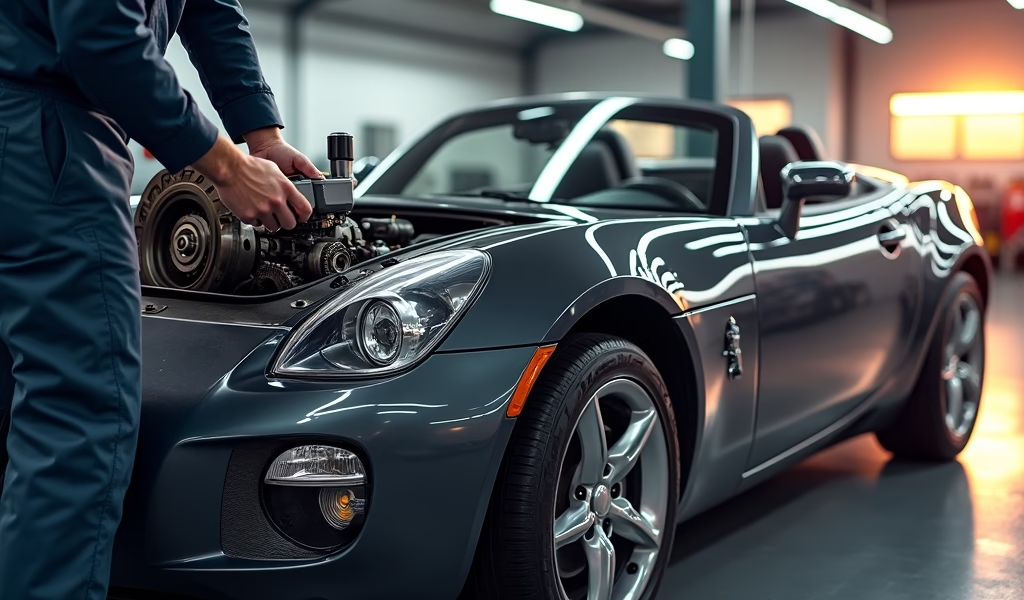
I strongly recommend seeking out transmission specialists rather than general repair shops for serious transmission issues. While your local mechanic might be excellent for routine maintenance, transmission work requires specialized tools, expertise, and experience that general shops often lack.
When choosing a transmission shop, ask specifically about their experience with the Aisin AR-5 or GM 5L40-E transmissions. These aren’t exotic, but they have specific quirks that experienced technicians will recognize immediately. According to the Automatic Transmission Rebuilders Association, shops with ATRA membership typically maintain higher technical standards.
For manual transmission repairs, the most common professional service is synchronizer replacement. This requires complete disassembly but addresses the most frequent complaint – grinding during shifts. A quality rebuild will include replacement of all synchronizers, bearings, and seals, not just the obviously worn components.
For automatic transmissions, valve body reconditioning and torque converter replacement are common services. The valve body controls shift timing and quality, while the torque converter transfers power from the engine to the transmission. Both components benefit from specialized equipment and expertise found at transmission-focused repair facilities.
When receiving estimates, be wary of prices that seem too good to be true. Quality transmission work requires time and precision. Shops offering dramatically lower prices often cut corners by reusing worn components or skipping critical steps in the rebuild process.
Cost Breakdown
Understanding potential transmission repair costs helps Solstice owners budget appropriately and avoid surprises.
For minor issues like external seals, shift linkage adjustments, or fluid services, expect to pay between $150-450 depending on your location and the specific service needed. These preventative services represent excellent value compared to major repairs.
Clutch replacement for manual transmission Solstices typically costs $1,200-1,800, including parts and labor. This service requires transmission removal but addresses one of the most common wear items. A quality clutch kit should include the pressure plate, disc, release bearing, and pilot bearing.
For automatic transmissions, a valve body rebuild or replacement typically costs $800-1,300 and can resolve many shifting issues without full transmission removal. This service addresses the hydraulic control center that determines shift quality and timing.
Complete transmission rebuilds represent the most significant investment. Expect to pay $2,500-3,500 for a quality manual transmission rebuild and $2,800-4,000 for an automatic. These comprehensive services address all wear items and should include a meaningful warranty, typically 12-36 months.
Transmission replacement with a remanufactured unit costs slightly more than a rebuild but offers the advantage of factory-quality reassembly and comprehensive component replacement. Prices typically range from $3,200-4,500 installed, including fluid and necessary peripheral components.
When budgeting for transmission work, remember to account for additional recommended services that might arise during the repair. These often include motor mounts, clutch hydraulics, or cooling system components that are more economical to replace while the transmission is already removed.
Extending Transmission Life
Beyond regular maintenance, several driving habits and modifications can significantly extend your Solstice’s transmission life.
For manual transmissions, proper shifting technique makes an enormous difference in component longevity. Avoid resting your hand on the shifter (which applies pressure to the shift forks) and fully depress the clutch when shifting. Allow the synchronizers time to work by not rushing shifts, particularly when the transmission is cold.
Automatic transmission longevity depends heavily on heat management. Consider installing an auxiliary transmission cooler if you live in a hot climate or frequently drive in stop-and-go traffic. These affordable additions (typically $150-300 installed) can lower operating temperatures by 20-40°F, dramatically extending fluid life and component durability.
Both transmission types benefit from gentle driving during the first few minutes of operation. Transmission fluid, like engine oil, needs time to circulate and reach operating temperature before it provides optimal protection. As noted by transmission specialists, even modern vehicles benefit from a short warm-up period before demanding performance.
If you’ve modified your Solstice for additional power, consider corresponding transmission upgrades. The stock transmissions were designed for factory power levels – even modest power increases can accelerate wear without supporting modifications. Strengthened clutches for manual transmissions and revised valve body calibration for automatics help accommodate increased engine output.
For vehicles that sit for extended periods, regular exercise prevents seals from drying out and fluids from stratifying. Even a short drive that brings the transmission to operating temperature will maintain lubrication of critical components and prevent long-term storage issues.
Conclusion
The Pontiac Solstice delivers a driving experience that continues to charm enthusiasts years after production ended. Its transmission, when properly maintained, complements the car’s sporting character while remaining reliable for daily use.
By recognizing early warning signs, following a consistent maintenance schedule, and addressing minor issues promptly, you can avoid the costly transmission repairs that plague many aging Solstices. Remember that preventative care costs a fraction of major repairs and helps preserve both your car’s performance and its value.
Whether you’re a dedicated enthusiast or casual owner, your Solstice’s transmission deserves attention commensurate with its importance. With the knowledge shared in this guide, you’re well-equipped to make informed decisions about maintenance, repairs, and driving habits that will keep your roadster shifting smoothly for years to come.
The joy of driving a responsive, well-maintained Solstice makes every bit of preventative care worthwhile. After all, these unique roadsters aren’t just transportation – they’re experiences that deserve to be preserved through thoughtful ownership.
Frequently Asked Questions
How long should a Pontiac Solstice transmission last?
With proper maintenance, manual transmissions typically last 120,000-150,000 miles while automatics generally reach 80,000-120,000 miles. Regular fluid changes and addressing minor issues promptly can significantly extend these figures.
What transmission fluid does a Pontiac Solstice use?
Manual Solstice transmissions require GM Synchromesh fluid (part #12345349) or equivalent. Automatic transmissions use Dexron VI fluid – never substitute with universal or non-GM approved fluids.
How much does it cost to replace a Solstice transmission?
Complete replacement with a quality remanufactured unit typically costs $3,200-4,500 including installation. Rebuilding the existing transmission usually costs $2,500-4,000 depending on the extent of internal damage.
Why does my Solstice manual transmission grind when shifting?
Grinding typically indicates worn synchronizers, particularly in second gear. Cold temperatures worsen the symptom, and while not immediately dangerous, this condition will progressively deteriorate without repair.
Can I drive with a slipping Solstice transmission?
No, a slipping transmission can fail completely without warning, potentially leaving you stranded or causing an accident. Have the vehicle towed to a qualified repair facility as soon as possible.