
Overview
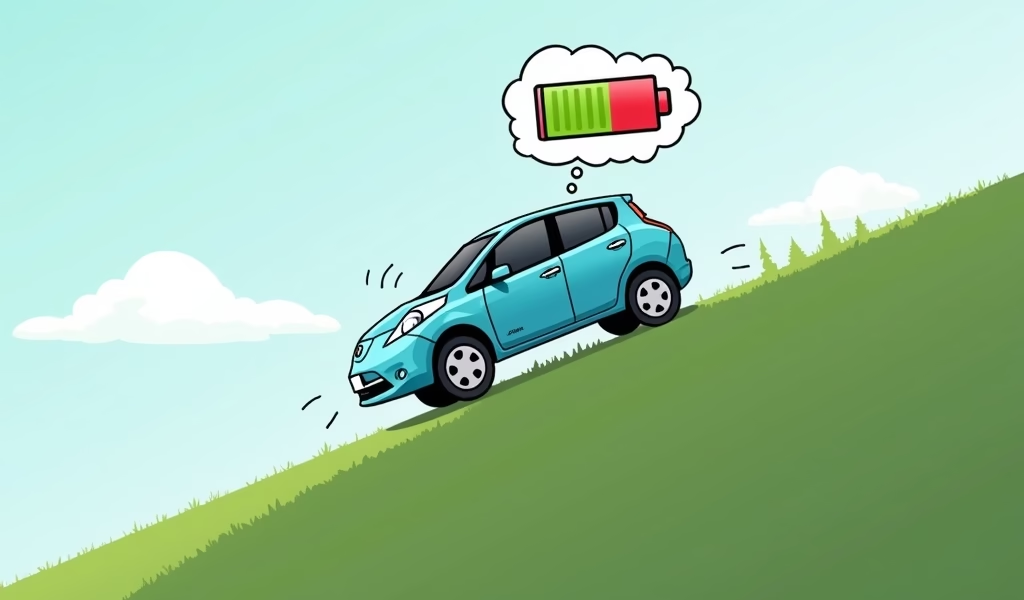
Just like your smartphone battery gradually holds less charge, your Nissan Leaf’s battery naturally degrades over time—with most retaining about 80-85% capacity after five years, though this varies based on climate, charging habits, and driving patterns. Understanding these degradation factors allows owners to implement practical prevention strategies like optimal charging (keeping between 20-80%), minimizing heat exposure, driving gently, and using monitoring tools like LeafSpy Pro to extend battery life before considering replacement options ranging from $5,500-$9,500.
Table of Contents
- Understanding Nissan Leaf Battery Degradation
- Signs of Battery Degradation in Your Nissan Leaf
- Factors Affecting Battery Degradation
- Preventing Battery Degradation: Practical Tips
- Monitoring Battery Health: Tools and Techniques
- Repair Options and Costs
- Warranty Information and Support
- Conclusion
- Frequently Asked Questions
Understanding Nissan Leaf Battery Degradation
Nissan Leaf battery degradation is something every Leaf owner should understand to maximize their vehicle’s lifespan. As someone who’s spent decades working with electric vehicles, I can tell you that battery health is the heartbeat of your Leaf. The lithium-ion batteries powering these vehicles naturally lose capacity over time – it’s not a defect, but rather a normal characteristic of the technology.
Think of your Leaf’s battery like your smartphone’s – it doesn’t hold the same charge after a few years of use. The difference? Your car’s battery replacement costs thousands, not hundreds. Most Leaf owners can expect their battery to retain about 80-85% of its original capacity after 5 years of normal use, but this can vary significantly based on several factors we’ll explore.
Early Leaf models (2011-2015) are particularly prone to capacity loss, especially those operated in hot climates. Nissan addressed some of these issues in later models with improved battery chemistry and thermal management systems, but understanding the fundamentals of battery care remains essential for every owner.
Signs of Battery Degradation in Your Nissan Leaf
Recognizing the symptoms of Nissan Leaf battery degradation early can save you from unexpected situations and help plan for potential repairs. The most obvious sign is reduced driving range. If your once-reliable 80-mile range has dwindled to 60 or less, that’s your battery telling you something important.
Your dashboard provides vital clues through the battery capacity bars. A new Leaf displays 12 bars representing 100% health, and as degradation occurs, these bars disappear from the right side. Losing the first bar typically happens around 15% degradation, while the second falls at approximately 21%. When you’re down to 8 or 9 bars, you’re facing significant capacity reduction.
Another telltale sign is when your battery charges to “full” much quicker than before. This isn’t a performance improvement – it’s because there’s literally less battery to fill. Many owners also notice the car struggling to maintain highway speeds or requiring more frequent charging between identical trips.
If your climate control system seems less effective or your acceleration feels sluggish compared to when the car was new, these might also indicate your battery is prioritizing essential functions over performance features as its capacity diminishes.
Factors Affecting Battery Degradation
The rate of Nissan Leaf battery degradation isn’t written in stone – several factors significantly influence how quickly capacity diminishes. Climate tops the list; heat is particularly harsh on lithium-ion batteries. Owners in Arizona or Florida often experience faster degradation than those in Minnesota or Oregon. The battery chemistry in earlier Leaf models lacked robust thermal management systems, making them especially vulnerable to heat-related degradation.
Charging habits play a crucial role too. Regularly charging to 100% or frequently using fast-charging (DC quick charging) generates more heat and stress on the battery cells. Both practices, while occasionally necessary, can accelerate degradation when done habitually. Proper battery care techniques suggest maintaining charge levels between 20% and 80% for optimal lifespan.
Your driving patterns matter significantly. Aggressive acceleration, high-speed driving, and heavy loads all increase battery temperature and stress. According to research from the National Renewable Energy Laboratory, gentle driving can extend battery life by up to 15%.
Age cannot be avoided – all batteries degrade over time even when not in use, though at a slower rate. Manufacturing variations also exist; two identical Leafs driven under similar conditions may experience different degradation rates due to subtle differences in their battery packs.
Preventing Battery Degradation: Practical Tips
While you can’t completely halt Nissan Leaf battery degradation, you can certainly slow it down with some thoughtful practices. Managing temperature exposure ranks among the most effective strategies. Whenever possible, park in shaded areas or garages to shield your battery from extreme temperatures. In very hot climates, try charging during cooler evening hours rather than midday heat.
Adopt smart charging habits to extend battery life. Aim to keep your battery between 20% and 80% charge for daily use, only charging to 100% when you need the full range for a specific trip. Many Leaf owners set their charging timers to finish just before departure, minimizing the time the battery sits fully charged, which can stress battery cells.
- Limit DC fast charging to when absolutely necessary
- Avoid letting the battery sit at very low charges for extended periods
- Use the scheduled charging feature to finish charging shortly before your drive
- In extreme heat, charging to lower levels (60-70%) reduces heat-related stress
Your driving style directly impacts battery health. Gentle acceleration and moderate speeds not only extend range but also reduce battery temperature and stress. Using ECO mode and the e-Pedal feature (on newer models) optimizes energy use and promotes regenerative braking, which is gentler on the battery than heavy physical braking.
Keeping up with regular maintenance routines ensures other vehicle systems work efficiently, reducing unnecessary strain on the battery. Something as simple as maintaining proper tire pressure can improve efficiency by 3-4%, indirectly benefiting battery health.
Monitoring Battery Health: Tools and Techniques
Staying informed about your Nissan Leaf’s battery health allows for proactive planning rather than reactive scrambling. The most basic monitoring tool comes built into your dashboard – the battery capacity gauge showing those 12 bars we discussed earlier. While somewhat crude, this meter provides a quick visual reference of overall health.
For more precise measurements, consider investing in an OBD-II scanner compatible with EV battery systems. Tools like LeafSpy Pro have become popular among Leaf owners, providing detailed battery data including individual cell voltages, temperature readings, and more accurate capacity measurements. These readings can help identify potential issues before they become serious problems.
Many newer Leafs come with the NissanConnect EV app, which provides remote monitoring capabilities. While not as detailed as dedicated diagnostic tools, it offers convenience and basic health monitoring from your smartphone. The app tracks charging status, estimates range based on current conditions, and can alert you to potential issues.
Establish a regular monitoring routine – perhaps monthly – where you record your maximum range under similar conditions. This creates a valuable degradation timeline specific to your vehicle and driving patterns. Research by FleetCarma shows that consistent monitoring can help owners predict when capacity will reach critical thresholds.
If you notice accelerated degradation or unusual battery behavior, don’t hesitate to consult with a Nissan dealer or EV specialist. Early intervention can sometimes prevent more serious issues or help you plan for eventual battery replacement.

Repair Options and Costs
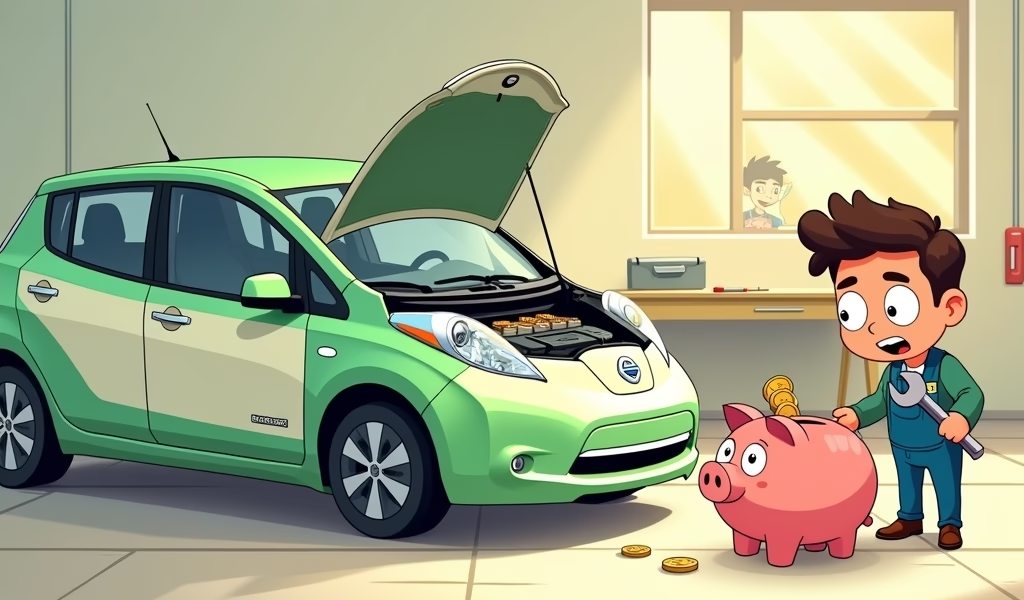
When Nissan Leaf battery degradation reaches the point where range becomes impractical, you’ll need to consider your repair options. A full battery replacement from Nissan currently costs between $5,500-$9,500 depending on your model year and battery capacity. That’s significantly less than the $15,000+ prices from a few years ago, reflecting the maturing EV market.
For many older Leafs, battery replacement costs may exceed the vehicle’s market value. Before making this investment, compare the replacement cost against your car’s current value and your expected ownership timeline. Sometimes, a used Leaf with a healthier battery might be more economical than replacing your current battery.
Third-party options have emerged in recent years. Companies like GreenTec Auto offer refurbished battery packs at lower costs, typically saving 30-40% compared to new Nissan batteries. Some independent shops can replace individual modules rather than the entire pack if degradation isn’t uniform across all cells.
For those comfortable with a reduced range, living with degradation might be economically sensible, especially if the Leaf serves as a second car for short commutes or errands. Understanding how electric vehicles work can help you maximize efficiency even with reduced capacity.
Battery technology continues improving, and some owners upgrade to higher-capacity packs when replacing – for example, fitting a 40kWh battery in place of the original 24kWh unit. This option costs more upfront but provides greater range than the car had when new.
Warranty Information and Support
Understanding your warranty coverage is crucial when dealing with Nissan Leaf battery degradation. Nissan provides an 8-year/100,000-mile warranty (whichever comes first) against battery defects for most model years. However, there’s an important distinction: this warranty covers battery failure, not normal degradation.
The capacity warranty is more relevant to degradation concerns. For 2011-2015 models, Nissan guarantees the battery will retain at least 9 bars (approximately 70% capacity) for 5 years/60,000 miles. Later models (2016+) typically offer stronger protection, with some extending to 8 years/100,000 miles for capacity retention.
If your battery degrades beyond the warranty threshold within the covered period, Nissan will replace it with a new or refurbished pack. Be aware that replacement batteries come with their own warranty, typically for the remainder of the original warranty period or 12 months, whichever is longer.
For out-of-warranty vehicles, Nissan’s battery replacement program offers some relief through standardized pricing. The company occasionally runs promotional pricing, so checking with multiple dealerships might yield different quotes. Some owners have successfully negotiated partial goodwill coverage for batteries that failed shortly after warranty expiration.
Joining Leaf owner communities online can provide valuable support and shared experiences. These forums often contain the latest information on warranty experiences, battery replacement options, and dealer recommendations that might not be readily available through official channels.
Conclusion
Nissan Leaf battery degradation is an inevitable reality for all owners, but understanding it empowers you to maximize your vehicle’s useful life. By implementing the preventive measures we’ve discussed – managing temperature exposure, adopting smart charging habits, and driving efficiently – you can significantly slow degradation and postpone costly repairs.
Regular monitoring provides peace of mind and eliminates surprises, allowing you to plan for eventual capacity loss. Whether you choose official Nissan replacement, third-party options, or adapting to reduced range, being proactive rather than reactive puts you in control.
Remember that the technology continues to evolve. Newer Leaf models incorporate improved battery chemistry and thermal management, and aftermarket solutions grow more affordable each year. What seems like an expensive repair today might have more economical alternatives tomorrow.
Ultimately, Nissan Leaf battery degradation doesn’t have to derail your electric vehicle experience. With proper care and informed decision-making, your Leaf can provide many years of reliable, eco-friendly transportation – saving both money and environmental impact along the way.
Frequently Asked Questions
How fast does a Nissan Leaf battery typically degrade?
Most Nissan Leaf batteries lose 20-25% capacity within the first 5 years of regular use. Climate, charging habits, and driving patterns significantly influence this rate.
Can I replace just part of my Leaf’s battery?
Some third-party services offer module-level replacement for Leaf batteries with uneven cell degradation. This can be more cost-effective than full replacement if only certain sections show significant degradation.
Is it normal to lose one capacity bar per year?
Losing one capacity bar annually is faster than average degradation, particularly after the first bar. This rate might indicate exposure to extreme conditions or aggressive usage patterns that warrant investigation.
Do newer Nissan Leaf models have better battery longevity?
Yes, Leaf models from 2016 onward incorporate improved battery chemistry and thermal management systems. These enhancements typically result in slower degradation compared to 2011-2015 models.
Will frequent DC fast charging ruin my Leaf’s battery?
Exclusive reliance on DC fast charging can accelerate degradation by generating more heat in the battery. Occasional fast charging is fine, but using Level 1 or 2 charging for routine needs is healthier for the battery.