

Overview
Just like how your morning coffee ritual can prevent a midday crash, regular transmission fluid changes and early attention to warning signs can save your Nissan Armada from catastrophic failure and your wallet from a $5,000 repair bill. This comprehensive guide covers everything from DIY maintenance and recognizing early symptoms to diagnostic processes and cost-saving strategies, empowering Armada owners to extend their transmission’s lifespan to 200,000+ miles with proper care.
Table of Contents
- Understanding Nissan Armada Transmission Issues
- Common Symptoms of Transmission Trouble
- The Diagnostic Process: Identifying Transmission Problems
- DIY Maintenance to Prevent Transmission Issues
- When to See a Professional
- Cost-Saving Strategies for Transmission Repairs
- Extended Warranty and Protection Plans
- Conclusion
- Frequently Asked Questions
Understanding Nissan Armada Transmission Issues
The Nissan Armada transmission system is a marvel of engineering that, when working properly, delivers seamless power to your wheels. However, like any complex mechanical system, it can develop issues over time. As someone who’s had their hands deep in these transmissions for over 15 years, I can tell you that understanding the basics can save you thousands in unnecessary repairs.
Nissan Armada models, particularly those from 2005-2010, have been known to experience specific transmission problems. The 5-speed automatic transmission found in these models sometimes suffers from valve body issues, solenoid failures, or torque converter problems. These aren’t just random failures – they often follow patterns that we’ve documented over years of repairs.
The good news? Many Nissan Armada transmission problems can be prevented with proper maintenance. Regular fluid changes are crucial – I’ve seen transmissions fail at 80,000 miles due to neglected fluid, while others sail past 200,000 with proper care. This is especially important for vehicles used for towing, which puts additional stress on the transmission system.
Understanding your specific transmission model matters too. Later Armada models transitioned to a 7-speed automatic that addressed some earlier issues but introduced new considerations for maintenance. Knowing which you have helps target preventative care appropriately and can guide your transmission service interval schedule.
Common Symptoms of Transmission Trouble
Your Nissan Armada will usually give you warning signs before major transmission failure occurs. Recognizing these early symptoms can mean the difference between a simple fix and a complete transmission rebuild. Here’s what to watch for:
- Delayed engagement when shifting from park to drive or reverse
- Rough or harsh shifting between gears
- Unusual humming, buzzing, or clunking noises
- Transmission slipping (engine revs but vehicle doesn’t accelerate proportionally)
- Check engine light or specifically, transmission warning light
- Burning smell coming from under the vehicle
- Leaking transmission fluid (often appears reddish or brownish)
The subtle shift hesitation is often the first sign I see in the shop. You might notice this as a slight delay when accelerating from a stop. Many drivers dismiss this as a quirk, but it’s actually your transmission’s early cry for help. Don’t ignore it!
Fluid condition tells a story too. Healthy transmission fluid should be bright red and smell slightly sweet. If your fluid is brown or black and smells burnt, that’s a clear indicator of excessive heat and potential internal damage. I always recommend checking your transmission fluid level and condition monthly – it’s a simple peek under the hood that can save you thousands.
Remember, transmission issues rarely improve on their own. That slight shudder you feel today could become a complete failure in a few thousand miles. Early intervention is key to keeping repair costs manageable.

The Diagnostic Process: Identifying Transmission Problems
When your Nissan Armada starts showing transmission symptoms, proper diagnosis is crucial before jumping into repairs. Modern transmissions are complex systems with mechanical, hydraulic, and electronic components that all need to work in harmony.
The diagnostic process typically begins with connecting a professional-grade scan tool to your vehicle’s OBD-II port. This allows us to check for transmission-specific trouble codes that can point to particular issues. For instance, code P0740 often indicates torque converter clutch circuit problems in the Armada, while P0750 might suggest a shift solenoid issue.
But diagnostic codes are just the starting point. An experienced technician will perform a road test to feel the transmission’s behavior firsthand. We’re looking for specific clues: Does it shift harder in cold weather? Does the problem occur only under heavy acceleration? These patterns help narrow down potential causes.
Fluid analysis is another critical diagnostic tool. I often perform a blotter test where I place a drop of transmission fluid on white paper to check for metal particles or burnt material. The presence of metal flakes could indicate internal wear, while a burnt smell suggests overheating issues.
For more complex problems, a pressure test might be necessary. This involves installing gauges to measure the hydraulic pressure in various parts of the transmission during operation. Low pressure in specific circuits can pinpoint valve body problems or pump failures that might otherwise require complete disassembly to identify.
Remember that accurate diagnosis requires specialized knowledge and equipment. While some auto parts stores offer free code reading, these basic scans often don’t access the deeper transmission control module data needed for a proper assessment of Nissan Armada transmission issues. As experts in transmission repair note, proper diagnosis can save you from replacing parts unnecessarily.
DIY Maintenance to Prevent Transmission Issues
While complex transmission repairs typically require professional intervention, there’s plenty you can do yourself to extend your Nissan Armada transmission’s lifespan. Preventative maintenance is where you, as an owner, have the most power to avoid costly repairs.
First and foremost, check your transmission fluid regularly – at least once a month. This is a simple procedure: With the engine running and warmed up, pull the transmission dipstick (typically labeled and often with a red handle), wipe it clean, reinsert it, then pull it again to check both level and condition. The fluid should be bright red to light brown, not dark brown or black, and should smell slightly sweet rather than burnt.
Changing the transmission fluid and filter is perhaps the most valuable DIY maintenance you can perform. For the Nissan Armada, I recommend fluid changes every 30,000-60,000 miles depending on your driving conditions. If you regularly tow or drive in mountainous areas, lean toward the shorter interval.
Here’s a basic procedure for a DIY fluid change:
- Purchase the correct type of transmission fluid (typically Nissan Matic-S or equivalent)
- Raise and secure the vehicle safely on jack stands
- Locate and remove the transmission pan bolts (keep one loosely in place to prevent spilling)
- Drain the fluid into a catch pan
- Remove the pan completely and clean it thoroughly
- Replace the transmission filter and gasket
- Reinstall the pan with a new gasket and torque bolts to specification
- Refill with new fluid through the dipstick tube using a funnel
- Check for leaks and verify proper fluid level
Beyond fluid maintenance, consider installing an auxiliary transmission cooler, especially if you tow frequently. Excessive heat is the number one killer of transmissions, and the transfer case maintenance can also impact overall drivetrain health. A quality aftermarket cooler can reduce transmission temperatures by 30-50 degrees, dramatically extending component life.
Additionally, be mindful of your driving habits. Aggressive acceleration, riding the brakes while in drive, and shifting into reverse or drive before the vehicle completely stops all place extra stress on your transmission. I’ve seen gentle drivers get 250,000+ miles from the same transmission that fails at 100,000 miles under aggressive use.
When to See a Professional
While preventative maintenance can be handled at home, certain situations call for professional intervention. As someone who’s rebuilt hundreds of transmissions, I can tell you that timing is everything – addressing issues early often prevents catastrophic failure.
Seek professional help immediately if you experience any of these symptoms:
- Complete failure to engage in any gear
- Grinding or severe shaking when shifting
- Transmission slipping under load or acceleration
- Transmission fluid leaking rapidly
- Strange noises (whining, clunking) coming from the transmission area
- Check engine light accompanied by noticeable transmission issues
When choosing a transmission specialist, look for shops that specialize in transmissions rather than general repair facilities. Transmission-focused technicians typically have more experience with specific issues common to the Nissan Armada transmission systems. Ask potential shops about their experience with your specific model year and transmission type.
Don’t be afraid to ask questions about their diagnostic process. Quality shops will explain their approach and won’t rush to recommend a complete rebuild without proper testing. They should be willing to show you problematic parts and explain how they contribute to the symptoms you’re experiencing.
Getting a second opinion is always wise for major transmission work. I’ve seen customers save thousands by getting another perspective on a diagnosis. Just make sure you’re comparing apples to apples – one shop might quote a rebuild while another is proposing a less comprehensive repair.
Remember that modern Nissan transmissions often require dealer-level programming after certain repairs. Ensure your chosen shop has access to the appropriate diagnostic equipment and software for your Armada’s specific transmission control module. This is particularly important for 2010 and newer models with more sophisticated electronic controls affecting the differential service schedule as well.
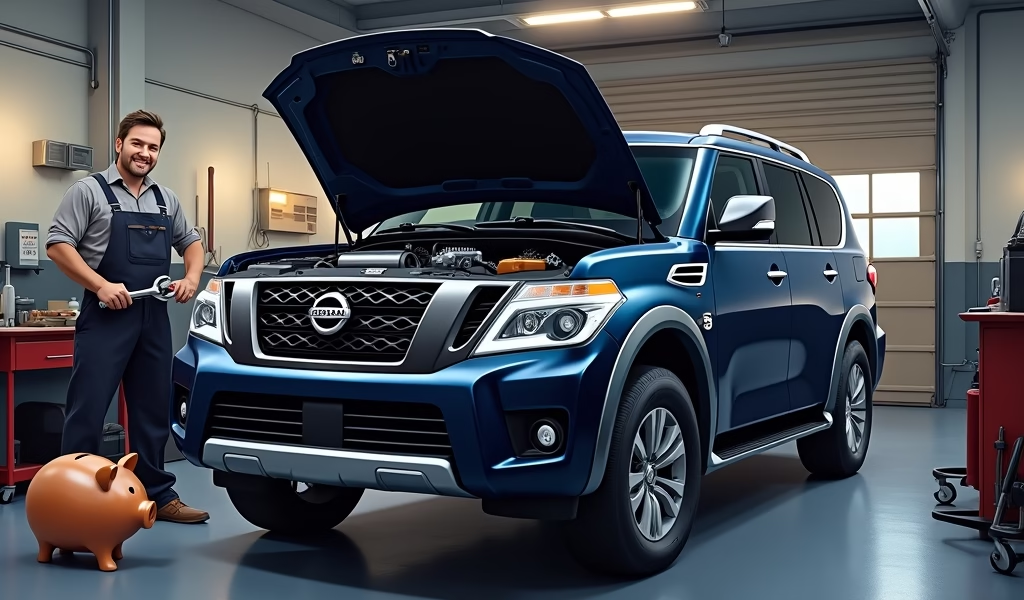
Cost-Saving Strategies for Transmission Repairs
Facing transmission repairs doesn’t have to break the bank. After years in the industry, I’ve developed several strategies to help Nissan Armada owners save significantly on transmission work without compromising quality.
First, consider remanufactured transmissions versus complete rebuilds. A quality remanufactured unit often costs 30-40% less than a dealership rebuild while offering comparable reliability. These units are factory rebuilt with updated components that often address known weaknesses in the original design. Companies like Jasper and ATC provide nationwide warranties that can exceed factory coverage.
For minor issues, targeted repairs may be possible instead of complete overhauls. For instance, if your Armada is experiencing shift problems related to the valve body (a common issue), replacing just this component might solve the problem for under $1,000, compared to $4,000+ for a complete rebuild. As Motor Trend points out, partial repairs can be highly effective for specific transmission issues.
Consider independent transmission shops rather than dealerships. While dealers have specific Nissan expertise, independent specialists often offer more competitive pricing and may provide more personalized service. Many independent shops have technicians with dealer training but without the overhead costs that drive up repair prices.
Don’t overlook the possibility of used transmissions from salvage yards, particularly for older Armadas. A low-mileage used transmission can sometimes be found for a fraction of rebuild costs. Just be sure to verify the mileage and condition, and ideally get some warranty protection. I recommend using services that offer nationwide networks of verified salvage parts with standardized warranty terms.
Negotiate payment terms with your chosen shop. Many transmission specialists will work with you on payment plans, especially for larger jobs. Some shops also offer financing options through third-party services specifically for automotive repairs, which can help spread the cost over time.
Finally, check if your credit card offers extended warranty protection on auto repairs. Some premium credit cards will add up to a year of additional protection beyond the shop’s warranty when you pay for repairs with their card – essentially free insurance against future issues.
Extended Warranty and Protection Plans
For many Nissan Armada owners, extended warranty coverage provides peace of mind against unexpected transmission failures. Having seen countless customers saved from $5,000+ repair bills through proper coverage, I believe warranty protection deserves serious consideration.
Factory extended warranties directly from Nissan offer the most comprehensive coverage but typically come at premium prices. These plans integrate seamlessly with dealership service departments and guarantee genuine Nissan parts. For newer Armadas still under original warranty, factory extensions can be worth the investment, especially if you plan to keep the vehicle long-term.
Third-party warranty providers like CarShield, Endurance, or CARCHEX often provide more affordable alternatives with similar coverage levels. When evaluating these plans, pay careful attention to the fine print regarding transmission coverage. Some plans exclude transfer cases or control modules, which can be expensive components in Armada transmission repairs.
Look for warranties that specify coverage for “seals and gaskets” as these are common failure points in aging transmissions. Also confirm whether the policy covers both parts AND labor – some budget plans cover only components, leaving you with substantial labor costs in the event of a major repair.
Another consideration is whether the warranty allows you to choose your repair facility or requires dealer service. Many third-party plans now offer flexibility in selecting your repair shop, which can be advantageous if you have a trusted transmission specialist.
For older Armadas beyond the eligibility window for comprehensive coverage, consider component-specific protection plans. Some companies offer transmission-only policies at more reasonable rates than full vehicle coverage. These can be especially valuable for vehicles with known transmission issues but otherwise good condition.
Remember that most warranty providers offer significantly better rates if you purchase coverage before any problems develop. Once transmission symptoms appear, coverage will typically exclude those pre-existing conditions, so being proactive is key.
Conclusion
Navigating Nissan Armada transmission issues doesn’t have to be overwhelming or financially devastating. With proper preventative maintenance, early intervention when symptoms appear, and smart repair decisions, you can significantly extend your transmission’s lifespan while minimizing costs.
Remember that the most expensive repair is often the one you could have prevented. Regular fluid checks and changes remain your best defense against major transmission failures. Pay attention to subtle changes in your Armada’s shifting behavior – those early warning signs provide valuable opportunities for less expensive repairs.
When professional help becomes necessary, arm yourself with knowledge. Understanding the diagnostic process, repair options, and cost-saving strategies puts you in a stronger position to make informed decisions and avoid unnecessary expenses. Whether you choose a rebuild, remanufactured unit, or targeted repair, knowing your options helps ensure you’re not paying more than necessary.
For many owners, especially those with newer models, warranty protection provides an additional layer of financial security against unexpected transmission failures. Carefully evaluate your coverage options based on your vehicle’s age, condition, and how long you plan to keep it.
With these approaches, your Nissan Armada can deliver many more miles of reliable service without transmission troubles breaking your budget. The road ahead looks much smoother when you combine preventative care with informed repair decisions.
Frequently Asked Questions
How long do Nissan Armada transmissions typically last?
With proper maintenance, a Nissan Armada transmission can last 150,000-200,000 miles. Regular fluid changes every 30,000-60,000 miles significantly improve longevity.
What is the average cost to replace a Nissan Armada transmission?
Complete transmission replacement for a Nissan Armada typically costs between $3,500-$5,500 depending on model year and labor rates. Remanufactured units can reduce this cost by 30-40%.
Can I drive with a slipping Nissan Armada transmission?
Driving with a slipping transmission can cause catastrophic damage very quickly. Continuing to drive can turn a repairable issue into a complete transmission failure requiring replacement.
Is it worth fixing an Armada transmission or better to sell?
This depends on the vehicle’s overall condition and value. If the Armada is in otherwise good condition with less than 150,000 miles, repair is often worthwhile. Calculate repair costs against current vehicle value to make an informed decision.
Are there any recalls for Nissan Armada transmission problems?
While specific models have had transmission-related technical service bulletins, there haven’t been widespread recalls specifically for Armada transmissions. Check the NHTSA website using your VIN to verify if your specific vehicle has any outstanding recalls.