
Overview
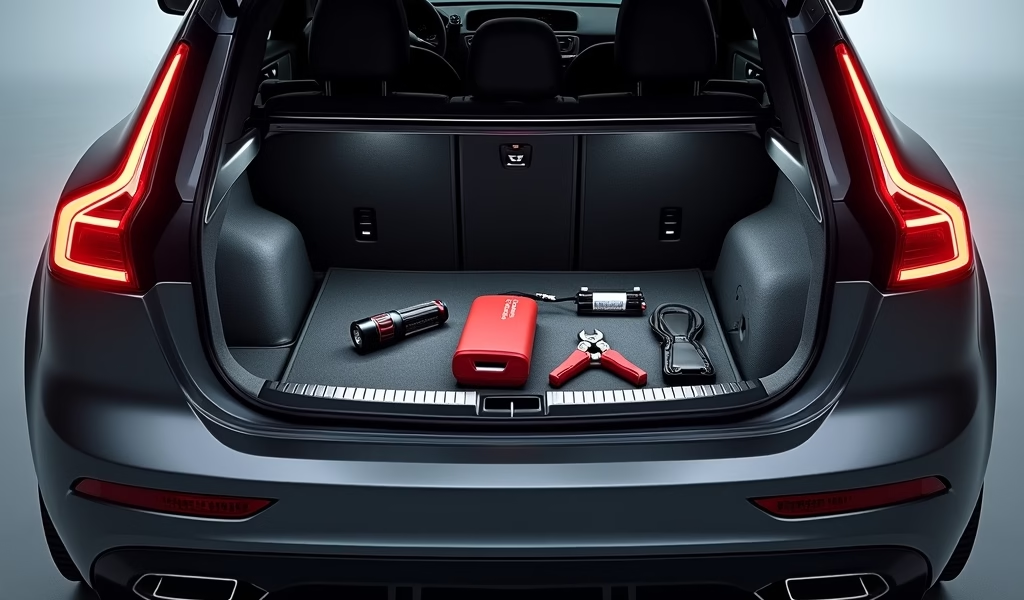
This gearhead’s guide to roadside survival outlines seven essential car gadgets that transform automotive disasters into minor hiccups—because nothing says “fun Sunday afternoon” like being stranded with a dead battery and no help in sight. The article recommends portable jump starters, digital tire pressure gauges, OBD2 scanners, emergency roadside kits, multi-tools, battery maintainers, and portable air compressors as must-have items that collectively cost $300-500 but provide invaluable peace of mind and potentially save thousands in emergency repair costs.
Table of Contents
- Introduction
- 1. Portable Jump Starter: Your Dead Battery’s Best Friend
- 2. Digital Tire Pressure Gauge: Precision Matters
- 3. OBD2 Scanner: Speak Your Car’s Secret Language
- 4. Emergency Roadside Kit: Be Prepared for Anything
- 5. Multifunctional Car Tool: Compact Life-Saver
- 6. Battery Tester/Maintainer: Extend Battery Life
- 7. Portable Air Compressor: On-Demand Inflation
- Conclusion
- Frequently Asked Questions
Introduction
As a mechanic with 15 years under my belt, I’ve seen what separates drivers who constantly battle breakdowns from those who enjoy trouble-free miles. The difference? A handful of must-have car gadgets that turn potential disasters into minor inconveniences.
Modern vehicles are complex machines with thousands of components working together. Even with regular maintenance, unexpected issues can leave you stranded at the worst possible moments. That’s why I’ve compiled this list of seven essential tools every car owner should keep handy.
These aren’t fancy luxuries—they’re practical investments that pay dividends in peace of mind and saved repair costs. I’ve personally tested dozens of options to find the sweet spot between quality, affordability, and usefulness for the average driver.
1. Portable Jump Starter: Your Dead Battery’s Best Friend
Few automotive situations are more frustrating than a dead battery. You’re running late, turn the key, and hear that dreaded clicking sound. Traditional jumper cables require another vehicle, but portable jump starters have changed the game entirely.
Today’s compact units pack serious power in a device small enough to fit in your glove box. They’re essentially powerful batteries with jumper cables attached, eliminating the need to flag down a stranger for help.
When shopping for a jump starter, consider these key factors:
- Peak amps: For most passenger vehicles, look for at least 400A; larger engines need 600A+
- Battery capacity: Higher mAh ratings mean more jump starts per charge
- Extra features: Built-in flashlights, USB charging ports for devices, and weather resistance
The NOCO Boost Plus GB40 offers exceptional reliability for most passenger vehicles. At around $100, it delivers 1,000 amps—enough to start a dead battery in seconds—plus it includes reverse polarity protection to prevent accidents if you connect the clamps incorrectly.
Using a portable jump starter is straightforward: connect the red clamp to the positive terminal, black clamp to a ground point (usually the negative terminal or a metal part of the engine block), power on the unit, and start your engine. Always keep your jump starter charged with a quarterly top-up, even if you haven’t used it.
2. Digital Tire Pressure Gauge: Precision Matters
Proper tire inflation is one of the simplest yet most overlooked aspects of vehicle maintenance. Running on underinflated tires doesn’t just reduce fuel efficiency by up to 3%—it accelerates wear patterns that can compromise safety and lead to premature replacement.
While analog stick gauges work in a pinch, digital gauges provide precision down to 0.1 PSI, eliminating guesswork. The best ones feature backlit displays for nighttime use and multiple unit measurements (PSI, BAR, kPa).
For accuracy that rivals professional tools, the Tecmasters Digital Tire Pressure Gauge provides consistently reliable readings. Its ergonomic design and non-slip grip make checking all four tires quick and comfortable, even in poor weather conditions.
Remember to check pressure when tires are “cold”—meaning the vehicle hasn’t been driven for at least three hours. The correct pressure isn’t what’s stamped on the tire sidewall (that’s the maximum); check the driver’s doorjamb sticker or your owner’s manual for manufacturer recommendations.
3. OBD2 Scanner: Speak Your Car’s Secret Language
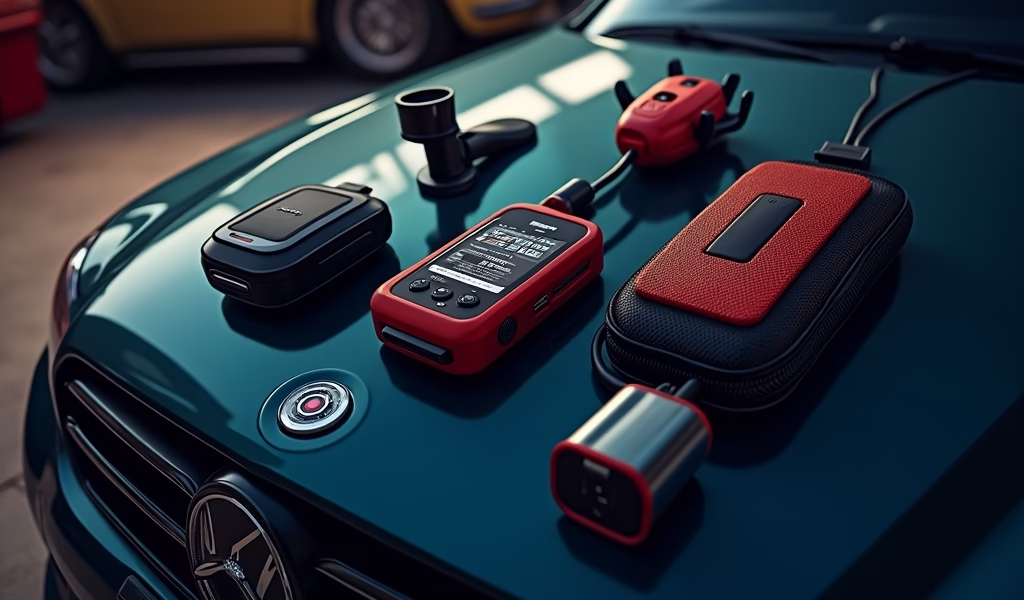
The check engine light might be the most anxiety-inducing dashboard warning. Without diagnostic tools, you’re left guessing whether it’s a minor issue or a major problem. This is where an OBD2 scanner becomes invaluable.
Since 1996, virtually all vehicles sold in North America feature an On-Board Diagnostics II port (usually located under the dashboard near the steering column). This standardized connection gives you access to your vehicle’s computer systems.
A quality scanner like the BlueDriver Professional OBD2 lets you read and clear error codes, view live engine data, and even perform advanced diagnostics like automatic high beam control system checks. The companion smartphone app provides plain-English explanations of what’s wrong and potential solutions.
I’ve personally seen customers save hundreds of dollars by discovering their check engine light was triggered by something as simple as a loose gas cap or minor sensor issue. Knowledge is power—knowing exactly what’s wrong lets you make informed decisions about repairs instead of relying blindly on others’ assessments.
Entry-level scanners start around $30, while advanced models with broader vehicle compatibility and detailed reports range from $100-200. Consider it an investment that pays for itself the first time you avoid an unnecessary tow or diagnostic fee at a repair shop.
4. Emergency Roadside Kit: Be Prepared for Anything
Mechanical issues and accidents rarely happen at convenient times or locations. A comprehensive roadside emergency kit turns potential nightmares into manageable situations, especially when help might be far away.
While pre-assembled kits are widely available, I recommend building your own with higher-quality components. A proper roadside kit should include:
- Heavy-duty jumper cables (8-gauge or thicker)
- LED flashlight with extra batteries
- Reflective warning triangles and a high-visibility vest
- Basic first aid supplies
- Multi-tool or basic tools (adjustable wrench, screwdrivers)
- Weather-appropriate items (blanket, rain poncho, etc.)
- Tire sealant and portable compressor
- Drinking water and non-perishable snacks
Tailor your kit to your typical driving conditions and vehicle. If you regularly travel through areas with animal detection capability needs, include items for wildlife encounters. Those in cold climates should add hand warmers and a folding shovel.
Store everything in a durable, water-resistant container and secure it in your trunk or cargo area where it won’t become a projectile in an accident. Check the kit twice yearly to replace expired items and ensure everything works properly.
5. Multifunctional Car Tool: Compact Life-Saver
When emergencies strike, having the right tool within arm’s reach can make all the difference. Multifunctional car tools combine several life-saving features in a compact, easy-to-store package.
The best models include:
- Seatbelt cutter for quick escape if belts jam after an accident
- Window breaker (spring-loaded or hammer style) to shatter tempered glass if doors won’t open
- LED flashlight for nighttime emergencies
- Whistle or alarm to signal for help
The Resqme Car Escape Tool remains my top recommendation for its reliability and compact size. It attaches to your keychain or sun visor, ensuring it’s always accessible when needed. I’ve heard numerous accounts from emergency responders about lives saved by these simple devices.
For around $15, this small investment provides massive peace of mind. Store one within reach of the driver’s seat—not in your glove compartment or trunk where it might be inaccessible during an emergency.
6. Battery Tester/Maintainer: Extend Battery Life
Many vehicle owners are surprised to learn that alternators aren’t designed to recharge completely dead batteries—they’re meant to maintain already-charged batteries during normal operation. This is especially important for vehicles that sit for extended periods.
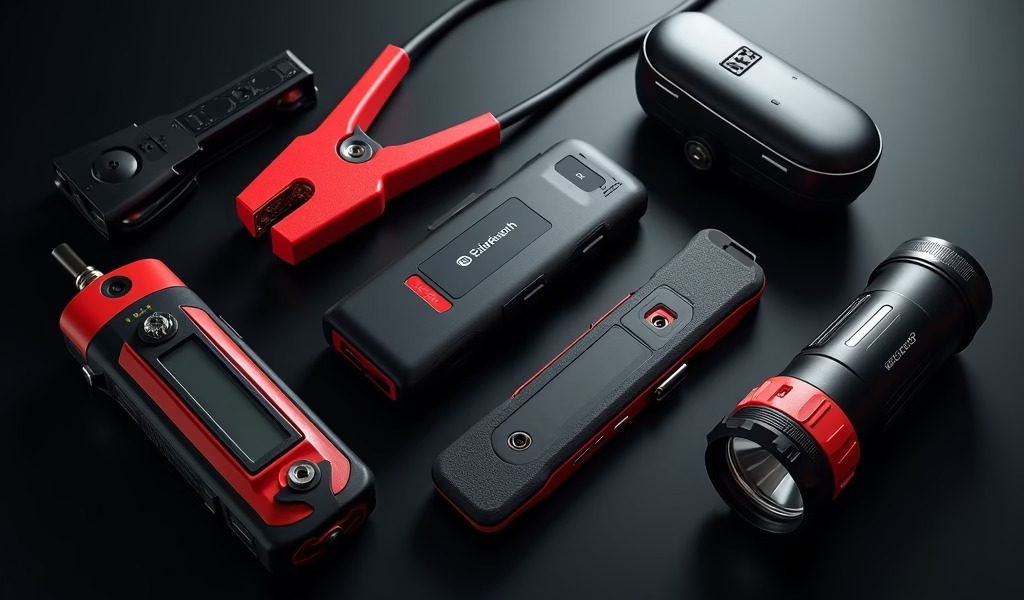
A battery maintainer (sometimes called a trickle charger) provides a steady, low-amperage charge that keeps your battery at optimal levels without overcharging. Modern “smart” maintainers automatically adjust their output based on the battery’s needs.
For those with multiple vehicles or seasonal-use machines like boats and RVs, a quality maintainer like the CTEK MXS 5.0 can extend battery life by years. It features multiple charging modes for different battery types and conditions, plus a reconditioning function for older batteries.
Pair this with a simple battery tester to monitor your battery’s health proactively. The Consumer Reports-recommended models provide accurate readings of your battery’s condition, helping you replace it before you’re stranded with a no-start situation.
Using a maintainer is straightforward: connect the positive and negative clamps to your battery, plug in the unit, and select the appropriate charging mode. Many users install quick-connect cables permanently attached to their batteries for easy hookup.
7. Portable Air Compressor: On-Demand Inflation
Tire pressure fluctuates with temperature changes—dropping roughly 1 PSI for every 10°F decrease. This natural variation, combined with the slow leaks that affect all tires eventually, means regular pressure checks and adjustments are essential for safety and efficiency.
A portable air compressor eliminates dependency on gas station air pumps, which are often out of service or inaccurate. Modern compressors plug into your vehicle’s 12V outlet or connect directly to your battery, providing enough power to inflate even completely flat tires.
When selecting a compressor, consider these features:
- Maximum PSI rating (should exceed your vehicle’s needs by at least 20%)
- Duty cycle (how long it can run continuously before needing to cool down)
- Built-in pressure gauge accuracy
- Cord and hose length for reaching all tires
- Noise level during operation
The Viair 88P Direct Drive Compressor consistently outperforms competitors in durability and performance. Its 120 PSI maximum output handles everything from compact cars to light trucks, and the 10-foot power cord and 16-foot air hose reach all four tires easily.
For vehicles equipped with cyclist recognition systems and other advanced safety features, maintaining proper tire pressure is particularly crucial for optimal sensor performance.
At approximately $70, this compressor represents excellent value compared to roadside assistance calls for flat tires or the safety risks of driving on underinflated tires.
Conclusion
The seven must-have car gadgets discussed here form a comprehensive toolkit that addresses the most common roadside emergencies and maintenance needs. While the complete collection represents an investment of $300-500, this amount pales in comparison to the cost of a single tow truck call or major repair that could have been prevented.
As a mechanic, I’ve witnessed countless situations where these simple tools made the difference between a minor inconvenience and a ruined day. The peace of mind they provide is perhaps their greatest value—knowing you’re prepared for whatever the road brings.
Consider building your collection gradually, prioritizing based on your driving habits and vehicle’s specific needs. Start with the emergency essentials (jump starter, multi-tool, roadside kit) and add the maintenance tools as your budget allows.
Remember that the best gadgets are the ones you know how to use properly. Familiarize yourself with each tool before you need it in an emergency situation. A few minutes of practice now could save hours of stress later.
Your vehicle is likely one of your largest investments and a crucial part of daily life. These tools help protect that investment while ensuring you and your passengers arrive safely at every destination. Visit our website and schedule a maintenance review for your car today!
Frequently Asked Questions
What’s the most important car gadget to buy first?
A portable jump starter should be your first purchase since dead batteries are the most common roadside emergency. Most models now include other useful features like USB charging ports and LED flashlights.
How often should I check my tire pressure?
Check your tire pressure at least once a month and before any long trips. Temperature changes affect pressure significantly, so be especially vigilant during seasonal transitions.
Are expensive OBD2 scanners worth the extra cost?
Mid-range scanners ($80-120) offer the best value for most drivers with features like live data and manufacturer-specific codes. Premium models are only necessary for DIY mechanics who work on multiple vehicle brands.
Can I jump start my car with a portable battery that’s not fully charged?
Most portable jump starters can still provide enough power even when not fully charged, but their effectiveness will be reduced. Check the unit’s indicator lights—many require at least 50% capacity to jump start effectively.
Should I keep my battery maintainer connected all the time?
Modern smart maintainers can safely remain connected indefinitely without overcharging. For vehicles driven regularly, connect the maintainer during storage periods of 2+ weeks; for seasonal vehicles, continuous connection is ideal.