
Overview
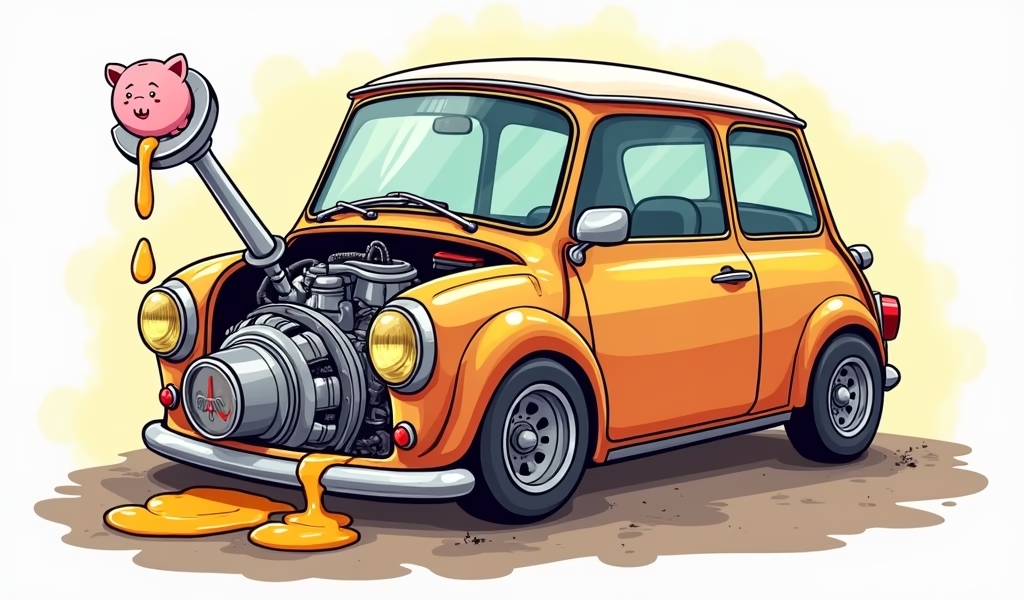
Much like their spirited personalities, Mini Cooper transmissions pack plenty of character but often come with unique challenges—from notorious CVT failures in older models to mechatronic issues in later versions that can lead to repair bills between $200 for basic maintenance to $7,000 for full replacements. The article provides a mechanic’s guide to identifying early warning signs, weighing repair versus replacement options, finding affordable solutions, and implementing preventative maintenance strategies that can significantly extend transmission life despite the manufacturer’s misleading “lifetime fluid” claims.
Table of Contents
- Understanding Mini Cooper Transmissions
- Common Transmission Issues
- Warning Signs to Watch For
- Transmission Repair Costs
- DIY Maintenance Tips
- When to Repair vs. Replace
- Finding Affordable Repair Options
- Extending Transmission Life
- Conclusion
- Frequently Asked Questions
Understanding Mini Cooper Transmissions
Mini Coopers pack a lot of fun into a small package, but their transmissions can sometimes cause big headaches for owners. These vehicles typically come with one of three transmission types: manual, automatic (conventional), or a dual-clutch transmission (DCT).
Each type has its own personality and potential issues. Manual transmissions give you that classic driving experience but require more driver involvement. Automatic transmissions offer convenience but tend to be more complex mechanically. The DCT (sometimes called Steptronic in Mini language) tries to give you the best of both worlds – quick shifting and convenience – but adds another layer of sophisticated electronics.
Older Minis (particularly 2002-2008 models) sometimes came with CVT transmissions, which have proven to be the most problematic of all. If you own one of these, you’ve probably already experienced some issues or heard the warnings from other owners.
What makes Mini transmissions unique is how they’re engineered for sportiness in a compact space. This design philosophy creates some inherent challenges – they work harder, run hotter, and sometimes wear faster than transmissions in larger, more sedate vehicles. But don’t worry – with the right knowledge, you can keep your Mini’s transmission healthy without draining your bank account.
Common Transmission Issues
Mini Cooper transmissions have several recurring issues that mechanics like myself see regularly in our shops. Understanding these common problems can help you identify issues early when they’re less expensive to fix.
The CVT transmissions found in first and second-generation Minis (2002-2008) are notorious for complete failures, often before reaching 100,000 miles. The main culprit is usually the internal chain mechanism that tends to wear prematurely. When these fail, a complete replacement is typically the only option.
For Minis with automatic transmissions (especially in R56 models from 2007-2013), the mechatronic unit is a frequent failure point. This component is essentially the brain of your transmission, combining mechanical and electronic functions. When it starts to fail, you’ll notice erratic shifting patterns or the transmission might go into “limp mode” – restricting you to just one or two gears.

Warning Signs to Watch For
Your Mini will usually give you plenty of warning before a catastrophic transmission failure. Catching these signs early can save you thousands in repair costs. Here’s what to watch for:
- Delayed engagement when shifting from park to drive or reverse
- Hesitation or slipping between gears while accelerating
- Unusual noises like whining, grinding, or clunking
- Burning smell after driving
- Leaking transmission fluid (usually red or brown spots under the car)
- Check engine light or transmission warning light
- Jerky or rough shifting that wasn’t present before
If your Mini suddenly loses power and seems stuck in one gear (usually 3rd), it’s likely entered “limp mode” – a protective measure to prevent further damage. This requires immediate attention, but it doesn’t always mean your transmission is toast. Sometimes a sensor or software issue triggers this response.
I recently worked on a 2013 Mini Cooper S that came in with violent shifting and occasional limp mode. The owner was preparing for the worst, but it turned out to be just a faulty speed sensor combined with dirty transmission fluid. A proper transmission service and new sensor had it shifting like new for under $500 – much better than the $4,000+ transmission replacement they feared!
Transmission Repair Costs
Transmission work on Minis can be expensive, but knowing what you’re up against helps you budget appropriately. Here’s what you can expect to pay for common repairs:
- Transmission fluid change: $200-400
- Valve body replacement: $800-1,500
- Mechatronic unit repair/replacement: $1,200-2,500
- Complete transmission rebuild: $2,500-4,000
- New/remanufactured transmission: $3,500-7,000
Dealership prices tend to run 30-50% higher than independent shops for the same work. I’ve seen customers save over $2,000 on transmission replacements by choosing a qualified independent shop over the dealer.
Your location also impacts pricing significantly. Major metropolitan areas typically charge more for labor, while parts costs remain relatively consistent nationwide. In rural areas, you might save on labor but could face challenges finding Mini specialists.
Keep in mind that diagnostics are crucial for transmission issues. Most shops charge $100-150 for proper diagnosis, but this is money well spent. I’ve seen too many customers waste thousands replacing transmissions when the real problem was a $300 sensor or solenoid.
DIY Maintenance Tips
While major transmission work requires professional equipment and expertise, there’s plenty you can do yourself to maintain your Mini’s transmission health and save money in the process.
Regularly checking your transmission fluid level and condition is the most important preventive measure. On models with dipsticks, check the fluid when the engine is warm and running, with the transmission in park. The fluid should be red or pink (not brown or black) and should smell slightly sweet (not burnt).
For models without dipsticks (most newer Minis), visual inspection requires removing an access plug on the transmission case – something best left to professionals or very comfortable DIYers. However, you can still watch for leaks and pay attention to how the transmission behaves.
Consider installing an aftermarket transmission cooler if you live in a hot climate or drive aggressively. These relatively inexpensive devices (typically $150-300 plus installation) can dramatically extend transmission life by keeping operating temperatures lower. Many Mini enthusiast forums offer detailed guides for installing these yourself.
Your driving habits dramatically impact transmission longevity. Avoid “launching” your Mini (hard accelerations from a stop), let the car fully stop before shifting from drive to reverse, and if you have paddle shifters, use them judiciously. While occasional spirited driving is part of the Mini experience, constant aggressive driving puts tremendous stress on transmission components.
Remember that proper clutch adjustment frequency is critical for manual transmission Minis. A well-maintained clutch protects the transmission and makes driving more enjoyable.

When to Repair vs. Replace
Deciding whether to repair or replace your Mini’s transmission depends on several factors. In my 20+ years working on these vehicles, I’ve developed some guidelines to help owners make this tough decision.
If your Mini has less than 100,000 miles and is in otherwise good condition, investing in a transmission repair or replacement usually makes financial sense. The car still has plenty of life left, and fixing the transmission will likely be cheaper than replacing the entire vehicle.
For higher-mileage Minis (over 150,000 miles) with multiple other issues, a full transmission replacement might not be justifiable unless you have a strong attachment to the vehicle. In these cases, a rebuild or quality used transmission might be worth considering if the car is otherwise solid.
The extent of damage also influences this decision. Issues like solenoid failures, valve body problems, or electronic glitches can often be repaired for a fraction of replacement costs. However, if internal mechanical components like gears and shafts are damaged, replacement might be more cost-effective in the long run.
Consider having a professional perform a thorough inspection with a diagnostic scan before making your decision. According to Bureau of Labor Statistics data, diagnostic services typically cost $75-150 but can save thousands by identifying the precise issue.
Finding Affordable Repair Options
When transmission work becomes inevitable, you don’t have to pay top dollar. Here are some proven strategies to reduce your repair costs:
- Get multiple quotes from both dealerships and independent shops
- Consider remanufactured transmissions (often half the cost of new units with similar warranties)
- Ask about used transmissions from reputable salvage operations
- Inquire about rebuilt options, especially for older Minis
- Check if your specific issue might be covered under an extended warranty or recall
Independent shops specializing in European vehicles typically offer the best combination of expertise and value. Look for shops that work on Minis regularly – general repair shops sometimes lack the specialized knowledge needed for these unique transmissions.
Online Mini communities like North American Motoring can be excellent resources for finding reputable shops in your area. Fellow Mini owners can often recommend specialists who provide quality work at reasonable prices.
Don’t forget to ask about warranty terms. Quality shops typically offer at least 12 months/12,000 miles on transmission work. Some remanufactured units come with warranties up to 3 years – occasionally better than what dealers offer on new units.
If you’re comfortable with some DIY work, consider a partial approach – have a shop diagnose the problem, then source parts yourself and either install them yourself (for simpler jobs) or negotiate labor-only rates with the shop.
Extending Transmission Life
An ounce of prevention truly is worth a pound of cure when it comes to Mini Cooper transmissions. Following these proactive maintenance steps can add years and thousands of miles to your transmission’s life:
- Change transmission fluid every 30,000-40,000 miles, regardless of “lifetime fluid” claims
- Use only Mini-approved transmission fluids or direct equivalents
- Address minor shifting issues promptly before they become major problems
- Have regular differential service scheduled for all-wheel drive models
- Allow your transmission to warm up before aggressive driving, especially in cold weather
- Consider installing an auxiliary transmission cooler if you live in a hot climate
The “lifetime fluid” claim made by Mini for many of their transmissions has proven misleading. While the fluid might last the lifetime of the transmission, regularly changing it significantly extends that lifetime! Most transmission specialists recommend changes every 30,000-40,000 miles for normal driving or every 20,000-30,000 for severe service (frequent stop-and-go traffic, mountain driving, or aggressive driving habits).
Modern transmission fluids contain vital additives that break down over time. Fresh fluid provides better lubrication, cooling, and hydraulic performance – all critical for transmission longevity.
Conclusion
Mini Cooper transmission issues don’t have to break the bank or end your love affair with these charming vehicles. With proper maintenance, early intervention when problems arise, and smart repair decisions, you can keep your Mini shifting smoothly for many years to come.
Remember that preventative maintenance is always cheaper than emergency repairs. Regular fluid changes, gentle driving (most of the time), and addressing small issues promptly will save you thousands over your ownership experience.
When repairs become necessary, take time to explore all your options. Get multiple quotes, consider different repair approaches, and don’t assume the dealership is your only choice. Many independent specialists provide excellent work at substantially lower prices.
Your Mini’s transmission may have its quirks and challenges, but with the knowledge from this guide, you’re well-equipped to make informed decisions that keep both your car and your wallet happy. After all, isn’t that what the Mini experience is all about – maximum fun with minimum fuss?
Frequently Asked Questions
How much does it cost to replace a Mini Cooper transmission?
Replacement costs typically range from $3,500-7,000 depending on your model and whether you choose new, remanufactured, or rebuilt. Independent shops usually charge 30-50% less than dealerships for comparable work.
How long do Mini Cooper transmissions typically last?
Manual transmissions often reach 150,000+ miles, while automatics typically last 100,000-120,000 miles with proper maintenance. CVT transmissions (2002-2008 models) are the least reliable, often failing before 100,000 miles.
What’s the most common Mini Cooper transmission problem?
For CVT models, complete transmission failure is most common. For automatics (especially 2007-2013 models), mechatronic unit failures cause the majority of issues, while manual transmissions most frequently experience clutch wear.
Can I drive with a slipping Mini Cooper transmission?
Driving with a slipping transmission will cause accelerated wear and potentially catastrophic failure. Limit driving to essential trips only and have the issue diagnosed immediately.
Is it worth fixing the transmission in an older Mini?
For Minis under 100,000 miles in otherwise good condition, fixing the transmission is usually worthwhile. For higher-mileage vehicles with multiple other issues, the decision depends on your attachment to the car and your budget for ongoing maintenance.