

Overview
When functioning properly, the Mercedes R-Class air suspension system provides that coveted cloud-like ride quality, but it typically begins failing between 60,000-100,000 miles with repairs costing upwards of $4,000. Understanding the symptoms of failure (uneven ride height, extended compressor run times, warning lights), performing preventative maintenance, and choosing between OEM repairs, quality aftermarket parts, or conversion to conventional springs can save owners thousands while extending the lifespan of this sophisticated engineering marvel.
Table of Contents
- Understanding Mercedes R-Class Air Suspension
- Common Symptoms of Air Suspension Failure
- How the AIRMATIC System Works
- Typical Causes of Suspension Problems
- Preventative Maintenance Tips
- Repair vs. Conversion Options
- DIY Troubleshooting Steps
- Cost Breakdown for Repairs
- Extending Your Air Suspension Lifespan
- Conclusion
- Frequently Asked Questions
Understanding Mercedes R-Class Air Suspension
The Mercedes R-Class air suspension system isn’t just a luxury feature—it’s a sophisticated engineering marvel that significantly enhances your driving experience. As a technician who’s worked on hundreds of these vehicles, I can tell you this system provides that cloud-like ride quality Mercedes owners love, but it also has a notorious reputation for expensive failures.
At its core, the AIRMATIC suspension replaces traditional coil springs with air-filled rubber bellows that can adjust vehicle height and damping on the fly. This allows your R-Class to maintain optimal ride height regardless of passenger load or road conditions.
When working properly, the system is nearly magical—automatically lowering at highway speeds for better aerodynamics, raising for rough terrain, and self-leveling when carrying heavy loads. But when problems start, they can quickly cascade into repairs costing upwards of $4,000.
Most R-Class models begin experiencing air suspension issues between 60,000-100,000 miles, though environmental factors and driving habits significantly impact system longevity. The good news? With proper maintenance and early intervention, you can often prevent those heart-stopping repair bills.
Common Symptoms of Air Suspension Failure
The telltale sign most owners first notice is uneven ride height—that unmistakable sag where one corner (usually rear) sits noticeably lower than the others. If you spot this, consider it an urgent warning flag.
Many suspension issues start subtly. Your R-Class might appear normal when running but gradually sink overnight. This happens because the compressor compensates for small leaks while the engine runs but can’t maintain pressure indefinitely when parked.
Listen for your air compressor running longer than usual. A healthy system runs the compressor briefly (5-15 seconds) during startup or height adjustments. If it’s running constantly or cycling frequently while driving at consistent speeds, you likely have air leaks.
Dashboard warning lights shouldn’t be ignored. When that yellow suspension warning illuminates, your control module has detected pressure irregularities, sensor failures, or compressor issues requiring attention. These warnings rarely resolve themselves and typically worsen with time.
Changes in ride quality provide another early indicator. If your once-smooth R-Class starts bottoming out over speed bumps or wallowing through corners, your air suspension may be struggling to maintain proper pressurization.
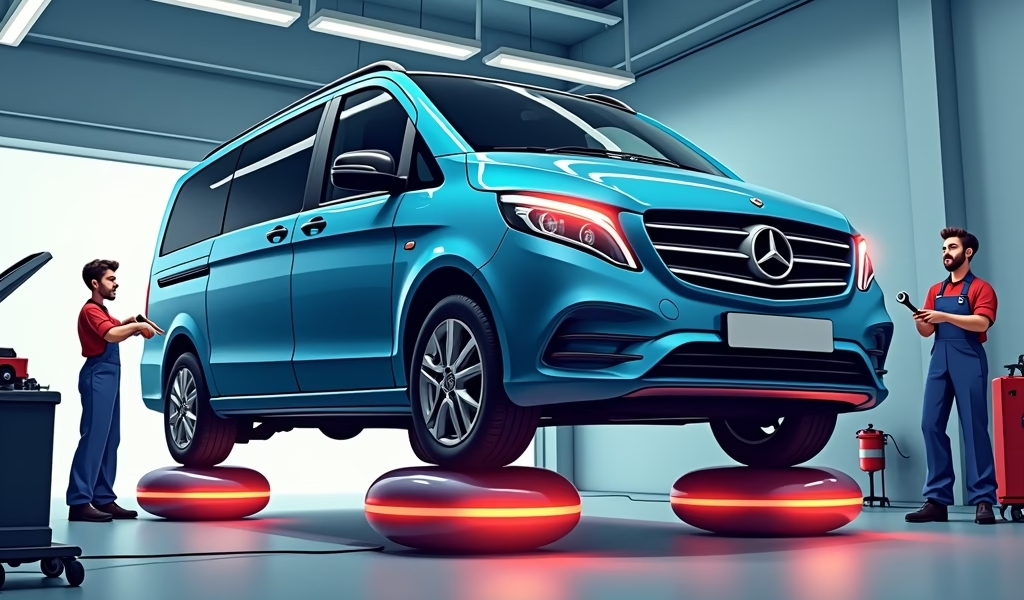
How the AIRMATIC System Works
To truly understand why these systems fail, you need to know the key components working behind the scenes. Your Mercedes R-Class AIRMATIC system consists of five critical elements working in harmony:
The air struts (one at each wheel) contain flexible rubber air springs that inflate or deflate to adjust ride height. These are essentially sophisticated air bladders surrounded by protective rubber bellows—the components most susceptible to leaks as they age.
The air compressor, typically mounted near the rear axle, pressurizes air for the entire system. This hardworking pump is another common failure point, especially when it’s been overworking to compensate for leaks elsewhere.
A central valve block distributes pressurized air to individual struts based on commands from the control module. This component houses solenoid valves that can develop internal leaks or electrical faults over time.
Height sensors at each wheel constantly measure vehicle position relative to the ground, sending real-time data to the control module. These delicate sensors can become damaged or misaligned, sending incorrect signals that confuse the system.
The AIRMATIC control module serves as the system’s brain, processing sensor inputs and controlling the compressor and valve block. Like any electronic component, it can develop internal faults or suffer from corrosion at its connections.
This complex network is connected by rubber air lines and electrical wiring—all potential points of failure as they age. When one component starts to fail, the entire system compensates by working harder, creating a domino effect that often leads to multiple part failures.
Typical Causes of Suspension Problems
After diagnosing hundreds of R-Class air suspension failures, I’ve found several recurring culprits. Age-related deterioration tops the list—the rubber components simply weren’t designed to last indefinitely. Those air springs and connecting lines inevitably dry out, crack, and develop pinhole leaks after years of temperature fluctuations and constant flexing.
Moisture contamination within the system creates another common failure pathway. Your compressor draws in outside air, and with it, humidity. Over time, this moisture corrodes internal components and freezes during cold weather, blocking valves and lines. This explains why many failures occur during seasonal temperature changes.
Excessive weight regularly overloads the system. The R-Class comfortably carries seven passengers plus cargo, but consistently maxing out the vehicle’s capacity forces the suspension to work overtime, accelerating component wear. Those weekend trips fully loaded with passengers and luggage put significant strain on the system.
Environmental factors play a significant role too. Road salt in northern regions accelerates corrosion of metal components and connections. Meanwhile, extreme heat in southern climates speeds up the deterioration of rubber parts. Neither environment is particularly friendly to air suspension systems.
Improper maintenance often exacerbates these issues. Dirty air filters force the compressor to work harder, while neglecting to address small leaks when they first appear allows them to grow into major problems. Many catastrophic failures could have been prevented with early intervention.
As a mechanic, I’ve seen how technical service bulletins from Mercedes have addressed some design weaknesses in earlier models, but the fundamental vulnerability remains: complex air suspension systems have more potential failure points than conventional springs.
Preventative Maintenance Tips
Preventative care is your best defense against costly suspension failures. I recommend a simple visual inspection every 3-4 months—just take a few minutes to check that all four corners of your R-Class sit level and examine the air struts for any signs of seepage, cracking, or unusual wear.
Keep the system’s air intake clean. The compressor’s air filter (often overlooked during routine maintenance) should be replaced every 30,000 miles or whenever it appears dirty. This simple $20-30 part can prevent hundreds in compressor damage.
Regular undercarriage cleaning is crucial, especially in winter months. Road salt and debris accelerate corrosion of suspension components. A monthly trip through a car wash with undercarriage spray (or a garden hose at home) can significantly extend your system’s lifespan.
Address warning lights promptly. When that suspension indicator illuminates, have it diagnosed immediately rather than hoping it will disappear. Early intervention typically means repairing just one component instead of multiple parts after a cascade failure.
Consider professional system checks during routine maintenance visits. Many Mercedes specialists offer air suspension pressure tests that can identify small leaks before they become major problems. This diagnostic typically costs $100-150 but can save thousands by catching issues early.
For vehicles approaching higher mileage (80,000+), proactive replacement of aging components might make financial sense. Some owners choose to replace air springs preventatively rather than waiting for failures—especially before long road trips or after purchasing a used R-Class with unknown maintenance history.

Repair vs. Conversion Options
When facing significant air suspension repairs, you have three main options to consider. First, you can repair the existing system with genuine Mercedes parts, which provides factory-original ride quality but at premium prices ($3,000-6,000 depending on components needed).
Your second option is using quality aftermarket parts from companies like Arnott or Strutmasters. These typically cost 40-60% less than OEM components while offering comparable performance and often better warranties. Many independent shops exclusively use these parts with excellent results.
The third path is conversion to conventional coil springs using a kit. At $1,000-1,800 installed, this is the most economical long-term solution, eliminating the possibility of future air suspension failures. However, you’ll lose the self-leveling feature and adjustable ride height capabilities.
I’ve installed dozens of conversion kits, and while most customers are satisfied with the ride quality, it’s definitely firmer than the original air suspension. For older R-Class vehicles that you plan to keep long-term, conversion often makes the most financial sense.
If your vehicle is still under 100,000 miles and you value the original ride characteristics, repairing with quality aftermarket components usually provides the best balance of cost and performance. Companies like Arnott Industries specialize in air suspension components that match or exceed OEM specifications.
The decision ultimately depends on how long you plan to keep your R-Class, your budget, and how much you value the original ride quality versus long-term reliability.
DIY Troubleshooting Steps
If you’re mechanically inclined, you can perform some basic diagnostics before heading to the shop. Always start with a visual inspection—get down low and examine each air spring for obvious tears, leaks, or uneven wear patterns. Even small seepages of oily residue indicate a failing seal.
Listen for air leaks around each strut and connection point. With the engine running and suspension pressurized, spray soapy water on suspected leak areas and watch for bubbles. This old-school technique remains one of the most effective ways to pinpoint small leaks.
Check the compressor operation by monitoring its run cycle. A healthy system should pressurize within 15-30 seconds after starting the vehicle (if it’s been sitting overnight). Excessive running time indicates leaks, while no operation might point to electrical issues or a failed compressor.
For those comfortable with more advanced diagnostics, diagnostic equipment accuracy is critical. A quality OBD-II scanner with Mercedes-specific capabilities can retrieve suspension fault codes not accessible with generic scanners. Tools like the iCarsoft MB II or Launch Tech scanners provide this capability for $100-300.
The “bounce test” offers another simple diagnostic—push down firmly on each corner of the vehicle and release. A properly functioning corner should return to position smoothly with minimal bouncing. Excessive oscillation or failure to return to height indicates problems with that corner’s suspension.
Remember that DIY troubleshooting has limits. While identifying problems yourself can save diagnostic fees, actual repairs often require specialized tools and expertise. Air suspension systems operate under high pressure (up to 220 PSI), making them potentially dangerous to disassemble without proper training.
Cost Breakdown for Repairs
Understanding potential repair costs helps you budget appropriately and evaluate your options. Individual air struts from Mercedes typically cost $800-1,200 each, with labor adding $150-300 per corner. Aftermarket alternatives from reputable manufacturers like Arnott run $400-700 per strut with the same labor costs.
The air compressor assembly represents another significant expense. OEM units run $800-1,200 plus 1-2 hours labor. Aftermarket compressors cost $350-700 but vary significantly in quality and longevity—this isn’t a component where choosing the cheapest option is wise.
Control modules and valve blocks fall in the $600-1,200 range for genuine parts, with programming often adding $100-200. These electronic components rarely have quality aftermarket equivalents, making them particularly expensive to replace.
Minor repairs like replacing air lines, fittings, or height sensors are more affordable, typically $100-300 including parts. These smaller repairs become worthwhile when addressed early but are often overlooked until larger failures occur.
Complete system replacement at a dealership typically runs $4,000-6,500 depending on model year and condition. Independent shops using quality aftermarket parts can often complete the same work for $2,500-4,000, while conversion to conventional springs averages $1,000-1,800 installed.
When considering repairs, remember that addressing problems individually as they arise often costs more in the long run than comprehensive system overhaul. Once one component fails, others are likely not far behind due to increased strain on the system.
Extending Your Air Suspension Lifespan
Beyond basic maintenance, several practices can significantly extend your air suspension’s functional life. Adjust your driving habits—avoid unnecessary off-road excursions and be gentle over speed bumps and driveway entrances. Even minor impacts can damage air struts over time.
Manage vehicle weight thoughtfully. While the R-Class can handle heavy loads, consistently maxing out its capacity accelerates wear. When carrying substantial cargo for extended periods, consider distributing weight evenly to prevent overloading specific corners.
In freezing climates, allow your vehicle to run for a few minutes before driving in extremely cold weather. This gives the system time to pressurize properly and circulate any moisture that might otherwise freeze in lines or valves. A warm garage provides ideal protection during winter months.
Consider using the suspension’s manual height adjustment strategically. When parked for extended periods (airport parking, long-term storage), some owners find that setting the suspension to its lowest position reduces strain on components. Just remember to restore normal height before driving.
For vehicles experiencing mild symptoms, specialized additives like leak sealants designed for air suspension systems can temporarily extend component life. Products like Rhosonix Air Suspension Leak Sealer may buy time before major repairs, though they’re not permanent solutions.
If you’ve already invested in suspension repairs, protect that investment with regular system checks. Many vehicles develop small secondary leaks shortly after major components are replaced—catching these early prevents the repair-fail-repair cycle that frustrates many owners.
Conclusion
The Mercedes R-Class air suspension system represents both the blessing and curse of advanced automotive technology—delivering exceptional comfort and capability when working properly, but potentially significant expenses when it fails. As someone who’s worked on these systems for years, I can assure you that preventative maintenance makes all the difference.
The most important takeaway is simple: address small issues immediately. That minor sag or occasional warning light won’t fix itself, and waiting typically turns a $500 repair into a $3,000+ ordeal. Regular inspections, prompt attention to warnings, and relationship-building with a qualified Mercedes specialist will serve you well.
Whether you choose to maintain your original air suspension or eventually convert to conventional springs, making informed decisions based on understanding the system will save you money and frustration. With proper care, your R-Class can continue delivering that exceptional ride quality and versatility for many years to come.
Remember that even the most sophisticated suspension technology can’t overcome basic physics and material limitations—rubber components wear, electrical connections corrode, and mechanical parts eventually fail. But with vigilance and proper care, you can often double the expected service life of your air suspension system and avoid those dreaded unexpected repair bills.
Frequently Asked Questions
How much does it cost to replace Mercedes R-Class air suspension?
Complete system replacement costs $4,000-6,500 at dealerships or $2,500-4,000 at independent shops using quality aftermarket parts. Conversion to conventional springs runs $1,000-1,800 installed.
Can I still drive if my air suspension is sagging?
Limited driving at reduced speeds is possible but not recommended as handling and safety systems are compromised. Consider it a temporary solution only for reaching a repair facility.
How long do Mercedes air suspension components typically last?
Most air struts and compressors last 60,000-100,000 miles depending on driving conditions and maintenance. Environmental factors like extreme temperatures and road salt can significantly reduce this lifespan.
Will a recall notice compliance issue cover my suspension repairs?
Mercedes hasn’t issued widespread recalls for R-Class air suspension systems, though some specific model years had limited warranty extensions. Check with Mercedes customer service using your VIN to confirm any potential coverage.
Is converting to conventional springs a good idea?
Conversion provides reliable, maintenance-free suspension at lower cost but permanently eliminates the adaptive ride quality and self-leveling capabilities. For higher-mileage vehicles you plan to keep long-term, conversion often makes financial sense.