

Overview
Just like your Mercedes CLA itself, its sophisticated dual-clutch transmission requires attention to warning signs and proper maintenance to avoid expensive repairs down the road. This guide provides expert insights on recognizing transmission problems early, proper diagnostic procedures, preventative maintenance strategies, and cost-effective repair options that can save Mercedes owners thousands while extending transmission life beyond 120,000 miles.
Table of Contents
- Understanding Mercedes CLA Transmission
- Common Warning Signs of Transmission Problems
- Diagnostic Procedures for Transmission Issues
- Preventative Maintenance Tips
- Dealing With Transmission Warnings
- Repair Options and Considerations
- Cost-Saving Strategies Without Compromising Quality
- When to Seek Professional Help
- Conclusion
- Frequently Asked Questions
Understanding Mercedes CLA Transmission
The Mercedes CLA transmission system is a sophisticated piece of engineering that deserves your attention and proper care. As a Mercedes-trained technician with 15 years in the field, I’ve seen how these transmissions can either purr like kittens or become expensive headaches depending on how they’re treated.
Mercedes equips the CLA models with either a 7G-DCT dual-clutch automatic transmission or, in some performance variants, an AMG SPEEDSHIFT DCT. These aren’t your average transmissions – they’re precision instruments designed to deliver that signature Mercedes-Benz driving experience.
The dual-clutch design means faster, smoother shifts than conventional automatics. One clutch handles odd gears while the other manages even gears, allowing for near-instantaneous gear changes. It’s impressive technology, but like any advanced system, it comes with its own set of potential issues.
What makes these transmissions unique is also what can make them temperamental. The electronic control unit, valve body, and mechatronic module work together in a delicate dance. When one component starts to falter, the whole system can begin to exhibit warning signs.
Understanding the basics of your Mercedes CLA transmission gives you a foundation for recognizing when something’s not quite right. Think of it like knowing your own body – you notice when something feels off even before a doctor might diagnose the specific issue.
Common Warning Signs of Transmission Problems
Your Mercedes isn’t shy about letting you know when transmission trouble is brewing. The key is knowing what to look for before small issues become major repairs. Here are the most common warning signs I see in the shop:
First and most obvious: warning lights. If your dash displays a transmission warning icon or “transmission malfunction” message, your car is directly telling you something’s wrong. Don’t ignore these – they’re your first line of defense against catastrophic failure.
Unusual shifting behavior is another telltale sign. This might include delayed engagement when switching from park to drive, hard shifts that feel like a jolt, or the transmission slipping – where engine RPMs increase but the car doesn’t accelerate proportionally. These symptoms often indicate developing issues with the valve body or electronic control.
Strange noises deserve your attention too. A healthy Mercedes CLA transmission should operate quietly. Whining, grinding, or clunking noises, especially when changing gears, suggest mechanical problems that won’t resolve themselves.
Fluid leaks are never normal. Transmission fluid is typically reddish and has a distinct sweet smell. If you notice spots on your driveway, have them checked immediately. Low fluid not only indicates a leak but can cause accelerated wear throughout the transmission.
The notorious “limp mode” is perhaps the most alarming sign. This is when your transmission restricts itself to a single gear (usually second or third) to prevent damage. You’ll notice severely reduced performance – your Mercedes is essentially saying, “Take me to a mechanic right now.”

Diagnostic Procedures for Transmission Issues
When your Mercedes CLA exhibits transmission symptoms, proper diagnosis is crucial before any repairs. While I’ll outline the diagnostic process, remember that specialist tools are required for a definitive diagnosis.
The first step is electronic diagnostics using a Mercedes-specific scanner. Generic OBD2 readers simply won’t access all the transmission control unit data. A professional-grade scanner can retrieve exact error codes, transmission fluid temperature readings, and adaptive learning values – all critical for accurate diagnosis.
After scanning, a road test allows the technician to experience the symptoms firsthand. We’re feeling for shift quality, listening for noises, and monitoring how the transmission responds to different driving conditions. Sometimes issues only appear under specific circumstances, like when the transmission is warming up or under heavy acceleration.
Fluid inspection tells us a lot about transmission health. Fresh transmission fluid should be clear red – if it’s dark, burnt-smelling, or contains metal particles, internal damage is likely occurring. The fluid level must also be precisely correct – regular transmission service intervals help prevent many common problems.
Mechanical inspection may involve checking mounts, linkages, and external components. Sometimes what seems like an internal transmission problem is actually a failed support component. For example, a broken mount can cause vibrations that feel like transmission issues.
Finally, a thorough evaluation includes checking Technical Service Bulletins (TSBs) from Mercedes. These manufacturer notices identify known issues and updated repair procedures. What looks like a major problem might be a documented issue with a straightforward fix, potentially saving you thousands in unnecessary repairs. The Mercedes-Benz service documentation provides valuable information on common issues and their solutions.
Preventative Maintenance Tips
The best transmission repair is the one you never need to make. Preventative maintenance is your strongest ally in avoiding costly transmission failures. Here’s what I recommend to keep your Mercedes CLA transmission healthy:
Follow Mercedes-Benz’s official fluid change intervals religiously. Despite some claims that these transmissions have “lifetime” fluid, real-world experience proves otherwise. For the 7G-DCT, changing fluid every 40,000-50,000 miles provides significant protection. Fresh fluid maintains proper lubrication and cooling properties that deteriorate over time.
Consider an auxiliary transmission cooler for severe driving conditions. If you frequently drive in hot climates, heavy traffic, or tow with your CLA (though not recommended), additional cooling helps prevent the fluid degradation that occurs at high temperatures.
Allow proper warm-up time, especially in cold weather. Modern transmissions adjust their operation based on temperature. Driving aggressively before your transmission reaches operating temperature puts excessive strain on components. Give your Mercedes a minute or two to circulate warm fluid before demanding performance.
Practice smooth driving habits. While the CLA’s sport mode is tempting, constant aggressive driving taxes the transmission. Rapid acceleration followed by hard braking forces the transmission to work harder than necessary. Smooth, progressive inputs extend component life dramatically.
Address small issues before they become big problems. That slight hesitation when shifting into drive? The occasional clunk when slowing down? These minor symptoms often precede major failures. Checking clutch adjustment frequency can prevent more serious issues down the road.
Here’s a simple maintenance schedule to keep your transmission healthy:
- Every 40,000-50,000 miles: Transmission fluid and filter change
- Every 15,000 miles: Check for leaks and proper fluid level
- Every 60,000 miles: Consider a transmission software update check
- Annually: Perform a thorough inspection of mounts and external components
Dealing With Transmission Warnings
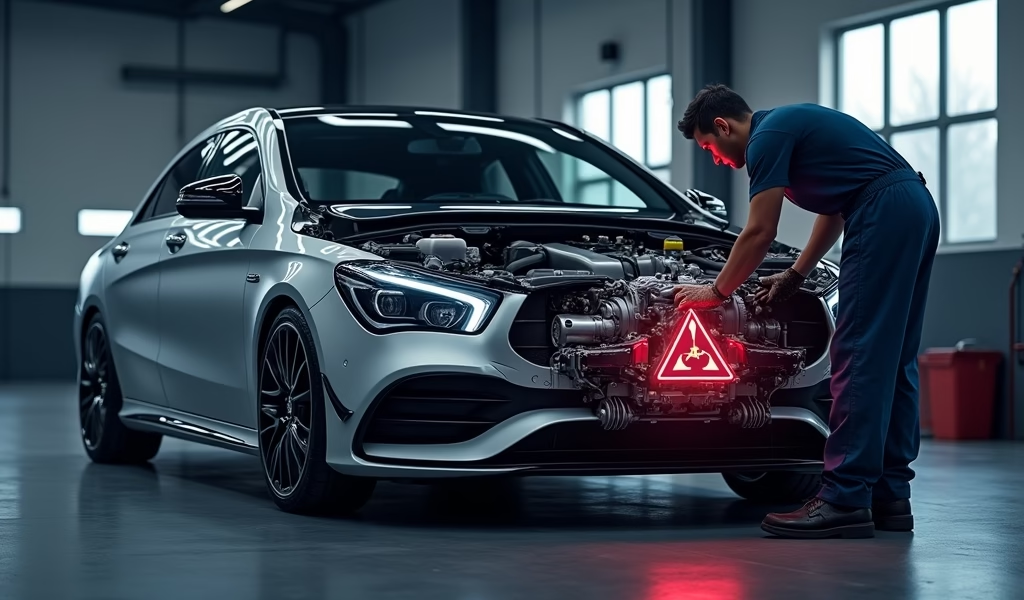
When your Mercedes CLA displays a transmission warning, your response in the first minutes and hours can significantly impact the final repair cost. Here’s how to handle these situations effectively:
First, don’t panic – but don’t ignore the warning either. If you’re driving when the warning appears, evaluate how the car is performing. If you notice severe symptoms (jerking, refusal to shift, strange noises), find a safe place to pull over and shut the engine off.
Check if the warning clears after restarting. Some transmission warnings are triggered by temporary electronic glitches. Turn the car off completely, wait about two minutes (this allows the control modules to reset), then restart. If the warning doesn’t return immediately, you may be able to drive cautiously to a service facility, but the underlying issue likely remains.
Avoid further driving if the warning persists after restart, especially if the car has entered limp mode. Continuing to drive can transform a minor issue into a complete transmission failure. The cost difference can be thousands of dollars.
Document everything. Note exactly when the warning appeared, what you were doing (accelerating, braking, cruising), any unusual sounds or sensations, and whether the warning is constant or intermittent. This information is invaluable to technicians during diagnosis.
Contact a Mercedes specialist rather than a general repair shop. Transmission issues, particularly in sophisticated models like the CLA, often require brand-specific knowledge and diagnostic equipment. According to Consumer Reports’ maintenance data, specialized repair facilities typically diagnose complex transmission issues more accurately the first time, reducing overall repair costs.
Repair Options and Considerations
When facing Mercedes CLA transmission issues, you’ll typically encounter several repair options. Understanding these choices helps you make informed decisions about your vehicle’s future.
Component-specific repair is often the most cost-effective approach when the diagnosis pinpoints a specific faulty part. For example, if the transmission control module or a solenoid is the culprit, replacing just that component might resolve the issue without major disassembly. These targeted repairs typically range from $500-1,500 depending on the component.
Remanufactured transmissions offer a middle-ground solution. These units have been completely disassembled, inspected, and rebuilt with new wear components. They often come with limited warranties and cost significantly less than new transmissions. Expect to pay $3,500-6,000 for a remanufactured DCT transmission including installation.
New factory transmissions provide the highest reliability but at premium prices. A new Mercedes 7G-DCT transmission with installation can easily exceed $8,000-10,000. However, this option comes with full factory warranty coverage and peace of mind.
Consider your vehicle’s overall condition and value before making your decision. If your CLA is older with high mileage and other looming repair needs, a major transmission investment might exceed the car’s value. Conversely, a newer vehicle with low mileage justifies more comprehensive repair approaches.
Another factor to consider is your differential service schedule, as transmission problems can sometimes be related to differential issues, especially in all-wheel-drive models.
When evaluating repair options, ask these critical questions:
- What warranty comes with the repair or replacement?
- Are there any known updates or improvements in newer versions of the transmission?
- Will the repair address only the symptoms or the root cause?
- What other transmission-related components should be replaced simultaneously?
Cost-Saving Strategies Without Compromising Quality
Transmission repairs are significant investments, but several strategies can help manage costs without cutting corners on quality. I’ve helped countless Mercedes owners navigate this balance successfully.
Start by getting multiple estimates from reputable Mercedes specialists. Prices can vary significantly for the same repair. However, be wary of estimates that seem too good to be true – they usually are. Quality transmission work requires specialized knowledge, tools, and parts.
Ask about using OE-equivalent parts rather than dealer-only components. Many high-quality parts manufacturers supply the original equipment for Mercedes but sell similar parts on the aftermarket at lower prices. The key is ensuring these are genuine equivalents, not generic substitutes. Federal-Mogul and other reputable manufacturers produce quality parts that meet or exceed OEM specifications.
Consider timing your repair with other scheduled maintenance. If your CLA is due for other services soon, combining them with transmission work can reduce overall labor costs since much of the access work is already completed.
Explore warranty coverage thoroughly, even for older vehicles. Some transmission issues may be covered under extended warranties or Mercedes-Benz service campaigns that you might not be aware of. I’ve seen customers save thousands through coverage they didn’t realize they had.
Independent Mercedes specialists often offer significant savings compared to dealerships while maintaining high-quality standards. Look for shops with certified Mercedes technicians and positive reviews specifically mentioning transmission work.
Finally, preventative maintenance remains your best cost-saving strategy. A $400-500 transmission service every 40,000 miles might seem expensive until you compare it to a $5,000+ repair bill. This regular investment protects your transmission and helps identify small issues before they become major failures.
When to Seek Professional Help
While I’m all for owner education and appropriate DIY maintenance, transmission issues almost always warrant professional attention. Here’s when you should definitely seek expert help for your Mercedes CLA transmission:
Any illuminated transmission warning light or message requires immediate professional diagnosis. These warnings are triggered by specific fault conditions detected by your vehicle’s sophisticated monitoring systems. Ignoring them rarely leads to positive outcomes.
Fluid leaks need prompt professional assessment. Unlike engine oil leaks that might be monitored for a while, transmission fluid leaks can rapidly lead to insufficient lubrication and catastrophic failure. Even small transmission leaks should be addressed quickly.
Shifting abnormalities – including hesitations, hard shifts, or refused gear changes – indicate internal transmission issues that require specialized diagnostic equipment. These symptoms rarely resolve without intervention and typically worsen over time.
Any unusual noises coming from the transmission area demand professional evaluation. Grinding, whining, or clunking sounds signal mechanical problems that are best caught early before they cascade into more extensive damage.
Performance issues like delayed engagement, slipping gears, or unexpected downshifts are transmission red flags. These symptoms impact not just driveability but potentially safety as well, particularly in emergency maneuvers where predictable acceleration is critical.
When selecting a professional, look for Mercedes-specific expertise rather than general transmission shops. The complexity of CLA transmissions requires both specialized knowledge and Mercedes-specific diagnostic equipment. Ask potential shops about their experience with dual-clutch transmissions specifically, as these differ significantly from conventional automatics.
Conclusion
Your Mercedes CLA’s transmission represents the perfect marriage of performance engineering and daily drivability. When properly maintained, these sophisticated systems can deliver hundreds of thousands of reliable miles. However, they demand respect and attention that many owners unfortunately overlook.
The key takeaway is that proactive care dramatically outperforms reactive repair in both cost and convenience. Following the recommended maintenance schedules, addressing minor symptoms promptly, and partnering with knowledgeable Mercedes specialists creates the foundation for transmission longevity.
Remember that transmission warnings are your vehicle’s way of communicating potential problems. Treating these warnings with appropriate urgency can mean the difference between a minor repair and a complete transmission replacement.
Whether you’re currently facing transmission issues or simply want to prevent them, the strategies outlined in this guide provide a roadmap to more confident Mercedes ownership. Your CLA deserves care that matches its engineering excellence – and your wallet will thank you for the preventative approach.
By understanding the unique characteristics of your Mercedes CLA transmission and forming relationships with qualified service providers, you position yourself to enjoy the precision German engineering that attracted you to the brand in the first place – without the stress of unexpected repair bills.
Frequently Asked Questions
How long do Mercedes CLA transmissions typically last?
With proper maintenance, Mercedes CLA transmissions can last 120,000-150,000 miles or more. Regular fluid changes every 40,000-50,000 miles significantly extend transmission lifespan.
What’s the average cost to replace a Mercedes CLA transmission?
Complete transmission replacement costs between $4,000-$9,000 depending on whether you choose remanufactured or new. Component-specific repairs can range from $500-$2,500.
Can I drive with a Mercedes transmission warning light on?
It’s not recommended to drive with an active transmission warning light. Doing so risks turning a minor issue into a complete transmission failure requiring expensive repairs.
Is it normal for the Mercedes CLA transmission to jerk or hesitate occasionally?
No, jerking or hesitation is not normal behavior for a Mercedes CLA transmission. These symptoms typically indicate developing problems that should be diagnosed promptly.
Does Mercedes-Benz offer any transmission warranty coverage?
New Mercedes vehicles include transmission coverage in the 4-year/50,000-mile warranty. Some issues may be covered under extended warranty programs or service campaigns even on older vehicles.