

Overview
Just like finding a tiny leak in your yacht, spotting transmission fluid issues in your Lexus LC500 early can save you from a $10,000 repair bill down the road. The article details the sophisticated 10-speed automatic transmission system, common leak points, diagnostic approaches, and maintenance strategies—emphasizing that proper fluid maintenance and prompt attention to even minor leaks are crucial to protecting your luxury investment.
Table of Contents
- Understanding Lexus LC500 Transmission
- Signs of Transmission Leaks
- Common Causes of Transmission Leaks
- Diagnosing the Problem
- Preventive Maintenance
- Repair Options and Costs
- DIY vs Professional Repair
- Protecting Your Investment
- Conclusion
- Frequently Asked Questions
Understanding Lexus LC500 Transmission
The Lexus LC500 comes equipped with one of the most sophisticated transmission systems on the market – a precisely engineered Aisin 10-speed automatic transmission. This mechanical marvel perfectly balances lightning-fast shifts with the buttery-smooth operation that Lexus owners expect.
What makes this transmission special is its ability to keep the 5.0L naturally aspirated V8 engine in its optimal power band through closely spaced gear ratios. This engineering feat contributes significantly to the LC500’s exhilarating acceleration while maintaining fuel efficiency during cruising.
The transmission contains various components vulnerable to leakage. The most common trouble spots include the transmission pan gasket, input/output shaft seals, valve body gaskets, and the torque converter seal. These components work together in a delicate balance, communicating with the LC500’s electronic systems through the transmission control module.
Lexus transmissions operate with extraordinarily tight tolerances, which delivers exceptional performance but also means they’re particularly sensitive to fluid issues. The automatic transmission system requires specialized Toyota Genuine ATF WS (World Standard) fluid with specific friction modifiers that protect internal components while enabling those crisp, responsive shifts that define the LC500 driving experience.
Signs of Transmission Leaks
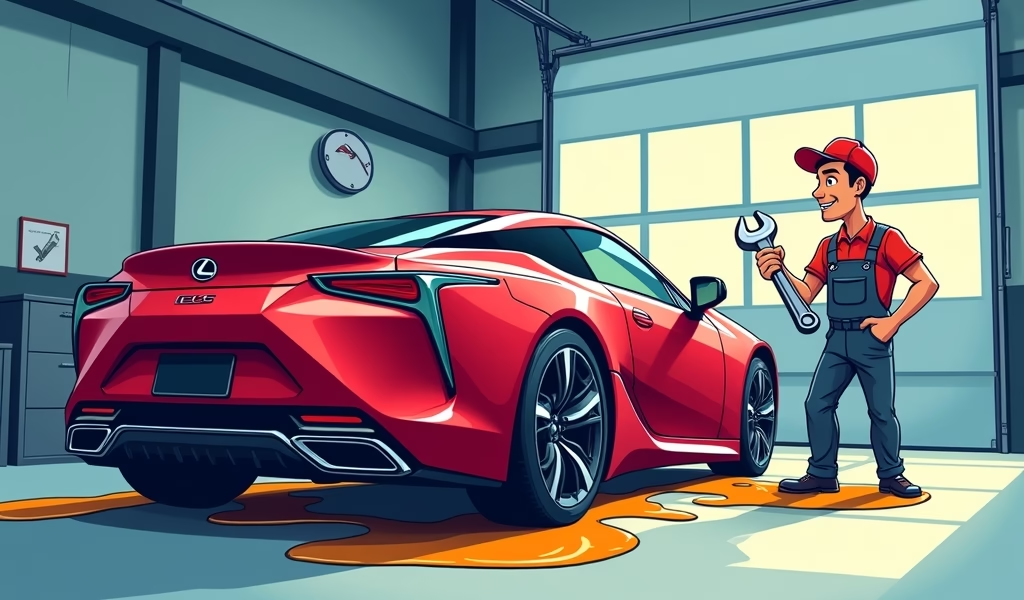
Spotting a transmission leak early can save you thousands in repair costs. The most obvious sign is fluid puddles beneath your vehicle. Transmission fluid in the LC500 has a distinctive reddish color when new and gradually darkens to a deeper red or brownish-red as it ages. It has a slightly sweet smell and feels exceptionally slick between your fingers – much more so than engine oil or coolant.
Beyond visible evidence, your LC500 will often display performance symptoms indicating transmission fluid loss:
- Delayed or rough shifting, especially noticeable when accelerating from a stop
- Unusual noises during gear changes – whining, buzzing, or clunking sounds
- Transmission overheating warnings on your instrument panel
- Gears slipping or unexpected shifts to neutral while driving
- Reduced acceleration response
It’s important to distinguish transmission fluid from other automotive fluids. Engine oil typically appears darker brown or black with less slipperiness. Coolant varies in color (often green, orange, or pink in Lexus vehicles) and has a more watery consistency with a sweet smell.
Your LC500’s sophisticated onboard diagnostics might alert you to transmission issues through dashboard indicators. Beyond the “Check Engine” light, you might see warnings specific to transmission temperature or a “Check VSC” (Vehicle Stability Control) notification, as the transmission feeds data into these systems.
Common Causes of Transmission Leaks
The precision engineering that makes your LC500’s transmission exceptional also creates specific vulnerability points where leaks commonly develop:
Pan gasket deterioration ranks as perhaps the most frequent issue. This thin seal between the transmission pan and case endures constant heat cycling and exposure to road debris. Over time, it hardens, shrinks, and develops cracks that allow fluid to escape, typically presenting as slow seepage that gradually worsens.
Damaged transmission seals, particularly around rotating shafts, create another common failure point. The front pump seal, input/output shaft seals, and shift selector seals all experience friction and heat that lead to deterioration. According to transmission repair statistics, seal failures account for approximately 30% of all transmission leaks.
Loose pan bolts and connections seem obvious but are surprisingly common culprits. The vibration inherent in a performance vehicle like the LC500 gradually loosens fasteners. Improper torque during previous service can also lead to leakage as the gasket compresses unevenly.
Cooler line issues present unique concerns. These lines carry hot transmission fluid to the radiator or dedicated transmission cooler for temperature regulation. They’re subject to both heat cycling and road vibration, making connection points and the lines themselves potential failure points. A cooler line leak often creates more pronounced fluid loss than a gasket leak.
Torque converter seal problems typically develop in higher-mileage vehicles. This seal contains fluid in the component that connects the transmission to the engine. When it fails, you’ll notice fluid accumulation around the bellhousing and often experience more dramatic driveability issues.
Diagnosing the Problem
Proper diagnosis of a transmission leak starts with visual inspection. Park your LC500 on a clean, level surface overnight. In the morning, look for any fluid puddles and note their color, consistency, and location. Transmission fluid will appear reddish and feel extremely slippery.
The location of fluid accumulation provides valuable clues. Leaks at the front of the transmission often indicate torque converter or front seal issues. Fluid beneath the center suggests pan gasket problems, while trails along the side might point to cooler line leaks.
For more precise diagnosis, a UV dye test can be invaluable. This professional technique involves adding a special dye to the transmission fluid, then using a UV light to trace exactly where fluid is escaping. It’s particularly helpful for slow leaks or when multiple leak points might exist.
A transmission pressure test can identify internal leaks that might not be immediately visible. This diagnostic procedure measures hydraulic pressure throughout the system to detect any abnormalities that could indicate failing seals or other internal problems.
Don’t overlook electronic diagnosis. Connect a professional-grade scanner to your LC500’s OBD-II port to check for transmission-related codes. Modern transmissions generate specific fault codes that can point directly to the problem area, saving diagnostic time.
Remember that symptoms alone can sometimes mislead. What appears as a transmission leak might actually be power steering fluid or even engine oil dripping onto transmission components. Proper identification is crucial before beginning any repair work.
Preventive Maintenance
The best way to avoid costly transmission repairs is through diligent preventive maintenance. For your Lexus LC500, this starts with regular fluid checks. Unlike many vehicles, the LC500 doesn’t have a traditional dipstick – proper level verification requires connecting to the vehicle’s OBD-II port with a compatible scanner or having the dealership perform an electronic check.
Lexus recommends fluid inspections every 5,000 miles, though monthly visual checks for leaks are wise for vehicles driven daily. The fluid must be checked with the engine running, transmission fluid at operating temperature, and after cycling through all gear positions.
Using only Lexus-specified transmission fluid is absolutely critical. The LC500 requires Toyota Genuine ATF WS fluid, which contains specific friction modifiers engineered for this transmission. Substituting with generic “universal” fluids can cause shifting problems, accelerated wear, and even catastrophic failure.
Follow these additional preventive steps:
- Have your cooling lines inspected for cracks or chafing at major service intervals
- Ensure the transmission cooler remains clean and unobstructed
- During routine maintenance, check beneath your vehicle for signs of fluid
- Consider a transmission service every 60,000 miles, including pan removal, filter replacement, and fresh fluid
- Address even minor seepage immediately – small leaks rarely resolve themselves
Your driving habits also impact transmission longevity. While the LC500 is designed for spirited driving, constant aggressive acceleration, high-speed operation, and frequent use of paddle shifters increase operating temperatures and stress on seals. Consider allowing your transmission to warm up properly before demanding peak performance, especially in cold weather.
Repair Options and Costs

When facing a transmission leak in your Lexus LC500, several repair options exist, each with different cost implications. Understanding these options helps you make an informed decision based on the severity of your leak and your budget constraints.
For minor external leaks like a seeping pan gasket, costs typically range from $400-$800 at a dealership. This service involves dropping the transmission pan, replacing the gasket and filter, and refilling with new fluid. Independent shops may charge somewhat less, but ensure they use OEM-quality parts and specified fluid.
External seal replacements, such as shift selector seals or sensor gaskets, generally run $300-$600 including labor. These accessible components can often be replaced without removing the transmission completely.
Cooling line repairs vary widely based on the location and extent of damage. Simple connection tightening might cost under $100, while complete line replacement could reach $400-$600 depending on accessibility.
Major repairs addressing internal leaks come with substantially higher price tags. A torque converter seal replacement typically costs $1,200-$2,000 because it requires transmission removal. Complete transmission rebuilds addressing multiple internal leaks range from $4,000-$7,000, while full replacement with a factory-remanufactured unit runs $8,000-$12,000 including labor.
Warranty considerations deserve attention. New Lexus vehicles include powertrain coverage for 6 years/70,000 miles, which typically covers transmission-related issues. Certified Pre-Owned vehicles often carry extended coverage. Even outside warranty, Lexus occasionally offers “goodwill” repairs for known issues on well-maintained vehicles just beyond warranty coverage.
The value proposition becomes clear when comparing repair costs: a $600 pan gasket replacement at the first sign of seepage prevents a potential $10,000 transmission replacement down the road. Early intervention almost always represents the more economical choice.
DIY vs Professional Repair
For mechanically inclined LC500 owners, some transmission maintenance tasks remain accessible, while others definitely require professional attention.
Tasks suitable for DIY approaches include external visual inspections for leaks, checking transmission cooling lines for damage, and cleaning areas around the transmission to better spot developing issues. Some owners with advanced skills might attempt transmission pan gasket replacement, though this requires specialized tools, a secure lifting system, and proper disposal methods for used fluid.
DIY repairs require specific tools including a transmission fluid pump with the correct adapters for Lexus vehicles, torque wrenches calibrated for precise settings, and possibly diagnostic equipment to verify proper fluid levels. The transmission components must be handled with extreme care to prevent damage.
Professional service becomes non-negotiable for several scenarios: any internal transmission repairs, torque converter seal replacement, valve body service, or electronic control issues. These require specialized training, dealer-level diagnostic equipment, and in some cases, Lexus-specific programming tools to reset adaptive learning after repairs.
When selecting a qualified transmission specialist, look for Lexus certification or extensive experience with luxury Japanese vehicles. Specialized transmission shops often provide better value than general repair facilities for transmission-specific issues, while offering more competitive pricing than dealerships.
The dealership versus independent shop decision involves several considerations. Dealerships offer factory-trained technicians with direct access to Lexus technical resources and original parts. Independent specialists may offer more competitive pricing and often provide more personalized attention. For vehicles under warranty, dealership service preserves your coverage.
Protecting Your Investment
Your Lexus LC500 represents a significant investment, and its transmission is one of the most valuable components. Protecting this investment requires a combination of vigilance, proper maintenance, and prompt attention to developing issues.
Develop a relationship with a qualified Lexus specialist who understands the nuances of your LC500’s complex transmission system. This professional partnership, combined with your own regular inspections, creates the strongest defense against costly transmission failures.
Maintain detailed service records documenting all maintenance and repairs. Well-documented history showing proactive care significantly enhances resale value and provides valuable information for future troubleshooting if problems arise.
Consider these additional protective measures:
- If you notice transmission fluid on your driveway, take a photo and place cardboard underneath to monitor the rate of leakage
- Address any shift performance changes immediately, as they often indicate developing problems
- For vehicles approaching higher mileage (80,000+), consider a proactive transmission service even without symptoms
- In extreme weather conditions, allow additional warm-up time for your transmission fluid to reach optimal operating temperature
- Never attempt to “flush” a transmission showing symptoms – proper diagnosis should always precede major service
For particularly valuable or collector-grade LC500s, some owners opt for synthetic transmission fluid upgrades, though this should only be performed with products specifically endorsed by Lexus for this application. According to Motor Trend’s analysis, quality synthetic fluids can provide enhanced protection in extreme conditions.
Conclusion
Transmission leaks in your Lexus LC500 deserve immediate attention, not just to prevent unsightly driveway stains, but to protect one of your vehicle’s most sophisticated and expensive components. By understanding the warning signs, causes, and repair options, you’re empowered to make informed decisions that preserve both performance and value.
Remember that prevention remains your most powerful tool. Regular inspections, using only manufacturer-specified fluids, and addressing even minor seepage quickly will help ensure your LC500’s transmission delivers the flawless performance it was designed for throughout your ownership.
The investment in proper maintenance pales in comparison to major repair costs. A few hundred dollars in preventive care can save thousands in repairs while maintaining the exhilarating driving experience that made you choose the LC500 in the first place.
Whether you opt for dealership service, independent specialists, or tackle some maintenance yourself, the key is consistency and attention to detail. Your Lexus deserves nothing less than meticulous care, especially when it comes to its remarkable transmission system.
Frequently Asked Questions
How much does it cost to fix a transmission leak in a Lexus LC500?
Repair costs range from $300-$800 for minor external seals and gaskets to $4,000-$12,000 for major repairs or replacement. Early intervention typically keeps costs on the lower end.
Can I drive my LC500 with a small transmission fluid leak?
Minor seepage that doesn’t create measurable fluid loss between checks may allow for short-term driving until scheduled repair. Any leak causing noticeable fluid drops or affecting shift performance requires immediate attention.
How often should transmission fluid be changed in an LC500?
Lexus recommends transmission service intervals of 60,000-100,000 miles under normal driving conditions. Consider more frequent service (every 40,000-50,000 miles) if you regularly drive in severe conditions or with a spirited driving style.
What does transmission fluid smell like?
Healthy transmission fluid has a slightly sweet or petroleum-like smell. Burnt transmission fluid has a distinctly acrid, burnt odor indicating overheating or internal wear.
Will using stop-leak products fix my transmission leak?
Commercial stop-leak additives are not recommended for the sophisticated LC500 transmission. These products may temporarily swell seals but often damage other internal components and clog vital fluid passages.