

Overview
This article explains car suspension systems, covering components like springs, shock absorbers, and control arms, different types of suspension designs, maintenance needs, common problems, and performance upgrade options. It emphasizes how suspension impacts both comfort and safety while providing practical advice for identifying issues, maintaining components, and making informed decisions about potential upgrades.
Table of Contents
- Understanding Suspension Basics: The Foundation of Comfort and Control
- Key Components of Car Suspension Systems
- Different Types of Suspension Systems
- Understanding Sprung and Unsprung Weight
- Suspension Maintenance: Keeping Your Ride Smooth
- Performance Upgrades for Your Suspension
- Common Suspension Problems and Diagnosis
- Conclusion
- Frequently Asked Questions
Understanding Suspension Basics: The Foundation of Comfort and Control
Learning how car suspension works might seem intimidating at first, but once you grasp the fundamentals, you’ll have a deeper appreciation for that smooth ride you enjoy daily. At its core, a car suspension system serves two critical purposes: it maximizes the friction between your tires and the road to provide stability with steering, and it delivers comfort by absorbing the bumps and vibrations that would otherwise rattle your teeth loose.
Think of your car suspension as the mediator between the road and your vehicle. Without it, every pebble, pothole, and pavement crack would transfer directly to the frame of your car and subsequently to you and your passengers. Not a pleasant thought, right? The suspension essentially isolates the car body from the roughness of the road, allowing your vehicle to travel over uneven surfaces while maintaining stability and control.
This intricate system works through a combination of springs, dampers (shock absorbers), and linkages that connect your vehicle to its wheels. Together, they allow relative motion between the two, cushioning impacts and controlling the vehicle’s dynamics. Understanding this balance between ride comfort and handling performance is key to appreciating how engineers design suspensions for different purposes—whether for luxury cruising or spirited driving.
Key Components of Car Suspension Systems
Every car suspension system consists of several vital components working in harmony. Let’s break down these elements so you can understand what’s happening beneath your vehicle:
- Springs: These store energy and support the vehicle’s weight. The three main types are coil springs (the most common), leaf springs (often found in trucks and heavy-duty vehicles), and torsion bars (used in some European and American cars).
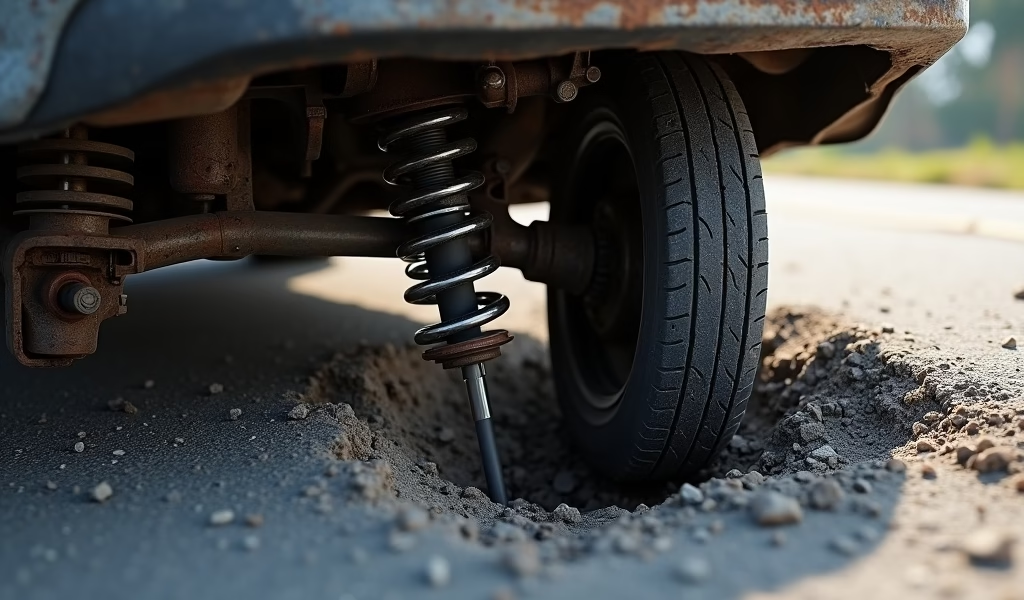
- Shock absorbers: Despite the name, they don’t actually absorb shocks—that’s the springs’ job. Shocks control the rebound movement of the springs, preventing your car from continuing to bounce after hitting a bump. Without them, your car would bounce like a basketball down the road.
- Struts: These structural components combine the functions of a shock absorber with a mounting point for the spring. They’re integral to the suspension structure in many modern vehicles.
- Control arms: These components connect the suspension to the vehicle’s frame and allow for vertical movement while maintaining proper wheel alignment.
- Sway bars (anti-roll bars): These reduce body roll during cornering by connecting the left and right wheels together, making them work against each other when the car leans.
- Bushings: These rubber or polyurethane components reduce friction between metal parts, absorb vibrations, and allow for controlled flexibility in the suspension joints.
All these parts work together in a delicate balance. When your mechanic talks about properly aligning your wheels, they’re essentially fine-tuning how these components interact with each other. This precision ensures optimal tire contact with the road, even wear on your tires, and predictable handling characteristics.

Different Types of Suspension Systems
Car suspension systems have evolved dramatically since the early days of automobiles. Today, several distinct types serve different purposes, vehicles, and driving conditions:
Dependent Suspension Systems
Solid Axle (Beam Axle): This is the oldest and simplest form of suspension. It features a rigid beam connecting the left and right wheels, meaning when one wheel moves, the opposite wheel is affected. While this design is sturdy and cost-effective for trucks and off-road vehicles, it offers less refined ride quality for passenger cars.
Advantages include durability and load-carrying capacity, which is why you’ll still find this system in many pickup trucks and SUVs designed for heavy-duty use. The downside? When one wheel hits a bump, the movement transfers across the axle, affecting both wheels.
Independent Suspension Systems
MacPherson Strut: One of the most common suspension types in modern cars, this system combines a shock absorber and a coil spring into a single unit. It’s compact, lightweight, and provides good handling with adequate comfort. You’ll find this setup in the front suspension of many passenger cars due to its space-efficient design.
Double Wishbone (A-arm): Used in performance and luxury vehicles, this system uses two wishbone-shaped control arms to connect each wheel to the frame. The design allows engineers to precisely control wheel movement for optimal handling. While more complex and expensive than MacPherson struts, double wishbone suspensions deliver superior performance and ride quality.
Multi-link: This sophisticated system uses several separate arms to control wheel movement. It’s essentially a refinement of the double wishbone concept, offering even greater precision in controlling wheel geometry. High-end vehicles often feature multi-link suspensions for their superior balance of comfort and handling.
Semi-Active and Active Suspension Systems
Adaptive Suspension: These systems can adjust their characteristics on the fly, either manually through driver-selectable modes or automatically based on road conditions. They typically use electronically controlled dampers that can change their stiffness in milliseconds.
Air Suspension: Using compressed air instead of conventional springs, these systems can adjust ride height and stiffness. Luxury vehicles often feature this technology for its ability to provide exceptional comfort while maintaining good handling. According to a study from the Society of Automotive Engineers, air suspensions can reduce vibrations by up to 30% compared to conventional systems.
Magnetic Ride Control: This cutting-edge technology uses magnetorheological fluid in the shock absorbers that changes viscosity when exposed to a magnetic field, allowing for near-instantaneous damping adjustments. It’s considered one of the fastest-reacting suspension technologies available today.
Understanding Sprung and Unsprung Weight
When discussing car suspension, two important terms frequently come up: sprung weight and unsprung weight. These concepts are fundamental to understanding suspension performance and vehicle dynamics.
Sprung weight refers to the mass of the vehicle supported by the suspension—essentially everything above the springs, including the body, frame, engine, passengers, and cargo. This weight is “sprung” because it’s isolated from road imperfections by the suspension system.
Unsprung weight includes everything that moves directly with the wheels: the tires, wheels, brake assemblies, and parts of the suspension components themselves. This weight isn’t cushioned by the springs and thus responds directly to road inputs. Performance enthusiasts and engineers work to minimize unsprung weight because it directly affects how quickly the suspension can respond to road irregularities.
The ratio between sprung and unsprung weight is crucial for ride quality and handling. A high sprung-to-unsprung weight ratio (meaning relatively light unsprung components) generally results in better ride quality and road-holding ability. This is why performance vehicles often use lightweight alloy wheels and components—reducing unsprung weight improves the suspension’s ability to keep the tires in contact with the road.
When checking your car’s alignment, technicians are ensuring that all this carefully balanced weight is distributed properly across your suspension system. This balancing act is essential for even tire wear and predictable handling characteristics.
Suspension Maintenance: Keeping Your Ride Smooth
Maintaining your car’s suspension system isn’t just about comfort—it’s a crucial safety consideration. A well-maintained suspension ensures your tires maintain optimal contact with the road, particularly during emergency maneuvers or adverse weather conditions.
Here are some essential maintenance tips to keep your suspension system in top shape:
- Perform regular visual inspections: Look for leaking fluid on your shock absorbers or struts, which indicates seal failure. Also check for cracked or damaged rubber bushings, which can compromise suspension performance.
- Listen for warning sounds: Clunks, knocks, or creaking noises when going over bumps often indicate worn suspension components. Don’t ignore these sounds—they rarely resolve themselves without intervention.
- Monitor tire wear patterns: Uneven tire wear is often your first clue that something’s amiss with your suspension or alignment. Cupping, scalloping, or edges wearing faster than centers all suggest potential suspension issues.
- Check your shock absorbers: The “bounce test” is a simple way to check shock absorber health. Press down firmly on each corner of your vehicle and release. The car should rebound once and then settle. If it continues to bounce, your shocks may need replacement.
- Pay attention to handling changes: If your car pulls to one side, feels “floaty,” or nose-dives excessively during braking, your suspension may need attention. These behaviors compromise safety and increase stopping distances.
- Replace components in pairs: When one shock or strut fails, replace both on the same axle to ensure balanced handling and even wear on other components.
According to AAA, shock absorbers and struts typically need replacement every 50,000-100,000 miles, though this varies based on driving conditions and vehicle type. If you frequently drive on rough roads or carry heavy loads, your suspension components may wear out faster.
Performance Upgrades for Your Suspension
For enthusiasts looking to enhance their vehicle’s handling capabilities, numerous suspension upgrades can transform how your car tackles corners and manages road imperfections. However, it’s important to understand that suspension modifications involve trade-offs—typically between comfort and performance.
Popular suspension upgrades include:
- Performance springs: These typically lower your vehicle’s ride height and offer increased stiffness, reducing body roll during cornering. The trade-off is a firmer ride that may be less comfortable for daily driving.
- Performance shock absorbers: These provide more controlled damping than stock units, improving handling without necessarily sacrificing too much comfort. Many aftermarket shocks are adjustable, allowing you to fine-tune their behavior.
- Coilovers: These combine adjustable springs and shocks into one unit, offering the ability to adjust ride height, spring rate, and sometimes damping. They represent a significant upgrade for serious performance enthusiasts.
- Sway bars (anti-roll bars): Upgrading to stiffer sway bars reduces body roll in corners without drastically affecting straight-line ride comfort—making this a popular first modification.
- Polyurethane bushings: Replacing rubber bushings with firmer polyurethane versions reduces suspension flex and provides more precise handling at the cost of increased vibration and noise.
Before upgrading your suspension, consider your vehicle’s primary use. A track-focused setup might be miserable for daily driving, while a mild performance upgrade could offer the best of both worlds. Also remember that suspension components work as a system—upgrading one part often necessitates upgrading others to maintain balance and prevent premature wear.
Performance suspension modifications can significantly enhance how your car works with traction control systems, potentially improving both performance and safety when properly implemented.
Common Suspension Problems and Diagnosis
Even the best-designed suspension systems eventually develop problems. Knowing how to identify common issues can save you money and prevent more serious damage:
Worn Shock Absorbers
Symptoms: Excessive bouncing after bumps, nose-diving during braking, squatting during acceleration, and reduced stability during cornering.
Diagnosis: Look for oil leaking down the body of the shock, perform the bounce test mentioned earlier, or check for uneven tire wear patterns (scalloping is common with worn shocks).
Damaged Springs
Symptoms: Vehicle sitting lower on one side, bottoming out over bumps, or uneven ride height.
Diagnosis: Visually inspect the springs for cracks, breaks, or sagging. A vehicle that sits noticeably lower on one corner likely has a damaged spring.
Worn Ball Joints
Symptoms: Clunking noises when going over bumps, excessive vibration, or uneven tire wear.
Diagnosis: With the wheel lifted and supported safely, grip the tire at 12 and 6 o’clock positions and try to rock it. Noticeable movement often indicates worn ball joints. Always have a professional perform a thorough inspection if you suspect ball joint issues, as failure can be dangerous.
Bad Control Arm Bushings
Symptoms: Clunking or creaking noises, especially when turning or going over bumps, and reduced steering precision.
Diagnosis: Look for cracked, split, or missing pieces of rubber on the bushings. Oil-soaked bushings are also problematic as the oil breaks down the rubber.
Strut Mount Problems
Symptoms: Knocking sounds when turning or going over bumps, and excessive vibration in the steering wheel.
Diagnosis: Listen for popping or creaking noises coming from the top of the strut tower (inside the engine bay or trunk). Visually inspect the mount for damage or deterioration.
Remember that suspension problems rarely improve on their own and often worsen over time. What starts as a minor annoyance can develop into a safety hazard or cause additional, more expensive damage to other components. When in doubt, have your suspension inspected by a qualified mechanic who specializes in vehicle suspension systems.
Conclusion
Understanding how your car suspension works is more than just mechanical knowledge—it’s about appreciating the engineering that makes modern driving comfortable, safe, and enjoyable. From the careful balance of sprung and unsprung weight to the intricate dance of springs, shocks, and control arms, your vehicle’s suspension system is a marvel of design that’s easy to take for granted until something goes wrong.
Whether you’re maintaining your factory setup, troubleshooting issues, or considering performance upgrades, a solid grasp of suspension fundamentals helps you make informed decisions about your vehicle. Remember that suspension maintenance isn’t just about comfort—it directly impacts safety by ensuring your tires maintain optimal contact with the road under all driving conditions.
Pay attention to how your car feels and sounds, and don’t ignore warning signs. A well-maintained suspension system not only provides a smoother ride but also extends the life of your tires, improves fuel efficiency, and enhances overall vehicle stability. With the knowledge you’ve gained from this guide, you’re better equipped to discuss suspension issues with your mechanic and understand the recommendations they make.
After all, the road beneath us isn’t always smooth—but with a properly functioning suspension system, your journey can be.
Frequently Asked Questions
How often should car suspension components be replaced?
Shock absorbers and struts typically need replacement every 50,000-100,000 miles, though this varies based on driving conditions. Other components like control arm bushings may last longer but should be inspected regularly.
Can I drive with damaged suspension components?
While technically possible, driving with damaged suspension is dangerous and not recommended. It compromises your vehicle’s handling, braking distance, and tire wear patterns.
How do I know if my suspension needs repair?
Watch for warning signs like excessive bouncing after bumps, uneven tire wear, knocking or clunking noises, or vehicle leaning to one side. Any of these symptoms warrant a professional inspection.
Will upgrading my suspension void my car warranty?
Suspension modifications can potentially affect your warranty, particularly if they cause or contribute to vehicle damage. Check with your dealer before making significant changes.
What’s the difference between shocks and struts?
Shock absorbers only dampen spring oscillation, while struts are structural components that also serve as mounting points for springs and support vehicle weight. Vehicles are designed with either shocks or struts at each wheel, not both.
Pingback: Sway Control Adjustment: 5 Proven Fixes for a Smoother Ride - knowsyourcar.com