
Overview
This detailed guide covers five essential car painting techniques: proper surface preparation (which determines 80% of results), mastering spray gun techniques, understanding paint types and mixing, perfecting layering and drying procedures, and finishing with professional polishing. The article emphasizes that patience is crucial throughout the process, and that even beginners can achieve professional-quality results by following proper techniques and investing in quality materials.
Table of Contents
- Understanding Car Painting Basics
- Essential Tools and Materials for Car Painting
- Surface Preparation: The Foundation of a Great Paint Job
- Mastering Spray Techniques for Professional Results
- Understanding Paint Types and Proper Mixing
- Perfecting Layering and Drying Techniques
- Finishing Touches: Polishing and Detailing
- Conclusion
- Frequently Asked Questions
Understanding Car Painting Basics
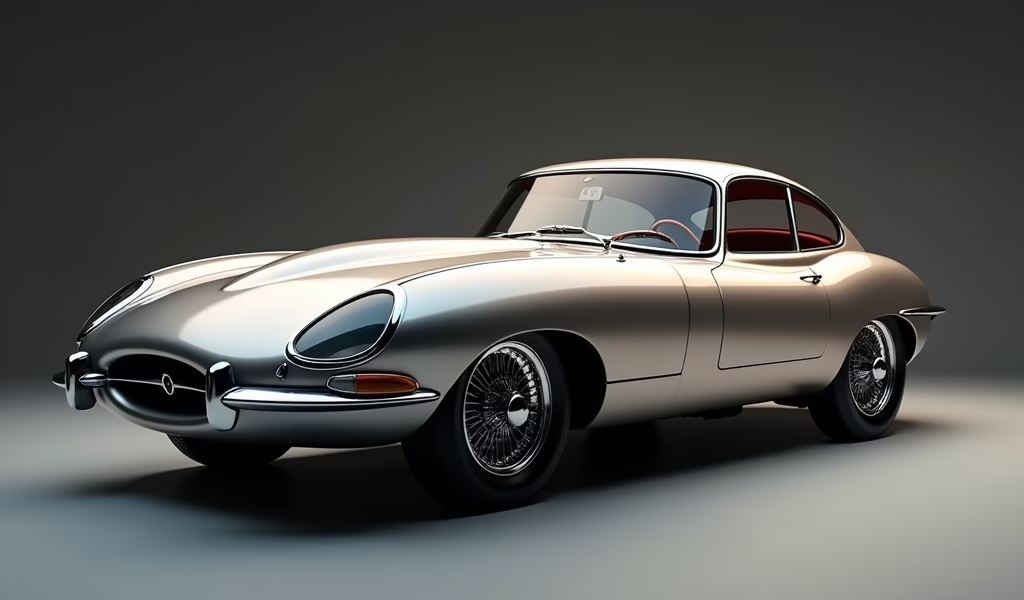
When you first decide to learn car painting techniques, it’s like stepping into a world where science meets art. That gorgeous, mirror-like finish you admire on showroom cars isn’t just about slapping on some color—it’s about mastering a process that combines technical knowledge with skilled craftsmanship.
In my 15 years working as an automotive painter, I’ve seen plenty of DIYers make the same mistake: rushing into painting without understanding the fundamentals. The truth is, a professional-looking finish starts long before the paint gun comes out of its case.
Think of car painting as building a house. You wouldn’t start with the roof, right? Similarly, a quality paint job requires a solid foundation. This means proper preparation, understanding paint chemistry, and developing technique through practice—lots of practice.
The good news? You don’t need decades of experience to get impressive results. With the right knowledge and a patient approach, you can transform your vehicle’s appearance while also providing crucial protection against rust, UV damage, and the elements.
As we dive into these five essential car painting techniques, remember that every professional painter started somewhere. The journey to mastery begins with understanding these fundamentals and being willing to learn from every coat you apply.
Essential Tools and Materials for Car Painting
Before we jump into techniques, let’s talk about what you’ll need in your arsenal. Having the right tools isn’t just convenient—it’s the difference between frustration and success.
First and foremost, safety equipment is non-negotiable. Always have:
- A quality respirator mask with appropriate filters for paint fumes
- Safety glasses to protect your eyes
- Nitrile gloves to keep chemicals off your skin
- A paint suit to protect your clothing and body
For surface preparation, gather these essentials:
- Various grits of sandpaper (80-3000 grit)
- Sanding blocks for flat surfaces
- Body filler and applicators for dent repairs
- Automotive masking tape and paper
- Degreaser and wax remover
- Tack cloths for removing dust before spraying
For the actual painting process, you’ll need:
- An air compressor (at least 60 gallon for serious projects)
- HVLP spray gun(s) with appropriate tip sizes
- Air hose and regulator
- Paint mixing containers and measuring sticks
- Paint strainers to remove contaminants
- Proper ventilation or a spray booth setup
When selecting your paint materials, quality matters tremendously. I’ve seen countless DIYers waste money twice by trying to save on cheap paint initially, only to redo the entire job later. Remember, your car faces harsh conditions daily—from scorching sun to road salt and everything in between—so invest in quality automotive paint systems that can withstand these challenges.
For beginners, I recommend starting with a smaller project like repairing a bumper or fender rather than attempting a full vehicle repaint. This approach allows you to develop your skills while minimizing the risk of a disappointing outcome on a larger scale.
Surface Preparation: The Foundation of a Great Paint Job
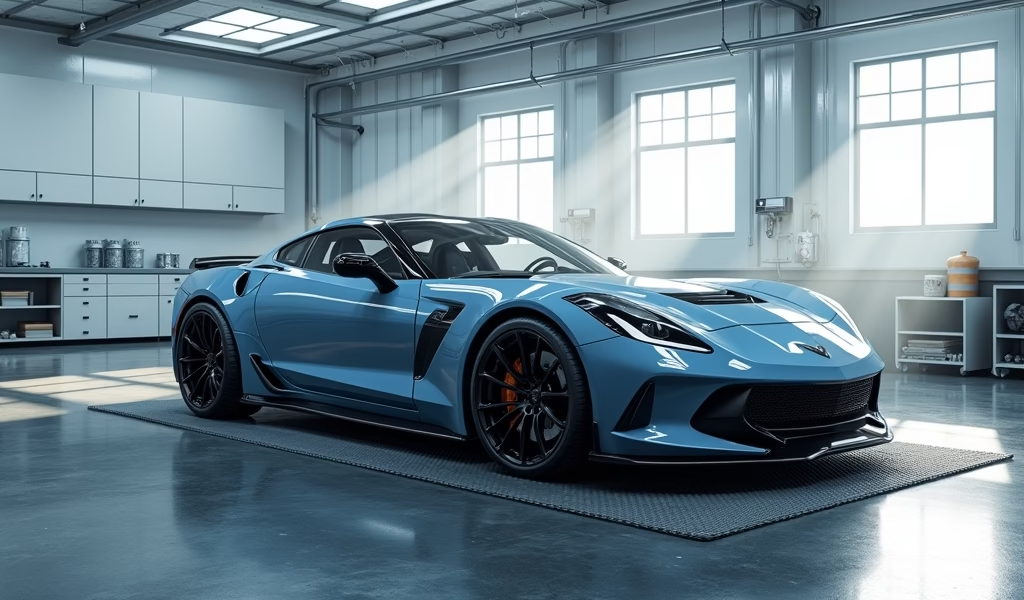
If I could only teach you one thing about car painting, it would be this: proper surface preparation determines 80% of your final result. I’ve seen $5,000 worth of premium paint look terrible on a poorly prepped surface, while budget-friendly paint can look amazing on a properly prepared car.
Start with a thorough cleaning. Wash the entire vehicle with automotive soap and water to remove surface dirt and grime. Next, use a clay bar treatment to remove embedded contaminants that washing alone can’t touch. You’ll be amazed at what comes off even on a “clean” car.
After cleaning comes the critical degreasing step. Use a quality wax and grease remover, applying with one clean cloth and removing with another. This ensures you’re not just spreading oils around. I typically wipe in one direction first, then use a fresh cloth and wipe in the perpendicular direction to guarantee complete coverage.
Sanding Sequence
Proper sanding progression is crucial for a smooth finish. Skipping grit levels is like trying to go from kindergarten to college—the surface simply isn’t prepared for that jump. Here’s my proven approach:
For factory paint in good condition:
- Start with 400 grit to create a mechanical bond
- Progress to 600 grit for smoothing
- Finish with 800-1000 grit before primer application
For damaged surfaces or bare metal:
- Begin with 80-180 grit to remove rust or damaged paint
- Move to 220 grit to refine the surface
- Continue to 320, then 400 grit
- Finish with 600-800 grit before primer
Always use a sanding block on flat surfaces to prevent creating waves or low spots. Your fingers naturally follow existing contours, which means they’ll exaggerate any imperfections rather than leveling them out.
Primer Application
Primers serve three critical purposes: providing corrosion protection, creating adhesion between the substrate and topcoat, and building a uniform surface for color application. Choose your primer based on the substrate:
- Epoxy primers: Best for bare metal due to superior corrosion resistance
- High-build primers: Ideal for filling minor imperfections
- Sealer primers: Applied before color coats to ensure uniform color appearance
Apply 2-3 medium coats of primer rather than one heavy coat to prevent runs and sags. Allow proper flash time between coats according to the manufacturer’s instructions—typically 10-15 minutes depending on temperature and humidity.
After the final primer coat has dried completely, block sand with 400-600 grit sandpaper to create the perfectly smooth foundation your color coat needs. Remember to wipe down with a tack cloth before moving to the next step to remove any sanding dust.
One final professional tip: outline any areas of concern with a pencil before sanding your primer. When the pencil marks disappear, you know you’ve sanded enough. This simple trick has saved me countless hours of unnecessary work and prevented over-sanding.
Mastering Spray Techniques for Professional Results
Proper spray gun technique separates amateur results from professional finishes. Even with perfect preparation, poor application technique will result in orange peel, runs, or uneven coverage. Let’s break down the fundamentals.
First, gun setup is critical. For most automotive applications, I recommend these starting points:
- Air pressure: 25-30 PSI at the gun (not at the compressor)
- Fluid delivery: 2-2.5 turns out from closed
- Fan pattern: 75% open for large panels, 50% for smaller areas
- Gun distance: 6-8 inches from the surface
The perfect spray pattern forms when your distance, speed, and trigger control work in harmony. Always start your pass before pulling the trigger and continue moving after releasing it to avoid heavy spots at the beginnings and ends of passes.
Maintain consistent gun speed across the panel. Moving too slowly creates runs and sags, while moving too quickly results in inadequate coverage and a dry, textured finish. Practice on cardboard or scrap metal until your movement becomes rhythmic and natural.
Developing Proper Technique
The 50% overlap rule is essential for even coverage. Each pass should overlap the previous one by approximately half the width of the fan pattern. Think of it like mowing a lawn—you wouldn’t leave strips untouched between passes.
Keep your wrist locked and move your entire arm parallel to the surface. This maintains a consistent distance and angle, which is crucial for even application. Many beginners make the mistake of painting with just their wrist, creating an arcing motion that varies the distance from the surface.
Break large panels into manageable sections. I typically divide a hood or roof into three or four zones and complete each one with a series of overlapping passes. This approach ensures consistent wet edge maintenance—critical for avoiding visible lines between sections.
For vertical surfaces like doors or fenders, start at the top and work your way down. Gravity is both your friend and enemy in painting—use it to your advantage by working with it rather than against it.
When painting complex shapes like bumpers or mirrors, use multiple light coats rather than trying to achieve full coverage in one pass. These areas are prone to runs because of their irregular surfaces, so patience pays dividends here.
Practice makes perfect with spray technique. Before tackling your actual project, set up some practice panels and work through these exercises:
- Spray straight lines focusing on consistent speed and distance
- Create crosshatch patterns to practice your 50% overlap technique
- Practice on curved surfaces to develop feel for maintaining proper distance
- Try different fan patterns and speeds to see their effects
Remember that professional-level detailing begins with excellent paint application. The better your spray technique, the less correction work you’ll need to do later.
Understanding Paint Types and Proper Mixing
Modern automotive paint systems are sophisticated chemistry sets that require precise understanding and handling. Using the wrong product or improper mixing ratios can lead to adhesion failures, color mismatches, or durability issues down the road.
Paint System Types
Let’s start by understanding the three main automotive paint systems:
Single-Stage Paints: These combine color and gloss in one product. They’re simpler to apply but generally don’t offer the depth, UV resistance, or longevity of two-stage systems. They’re ideal for classic car restorations or budget-conscious projects.
Base Coat/Clear Coat Systems: This two-stage approach involves applying a color layer followed by a separate clear protective layer. The clear coat adds depth, UV protection, and that wet-look shine most modern vehicles have. This is the industry standard for most vehicles today and what I recommend for most DIY painters.
Specialty Finishes: These include candies, pearls, and color-shifting paints. They typically require more skill and often involve three or more stages. I’d suggest mastering standard systems before attempting these more complex finishes.
Mixing Fundamentals
Proper mixing isn’t just a suggestion—it’s a chemical necessity. Modern automotive paints require specific proportions of:
- Paint/color component
- Reducer (thinner) appropriate for your temperature conditions
- Hardener (catalyst) at the specified ratio
Always mix according to the manufacturer’s specifications, measuring by weight rather than volume for the most accurate results. A digital scale is a worthwhile investment for consistent mixing.
Temperature and humidity significantly impact your paint application. As a rule of thumb:
- Below 70°F: Use a faster reducer
- 70-85°F: Use a medium reducer
- Above 85°F: Use a slow reducer to prevent dry spray
In high humidity conditions (above 60%), consider using a humidity-controlling additive to prevent moisture-related defects like blushing.
Color Matching Considerations
Color matching, especially when blending with existing paintwork, requires careful attention. Even factory cars of the same color often show slight variations between panels, and this challenge is amplified when trying to match aged paint.
For the best color match results:
- Use the vehicle’s color code as a starting point, but expect to adjust
- Create test panels and view them in different lighting conditions
- When possible, blend into adjacent panels rather than trying to match exactly at panel edges
- Remember that most colors look different when wet versus fully dried and cured
If you’re painting a complete vehicle, color matching is less critical, but consistency between batches becomes important. Mix enough paint for entire panels or sections at once to avoid visible differences.
Always strain your paint before loading it into your spray gun. Even the smallest contamination can create defects that require significant correction work. I use medium-fine strainers for base coats and fine strainers for clear coats.
When in doubt about a paint system or mixing ratio, consult the Technical Data Sheet (TDS) from the manufacturer. These documents contain the exact specifications needed for optimal results with that specific product line.
Perfecting Layering and Drying Techniques
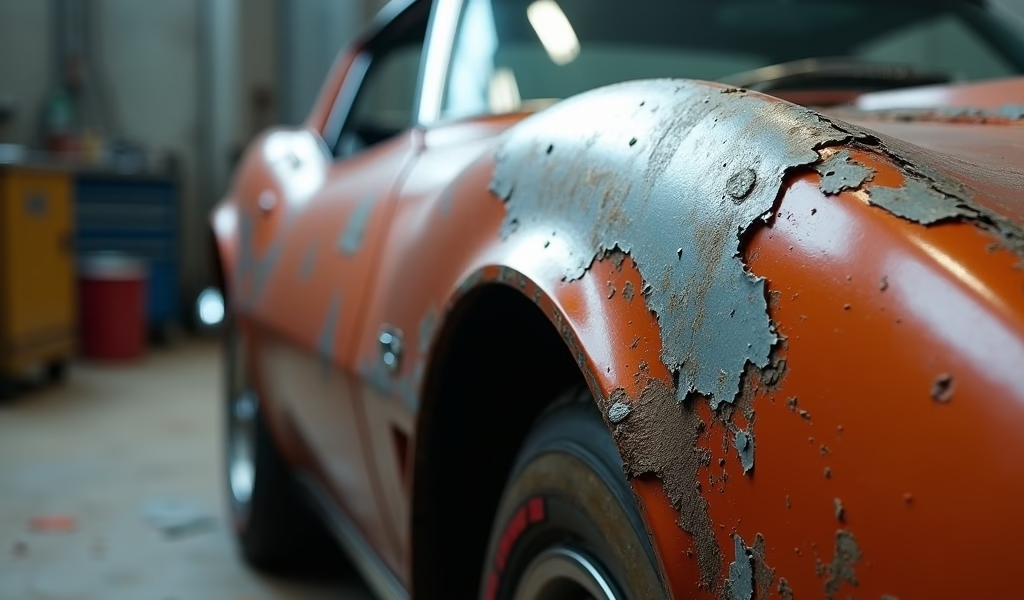
The magic of a professional paint job often lies in understanding how to build layers properly and allowing appropriate drying times between steps. This is where patience truly becomes a virtue in the painting process.
Building Layers Effectively
The secret to depth and durability in your finish lies in proper layering techniques. Always apply 2-3 medium coats rather than attempting one heavy coat. This approach minimizes the risk of runs and sags while building adequate film thickness for durability and depth.
For base coats, apply until you achieve uniform coverage—typically 2-3 coats depending on the color. Lighter colors like whites and silvers often require more coats than darker colors for complete coverage. Each coat should be wet enough to flow out properly but not so wet that it runs on vertical surfaces.
When applying clear coat, slightly heavier application is acceptable compared to base coat, as clear needs adequate thickness for UV protection and to allow for future polishing. I typically apply 2-3 coats of clear, with the final coat slightly heavier than the first.
Understanding Flash Times
Flash time—the waiting period between coats—is crucial yet often misunderstood by DIYers. Think of flash time as letting the solvents evaporate enough to prevent trapping them beneath subsequent layers.
Typical flash times for modern paint systems:
- Base coat between coats: 10-15 minutes at 70°F
- Final base coat before clear: 20-30 minutes
- Between clear coats: 15-20 minutes
The surface should appear uniformly matte (not wet or glossy) before applying the next coat. In cooler temperatures, extend these times; in warmer conditions, you may need slightly less time.
Many beginners make the mistake of either rushing between coats (trapping solvents) or waiting too long (reducing mechanical adhesion). When in doubt, follow the manufacturer’s recommended flash times for your specific product.
Curing Considerations
Even after your final coat appears dry to the touch, chemical curing continues for days or even weeks. During this time, your paint is still vulnerable:
- Air-dried finishes: Reach full hardness in 7-14 days at 70°F
- Baked finishes: Accelerate curing at 140°F for 30-45 minutes
- Infrared curing: Fastest option, typically 15-25 minutes with proper equipment
During this curing period, avoid:
- Waxing or polishing for at least 30 days with air-dried finishes
- Aggressive washing or pressure washing
- Prolonged exposure to harsh chemicals
- Parking under trees where sap might drop onto the fresh finish
One professional tip I’ve learned over the years: if you’re painting in higher humidity, extend your flash and drying times by 15-25%. Moisture in the air competes with paint solvents for evaporation, slowing the entire process.
For DIYers without a spray booth, proper vehicle maintenance includes finding a clean, dust-free environment for the painting process. A rented garage space or even a carefully cleaned home garage can work with proper preparation and ventilation according to EPA safety guidelines.
Finishing Touches: Polishing and Detailing
The difference between a good paint job and an exceptional one often comes down to what happens after the paint has cured. Professional-level finishing requires patience and attention to detail, but the results are well worth the effort.
Evaluating Your Finish
Before reaching for any polishing equipment, thoroughly evaluate your paint finish once it’s fully cured. Look for these common issues:
- Orange peel: A textured surface resembling an orange skin
- Dust nibs: Small particles that landed in your wet paint
- Runs or sags: Areas where paint flowed excessively
- Dry spray: Areas with a rough, textured appearance from spray dust
- Solvent pop: Small bubbles from trapped solvents
Use various lighting angles to spot imperfections. A handheld LED light moved across the surface at low angles will reveal even subtle defects that straight-on viewing might miss.
The Wet Sanding Process
For a truly glass-like finish, wet sanding is often necessary. This process must be approached with caution, as it’s possible to sand through your clear coat if you’re not careful.
Start with 1500 grit wet sandpaper to remove major defects, then progress through 2000, 2500, and 3000 grits. Always keep surfaces wet and rinse your sandpaper frequently. Use light pressure and let the paper do the work—this isn’t about muscle.
Focus on one small section at a time, typically 2′ x 2′ areas. After sanding, the surface will look flat and dull—don’t panic! This is normal and will be corrected in the polishing stage.
Buffing and Polishing
A three-stage polishing process achieves that mirror finish we all crave:
- Compounding: Use a cutting compound with a wool or aggressive foam pad to remove sanding marks
- Polishing: Apply polishing compound with a medium foam pad to enhance gloss
- Finishing: Use a fine finishing polish with a soft foam pad for maximum clarity
Work in small sections, using moderate machine speed (1200-1800 RPM) and keep the buffer moving to prevent heat buildup, which can burn through clear coat. After each stage, wipe the surface clean with a microfiber towel before proceeding to the next step.
For hand areas like edges and tight spots, use a foam applicator pad with the same compounds, applying more time and less pressure than with a machine.
Protection and Maintenance
Once you’ve achieved that perfect finish, protect your hard work with a quality sealant or wax. Synthetic polymer sealants offer the best durability (3-6 months), while carnauba waxes provide unmatched depth and warmth but require more frequent application.
For long-term care, consider applying a ceramic coating for the ultimate in protection and longevity. These professional-grade products can provide years of protection when properly applied, though they typically require more intensive preparation.
Regular maintenance with pH-neutral car wash soap and proper washing techniques will preserve your finish for years to come. Avoid automatic car washes, which can introduce swirl marks and damage your perfect finish.
Conclusion
Learning car painting techniques is a journey that combines technical knowledge with artistic skill. The five techniques we’ve covered—proper preparation, spray gun mastery, paint knowledge, layering skills, and finishing expertise—form the foundation for professional-quality results you can be proud of.
Remember that even professional painters weren’t born with a spray gun in their hand. Every expert started somewhere, making mistakes and learning along the way. The difference is in the willingness to learn from those mistakes and continuously improve your technique.
If I could leave you with one final piece of advice, it would be this: patience is the most valuable tool in your painting arsenal. Rushing any step of the process inevitably leads to disappointing results and often means starting over. Take your time, focus on quality over speed, and you’ll achieve results that make you smile every time you look at your vehicle.
Whether you’re refreshing your daily driver or restoring a cherished classic, applying these techniques will elevate your results from acceptable to exceptional. With practice, attention to detail, and the knowledge you’ve gained here, you can achieve professional-quality finishes that stand up to scrutiny and stand out in a crowd.
Frequently Asked Questions
How long does it take to learn car painting?
Basic proficiency typically takes 3-6 months of regular practice. Mastery, however, can take years of experience working with different vehicles and paint systems.
Do I need a spray booth to paint my car?
While professional results are easier to achieve in a controlled environment, you can get good results without a booth. A clean, dust-free garage with proper ventilation and lighting can work for DIY projects.
What’s the biggest mistake beginners make when painting cars?
Rushing through surface preparation is the most common and costly mistake. A perfect paint job on an imperfectly prepped surface will always disappoint.
How much does it cost to paint a car yourself?
DIY materials for a quality paint job typically run $500-$1,000 for a medium-sized vehicle. This doesn’t include tools and equipment, which can add $300-$1,500 depending on what you already own.
Can I paint just one panel to match the rest of my car?
Yes, but color matching is challenging. Professional painters often blend into adjacent panels rather than stopping at panel edges to create a seamless transition between old and new paint.
Pingback: Types of Paint Textures Cars: 5 Proven Durable Shine Tips - knowsyourcar.com
Pingback: Tinting Types: 5 Proven Car Film Treatments for Durability - knowsyourcar.com
Pingback: Kinds of Car Tint: 9 Essential Care & Protection Treatments - knowsyourcar.com
Pingback: Different Types of Tint: Ultimate Car Film Maintenance Tips - knowsyourcar.com