

Overview
That sinking feeling when your Jeep Patriot’s CVT transmission acts up isn’t just in your head—these notoriously problematic units require vigilant maintenance despite Chrysler’s misleading “lifetime fluid” claims. Regular fluid changes every 30,000 miles, installing an auxiliary cooler, and promptly addressing warning signs like shuddering and delayed response can help avoid the $3,000-5,000 replacement cost and potentially double your transmission’s lifespan.
Table of Contents
- Understanding the Jeep Patriot CVT: What You’re Up Against
- Warning Signs Your Patriot’s CVT is Failing
- Common CVT Issues in Jeep Patriots
- Preventing CVT Failures: Maintenance That Actually Works
- Repair Options That Won’t Break the Bank
- DIY vs. Professional Repairs: What You Can Safely Handle
- Conclusion: Making Smart Decisions for Your Patriot
- Frequently Asked Questions
Understanding the Jeep Patriot CVT: What You’re Up Against
If you own a Jeep Patriot with a CVT transmission, you’re probably already familiar with that sinking feeling when something doesn’t feel right with your vehicle. The Continuously Variable Transmission (CVT) used in Jeep Patriots from 2007 to 2017 has developed quite a reputation—and unfortunately, not a positive one.
Unlike traditional automatic transmissions with fixed gears, a CVT uses a belt and pulley system to provide seamless ratio changes. This design theoretically offers better fuel economy and smoother acceleration. In practice, however, the Jatco CVT2 transmission used in the Patriot has proven problematic for many owners.
Chrysler initially claimed these transmissions had “lifetime” fluid that never needed changing. As a mechanic who’s replaced hundreds of these units, I can tell you with certainty: this claim couldn’t be further from the truth. The reality is that regular transmission service intervals are crucial for these sensitive units.
Most Patriots equipped with CVTs fall into one of two categories: front-wheel-drive models or those with the “Freedom Drive I” four-wheel-drive system. The more rugged “Freedom Drive II” Patriots used a different transmission altogether and don’t share these specific problems.
What makes the Patriot’s CVT particularly challenging is that replacement costs often approach $4,000-$5,000—a significant portion of the vehicle’s current value. But don’t panic yet. With proper knowledge and preventive care, you can avoid becoming another CVT casualty.
Warning Signs Your Patriot’s CVT is Failing
Your transmission will usually give you several warning signs before catastrophic failure. Recognizing these early can save you thousands in repair costs.

The Dreaded Shudder
The most common symptom is a noticeable shudder or vibration, especially when accelerating from 40-60 mph. This feels like driving over rumble strips even on smooth roads. If you notice this, consider it your transmission’s desperate plea for attention.
Delayed Response and Power Loss
If your Patriot hesitates when you press the gas pedal or seems to lose power during acceleration, your CVT may be struggling. This symptom is particularly concerning when merging onto highways or attempting to pass other vehicles.
Unusual Noises
Listen for whining, grinding, or clunking sounds, particularly during acceleration. A healthy CVT should operate relatively quietly. Any persistent noise that increases with vehicle speed warrants immediate investigation.
Warning Lights
Modern Patriots will typically illuminate the check engine light or a dedicated transmission warning light when CVT problems develop. Don’t ignore these warnings—they’re often your first indication of trouble before more serious symptoms appear.
When these warning signs appear, getting a professional diagnosis quickly can mean the difference between a minor repair and a complete transmission replacement. Many shops will perform a basic diagnostic scan for under $100, which is money well spent if it catches problems early.
Common CVT Issues in Jeep Patriots
Understanding what typically goes wrong can help you make informed decisions about your vehicle. Here are the most common failure points I’ve seen in the shop:
Belt and Pulley System Wear
The heart of the CVT is its steel belt and variable pulley system. These components operate under tremendous pressure and can wear prematurely. As they deteriorate, metal particles contaminate the transmission fluid, creating a destructive cycle that accelerates damage.
Overheating Problems
CVTs generate significant heat, and the Patriot’s cooling system often struggles to maintain safe operating temperatures. While conventional transmissions can tolerate occasional overheating, CVTs are much more sensitive to heat. Just a few instances of overheating can dramatically shorten your transmission’s lifespan.
Fluid Degradation
The specialized fluid used in CVTs breaks down much faster than conventional transmission fluid. As it degrades, it loses its protective properties and becomes less effective at lubricating critical components. This is why regular fluid changes are absolutely essential, despite what early owner’s manuals claimed.
Solenoid and Valve Body Issues
The electronic and hydraulic control systems that regulate the CVT can develop problems that mimic mechanical failures. The good news? These components are often repairable without a complete transmission replacement, potentially saving you thousands.
According to Car Complaints data, the 2012 Patriot had particularly high rates of CVT failures, with an average repair cost of $3,800. However, problems have been reported across all model years featuring this transmission.
Preventing CVT Failures: Maintenance That Actually Works
An ounce of prevention truly is worth a pound of cure when it comes to CVT transmissions. Here’s what actually works to extend your transmission’s life:
Regular Fluid Changes
Forget what your dealer might have told you about “lifetime fluid.” Change your CVT fluid every 30,000 miles or two years, whichever comes first. In severe conditions (towing, mountain driving, extreme temperatures), change it even more frequently—every 20,000 miles is not excessive.
Always use the correct NS-2 fluid specified for your Patriot’s CVT. Using incorrect fluid, even for a short period, can cause irreparable damage. A proper fluid change costs $150-300 at most shops, but can save you thousands down the road.
Install an Auxiliary Cooler
One of the best investments for your Patriot’s longevity is an auxiliary transmission cooler. These typically cost $200-400 installed and can lower fluid temperatures by 20-30 degrees—often the difference between normal wear and premature failure.
Modify Your Driving Habits
How you drive significantly impacts CVT lifespan. Avoid these transmission-killing habits:
- Aggressive accelerations from a stop
- Constant stop-and-go driving without cooling periods
- Towing anything over 1,000 pounds
- “Launching” the vehicle or racing starts
Check for Software Updates
Chrysler released several technical service bulletins for the Patriot’s CVT that included control module updates. These updates adjusted operating parameters to reduce stress on components. Check with your dealer to ensure your vehicle has the latest transmission software.
A former Chrysler technician told me that vehicles receiving regular fluid changes often lasted 50,000-70,000 miles longer than those that didn’t. This preventative maintenance can literally double your transmission’s lifespan in some cases.
Repair Options That Won’t Break the Bank
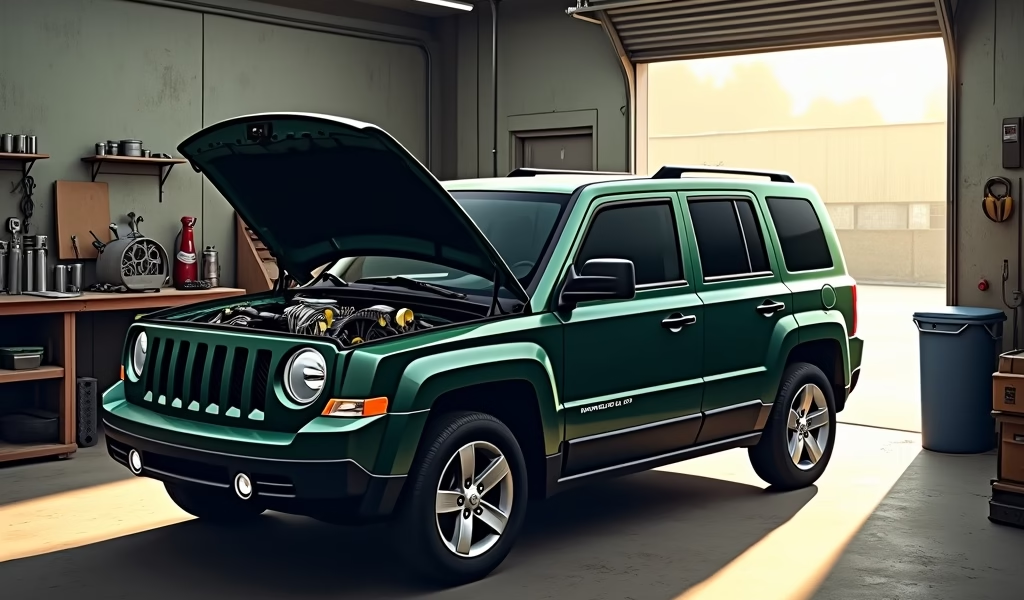
When prevention isn’t enough and you’re facing CVT problems, you have several repair options. Here’s how to approach them strategically:
Get a Proper Diagnosis First
Before authorizing any repairs, get a comprehensive diagnosis from a shop with specific CVT experience. Some symptoms that appear to be major mechanical failures might actually be caused by relatively inexpensive electronic or hydraulic issues.
A proper diagnosis should include:
- Computer scanning for error codes
- Fluid condition inspection
- Road testing to replicate symptoms
- Pressure testing when applicable
Consider Partial Repairs for Specific Issues
Not all CVT problems require complete replacement. Depending on your specific issue, these partial repairs might be viable:
- Valve body rebuilding ($600-900)
- Solenoid replacement ($300-500)
- Control module reprogramming ($150-300)
- Torque converter replacement ($800-1,200)
These targeted repairs make the most sense when the internal belt and pulley system remains in good condition.
Rebuilt vs. Remanufactured vs. Used
If you need a complete transmission replacement, you generally have three options:
Rebuilt transmission: Your original transmission is disassembled, worn parts are replaced, and it’s reassembled. Cost: $2,500-3,500 installed.
Remanufactured transmission: A factory-remanufactured unit built to original specifications with updated components. Cost: $3,000-4,500 installed. These typically carry the best warranties (often 3 years/36,000 miles).
Used transmission: A direct replacement from a salvage vehicle. Cost: $1,500-2,500 installed. This is the riskiest option since the used unit may have similar wear to your original.
Many independent transmission shops offer financing options that can make these repairs more manageable. Some even provide interest-free payment plans for 90 days, which can help spread out the financial impact without adding cost.
Before making your decision, check if your vehicle is covered under any recall notice compliance programs. While Chrysler never issued a general recall for all CVT transmissions, specific VIN ranges did receive extended warranty coverage for certain issues.
DIY vs. Professional Repairs: What You Can Safely Handle
Some aspects of CVT maintenance can be performed by mechanically-inclined owners, while others should absolutely be left to professionals.
DIY-Friendly Tasks
With basic tools and mechanical knowledge, most owners can handle:
- Fluid changes: This requires a fluid pump, catch pan, the correct NS-2 fluid, and basic hand tools. Just be extremely careful to follow the proper procedure and fill to the exact specified level.
- External inspections: Checking for leaks, loose connections, and damaged cooling lines.
- Temperature monitoring: Using an OBD2 scanner to check transmission temperatures during operation can help you identify overheating issues before damage occurs.
According to Transmission Repair Cost Guide, DIY fluid changes typically save $100-150 compared to shop prices.
Leave These to the Professionals
Some jobs require specialized tools and expertise:
- Internal mechanical repairs
- Computer reprogramming and adaptation
- Complete fluid flushes (as opposed to drain-and-fills)
- Pressure testing and diagnosis
When choosing a shop, look specifically for CVT experience—not just general transmission work. Chain transmission shops may offer lower prices but often lack the specialized CVT knowledge of dedicated transmission specialists.
Ask potential shops how many Patriot CVTs they service monthly. If they handle several each month, they’ve likely developed effective protocols for diagnosing and repairing these units.
Conclusion: Making Smart Decisions for Your Patriot
Living with a Jeep Patriot CVT doesn’t have to be a financial nightmare. By understanding the warning signs, performing essential maintenance, and making informed repair decisions, you can avoid the worst outcomes and potentially save thousands.
The most important takeaways for any Patriot owner:
- Change your transmission fluid regularly, despite what early manuals claimed
- Address minor symptoms immediately before they become major failures
- Consider installing an auxiliary cooler, especially in hot climates
- Get multiple opinions before authorizing expensive repairs
- Weigh repair costs against your vehicle’s value and expected longevity
With proper care, many Patriots can deliver 150,000+ miles of service—even with their problematic CVTs. The key is being proactive rather than reactive with maintenance.
If you’re currently facing transmission issues, take heart. The repair market for these vehicles has matured significantly, with more options and better solutions than were available when these transmissions first started failing en masse. Many shops now specialize in these units and can offer cost-effective solutions that weren’t available years ago.
Your Patriot deserves an owner who understands its needs and limitations. With the knowledge in this guide, you’re now better equipped to provide exactly that.
Frequently Asked Questions
How long do Jeep Patriot CVT transmissions typically last?
With proper maintenance, most Patriot CVTs last 80,000-120,000 miles. Without regular fluid changes, this often drops to 60,000 miles or less.
What does a CVT transmission replacement cost for a Jeep Patriot?
Complete replacement typically costs between $3,000-$5,000 depending on your location and whether you choose a rebuilt, remanufactured, or used transmission. Independent shops usually charge 20-30% less than dealerships.
Can I tow with my Patriot CVT?
Technically yes, but the official capacity is limited to 1,000 pounds for CVT-equipped models. Even this modest amount places considerable stress on the transmission and isn’t recommended for frequent use.
How often should I change the CVT fluid?
Every 30,000 miles under normal conditions, or every 20,000 miles under severe conditions (extreme temperatures, mountains, heavy loads). This is far more frequent than Chrysler’s original “lifetime fluid” recommendation.
Is it worth fixing a CVT transmission or better to replace the vehicle?
If your Patriot is in otherwise good condition with under 100,000 miles, a transmission repair/replacement often makes financial sense. For higher-mileage vehicles with multiple issues, it may be more economical to use the repair cost as a down payment on a different vehicle.