
Overview
Just like that dream off-road adventure can quickly turn into a stranded nightmare, ignoring your Jeep Gladiator’s transmission maintenance can transform a $250 fluid change into a $4,500 replacement disaster. This detailed guide covers everything from recognizing early warning signs and proper maintenance schedules to understanding the unique challenges faced by both automatic and manual transmissions in off-road conditions, helping owners add years and thousands of miles to their Gladiator’s lifespan.
Table of Contents
- The Real Cost of Ignoring Your Gladiator’s Transmission
- Understanding Your Jeep Gladiator’s Transmission System
- Warning Signs Your Transmission Needs Attention
- Common Causes of Gladiator Transmission Problems
- How Long Should Your Gladiator’s Transmission Last?
- Essential Preventative Maintenance Schedule
- When Replacement Becomes Necessary
- Cost Breakdown: What to Expect for Repairs
- DIY vs. Professional Service: What You Can Handle
- Common Mistakes Gladiator Owners Make
- Conclusion: Protecting Your Investment
- Frequently Asked Questions
The Real Cost of Ignoring Your Gladiator’s Transmission
Picture this: You’re halfway up a challenging trail in Moab, your Jeep Gladiator loaded with camping gear, when suddenly your transmission refuses to engage. As the sun sets and temperatures drop, you’re stranded miles from cell service, facing an expensive tow and a repair bill that’ll soon exceed $4,000.
This isn’t a hypothetical scenario—it happens to Gladiator owners more often than you might think. What should’ve been an epic adventure turns into a costly nightmare that proper maintenance could have prevented.
Your Jeep Gladiator’s transmission isn’t just another component; it’s the critical link that transfers power from your engine to your wheels. When it fails, your rugged off-road machine becomes nothing more than an expensive trail ornament.
Gladiator owners face unique challenges. The vehicle’s impressive towing capacity (up to 7,650 pounds), off-road capabilities, and utility mean the transmission often works harder than in standard SUVs. Whether you’re rock crawling, hauling materials for weekend projects, or just commuting to work, knowing how to properly care for your Gladiator’s transmission can save you thousands in repair costs and countless hours of frustration.
Understanding Your Jeep Gladiator’s Transmission System
The Jeep Gladiator comes equipped with one of two transmission options: an 8-speed automatic (850RE) or a 6-speed manual (NSG370). The automatic transmission is manufactured by ZF and offers smooth shifting, better fuel economy, and improved towing capacity. The manual transmission gives drivers more control, particularly in technical off-road situations, and tends to be preferred by purists and serious off-roaders.
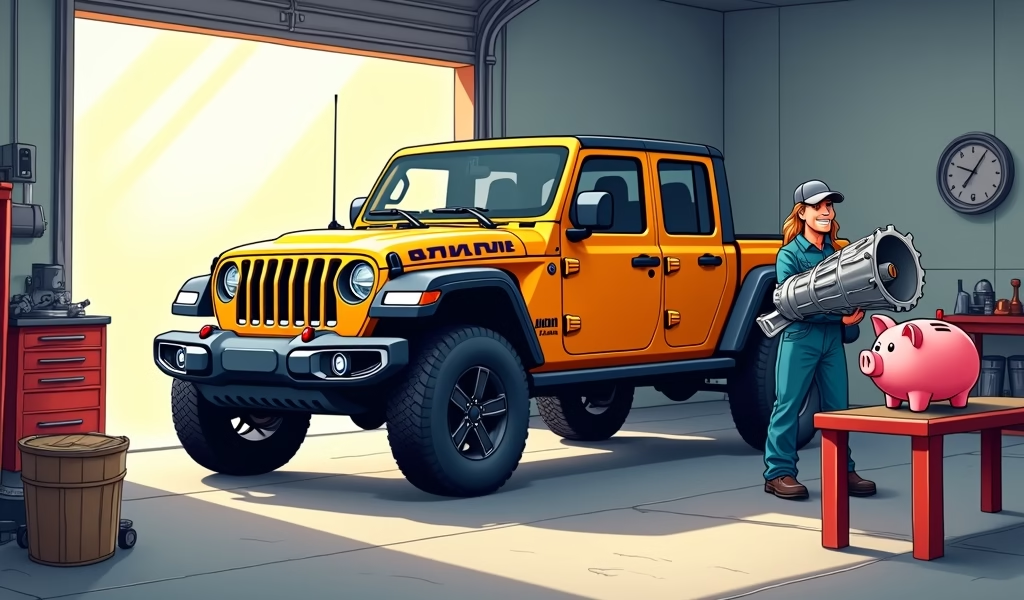
At its core, your transmission’s job seems simple: convert the engine’s rotational power into usable force at various speed ranges. But achieving this requires incredible precision and hundreds of moving parts working in perfect harmony.
In your Gladiator’s automatic transmission, a torque converter replaces the clutch found in manual transmissions. This hydraulic device transfers power from the engine to the transmission using transmission fluid. Inside, planetary gear sets, clutch packs, and bands work together to create different gear ratios.
The manual transmission works differently, using a clutch pedal that you control to disconnect the engine from the transmission when shifting. Inside, synchronizers match the speed of gears before they engage, preventing the grinding noise that occurs when gears aren’t properly aligned.
Both transmission types rely on proper fluid levels for lubrication, cooling, and in the automatic’s case, hydraulic pressure. The transmission connects to the transfer case, which directs power to front and rear axles when four-wheel drive is engaged.
According to Jeep’s official specifications, your Gladiator’s performance and longevity depend heavily on this system functioning correctly. A healthy transmission provides smooth acceleration, efficient power delivery, and the ability to handle diverse demands of both highway driving and off-road adventures.
Warning Signs Your Transmission Needs Attention
Your Jeep Gladiator won’t stay silent when transmission problems develop. Recognizing these warning signs early can mean the difference between a minor repair and a complete rebuild.
Strange noises are often the first indicator something’s wrong. Pay close attention if you notice grinding during gear shifts, whining that increases with speed, or buzzing from under the floorboards. In manual transmissions, grinding usually indicates worn synchronizers, while automatics might produce humming when fluid levels are low.
Difficulty shifting gears or delayed engagement should never be ignored. In a manual Gladiator, this might feel like increased resistance when moving the shifter. With an automatic, you might notice a significant pause between shifting from Park to Drive before the vehicle moves, or hesitation when accelerating from a stop.
Fluid leaks are a visible warning sign that’s easy to spot. Transmission fluid is typically reddish when new and becomes darker or brown when old or burning. Unlike motor oil or coolant, transmission fluid has a distinctive color and slightly sweet smell. Check for spots on your driveway, particularly after your Gladiator has been parked overnight.
A burning smell while driving often indicates overheating transmission fluid, caused by low fluid levels, a malfunctioning cooler, or excessive strain from towing. This smell is distinct from burning oil or hot brakes and has a somewhat sweet yet acrid odor.
Modern Gladiators have sophisticated monitoring systems that illuminate dashboard warning lights when potential problems arise. The “Check Engine” light often indicates transmission issues, and some models feature specific transmission temperature warnings.
Finally, unusual vibrations or shuddering, particularly during acceleration or gear changes, suggest internal problems. This might feel like driving over rumble strips even on smooth pavement or noticeable shaking when accelerating from a stop.
Common Causes of Gladiator Transmission Problems
Jeep Gladiators are built for adventure, but certain conditions and habits can significantly reduce transmission lifespan. Understanding these common causes of failure helps you avoid costly repairs.
Overheating during towing or off-roading ranks among the most frequent culprits. While the Gladiator can tow up to 7,650 pounds when properly equipped, doing so places enormous strain on the transmission, generating excessive heat. Similarly, technical off-road maneuvers create heat that breaks down transmission fluid and damages internal components.
Low or contaminated transmission fluid creates a dangerous situation. The fluid serves multiple critical functions: it lubricates moving parts, carries away heat, provides hydraulic pressure for shifting, and prevents corrosion. When fluid levels drop or become contaminated with metal particles, these functions are compromised. Contaminated fluid acts like liquid sandpaper on precision components.
Off-road abuse and extreme conditions test the limits of even robust transmissions. Constant exposure to mud, water crossings, and dusty conditions can introduce contaminants through breather tubes and seals. Hard impacts from rocks or sudden directional changes place stress on transmission mounts and internal components.
Factory defects have affected some Gladiator model years. Early 2020 models with the automatic transmission occasionally experienced software-related shifting problems, while some units had improperly torqued transmission-to-engine bolts. According to NHTSA data, later software updates addressed many of these issues, but unresolved problems can lead to premature failure.
Improper maintenance or neglect is perhaps the most preventable cause of transmission failure. Skipped fluid changes, using incorrect fluid specifications, or ignoring early warning signs often set the stage for major problems down the road.
How Long Should Your Gladiator’s Transmission Last?
With proper maintenance, your Jeep Gladiator’s 8-speed automatic transmission can typically achieve 150,000 to 200,000 miles of service. The 6-speed manual transmission often extends beyond this range, with many reaching 200,000 to 250,000 miles before requiring major rebuilds.
Several factors significantly influence these numbers. Maintenance history stands as the most critical factor—regular fluid changes and addressing minor issues promptly can add tens of thousands of miles to transmission life.
Your driving habits dramatically impact longevity. Aggressive driving with frequent hard acceleration increases wear on clutch packs and bands in automatic transmissions. For manuals, riding the clutch or improper shifting techniques can prematurely wear the clutch disc and pressure plate.
Environmental factors also play a role. Gladiators operated in extremely hot climates or regularly used for towing in mountainous regions experience accelerated wear due to heat stress. Vehicles primarily driven on highways generally see longer transmission life than those subjected to constant stop-and-go city driving.
Compared to other mid-size trucks, the Gladiator’s transmissions perform relatively well. The 8-speed ZF automatic is used across various Stellantis vehicles and has proven generally reliable, though it typically doesn’t match the legendary longevity of Toyota’s transmissions found in the Tacoma.
The automatic transmission in the Gladiator tends to require more maintenance attention in high-stress applications, while the manual often proves more durable over the long haul when properly maintained.
Essential Preventative Maintenance Schedule
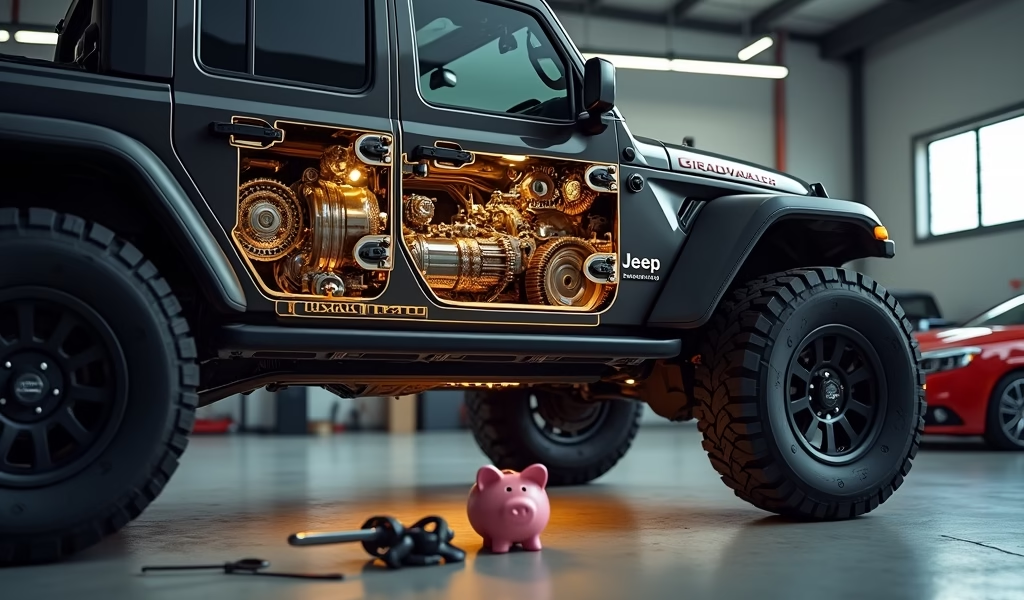
Following a disciplined maintenance schedule is your best defense against costly transmission failures. For Jeep Gladiator owners, this means adhering to both factory recommendations and making adjustments based on your specific driving conditions.
The factory-recommended transmission fluid change interval for the 8-speed automatic is every 100,000 miles under normal driving conditions. However, this assumes primarily highway driving with minimal towing or off-road use. For Gladiator owners who regularly tow, drive in mountainous terrain, or venture off-road, a more conservative 50,000-60,000 mile interval is advisable.
For the manual transmission, change fluid every 60,000 miles under normal conditions, or every 30,000 miles with heavy use. Use only the specified fluids: Mopar ATF+4 for the automatic and Mopar MS-9224 for the manual.
Transmission filter replacement (in automatic transmissions) should coincide with fluid changes. The filter captures metal particles and debris that could cause internal damage, and a clogged filter restricts fluid flow, leading to overheating and poor shifting.
Don’t overlook cooling system maintenance. Your transmission relies on the radiator’s auxiliary cooling section or a separate transmission cooler to maintain proper temperatures. Flush the cooling system according to Jeep’s recommendations (typically every 100,000 miles), and consider adding an auxiliary transmission cooler if you frequently tow or off-road in hot weather.
For off-road enthusiasts, additional precautions help protect your investment:
- Before tackling difficult trails, warm up your transmission with gentle driving for 10-15 minutes
- Avoid prolonged “rocking” to free your vehicle from mud or sand
- After water crossings, check transmission fluid for signs of water contamination (milky appearance)
- Allow cool-down periods during extended low-range operation
Regular dealer or transmission specialist inspections can catch developing issues before they cause noticeable symptoms. These professionals can perform computer diagnostic scans that identify potential problems in the electronic control systems that manage modern transmissions.
When Replacement Becomes Necessary
Despite your best maintenance efforts, every transmission eventually reaches the end of its serviceable life. Recognizing when repair is no longer feasible requires evaluating several factors.
Major internal damage, such as broken gear teeth, failed bearings, or cracked cases, generally indicates replacement is necessary. Similarly, when repair quotes exceed 70-80% of replacement cost, the economics usually favor a complete replacement.
When facing replacement, you’ll need to decide between rebuilding your existing transmission or installing a remanufactured or new unit. A rebuild involves disassembling your transmission, replacing worn or damaged parts, and reassembling it with new seals, gaskets, and friction materials. This option typically costs less but depends heavily on the rebuilder’s skill.
Remanufactured transmissions are completely disassembled, inspected, and rebuilt to original specifications using a combination of new and reconditioned parts. These units often come with warranties and eliminate the downtime associated with rebuilding your original transmission.
New transmissions direct from Jeep (OEM) provide the greatest reliability but come at a premium price, often 25-40% higher than remanufactured options.
Aftermarket transmissions from companies like Jasper Engines & Transmissions often include upgrades to address known weakness points in the original design. These can be good options for vehicles used in demanding conditions, though they may affect warranty coverage on other components.
For Gladiators still under warranty, transmission replacement should be handled through your dealership. The factory powertrain warranty covers the transmission for 5 years or 60,000 miles, and some owners may have purchased extended warranties.
Cost Breakdown: What to Expect for Repairs
Transmission service and repair costs vary widely depending on the specific issue and your geographic location. Understanding typical price ranges helps you budget appropriately and evaluate repair quotes.
Routine fluid change services typically cost between $150-$300 for a Jeep Gladiator. The automatic transmission requires more fluid and a more complex procedure than the manual, accounting for the price range. Dealerships generally charge 20-30% more than independent shops for this service.
Minor repairs, such as replacing a shifter mechanism, solenoid pack, or speed sensor, usually fall in the $500-$1,200 range. These repairs often address specific symptoms without requiring extensive disassembly.
Major repairs involving internal components like valve bodies, clutch packs, or gear sets typically cost $1,500-$3,000. These repairs require removing the transmission from the vehicle and partial disassembly.
Full transmission replacement represents the most substantial investment:
- Rebuilt unit (independent shop): $3,500-$4,200
- Remanufactured unit with warranty: $4,000-$4,800
- Factory new transmission (dealership): $4,500-$5,500
The 8-speed automatic typically costs 15-20% more to replace than the 6-speed manual due to its complexity and parts costs.
Geographic location significantly affects these prices—labor rates in metropolitan areas can be twice those in rural areas. The choice between dealership service (highest cost), specialized transmission shops (mid-range), and general repair shops (lowest cost) also impacts pricing.
DIY vs. Professional Service: What You Can Handle
Some transmission maintenance tasks are suitable for DIY-minded Gladiator owners, while others demand professional expertise and specialized equipment.
Fluid level checks on the manual transmission are straightforward, requiring only basic tools and about 15 minutes. The automatic transmission is more challenging, as the 8-speed uses a sealed system without a traditional dipstick. Instead, checking the fluid requires following a specific procedure using an OBD-II scanner to monitor fluid temperature.
Manual transmission fluid changes are relatively DIY-friendly, requiring a catch pan, the correct fluid, a fluid pump, and basic hand tools. Expect to spend 1-2 hours on this job. The automatic transmission fluid change is considerably more complex, as it requires specialized adapters to connect to the cooling lines for a proper flush.
For most other transmission work, professional service is strongly recommended. Modern transmissions contain precision-machined components with critical tolerances, specialized electronic sensors, and complex hydraulic circuits. Even small mistakes during disassembly or reassembly can cause catastrophic failure.
When selecting a professional, look for shops specializing in Jeep or Chrysler/FCA transmissions. Ask about their experience specifically with Gladiator models, and verify they have proper diagnostic equipment for electronic transmission control systems. Quality transmission shops should offer warranties on their work—typically 12-24 months for repairs and up to 36 months for complete replacements.
According to the Automatic Transmission Rebuilders Association, certified transmission specialists receive ongoing training on the latest transmission technologies, making them better equipped to handle complex issues than general automotive repair shops.
Common Mistakes Gladiator Owners Make
Even well-intentioned Gladiator owners can inadvertently damage their transmissions through common mistakes and misconceptions.
Ignoring early warning signs tops the list of costly errors. That slight hesitation when shifting into Drive or the occasional momentary shudder might seem minor, but these symptoms rarely resolve themselves. Addressing issues while they’re small often costs a fraction of waiting until complete failure occurs.
Using incorrect transmission fluid can cause serious damage. The 8-speed automatic requires specific fluid that meets MS-9602 specifications, while the manual transmission uses Mopar MS-9224. Using generic “universal” transmission fluids might seem economical but can lead to poor shifting, overheating, and accelerated wear.
Overlooking cooling system maintenance creates a dangerous situation for your transmission. The transmission relies on the engine’s cooling system to regulate fluid temperature. A partially clogged radiator or low coolant levels can lead to transmission overheating, even if the engine temperature gauge reads normal.
Improper towing techniques place enormous strain on automatic transmissions. Common mistakes include:
- Failing to use Tow/Haul mode when available
- Overloading beyond rated capacity
- Shifting between Drive and Reverse without coming to a complete stop
- Not allowing cool-down periods during long uphill towing sessions
Aggressive driving habits, particularly in off-road situations, can damage both transmission types. “Power braking” (holding the brake while applying throttle), aggressive launches, and rapid directional changes all increase wear on internal components.
Perhaps most common is skipping scheduled maintenance. Many owners follow the factory 100,000-mile interval for automatic transmission fluid changes without considering their driving habits. Those who off-road regularly or tow frequently should halve that interval to protect their investment.
Conclusion: Protecting Your Investment
Your Jeep Gladiator represents a significant investment—one that delivers adventure, utility, and the unique open-air experience only a Jeep can provide. The transmission, while often overlooked until problems arise, deserves attention proportional to its importance and replacement cost.
By understanding the unique challenges your Gladiator’s transmission faces, recognizing early warning signs, and following a maintenance schedule appropriate for your driving habits, you can potentially add years and tens of thousands of miles to your transmission’s service life.
Remember that prevention costs significantly less than cure when it comes to transmission issues. A $250 fluid and filter change every 50,000 miles is negligible compared to a $4,500 replacement when neglect leads to failure. That’s not just smart economics—it’s the difference between conquering that bucket-list trail and being stranded miles from help.
Whether you’re a hardcore off-roader, weekend warrior, or daily commuter who occasionally ventures off the beaten path, your Gladiator’s transmission deserves proper care. The reward is years of trouble-free operation and the confidence to tackle whatever adventures lie ahead.
Frequently Asked Questions
How often should I change the transmission fluid in my Jeep Gladiator?
For normal driving, change automatic transmission fluid every 60,000 miles or manual transmission fluid every 40,000 miles. For heavy towing or frequent off-roading, reduce these intervals by half to protect your transmission from premature wear.
What transmission fluid does a Jeep Gladiator take?
The 8-speed automatic requires Mopar ATF+4 or equivalent fluid meeting MS-9602 specifications. The 6-speed manual transmission uses Mopar MS-9224 fluid (sometimes called MTF or Manual Transmission Fluid).
Is the 8-speed automatic or 6-speed manual more reliable in the Gladiator?
The manual transmission typically demonstrates better long-term reliability with fewer expensive failures, especially for serious off-road use. However, the 8-speed automatic offers better everyday drivability and has proven reasonably reliable when maintained properly.
What are the first signs of transmission problems in a Jeep Gladiator?
Early warning signs include delayed engagement when shifting into gear, unusual noises during shifting, shuddering or vibration during acceleration, and fluid leaks under the vehicle. Address these symptoms immediately to prevent more expensive damage.
Can I tow with my Gladiator without damaging the transmission?
Yes, when done properly by staying within the manufacturer’s towing capacity (4,000-7,650 pounds depending on your model). Always use Tow/Haul mode with the automatic transmission and consider adding an auxiliary transmission cooler for frequent or heavy towing.