

Overview
Just like that friend who signals trouble with a subtle change in behavior, your Hyundai Palisade’s transmission gives early warnings through unusual sounds, delayed shifting, and fluid leaks that shouldn’t be ignored. This comprehensive guide walks Palisade owners through understanding their transmission system, recognizing warning signs, implementing preventative maintenance strategies, and making informed repair decisions—potentially saving thousands in unexpected costs.
Table of Contents
- Understanding Palisade Transmission Systems
- Common Symptoms of Transmission Problems
- Early Warning Signs You Shouldn’t Ignore
- What Causes Hyundai Palisade Transmission Problems
- Preventative Maintenance Tips
- When to Seek Professional Help
- Repair vs. Replace: Making the Right Decision
- Driving Habits That Protect Your Transmission
- Conclusion
- Frequently Asked Questions
Understanding Palisade Transmission Systems
The heart of your Hyundai Palisade’s drivability lies in its transmission system. This SUV typically features an 8-speed automatic transmission that’s designed to deliver smooth gear changes and optimal fuel efficiency for family adventures and daily commutes alike.
Think of your transmission as the sophisticated middleman between your engine’s raw power and your wheels. It constantly evaluates factors like vehicle speed, throttle position, and engine load to determine the perfect gear ratio for any driving situation.
Hyundai equipped the Palisade with an electronically controlled automatic transmission that uses a complex network of sensors, solenoids, and hydraulic systems to change gears. The beauty of this system is its adaptability – it learns your driving style over time, adjusting shift patterns to match your preferences while still protecting the drivetrain components.
What makes the Palisade’s transmission unique is its integration with the vehicle’s various driving modes. Whether you’re in Comfort, Sport, or Snow mode, the transmission behavior changes significantly to provide the appropriate performance characteristics. This adaptability is impressive but also adds complexity when diagnosing potential issues.
Common Symptoms of Transmission Problems
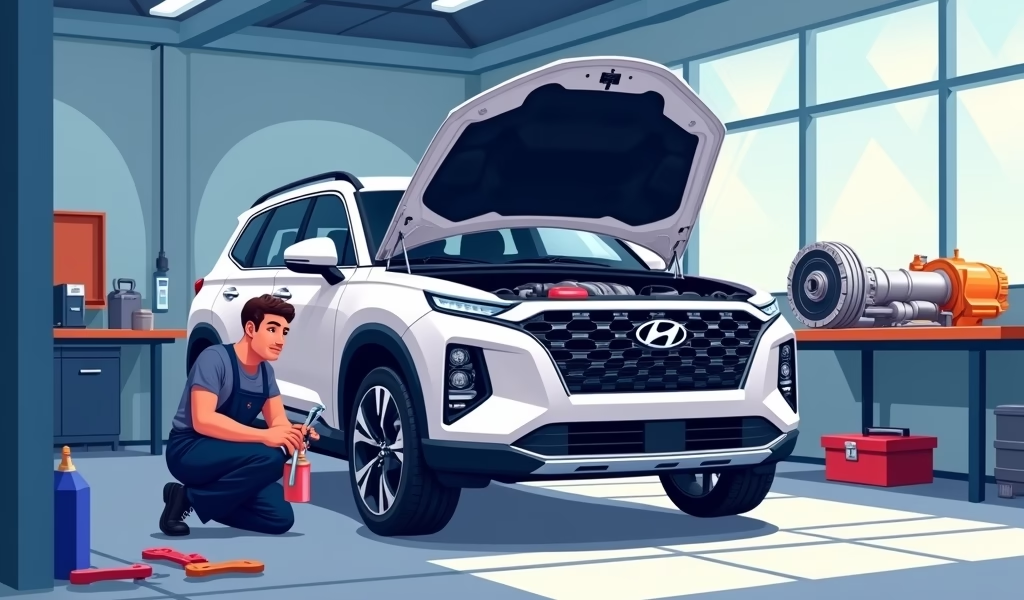
Recognizing transmission problems early can save you thousands in repair bills. Here are the telltale signs your Palisade’s transmission might be struggling:
Delayed or harsh shifting is often the first symptom owners notice. Your SUV might hesitate before engaging Drive or Reverse, or you might feel a pronounced “clunk” when shifting between gears. This isn’t normal, even in cold weather.
Unusual noises deserve immediate attention. A healthy transmission should be virtually silent. Whining, buzzing, or grinding sounds, especially during gear changes, suggest internal components may be wearing out or fluid levels might be low.
Slipping gears creates a distinct sensation where engine RPMs surge but vehicle speed doesn’t increase proportionally. It feels like someone momentarily disconnected your engine from your wheels – because that’s essentially what’s happening when gears slip.
Transmission fluid leaks appear as bright red or brown spots on your driveway. Unlike engine oil leaks (which are dark brown or black), transmission fluid has a distinctive color and sweet smell when fresh, turning darker and developing a burnt odor as it degrades.
Warning lights on your dashboard shouldn’t be ignored. The Palisade’s onboard diagnostics monitor transmission function, illuminating the check engine light or dedicated transmission warning when parameters fall outside normal ranges. Always take these electronic warnings seriously.
Complete failure to engage gears is the end-stage symptom you want to avoid. If your Palisade won’t move when placed in Drive or Reverse – despite the engine running normally – you’re likely facing a major transmission issue requiring immediate professional attention from a certified transmission specialist.
Early Warning Signs You Shouldn’t Ignore
Before major symptoms develop, your Palisade will often give subtle hints that transmission trouble is brewing. Consider these early warning signs your transmission’s way of asking for help:
Slight hesitation during acceleration that wasn’t present before might indicate transmission fluid issues or electronic control problems. You know your vehicle best – if acceleration feels different, trust your instincts.
Rough idling when stopped at lights could be engine-related, but it’s also a common early symptom of transmission mount issues or internal transmission problems. Pay attention to unusual vibrations, especially when the vehicle is in Drive but stopped.
Difficulty shifting into specific gears often indicates problems with individual solenoids or valves within the transmission. If your Palisade consistently struggles to engage third gear, for example, that’s valuable diagnostic information for your mechanic.
Burning smells after driving deserve immediate investigation. Transmission fluid exposed to excessive heat develops a distinctive burnt odor similar to scorched paper. This smell often appears before any performance issues become noticeable.
Small fluid spots that progressively grow larger indicate seal deterioration. What starts as occasional drops can quickly become a steady stream as the problem worsens. Check your parking spot regularly for any signs of fluid.
Transmission temperature warnings on newer Palisade models should never be ignored. Modern transmissions operate within specific temperature ranges, and exceeding those limits dramatically accelerates wear. If your vehicle displays overheating warnings, reduce load and seek service promptly.
What Causes Hyundai Palisade Transmission Problems
Understanding what damages transmissions helps prevent failures. Here are the most common culprits behind Palisade transmission troubles:
Fluid issues rank as the leading cause of transmission problems. Low fluid levels due to leaks prevent proper lubrication and cooling, while degraded fluid loses its protective properties over time. Even using the incorrect type of transmission fluid can cause shifting problems and accelerated wear.
Excessive heat is transmission kryptonite. Towing beyond capacity, aggressive driving, or stop-and-go traffic in hot weather can push fluid temperatures beyond safe limits. Modern transmissions typically operate best between 175-200°F, with damage accelerating dramatically above 240°F.
Electronic component failures have become more common as transmissions grow increasingly computerized. Faulty shift solenoids, speed sensors, or transmission control modules can create shifting issues that mimic mechanical problems, often confusing diagnosis.
Torque converter problems typically manifest as shuddering during light acceleration or difficulty maintaining highway speeds. This component transfers power from your engine to the transmission and can develop internal wear that affects overall transmission performance.
Manufacturing defects, while relatively rare, do occur in some production runs. Certain model years may have higher rates of specific issues, which is why researching Technical Service Bulletins (TSBs) for your specific year and model is valuable.
Improper maintenance remains the most preventable cause of transmission failure. Following Hyundai’s recommended service intervals for your specific driving conditions is crucial for maximizing transmission life. As noted in Consumer Reports’ maintenance guide, neglecting fluid changes is particularly damaging.
Preventative Maintenance Tips

An ounce of prevention truly is worth a pound of cure when it comes to your Palisade’s transmission. Here’s how to keep yours healthy:
Check fluid levels regularly, especially before long trips or towing. While newer Palisade models don’t have traditional dipsticks (using instead a fill plug that requires lifting the vehicle), you can still visually inspect for leaks and monitor transmission performance for signs of low fluid.
Follow Hyundai’s recommended fluid change intervals, which typically suggest replacement every 60,000 miles under normal conditions. However, if you frequently tow, drive in mountainous terrain, or experience extreme temperatures, consider changing fluid more frequently – perhaps every 30,000-40,000 miles.
Use only the specified transmission fluid for your Palisade model year. The owner’s manual will indicate the exact specification required (typically SP-IV for most recent models). Using incorrect fluid can cause shift quality issues and accelerate wear even if it seems to work initially.
Install an auxiliary transmission cooler if you regularly tow or drive in hot climates. This relatively inexpensive addition can dramatically extend transmission life by maintaining optimal fluid temperatures even under demanding conditions.
Address any unusual behavior promptly. That slight hesitation or occasional rough shift won’t fix itself – in fact, continuing to drive with early warning signs almost always leads to more extensive and expensive damage.
Maintain your vehicle’s service records meticulously. Documentation of regular maintenance not only helps with potential warranty claims but also increases resale value and provides valuable history if transmission issues do develop.
When to Seek Professional Help
While preventative maintenance can be handled by many DIY-minded owners, certain situations demand professional attention. Here’s when to call in the experts:
Warning lights related to the transmission or check engine light should be professionally diagnosed. Modern vehicles store specific error codes that help pinpoint problems, but accessing and interpreting these codes requires specialized equipment and knowledge.
Fluid that appears dark brown, has a burnt smell, or contains metal particles requires immediate professional inspection. These signs indicate internal damage has already occurred, and continued driving could lead to complete failure.
Persistent shifting issues that don’t resolve after the transmission warms up suggest electronic or mechanical problems requiring diagnostic equipment. Intermittent problems can be particularly challenging to diagnose but are equally important to address.
Unusual noises that coincide with specific transmission operations (shifting, accelerating, decelerating) typically indicate internal component wear. A trained ear can often distinguish between normal operation sounds and those indicating problems.
When selecting a shop, consider transmission specialists rather than general repair facilities. Shops specializing in transmission work typically have more experience, better diagnostic equipment, and deeper knowledge of common issues affecting specific makes and models.
Always verify warranty coverage before authorizing repairs. Hyundai provides a 10-year/100,000-mile powertrain warranty for original owners that covers many transmission issues. Even if you’re the second owner, the 5-year/60,000-mile new vehicle warranty documentation might still apply.
Repair vs. Replace: Making the Right Decision
When facing transmission troubles, you’ll eventually need to decide between repair options. Here’s how to make that choice wisely:
Minor issues like solenoid replacement, sensor failures, or fluid-related problems can often be repaired individually without major transmission disassembly. These targeted repairs typically cost between $300-$800 depending on component accessibility and labor rates.
Major mechanical failures involving internal components usually require transmission removal and either rebuilding or replacement. At this point, you’ll need to choose between several options, each with different cost and reliability implications.
A complete rebuild involves disassembling your existing transmission, replacing worn components, and reassembling with new seals, gaskets, and clutches. This option typically costs $2,500-$3,500 and works well when the transmission case and major components are still in good condition.
Remanufactured transmissions offer a middle ground between rebuilding and new replacement. These are factory-rebuilt units that have been completely disassembled, inspected, and restored to original specifications with standardized procedures. Expect to pay $3,000-$4,000 installed.
New factory transmissions provide maximum reliability but at premium prices, typically $4,000-$5,500 installed. This option makes most sense for newer vehicles you plan to keep long-term or when other repair options aren’t readily available.
Consider your vehicle’s overall condition, mileage, and value when making this decision. Investing $4,000 in a transmission for a vehicle worth $10,000 with other significant issues might not make financial sense, while the same repair on a $30,000 vehicle you plan to keep for years could be entirely reasonable.
Driving Habits That Protect Your Transmission
How you drive your Palisade significantly impacts transmission longevity. These habits help prevent premature wear:
Allow your vehicle to warm up briefly before driving, especially in cold weather. Modern vehicles don’t need extended warm-up periods, but 30-60 seconds allows transmission fluid to circulate and reach operating components before being subjected to load.
Avoid aggressive driving behaviors like jackrabbit starts, hard acceleration, and abrupt braking. These actions create excess heat and stress on transmission components. Smooth, progressive inputs extend transmission life and improve fuel economy.
Come to a complete stop before shifting between Drive and Reverse. The momentary pause allows gears to fully disengage before being asked to rotate in the opposite direction, reducing wear on the transmission’s directional clutches.
Use your brakes – not the transmission – to hold position on hills. Riding the throttle to maintain position on an incline forces the transmission to slip constantly, generating heat and accelerating clutch wear. Instead, use your brakes until you’re ready to proceed.
Respect towing capacity limits and use the appropriate drive mode. The Palisade offers specific modes for towing that optimize transmission shift points and cooling. Exceeding capacity recommendations places enormous strain on the entire drivetrain.
Reduce load before stopping on long downhill stretches. Downshifting manually (using the Palisade’s manual shift mode) on extended downgrades uses engine braking to reduce speed, minimizing brake heat while protecting the transmission from constant shifting.
Conclusion
Your Hyundai Palisade’s transmission is a marvel of engineering designed to provide years of trouble-free service – but only with proper care and attention. By understanding how this complex system works, recognizing early warning signs, and following recommended maintenance schedules, you can significantly extend its lifespan and avoid costly repairs.
Remember that most catastrophic transmission failures don’t happen suddenly; they develop progressively, offering multiple opportunities for early intervention. The difference between a $300 repair and a $3,000 replacement often comes down to how quickly you respond to those subtle early warnings.
Invest in preventative maintenance, develop transmission-friendly driving habits, and establish a relationship with a qualified service provider who understands your specific vehicle. These simple steps will help ensure your family adventures continue without unexpected roadside transmission troubles.
When it comes to your Palisade’s transmission, the old adage holds true: take care of it, and it will take care of you. With proper attention, there’s no reason your transmission shouldn’t provide reliable service throughout your ownership experience.
Frequently Asked Questions
How long should a Hyundai Palisade transmission last?
With proper maintenance, a Palisade transmission should last 150,000-200,000 miles. Regular fluid changes and avoiding excessive towing are key factors in maximizing lifespan.
How often should I change my Palisade’s transmission fluid?
Hyundai recommends changing transmission fluid every 60,000 miles under normal conditions. Consider more frequent changes (30,000-40,000 miles) if you tow regularly or drive in extreme conditions.
What transmission fluid does the Hyundai Palisade use?
The Palisade requires Hyundai SP-IV automatic transmission fluid. Using incorrect fluid can cause shifting problems and accelerate component wear.
How much does it cost to replace a Hyundai Palisade transmission?
Complete transmission replacement typically costs between $3,000-$5,500 depending on whether you choose remanufactured or new. Labor represents approximately 30-40% of this cost.
Is there a recall on Hyundai Palisade transmissions?
As of this writing, there is no widespread recall specifically for Palisade transmissions. However, several Technical Service Bulletins (TSBs) address specific transmission-related issues in certain production runs.