

Overview
That dreaded check engine light isn’t always the financial disaster it seems, as it can signal issues ranging from a loose gas cap to serious engine problems that should be properly diagnosed before resetting. This comprehensive guide explains how to interpret the warning, safely reset the light after repairs, recognize when professional help is needed, and implement preventive maintenance to avoid future issues—potentially saving thousands in unnecessary repair costs.
Table of Contents
- Understanding the Check Engine Light
- Common Causes of Check Engine Light Illumination
- Diagnostic Tools for Check Engine Lights
- Safe Methods to Reset Your Check Engine Light
- When You Shouldn’t Reset the Light
- When to Seek Professional Help
- Preventive Maintenance to Avoid Future Problems
- DIY vs. Professional Service: Making the Right Choice
- Conclusion
- Frequently Asked Questions
We’ve all been there. You’re cruising along, maybe humming to your favorite tune, when suddenly that amber glow appears on your dashboard. The dreaded check engine light. In an instant, your mind races with visions of expensive repairs and depleted savings.
But take a deep breath. That illuminated symbol isn’t always the disaster it seems. As a mechanic with 15+ years of experience, I’ve seen thousands of check engine lights come on for reasons ranging from critical engine failures to… a loose gas cap. Yes, really.
Understanding how to reset your check engine light properly—and more importantly, when you should and shouldn’t attempt it—can save you significant money and headaches. Let’s roll up our sleeves and get into the nitty-gritty of what’s happening when that light appears.
Understanding the Check Engine Light
Your vehicle’s check engine light (officially called the Malfunction Indicator Lamp or MIL) is essentially your car’s way of saying, “Hey, we need to talk.” It’s connected to your vehicle’s onboard diagnostic system, which continuously monitors engine performance, emission systems, and dozens of sensors throughout your vehicle.
This warning light generally appears in one of two ways:
- Steady illumination: Usually indicates a non-emergency problem that should be checked soon but doesn’t require immediate action
- Flashing light: Signals a serious issue that could potentially damage expensive components—requires immediate attention and reduced driving speed
The check engine light isn’t necessarily indicating a catastrophic engine failure. According to data from CarMD’s Vehicle Health Index, about 15% of check engine light issues can be resolved for under $50, while only about 8% indicate problems exceeding $1,000 in repair costs.
When this light activates, your car’s computer stores specific “trouble codes” that identify which systems or components are reporting issues. These codes are the key to understanding what’s happening under your hood.
Common Causes of Check Engine Light Illumination
Before we jump into resetting the light, let’s understand what might have triggered it in the first place. Here are the most common culprits I’ve encountered in my shop:
- Loose or damaged gas cap (10-15% of cases): Modern fuel systems are pressurized, and a compromised gas cap disrupts this pressure. Cost: $0-20
- Faulty oxygen sensor (20-25% of cases): These sensors monitor exhaust gases and help regulate the air-fuel mixture. Cost: $150-500
- Catalytic converter issues (5-7% of cases): Often the result of neglecting other problems. Cost: $800-2,500
- Mass airflow sensor problems (10-12% of cases): Measures incoming air to determine proper fuel delivery. Cost: $200-400
- Spark plug and ignition system faults (15-20% of cases): Worn plugs or damaged coils prevent proper combustion. Cost: $100-400
- EVAP system leaks (8-10% of cases): Issues with the system that captures fuel vapors. Cost: $150-750
When your check engine light illuminates, you might also notice symptoms like rough idling, decreased fuel efficiency (I’ve seen drops of 10-30%), strange engine noises, or hesitation during acceleration. These additional symptoms can provide valuable clues about what’s happening.
Remember, the check engine light is a messenger—it’s trying to protect you from potentially bigger problems down the road. The sooner you address it, the less likely you’ll face those $1,000+ repair bills we all dread.
Diagnostic Tools for Check Engine Lights
Before you can properly address (and eventually reset) your check engine light, you need to know what triggered it. That’s where diagnostic tools come in—they’re like interpreters that translate what your car is trying to tell you.
All vehicles manufactured after 1996 use a standardized system called OBD-II (On-Board Diagnostics, version II). This system has a diagnostic port, usually located under your dashboard near the steering column, which provides access to the stored trouble codes.
You have several options for accessing these codes:
- Basic code readers ($20-50): These simple devices retrieve and clear the diagnostic trouble codes but offer minimal explanation
- DIY scanners ($50-200): More advanced tools that provide code explanations and sometimes real-time data. Many connect to smartphone apps for OBD2 scanning, making them more user-friendly
- Professional diagnostic tools ($200-5,000+): Comprehensive systems with complete data interpretation and advanced features
- Free auto parts store scanning: Most major chains offer free code reading services—though they typically just tell you the code without much context
The codes you’ll retrieve follow a pattern like “P0301” where the first character indicates the system (P=Powertrain, B=Body, C=Chassis, U=Network), and the remaining digits identify the specific fault. For example, P0301 indicates a cylinder 1 misfire, while P0420 suggests a catalytic converter efficiency issue.
For frequent DIYers, investing in even a basic scanner can pay for itself the first time you use it. Using these car diagnostic apps provides an affordable alternative to shop visits for minor issues.
Safe Methods to Reset Your Check Engine Light
Once you’ve diagnosed and fixed the underlying issue, it’s time to reset that pesky light. I always emphasize to my customers: resetting without fixing is like unplugging a smoke detector because it’s beeping. The problem remains, and the light will likely return.
Here are the proper methods to reset your check engine light after repairs:
Method 1: Using an OBD-II Scanner (Recommended)
- With the engine off, plug your scanner into the diagnostic port
- Turn the ignition to “on” position (don’t start the engine)
- Follow your scanner’s menu to “clear codes” or “reset MIL”
- Disconnect the scanner and start your vehicle to confirm the light stays off
This method is precise, leaves other vehicle systems untouched, and takes less than 5 minutes. It’s the same approach we use in professional shops.
Method 2: Battery Disconnection
- Ensure the ignition is off
- Disconnect the negative (black) battery terminal
- Press the horn button for 30 seconds to discharge residual electricity
- Wait 15 minutes for the computer to fully reset
- Reconnect the battery terminal
While this method works, it has significant drawbacks: it resets all electronic systems (including radio presets and adaptive learning parameters). In many newer vehicles, particularly those built after 2010, this method may not clear persistent codes at all.
Method 3: Drive Cycle Reset
Sometimes your vehicle will reset the light itself after a specific “drive cycle”—a predetermined sequence of driving that allows the computer to run all its self-tests:
- Start with a cold engine (completely cooled overnight)
- Idle for 2-3 minutes
- Drive at highway speeds for 10-15 minutes
- Drive through several acceleration/deceleration cycles
- Continue normal driving for 1-3 days
This method varies by manufacturer, but it’s completely non-invasive. The downside? It can take several days to complete, and there’s no guarantee of success for all code types.
When You Shouldn’t Reset the Light
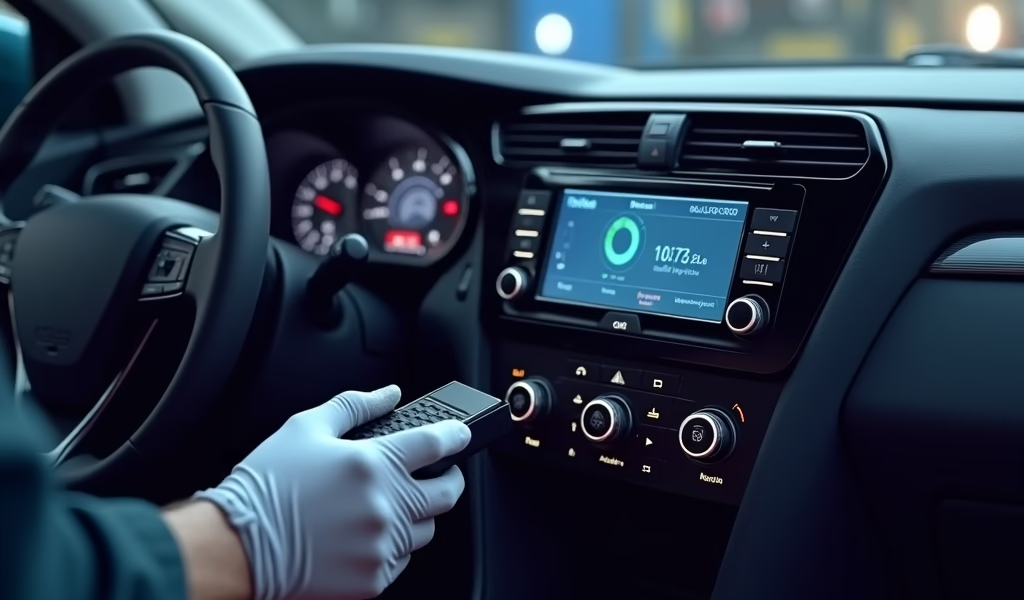
In my years at the shop, I’ve seen plenty of well-intentioned folks create bigger problems by resetting their check engine lights prematurely. Here are situations where you should absolutely NOT reset your light:
Safety-Critical Issues
If your vehicle shows symptoms like engine overheating, severe misfiring, or loss of power while driving, resetting the light without repair could mask conditions that lead to accidents or leave you stranded in dangerous situations. I once had a customer clear his codes despite a severe misfire, only to have his vehicle break down on a busy highway during rush hour.
Before Emissions Testing
Modern emissions testing equipment communicates directly with your vehicle’s computer. When you clear the check engine light, the system enters a “not ready” state until it completes various self-tests—which might take 50-100 miles of driving to complete. Most testing facilities will automatically fail vehicles with systems in “not ready” status.
During Active Warranty Coverage
If your vehicle is under warranty, resetting the check engine light without addressing the underlying issue could potentially void coverage for related components. Manufacturers can determine if codes have been cleared when evaluating warranty claims.
Think of your check engine light as a messenger. Shooting the messenger without heeding the message rarely leads to positive outcomes—and often leads to more expensive repairs down the road.
When to Seek Professional Help
While I’m all for DIY maintenance when appropriate (it’s how I started my career!), there are definitely times when calling in the professionals makes sense. Here’s when you should consider seeking expert help:
Complex Diagnostic Situations
When multiple codes appear simultaneously or codes don’t match symptoms, professional diagnostic equipment and expertise become invaluable. In my shop, we regularly see “parts changers” who’ve replaced three or four components based on a code, only to find they needed specialized testing to identify the actual problem.
Warning Signs of Serious Problems
Certain symptoms demand immediate professional attention:
- Engine overheating or coolant loss
- Metal shavings in oil
- Knocking or severe mechanical noises
- Visible smoke from exhaust or engine bay
- Complete power loss or inability to maintain speed
- Flashing (rather than steady) check engine light
I once had a customer ignore a flashing check engine light for weeks, turning what would have been a $120 ignition coil replacement into a $1,800 catalytic converter job. Don’t be that person.
Manufacturer-Specific Issues
Some vehicles have known issues or technical service bulletins that require specialized knowledge. For example, certain European models may require dealer-level programming to resolve specific check engine light issues—something beyond the capability of most DIYers and even some independent shops.
A quality diagnostic service typically costs $75-150, with many shops applying this fee toward repairs if you have the work done with them. This is often money well spent, especially for complex issues or when you value your time.
Preventive Maintenance to Avoid Future Problems
In my 15+ years turning wrenches, I’ve noticed a clear pattern: the drivers who rarely see check engine lights are those who stay on top of maintenance. An ounce of prevention truly is worth a pound of cure in automotive care.
Here’s a practical maintenance schedule that can dramatically reduce unexpected check engine lights:
- Monthly checks: Inspect all fluid levels (oil, coolant, transmission, brake, power steering) and tire pressure
- Every 3,000-7,500 miles: Oil changes using manufacturer-recommended oil type and weight
- Every 15,000-30,000 miles: Air filter replacement and fuel system cleaning
- Every 30,000 miles: Inspect spark plugs, ignition components, and fuel filters
- Every 60,000-100,000 miles: Replace timing belt/chain (if applicable) and spark plugs
Beyond the schedule, consider these driving habits that reduce system strain:
- Allow your engine to reach operating temperature before hard acceleration in cold weather
- Use quality fuel from reputable stations
- Address small issues before they become big problems
- Properly tighten your gas cap until it clicks (you’d be surprised how often this simple step prevents check engine lights)
These preventive measures don’t just save you from check engine lights—they extend your vehicle’s lifespan and maintain its value. For every $1 spent on preventive maintenance, I estimate most drivers save $3-5 in avoided repairs.
DIY vs. Professional Service: Making the Right Choice
When that check engine light pops on, you’re faced with a choice: tackle it yourself or head to the shop? Having worked both as a DIY enthusiast and professional mechanic, I can offer perspective on both approaches.
When DIY Makes Sense
DIY diagnosis and repair work well when:
- You’ve confirmed a simple issue (gas cap, basic sensor replacement)
- You have access to proper repair information and tools
- You have experience with similar repairs
- The repair doesn’t require specialized programming or calibration
- You have time to potentially make mistakes and learn
DIY diagnosis typically requires an OBD-II scanner ($20-200), basic hand tools, and reliable reference information from repair manuals or online sources. The financial savings can be substantial—a DIY oxygen sensor replacement might cost you $100 in parts versus $250-400 at a shop.
When Professional Service Makes Sense
Professional service becomes the better option when:
- You’re dealing with intermittent issues that are hard to pinpoint
- Specialized equipment is required (scope testing, pressure testing)
- Your vehicle has computer programming needs
- You’re short on time and need quick resolution
- The issue involves safety-critical systems
The most cost-effective approach for many drivers is a hybrid: use a personal scanner to read codes, research the likely causes, and then decide whether the specific repair matches your skill level. If not, you’ll go to the shop with knowledge that helps you avoid unnecessary work.
Remember, even professional mechanics have limits—I regularly refer certain programming tasks to dealerships because they have manufacturer-specific equipment my independent shop doesn’t.
Conclusion
That illuminated check engine light doesn’t have to send shivers down your spine or drain your wallet. Armed with the knowledge of what the light means, how to diagnose it, and when (and how) to reset it properly, you’re now equipped to handle this common car issue with confidence.
Remember these key takeaways:
- The check engine light is a messenger—don’t ignore it or “shoot” it without addressing the message
- Always diagnose before resetting, using either DIY tools or professional help
- Many check engine light issues are relatively inexpensive to fix if caught early
- Preventive maintenance is your best defense against future problems
- Know when to DIY and when to seek professional assistance
By following these guidelines, you’ll not only save money on unnecessary repairs but also extend your vehicle’s lifespan and maintain its reliability. That peace of mind is worth far more than the cost of a diagnostic scanner or occasional professional checkup.
The next time your check engine light illuminates, take a deep breath and remember: you’ve got this. And if you don’t, there’s always a mechanic like me ready to help.
Frequently Asked Questions
Will disconnecting the battery reset the check engine light?
Yes, disconnecting the battery for 10-15 minutes will usually reset the check engine light, but it also resets all other electronic memories in your vehicle. This method isn’t recommended for modern vehicles as it can disrupt adaptive learning systems.
How long does it take for a check engine light to reset itself?
If the problem is fixed, some vehicles will automatically reset the light after completing 3-4 drive cycles, which can take 1-3 days of normal driving. This varies by manufacturer and the specific issue that triggered the light.
Can I drive with the check engine light on?
You can usually drive with a steady check engine light on, but should have it checked soon to prevent additional damage. If the light is flashing, reduce speed immediately and get to a repair shop as this indicates a severe problem that could damage expensive components.
Will the check engine light reset after tightening the gas cap?
Sometimes it will reset automatically after 10-20 miles of driving if a loose gas cap was the only issue. However, many vehicles require the codes to be cleared with a scanner even after the gas cap is properly tightened.
How much does it typically cost to diagnose a check engine light?
Professional diagnostic services typically range from $75-150, though many shops will apply this fee toward repairs if you choose to have the work done with them. Basic code readers for DIY diagnosis start around $25-50.