

Overview
That heartbreaking moment when you discover a scratch on your car doesn’t have to end with an expensive repair bill, as this guide walks through DIY solutions for everything from simple clear coat blemishes to deeper paint damage. Through proper assessment, appropriate techniques, and the right products, you can restore your vehicle’s appearance yourself in most cases, saving hundreds while learning when professional help is truly necessary.
Table of Contents
- Understanding Car Scratches: Types and Severity
- Assessing the Damage: Can You Fix It Yourself?
- DIY Scratch Removal: Methods That Actually Work
- Household Remedies vs. Commercial Products
- Deep Scratch Techniques: When Buffing Isn’t Enough
- When to Seek Professional Services
- Prevention Tips: Keeping Your Paint Job Pristine
- Conclusion: Restoring Your Car’s Appearance
- Frequently Asked Questions
Understanding Car Scratches: Types and Severity
Nothing ruins the gleam of your beloved vehicle quite like an unexpected scratch. Whether from a shopping cart, a careless driver, or that sneaky bush you parked too close to, scratches happen to even the most careful car owners. As someone who’s spent 20 years restoring cars to their former glory, I can tell you that knowing how to remove scratches from car surfaces is a valuable skill that can save you hundreds in repair costs.
Before we dive into scratch removal techniques, let’s understand what we’re dealing with. Car paint isn’t just a single layer – it’s a sophisticated system typically consisting of four layers: primer, basecoat (the color), clear coat (the shine and protection), and sometimes a ceramic or wax sealant on top.
Car scratches generally fall into three categories based on depth:
- Clear coat scratches: These are surface-level scratches that haven’t penetrated beyond the transparent protective layer. They appear white or silvery when the light hits them.
- Paint scratches: These have broken through the clear coat and into the color layer. You’ll know you have a paint scratch when you can see a different color in the scratch line (usually white or primer gray).
- Deep scratches: These nasty gouges reach the primer or even the metal body. They require more intensive repair and sometimes professional attention.
The good news? About 80% of car scratches are just in the clear coat and can be fixed at home with the right approach. Let’s figure out which type you’re dealing with.
Assessing the Damage: Can You Fix It Yourself?
Before rushing to grab your supplies (or your wallet), take a moment to properly evaluate the scratch. Here’s a simple test that works like a charm: run your fingernail gently across the scratch. If your nail doesn’t catch in the groove, congratulations – it’s likely just a surface scratch that you can easily fix yourself.
If your nail catches slightly, you’re dealing with a moderate scratch that might need more attention but is still within DIY territory. However, if the scratch is deep enough to prominently catch your fingernail, reveals primer or metal, or spans multiple body panels, you might want to consider professional help or more advanced repair methods.
Another quick test is the “water test” – simply spray some water on the scratch. If the scratch temporarily disappears when wet but reappears when dry, it’s likely just affecting the clear coat and will be relatively simple to address with proper clear coat restoration techniques.
Remember that darker-colored cars show scratches more prominently than lighter ones, making even minor scratches look worse than they actually are. Don’t let this initial appearance discourage you!
DIY Scratch Removal: Methods That Actually Work
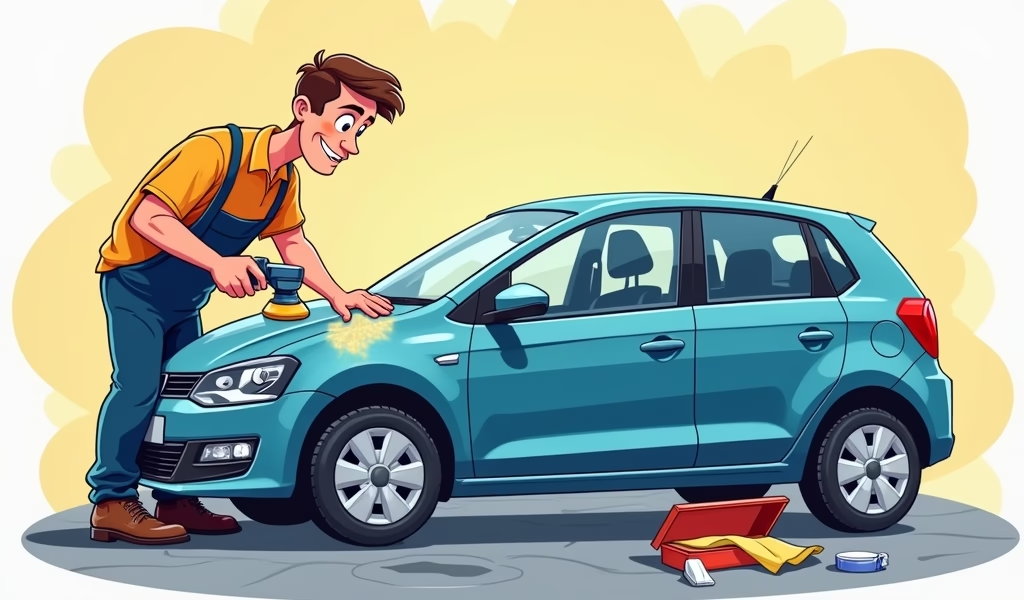
Once you’ve determined you’re dealing with a fixable scratch, it’s time to gather your supplies. For most light to moderate scratches, you’ll need:
- Car wash soap and microfiber cloths
- Masking tape (for protecting surrounding areas)
- Scratch removal compound or polish
- Applicator pads or microfiber applicators
- Wax or sealant for finishing
The process is surprisingly straightforward when you take it step by step:
Start with a thoroughly clean car. Any dirt or debris can cause additional scratches during the repair process. Wash the affected area with car soap (never dish soap, which can strip protective waxes), rinse thoroughly, and dry completely with a microfiber towel.
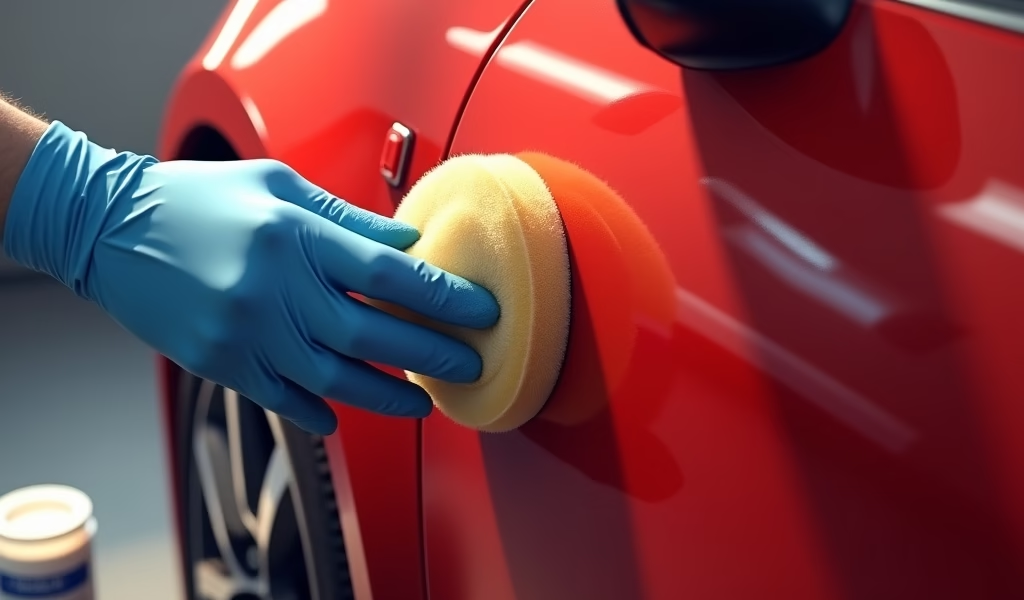
For light surface scratches, a good quality scratch removal compound like Meguiar’s ScratchX can work wonders. Apply a small amount to a foam applicator pad and work it into the scratch using firm pressure and small circular motions. The compound contains fine abrasives that level the surface by removing a microscopic layer of clear coat around the scratch, effectively “blending” it away.
For moderate clear coat scratches, you might need to start with a slightly more aggressive compound before moving to a fine polish. Always work in a well-lit area so you can see your progress. Natural sunlight is ideal for spotting remaining imperfections.
One common mistake I see in my shop is people giving up too soon. The key to success is patience—it might take 5-10 minutes of polishing a single area to see significant improvement. Your arm might get tired, but your wallet will thank you compared to a professional repair bill!
After removing the scratch, apply a high-quality car wax or sealant to restore protection to the area. This isn’t just for shine—it’s critical for protecting your newly restored clear coat from UV damage and environmental contaminants.
Household Remedies vs. Commercial Products
You’ve probably seen various household items recommended online for scratch removal—toothpaste, baking soda pastes, even WD-40. Do they actually work? Well, yes and no.
Toothpaste (specifically white, non-gel varieties) contains mild abrasives that can diminish very light surface scratches through the same mechanism as commercial compounds, just less effectively. It’s essentially a crude polishing compound. If you’re in a pinch with a barely visible scratch and some Colgate on hand, it might improve the appearance slightly.
However, I need to be honest with you—commercial products specifically formulated for automotive paint will always yield superior results. They contain precisely calibrated abrasives designed for automotive clear coats, plus lubricants that prevent additional damage during application.
If you’re working on a cherished vehicle, I strongly recommend investing in proper automotive scratch removal products. They typically cost $10-20 and will give you much better results while also being safer for your paint. Think of it this way: your car represents thousands of dollars in value—saving a few bucks on repair products isn’t worth risking further damage.
For those looking to learn more comprehensive techniques, taking time to learn proper car paint polishing can be incredibly rewarding and save you money in the long run.
Deep Scratch Techniques: When Buffing Isn’t Enough
When dealing with deeper scratches that have penetrated the clear coat and reached the color layer or primer, simple polishing won’t be enough. These more severe scratches require a different approach—one that adds material rather than just leveling the surface.
For these scratches, touch-up paint becomes your best friend. Most auto parts stores sell manufacturer-matched touch-up paint that you can purchase by providing your vehicle identification number (VIN) or paint code (usually found on a sticker inside the driver’s door jamb).
The touch-up process requires a steady hand and patience:
- Clean and dry the scratch thoroughly
- For deeper scratches that reach the metal, apply a tiny amount of primer first and allow it to dry completely
- Using the brush applicator or toothpick, carefully fill the scratch with color-matched paint, trying not to overflow onto the surrounding area
- Allow the paint to dry completely (usually 24 hours)
- If needed, apply a clear coat touch-up on top of the colored paint
- After full curing (typically 2-3 days), wet-sand with very fine sandpaper (2000+ grit) if there’s any unevenness
- Polish the area to blend the repair with the surrounding paint
The results won’t be quite as perfect as a professional repair, but they can be remarkably close if you take your time. The key is applying the paint in thin layers rather than trying to fill the scratch all at once, which would create a noticeable “blob” of paint.
For particularly deep scratches across large areas, another option is using a paint repair kit that includes filler materials. These work by filling the depression with a special resin that hardens and can then be painted over. 3M’s scratch repair system is a reliable option that bridges the gap between DIY and professional repair.
When to Seek Professional Services
While I’m all for saving money with DIY solutions, there comes a point where professional help makes more sense. Consider professional repair services in these scenarios:
If the scratch spans multiple body panels or follows a complex curve, achieving a seamless repair at home becomes extremely difficult. Professional body shops have specialized tools and techniques for ensuring consistent results across these challenging areas.
For deep scratches that have exposed bare metal, professional attention is crucial. Left untreated, these can quickly develop rust that spreads beneath the paint, causing much more extensive (and expensive) damage down the road.
If your vehicle has special paint finishes such as metallic, pearl, or matte coatings, DIY repairs become substantially more difficult to blend seamlessly. These paints often require specialized application techniques to match properly.
When seeking professional services, don’t immediately default to the dealership. Independent body shops often provide equal or better quality at more reasonable prices. Ask for recommendations from car enthusiast groups in your area, and always check reviews and examples of previous work.
The cost range for professional scratch repair varies widely depending on the severity and location:
- Minor scratch buffing: $50-150
- Moderate scratches requiring touch-up: $150-300
- Deep scratches needing paint blending: $300-800
- Severe damage requiring repainting: $800-1500+ per panel
If you’re planning to sell your vehicle soon, weigh the repair cost against the likely impact on resale value. Sometimes, living with a minor scratch makes more financial sense than investing in a perfect repair.
Prevention Tips: Keeping Your Paint Job Pristine
An ounce of prevention is worth a pound of cure, especially when it comes to maintaining your car’s appearance. After spending years detailing cars to professional standards, I’ve learned that a few simple habits can dramatically reduce the likelihood of scratches in the first place.
Regular washing is essential, but technique matters more than frequency. Always use car-specific wash mitts and soaps, and follow the “two-bucket method” – one bucket with soapy water and another with clean rinse water. This prevents you from rubbing dirt particles back onto the paint surface, which is a common cause of swirl marks and micro-scratches.
Consider applying a protective layer beyond regular wax. Modern ceramic coatings create a hard, transparent shell over your paint that resists minor scratches and makes the surface slicker, reducing the likelihood that debris will leave a mark. While professional application can cost $500+, DIY ceramic coating kits have become quite effective and typically run $50-100.
Parking habits also make a difference. Whenever possible, park away from high-traffic areas in parking lots. Those few extra steps to the store entrance are a small price to pay compared to the cost and hassle of repairing door dings and shopping cart scratches.
If you regularly travel on gravel roads or construction zones, consider temporary protection like clear vinyl film for the front-facing surfaces of your vehicle. These areas take the brunt of stone impacts and road debris.
Conclusion: Restoring Your Car’s Appearance
Learning how to remove scratches from car surfaces is more than just a money-saving skill—it’s about preserving the pride and joy that comes with maintaining your vehicle. We’ve covered everything from identifying scratch severity to choosing the right repair method, whether it’s a simple polish for clear coat scratches or touch-up paint for deeper damage.
Remember that successful scratch repair relies on patience and proper technique more than expensive products. Take your time, work in good lighting, and don’t hesitate to make multiple passes when needed. Your efforts will be rewarded with a restored finish that looks professionally done.
For those scratches beyond DIY repair, we’ve discussed when to seek professional help and what to expect in terms of costs. Sometimes, the investment in professional work is worth it, especially for deep scratches that might lead to rust or complex repairs on specialty finishes.
As you run your hand over your newly repaired paint job, feeling that smooth, flawless surface where an unsightly scratch once was, you’ll experience that unique satisfaction that only comes from fixing something yourself. Your car isn’t just transportation—it’s a reflection of your care and attention, now restored to its rightful glory.
Frequently Asked Questions
Can toothpaste really remove car scratches?
Toothpaste can remove very light surface scratches in the clear coat due to its mild abrasives. It’s only effective on minor scratches and won’t help with deeper damage that penetrates the paint layer.
How can I tell how deep a car scratch is?
Run your fingernail across the scratch—if it catches in the groove, it’s deeper than the clear coat. Another indicator is color: if you see white/silver, it’s in the clear coat; if you see primer color or metal, it’s a deep scratch.
Will insurance cover scratch repair?
Insurance typically covers scratch repair if it resulted from a collision or vandalism, subject to your deductible. Minor scratches often cost less to repair than most deductibles, making it more economical to pay out-of-pocket.
Can I use regular household polish on car scratches?
Household polishes are not formulated for automotive clear coats and may damage your paint. Always use products specifically designed for automotive use to avoid further paint damage.
How long does DIY scratch repair typically last?
A properly executed DIY scratch repair can last the lifetime of the vehicle if the area is maintained correctly. Protect the repaired area with wax or sealant regularly to ensure longevity.