
Overview
That mysterious engine revving while your car sits in park isn’t just annoying—it’s a warning sign of issues ranging from vacuum leaks and dirty throttle bodies to faulty sensors, often fixable through DIY diagnosis and repair. This guide walks readers through understanding, identifying, and solving high idle problems to improve fuel efficiency and prevent costly repairs, with step-by-step solutions that can save hundreds in mechanic fees while keeping your engine purring at its proper resting rate.
Table of Contents
- Understanding High Idle: What It Is and Why It Happens
- Common Causes of High Idle in Cars
- Diagnosing High Idle Issues: How to Identify the Problem
- DIY Solutions: How to Fix High Idle Without a Mechanic
- When to Seek Professional Help for High Idle Issues
- Prevention Tips: Keeping Your Car’s Idle Smooth
- Cost Considerations: Saving Money on High Idle Repairs
- Conclusion
- Frequently Asked Questions
Ever turned on your car and noticed it sounds like it’s revving even when you’re not touching the gas pedal? That racing engine at standstill isn’t just annoying—it’s your vehicle crying out for help. A high idle isn’t something to ignore, as it can lead to reduced fuel efficiency, unnecessary engine wear, and potentially expensive repairs down the road. The good news? Learning how to fix high idle in car issues isn’t rocket science, and many solutions are surprisingly simple.
Having spent over two decades under the hood, I’ve seen countless vehicles suffering from high idle problems. In this comprehensive guide, I’ll walk you through understanding, diagnosing, and fixing high idle issues—often without needing to visit a repair shop. By the end, you’ll have the knowledge to potentially save hundreds in unnecessary repair costs and keep your engine purring at just the right speed.
Understanding High Idle: What It Is and Why It Happens
In automotive terms, “idle” refers to the running of your engine when the vehicle is stationary and not accelerating. A properly functioning car should idle at a consistent, relatively low RPM—typically between 600-1000 RPM, depending on your vehicle make and model. When your car is experiencing high idle, the engine runs at a higher RPM than normal while in park or neutral, often hovering around 1500-2000 RPM or even higher.
Think of idle as your engine’s resting heart rate. Just like how a person’s elevated resting heart rate might signal a health issue, your car’s high idle indicates something isn’t quite right in the complex system that controls fuel delivery and air intake.
At its core, high idle occurs when your engine receives too much air, too much fuel, or when the computer controlling these factors gets confused. Your car’s Engine Control Unit (ECU) constantly adjusts the air-fuel mixture to maintain the perfect idle speed, but when sensors malfunction or components fail, this delicate balance gets disrupted.
Left unchecked, a high idle problem can lead to decreased fuel economy, increased emissions, and unnecessary stress on engine components. The regular car maintenance checks many owners overlook often would catch these issues before they escalate to expensive repairs.
Common Causes of High Idle in Cars

High idle issues stem from several potential sources, and understanding the most common culprits will help you troubleshoot more effectively. Here are the frequent offenders I encounter in my repair bay:
Vacuum Leaks
The most common cause of high idle is a vacuum leak. Your engine relies on a precisely controlled vacuum system to regulate airflow. When a vacuum hose cracks, disconnects, or develops a leak, unmetered air enters the engine, creating a lean condition (too much air, not enough fuel). The ECU detects this imbalance and increases the idle speed to compensate.
Vacuum leaks often occur in rubber hoses, intake gaskets, or the throttle body gasket—all of which become brittle with age and heat exposure. According to a study by the Society of Automotive Engineers, vacuum leaks account for approximately 40% of all idle control issues in modern vehicles.
Dirty or Failing Idle Air Control Valve
The Idle Air Control valve (IAC) is a crucial component that regulates airflow into the engine during idle. When it becomes clogged with carbon deposits or fails electrically, it may stick in an open position, allowing too much air into the engine and causing high idle.
In my experience, IAC issues are particularly common in vehicles that regularly make short trips or experience stop-and-go driving patterns. The valve simply doesn’t get a chance to heat up and clear itself of deposits.
Malfunctioning Throttle Position Sensor
Your throttle position sensor (TPS) tells the car’s computer the exact position of the throttle plate. When this sensor goes bad, it might send incorrect signals indicating that the throttle is open more than it actually is, causing the computer to increase idle speed unnecessarily.
Carbon Buildup on the Throttle Body
Over time, carbon deposits can accumulate on the throttle body, preventing the throttle plate from closing completely. This essentially creates a permanent opening for air to enter, resulting in a consistently high idle. This is especially common in gasoline direct injection engines, which have become increasingly popular for their fuel efficiency benefits.
Faulty Mass Airflow Sensor
The Mass Airflow Sensor (MAF) measures the amount of air entering the engine. When it gets dirty or fails, it may report incorrect air volume readings to the ECU, leading to improper fuel delivery and irregular idle speeds. Improving your car’s overall performance often starts with ensuring these critical sensors are functioning correctly.
ECU Issues
Sometimes, the problem isn’t with a physical component but with the brain of your car—the Engine Control Unit. Software glitches, failed updates, or corrupted adaptive learning data can cause the ECU to command an incorrect idle speed. While less common than mechanical issues, these electronic gremlins are becoming more prevalent in newer, more computerized vehicles.
Diagnosing High Idle Issues: How to Identify the Problem
Before you start replacing parts based on hunches, it’s essential to properly diagnose the issue. Here’s my step-by-step approach to pinpointing the cause of your car’s high idle:
Basic Visual Inspection
Start with the simplest step—a thorough visual inspection. With the engine off, check for:
- Disconnected, cracked, or brittle vacuum hoses
- Loose connections at the intake manifold
- Oil leaks around gaskets that might indicate a failing seal
- Corroded electrical connections on sensors
You’d be surprised how often I find an obvious disconnected hose that explains the entire problem. Don’t skip this crucial first step.
Listen for Vacuum Leaks
With the engine running, listen carefully around the engine bay for hissing sounds, which often indicate a vacuum leak. A mechanic’s stethoscope is ideal for this, but even a long screwdriver or piece of hose held to your ear can work in a pinch. Move methodically around potential leak points, paying special attention to hose connections and the intake manifold gasket area.
Use a Smoke Machine or Spray Test
For harder-to-find vacuum leaks, professional mechanics use a smoke machine that pumps harmless smoke through the vacuum system, making leaks visible. At home, you can approximate this by carefully spraying small amounts of carb cleaner around suspected leak areas while the engine runs. If the idle suddenly changes when spraying a particular spot, you’ve likely found your leak.
Check for Error Codes
Modern vehicles store diagnostic trouble codes when they detect issues. Connect an OBD-II scanner to your car’s diagnostic port (usually under the dashboard) to read these codes. Codes related to the throttle position sensor, idle air control valve, or mass airflow sensor can point you in the right direction.
Even if no codes appear, many scanners offer live data streaming, allowing you to see sensor readings in real-time. Abnormal readings from the TPS, MAF, or oxygen sensors during idle can provide valuable diagnostic clues.
Test the Idle Air Control Valve
If you suspect an IAC issue, you can test it by disconnecting its electrical connector while the engine idles (be careful—this may cause a momentary rough idle). Reconnect it and listen for changes. A properly functioning IAC should cause a noticeable change in idle when disconnected and reconnected. No change might indicate a stuck or failed valve.
Inspect the Throttle Body
Remove the air intake tube and visually inspect the throttle body. If it’s caked with black carbon deposits, this could prevent proper throttle plate closure. While inspecting, check that the throttle plate fully closes when the throttle is released.
DIY Solutions: How to Fix High Idle Without a Mechanic
Now for the fun part—fixing the problem yourself! Here are proven solutions for common high idle causes that you can tackle with basic tools and moderate mechanical knowledge:
Repairing Vacuum Leaks
Once you’ve identified a vacuum leak, the fix is usually straightforward:
- Replace cracked or damaged vacuum hoses with new ones of the same diameter
- Ensure all connections are secure and hose clamps are tight
- For leaking gaskets, replacement is typically necessary—particularly intake manifold or throttle body gaskets
Remember to use the correct replacement parts for your specific vehicle. Generic vacuum hoses from auto parts stores work for simple connections, but complex molded hoses may need to be dealer-sourced.
Cleaning the Throttle Body
This simple maintenance task can often resolve high idle issues:
- Disconnect the negative battery terminal for safety
- Remove the air intake tube to access the throttle body
- Spray throttle body cleaner on a clean shop rag (never spray directly into the throttle body)
- Carefully clean the throttle plate and housing, removing all carbon deposits
- Be careful not to damage the throttle position sensor
- Reconnect everything and start the engine to check idle
After cleaning, some vehicles may need an idle relearn procedure, which typically involves running the engine at specific temperatures with all accessories off. Your vehicle’s service manual will detail this process if required.
Cleaning or Replacing the IAC Valve
If the IAC valve is dirty but not failed, cleaning may solve your problem:
- Locate the IAC valve (usually attached to the throttle body)
- Disconnect the electrical connector and remove mounting screws
- Clean the valve and passages with throttle body cleaner
- Pay special attention to the pintle (the moving part) to ensure it moves freely
- Reinstall and test
If cleaning doesn’t help, replacement is your next step. IAC valves typically cost between $40-$150 depending on your vehicle, making this a cost-effective DIY repair compared to shop rates.
Cleaning the Mass Airflow Sensor
A dirty MAF sensor often causes idle issues and is easy to clean:
- Locate the MAF sensor between the air filter and throttle body
- Carefully remove it (usually secured by screws or clips)
- Spray MAF sensor cleaner (not throttle body or carburetor cleaner!) onto the sensing elements
- Allow to dry completely before reinstallation
This simple maintenance treatment can significantly improve both idle quality and overall performance. Just be gentle—the sensing wires inside the MAF are delicate and expensive to replace if damaged.
Resetting the ECU
Sometimes, the ECU needs a fresh start to clear adaptive learning that may be causing high idle:
- Disconnect the negative battery terminal
- Press the brake pedal for 30 seconds to drain residual power
- Leave disconnected for at least 15 minutes (some mechanics recommend overnight)
- Reconnect and start the engine
After resetting, the vehicle may idle roughly for a short period while the ECU relearns its parameters. Drive normally for several cycles to allow complete adaptation.
When to Seek Professional Help for High Idle Issues
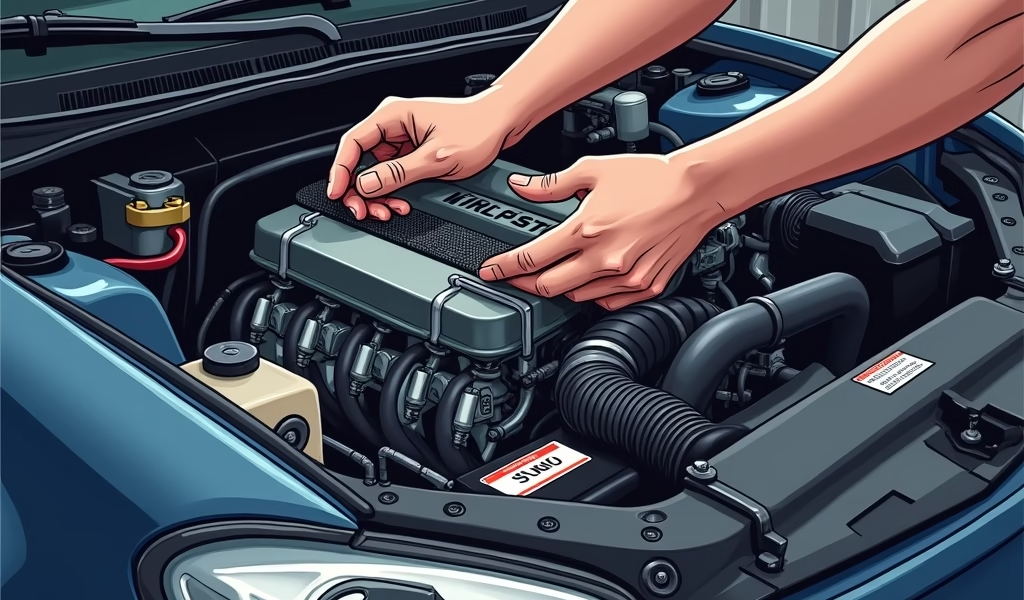
While many high idle problems can be tackled in your driveway, some situations call for professional intervention. Here’s when to wave the white flag and call in the experts:
Complex Electrical Issues
If your diagnostic scan revealed multiple sensor-related codes or if the idle problem is intermittent (coming and going unpredictably), you may be dealing with a complex electrical issue. Modern vehicles have sophisticated networks of sensors and computers that can develop problems beyond the scope of typical DIY repairs.
Professionals have advanced diagnostic equipment to trace electrical faults and access to manufacturer-specific troubleshooting information that isn’t readily available to the public.
After Exhausting DIY Options
If you’ve methodically worked through the common causes and fixes without improvement, it’s time for expert eyes. Sometimes, high idle issues stem from less common causes like fuel pressure regulator problems, EGR system failures, or transmission input issues that affect idle control.
When Special Tools Are Required
Some fixes require specialized tools that aren’t practical to purchase for a one-time use. For instance, properly diagnosing fuel system issues might require professional-grade pressure testers, and some throttle systems need computerized calibration after service.
For Newer, Highly Computerized Vehicles
If your vehicle is a newer model with advanced driver assistance features or a complex engine management system, DIY repairs become riskier. These systems often require dealer-level diagnostic tools to properly reset adaptive learning parameters after repairs.
According to AAA’s automotive research, vehicles manufactured after 2017 often have so many interconnected systems that even minor repairs can affect multiple control modules, requiring professional recalibration.
Prevention Tips: Keeping Your Car’s Idle Smooth
The best fix is prevention. Here are my top recommendations for avoiding high idle problems before they start:
Regular Maintenance Schedule
Following your vehicle’s recommended maintenance schedule is crucial. This includes:
- Regular air filter changes (every 15,000-30,000 miles, depending on driving conditions)
- Fuel system cleaning services every 30,000 miles
- Throttle body cleaning during major service intervals
- Vacuum hose inspection during oil changes
These routine services prevent the build-up issues that commonly lead to high idle problems.
Fuel Quality Considerations
Using quality fuel from reputable stations helps prevent carbon build-up. Consider using top-tier gasoline with higher detergent levels at least every few fill-ups. For direct injection engines, which are particularly prone to carbon build-up issues, some mechanics recommend a fuel system cleaner additive every 5,000-10,000 miles.
Driving Habits That Help
Believe it or not, how you drive affects idle quality. Frequent short trips where the engine never fully warms up contribute to carbon build-up and sensor fouling. When possible, combine errands into longer trips to allow your engine to reach full operating temperature, which helps it clean itself through normal combustion processes.
Additionally, letting your vehicle idle for extended periods is counterproductive. Modern engines don’t need long warm-up periods and excessive idling actually promotes carbon accumulation.
Cost Considerations: Saving Money on High Idle Repairs
Let’s talk dollars and sense. High idle repairs can vary dramatically in cost depending on the cause and whether you DIY or seek professional help:
DIY vs. Professional Repair Cost Comparison
Here’s a breakdown of common high idle repairs and their approximate costs:
- Vacuum hose replacement: $5-20 DIY vs. $80-150 professional
- Throttle body cleaning: $8-15 DIY vs. $100-200 professional
- IAC valve replacement: $40-150 DIY vs. $150-400 professional
- MAF sensor cleaning: $8 DIY vs. $80-120 professional
- MAF sensor replacement: $80-300 DIY vs. $200-600 professional
- Intake manifold gasket: $30-100 DIY vs. $300-800 professional
As you can see, the DIY savings are substantial, especially for simpler fixes like vacuum hoses and cleaning procedures.
The Cost of Ignoring High Idle Problems
Procrastination rarely pays off with car problems. A high idle issue left unaddressed can lead to:
- Decreased fuel efficiency (often 10-15% worse economy)
- Premature wear on engine components
- Increased emissions that may cause failed inspections
- Potential damage to catalytic converters (a $1,000+ repair)
That minor vacuum leak causing your high idle might cost $10 in parts to fix now, but ignore it for months, and you could be looking at hundreds in wasted fuel and potentially thousands in engine repairs.
Parts Shopping Tips
When purchasing parts for high idle repairs, consider these money-saving strategies:
- Compare prices between local auto parts stores and online retailers
- Consider OEM-equivalent parts from reputable aftermarket brands
- Check if your parts store offers free diagnostic tool rental
- For expensive electronic components, look into remanufactured options with warranties
Remember that the cheapest part isn’t always the most economical in the long run. Focus on value—the balance between quality and price—especially for critical components like sensors and valves.
Conclusion
Tackling a high idle problem doesn’t have to be intimidating or expensive. By understanding the common causes, properly diagnosing the issue, and approaching repairs methodically, you can often resolve the problem yourself and save hundreds in repair costs.
Remember that regular maintenance is your best defense against developing high idle issues in the first place. Simple habits like regular air filter changes, occasional throttle body cleaning, and using quality fuel can prevent many of the problems we’ve discussed.
Whether you decide to tackle repairs yourself or seek professional help, addressing high idle issues promptly will improve your vehicle’s performance, fuel efficiency, and longevity. That racing engine at standstill isn’t just an annoyance—it’s your car communicating that something needs attention.
Armed with the knowledge from this guide, you’re now equipped to listen to what your car is telling you and respond appropriately. Your engine (and wallet) will thank you for it.
Frequently Asked Questions
Can a dirty air filter cause high idle?
Rarely. A dirty air filter typically causes low power and poor acceleration rather than high idle, as it restricts airflow rather than allowing excess air.
How long does it take for a car to relearn idle after cleaning the throttle body?
Most vehicles will relearn proper idle within 50-100 miles of normal driving. Some may require a specific idle relearn procedure detailed in the service manual.
Is high idle dangerous for my engine?
While not immediately dangerous, prolonged high idle increases wear on engine components and wastes fuel. It can eventually lead to more serious issues if left unaddressed.
Can weather affect my car’s idle speed?
Yes. Cold temperatures naturally cause slightly higher idle speeds as the ECU compensates for poor fuel atomization and increased internal friction.
Will a bad oxygen sensor cause high idle?
Sometimes. A faulty oxygen sensor can cause the ECU to miscalculate the air-fuel mixture, potentially resulting in idle speed issues along with poor fuel economy.