

Overview
Who knew your fancy leather seats were basically high-maintenance skin that needs a spa day every few months? This article provides a detailed five-step process for properly cleaning and conditioning leather car seats—removing debris, testing cleaners, cleaning with proper techniques, conditioning to replace natural oils, and applying protection—while warning against common mistakes like using household cleaners that can turn your luxurious leather into a cracked, faded disaster.
Table of Contents
- Introduction
- Why You Should Regularly Clean Leather Seats
- What You’ll Need for Leather Cleaning
- Step 1: Remove Debris and Vacuum
- Step 2: Test Your Cleaner
- Step 3: Apply Leather Cleaner
- Step 4: Condition the Leather
- Step 5: Final Buffing and Protection
- Maintenance Tips Between Cleanings
- Common Mistakes to Avoid
- Conclusion
- Frequently Asked Questions
Introduction
Let’s face it—your leather seats take a beating. Coffee spills, food crumbs, dirt from your work boots, and that mysterious sticky substance your kid left behind. After 25 years working as an automotive upholstery specialist, I’ve seen it all. Leather seats aren’t just a luxury; they’re an investment that deserves proper care.
Many car owners avoid cleaning their leather seats because they’re afraid of damaging them. Others simply don’t know where to start. The good news? Properly cleaning leather car seats isn’t rocket science—it just requires the right approach and products.
In this guide, I’ll walk you through how to clean leather car seats using five proven steps that won’t break the bank or your back. These are the same techniques I’ve used in professional detailing shops, simplified for your garage at home.
Why You Should Regularly Clean Leather Seats
Leather is skin—literally. Like your own skin, it needs regular care to prevent drying, cracking, and premature aging. Here’s why consistent cleaning matters:
- Prevents permanent staining from spills and body oils
- Extends the life of your leather by years
- Maintains your vehicle’s resale value (clean leather can add hundreds to your car’s value)
- Reduces wear on high-friction areas like side bolsters
- Eliminates odors that get trapped in leather pores
The average leather seat contains over 10,000 microscopic pores per square inch. Each one of these pores can trap dirt, oils, and moisture. When left uncleaned, these contaminants break down leather fibers from the inside out, according to research on material degradation.
Most drivers don’t realize that proper leather care isn’t just about aesthetics—it’s preventative maintenance that’s as important as keeping your entire interior clean.
What You’ll Need for Leather Cleaning
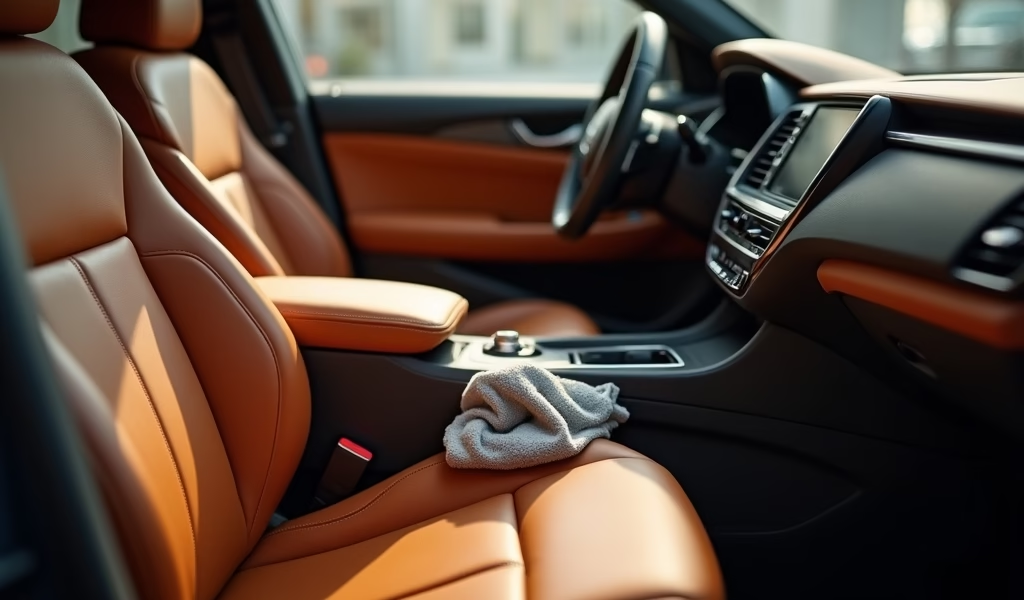
Before diving in, gather your supplies. Having everything ready makes the job go smoother and faster.
Essential Supplies:
- Leather cleaner (I recommend Lexol, Chemical Guys, or Meguiar’s)
- Leather conditioner
- At least 3 microfiber towels
- Soft-bristled brush (a clean toothbrush works perfectly)
- Vacuum with upholstery attachment
- Spray bottle for DIY solutions
Optional but Helpful:
- Leather UV protectant (especially important for convertibles)
- Steam cleaner for deep stains
- Cornstarch (for grease stains)
On a budget? You can make a decent DIY cleaner by mixing equal parts white vinegar and linseed oil. While not as effective as commercial products, it’ll do in a pinch. For tough stains, some detailers swear by mixing one part white vinegar with two parts water and a drop of dish soap.
One note of caution: never use household cleaners like Windex or 409 on leather. They contain harsh chemicals that strip away protective coatings and dry out the leather. I’ve seen beautiful Mercedes seats ruined by household glass cleaner—don’t be that person.
Step 1: Remove Debris and Vacuum
Start with a thorough vacuum. Seems obvious, right? You’d be surprised how many folks skip this crucial first step. Those tiny sand particles and crumbs act like sandpaper when you start wiping, potentially scratching your leather.
Use the upholstery attachment on your vacuum—the one with the soft bristles—and work methodically from top to bottom. Pay extra attention to seams, piping, and the gap between the seat bottom and backrest. These crevices love to collect debris that can scratch leather during cleaning.
For those tight spaces where your vacuum can’t reach, use a clean, dry paintbrush to sweep debris toward areas where the vacuum can grab it. The soft bristles won’t scratch your leather but will dislodge dirt effectively.
Before moving to the next step, check for any large stains or heavily soiled areas that might need extra attention. Make a mental note of these trouble spots—we’ll tackle them with specific techniques later.
Step 2: Test Your Cleaner
This isn’t just cautious advice—it’s essential. Leather varies tremendously between manufacturers, and what works beautifully on a BMW might damage a Ford. Always test your cleaner on an inconspicuous spot first.
Apply a small amount of your chosen cleaner to a hidden area of the seat (under the front edge or side bolster works well). Wait about five minutes, then check for any adverse reactions:
- Color transfer to your cloth
- Discoloration of the leather
- Stiffening or other texture changes
This test is especially important with older vehicles or those with dyed leather. I once worked on a 1990s Jaguar whose red leather turned pink when the wrong cleaner was applied—an expensive lesson that could have been avoided with a simple test.
If your test spot shows any negative reaction, stop immediately and try a different product. Better to delay your cleaning than damage your upholstery.
Step 3: Apply Leather Cleaner
Now for the main event. Apply your leather cleaner to a microfiber cloth—never directly to the seats. A damp cloth is what you’re aiming for, not soaking wet. Excess moisture is leather’s enemy and can seep into seams, potentially causing mold beneath the surface.
Work in small sections (about 2 square feet at a time) using gentle circular motions. Let the cleaner do the work—no need to channel your inner gym enthusiast here. Firm but gentle pressure is all that’s needed.
For Different Types of Stains:
- Ink marks: Dab (don’t rub) with a cotton ball slightly dampened with rubbing alcohol. Be extremely cautious and test first!
- Grease or oil: Sprinkle with cornstarch, let sit for 30 minutes to absorb oils, then vacuum before cleaning normally
- Liquid spills: Blot (never rub) with a dry cloth first to absorb excess, then clean normally
Pay special attention to high-contact areas: headrests, side bolsters, and where your jeans rub against the seat. These typically collect the most body oils and dirt.
For perforated leather (those seats with tiny holes for ventilation), use minimal product and never soak these areas. Excess moisture can seep underneath and cause damage that’s impossible to fix without disassembly.
After cleaning each section, use a separate damp microfiber cloth to remove any cleaner residue. Then, follow with a dry cloth to remove moisture. This three-cloth system—cleaner application, residue removal, drying—produces the best results in my professional experience.
Step 4: Condition the Leather
Cleaning removes the natural oils in leather along with the dirt. Conditioning replaces those oils, keeping the leather supple and preventing cracks. Think of it like moisturizing your skin after washing your face.
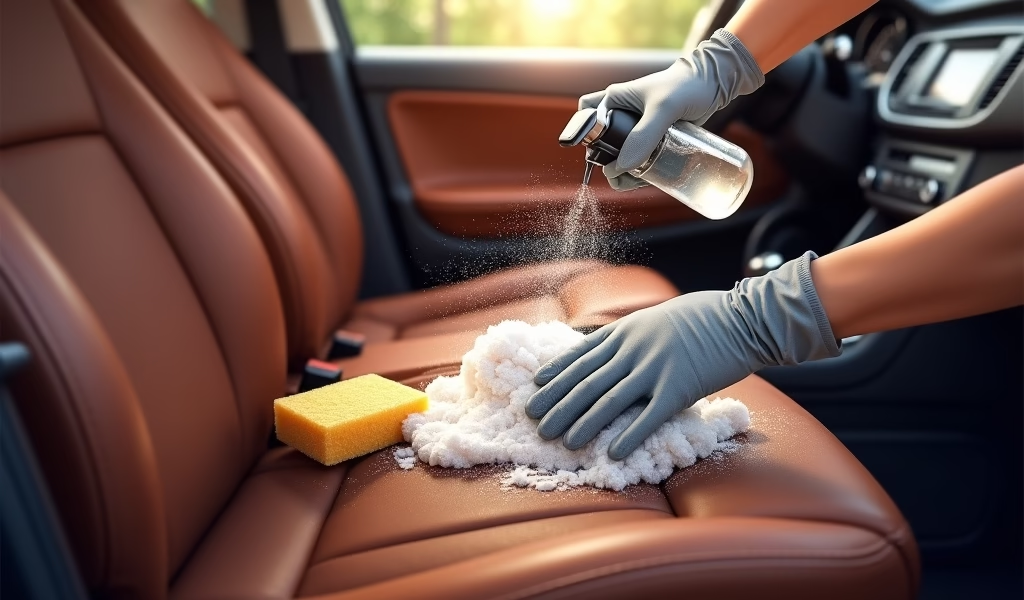
Apply conditioner to a clean microfiber cloth and work it into the leather with gentle circular motions. Less is more here—a thin, even coat is what you’re aiming for. Too much conditioner creates a greasy film that attracts more dirt.
After applying, let the conditioner penetrate for 10-30 minutes (follow the product’s specific instructions). Then, using a clean, dry cloth, buff away any excess. Your leather should feel soft and supple, not slick or greasy.
Skip this step at your own risk. I’ve seen five-year-old leather seats that look twenty years old because the owner cleaned but never conditioned. The difference between conditioned and unconditioned leather is like night and day in terms of aging.
Step 5: Final Buffing and Protection
The final buff is what separates amateur work from professional results. Using a clean, dry microfiber cloth, lightly buff the entire surface to remove any remaining conditioner residue and bring out the leather’s natural luster.
For added protection, especially if your car is frequently parked outdoors, apply a UV protectant specifically designed for automotive leather. UV rays are leather’s worst enemy, causing fading and premature cracking. This is particularly important for convertibles or cars parked in sunny climates.
The key to this step is patience and attention to detail. Take your time working around buttons, stitching, and embossed logos. These details are what make leather upholstery special, and careful buffing highlights them beautifully.
When you’re done, your seats should have a soft, natural sheen—not a glossy or artificial shine. Quality leather has a distinctive look that falls somewhere between matte and satin. If your seats look like plastic, you’ve either used too much product or the wrong type.
Maintenance Tips Between Cleanings
Maintaining your leather between deep cleanings is like brushing your teeth between dental visits—it prevents bigger problems down the road. Here’s my maintenance schedule for clients who want to maximize their leather’s lifespan:
- Weekly: Quick wipe-down with a slightly damp microfiber cloth
- Monthly: Spot-clean any new stains before they set
- Quarterly: Apply a light coat of conditioner
- Biannually: Complete deep clean and condition (follow all five steps)
Consider using seat covers during extreme activities. Planning to hit the gym and drive home in sweaty clothes? Heading to the beach? A temporary seat cover can save you hours of cleaning later.
Climate matters too. If you live in a dry climate like Arizona, condition more frequently. In humid areas like Florida, focus more on preventing mildew with proper cleaning and less frequent conditioning. Adjust your maintenance schedule based on your local conditions and how you use your vehicle.
Taking these small steps regularly makes professional-level detailing much easier and extends the intervals between deep cleanings.
Common Mistakes to Avoid
Over my years in automotive upholstery, I’ve seen well-intentioned car owners make the same mistakes repeatedly. Here’s what to avoid:
- Using household cleaners: These typically contain harsh chemicals that strip leather’s protective coating
- Excessive water: Leather is skin—it absorbs moisture, which can lead to stretching, mold, or mildew
- Scrubbing too hard: Aggressive cleaning damages the leather’s surface coating
- Skipping conditioning: Cleaned but unconditioned leather will dry out and crack
- Using silicone-based products: These create build-up over time that attracts more dirt
- Rushing the process: Proper leather care takes time—shortcuts lead to poor results
Perhaps the biggest mistake is using the wrong products for your specific type of leather. Modern cars often have coated leather that needs different care than the natural leather found in classic vehicles. When in doubt, consult your owner’s manual or contact the dealer’s service department.
According to Car and Driver’s research team, improper cleaning techniques are responsible for up to 60% of premature leather wear—making your cleaning method as important as the frequency.
Conclusion
Clean leather seats aren’t just about aesthetics—they’re about protecting your investment and creating a healthier driving environment. The five steps we’ve covered—vacuuming, testing, cleaning, conditioning, and protecting—create a comprehensive system that works for vehicles of all ages and values.
Remember that consistency trumps intensity. Regular, gentle maintenance will always yield better results than occasional aggressive cleaning. Your leather seats are designed to last the lifetime of your vehicle if properly cared for.
With these professional techniques in your maintenance arsenal, you’re well-equipped to keep your leather looking, feeling, and even smelling like new. Your car is often your second largest investment after your home—treating your leather right is one of the best ways to protect that investment while enjoying a more luxurious driving experience every day.
Now step back and admire your handiwork. There’s something deeply satisfying about sliding into a clean, well-maintained leather seat—a small luxury that makes every drive just a little more enjoyable.
Frequently Asked Questions
How often should I clean my leather car seats?
Clean leather seats thoroughly every 3-4 months, with light maintenance wipe-downs weekly. Increase frequency if you have kids, pets, or regularly eat in your vehicle.
Can I use baby wipes on leather car seats?
Avoid using baby wipes as they often contain oils and chemicals not designed for leather. These ingredients can damage protective coatings and cause premature aging.
How do I remove ink stains from leather seats?
Dab (never rub) the ink stain gently with a cotton ball slightly moistened with rubbing alcohol. Always test in an inconspicuous area first, as some dyed leathers may be affected.
What’s the difference between leather cleaner and conditioner?
Leather cleaner removes dirt and oils from the surface, while conditioner replaces natural oils to prevent drying and cracking. Both are essential for proper leather maintenance.
Can I use olive oil or coconut oil to condition my leather seats?
Never use food oils on leather as they eventually turn rancid and can cause discoloration and unpleasant odors. Always use products specifically formulated for automotive leather.