

Overview
Fuel injectors, the unsung heroes of modern engines, require regular cleaning to maintain optimal vehicle performance and prevent costly repairs down the road. This guide explores the warning signs of dirty injectors, various cleaning methods from simple fuel additives to professional services, and preventative measures that can save drivers up to 10-20% in fuel economy while extending engine life.
Table of Contents
- Understanding Fuel Injectors: Your Engine’s Precision Fuel Delivery System
- Warning Signs: How to Tell When Your Fuel Injectors Need Cleaning
- Why Do Fuel Injectors Get Dirty? Common Causes Explained
- DIY Cleaning Methods: 3 Ways to Restore Your Fuel Injectors
- Professional Cleaning: When to Call in the Experts
- Prevention Tips: Keep Those Injectors Clean Longer
- Cost Comparison: DIY vs. Professional Cleaning vs. Replacement
- Conclusion: Clean Injectors, Happy Engine
- Frequently Asked Questions
Understanding Fuel Injectors: Your Engine’s Precision Fuel Delivery System
Remember the old days when carburetors were king? Those finicky devices have given way to something far more precise and efficient: fuel injectors. As a master mechanic who’s seen it all, I can tell you that understanding how fuel injection works is the first step in keeping your engine running smoothly.
Fuel injectors are essentially high-precision valves that spray fuel in a specific pattern into your engine. Think of them as sophisticated perfume atomizers, but instead of Chanel No. 5, they’re spraying gasoline or diesel. These components receive pressurized fuel from your fuel pump and, following instructions from your engine’s computer, deliver just the right amount of fuel at precisely the right time.
The beauty of fuel injectors is in their precision. When working properly, they ensure your engine gets the perfect air-fuel mixture for combustion – not too rich (wasting fuel) and not too lean (reducing power and potentially damaging your engine). This precision is what gives modern vehicles their excellent fuel economy, reliable performance, and lower emissions compared to older vehicles.
But like any precision instrument, fuel injectors are sensitive to contamination. Even tiny particles can disrupt their spray pattern or restrict fuel flow. And when that happens, your entire driving experience suffers.
Warning Signs: How to Tell When Your Fuel Injectors Need Cleaning
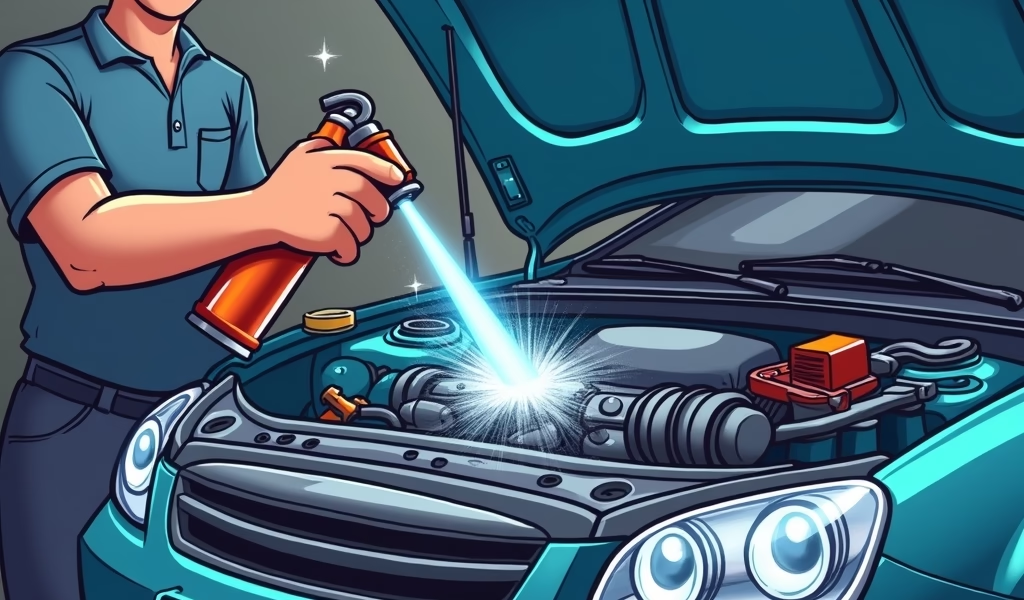
Your vehicle has a way of “talking” to you when something’s not right. When it comes to fuel injector issues, here are the warning signs I’ve seen countless times in my garage:
Rough idle: Does your engine shake, vibrate, or sound uneven when you’re stopped at a light? Dirty injectors create uneven fuel delivery, causing your engine to stumble when idling.
Hesitation during acceleration: When you press the gas pedal, does your car hesitate before responding? That’s often your engine gasping for the proper fuel-air mixture it needs to accelerate smoothly.
Decreased fuel economy: Have you noticed more frequent trips to the pump? When injectors can’t spray properly, your engine computer often compensates by adding extra fuel, tanking your MPG by up to 10-15%.
Misfires and rough running: Random misfires, especially under load, are classic symptoms of injector problems. You might feel a slight stutter or loss of power while cruising at steady speeds.
Hard starting: Dirty injectors can make cold starts particularly difficult, especially in cooler weather. If your morning start-up routine is taking longer than it used to, your injectors might be crying out for attention.
Check engine light: While this light can indicate numerous issues, fuel delivery problems often trigger codes related to “fuel trim” or “system too rich/lean.” A diagnostic scan can point you in the right direction.
Here’s what’s important to understand: these symptoms typically develop gradually over time. Many drivers don’t notice there’s a problem until it becomes severe. That’s why regular maintenance is so crucial – it prevents these issues from developing in the first place.
Why Do Fuel Injectors Get Dirty? Common Causes Explained
In my 25+ years working on engines, I’ve seen countless dirty injectors. Understanding what causes this contamination can help you prevent it. Here are the primary culprits:
Low-Quality Fuel
Not all gas is created equal. Budget fuel stations often cut corners on detergent additives that keep your fuel system clean. According to Top Tier Gas standards, premium brands contain up to three times the detergent additives required by the EPA. These detergents prevent deposit formation and keep your injectors happier.
Carbon Buildup
Every time your engine runs, the combustion process naturally creates carbon deposits. When these deposits build up on injector tips, they can disrupt the spray pattern or even clog the injector entirely. Engines that run hot or frequently idle for long periods are especially prone to carbon buildup.
Fuel Contamination
Water, dirt, and other contaminants can enter your fuel system through compromised storage tanks at gas stations or through degraded fuel system components. These contaminants can damage the precision components inside your injectors.
Ethanol Issues
While ethanol helps reduce emissions, it can cause problems in your fuel system. Ethanol attracts water, which can lead to corrosion. It can also cause older fuel system components to deteriorate more quickly. This is especially problematic in vehicles that sit unused for extended periods.
Failing Fuel Filters
Your fuel filter is your injectors’ first line of defense. When this filter becomes clogged or is past its service life, contaminants can reach your injectors. Many modern vehicles have lifetime fuel filters inside the tank, which can be problematic as they age.
The good news? Most of these issues can be prevented with proper maintenance and fuel selection. Let’s look at how to clean those injectors when they do get dirty.
DIY Cleaning Methods: 3 Ways to Restore Your Fuel Injectors
As someone who’s cleaned thousands of fuel systems, I can tell you there’s no one-size-fits-all approach. Here are three effective DIY methods, from simplest to most involved:
Method 1: Fuel System Cleaners (The Simple Approach)
This is my go-to recommendation for regular maintenance or addressing minor symptoms. These fuel additives work while you drive, dissolving deposits throughout your fuel system.
- Purchase a quality fuel system cleaner (I recommend Chevron Techron, BG 44K, or Redline SI-1)
- Ensure your tank is about 1/4 full
- Pour in the entire bottle according to package directions
- Fill up with high-quality fuel
- Drive normally for at least 50 miles to allow the cleaner to work through the system
For best results, run your tank almost empty before refilling. This ensures the cleaner reaches a higher concentration in your fuel system. Expect to see improvements after 1-2 tanks of treated fuel.
Remember, these cleaners work gradually – they’re best for prevention or addressing minor symptoms. For severe contamination, you’ll need a more aggressive approach.
Method 2: Fuel Rail Cleaning (The Intermediate Approach)
This method bypasses your fuel tank and delivers concentrated cleaner directly to your injectors. It’s more effective than additives but requires some mechanical knowledge:
- Purchase or rent a fuel injector cleaning kit ($50-150 at auto parts stores)
- Locate your fuel rail and pressure test port (consult your vehicle’s service manual)
- Relieve fuel system pressure following safety procedures
- Connect the cleaning kit to the fuel rail according to instructions
- Disconnect the fuel pump fuse/relay to prevent it from running
- Run the engine on the cleaning solution for 15-30 minutes
- Reconnect everything and test drive
This method delivers a much higher concentration of cleaner directly to your injectors. It’s particularly effective for vehicles with moderate deposit buildup or those experiencing noticeable performance issues.
Method 3: Removal and Ultrasonic Cleaning (The Advanced Approach)
For severely clogged injectors, nothing beats removing them for professional-grade cleaning. This is the most involved DIY option:
- Purchase an ultrasonic cleaner designed for fuel injectors
- Relieve fuel system pressure and disconnect the battery
- Remove necessary components to access the fuel rail and injectors
- Carefully remove injectors, noting their position and orientation
- Replace all O-rings and seals (never reuse old ones)
- Clean injectors in the ultrasonic bath with proper cleaning solution
- Reinstall carefully, ensuring proper seating and connections
This method provides the most thorough cleaning but requires significant mechanical skills. If you’re not confident in your abilities, this might be where you consider professional help.
Whichever method you choose, always prioritize safety. Fuel systems are pressurized and fuel is flammable. Work in a well-ventilated area, avoid ignition sources, and follow proper procedures for relieving fuel system pressure.
Professional Cleaning: When to Call in the Experts
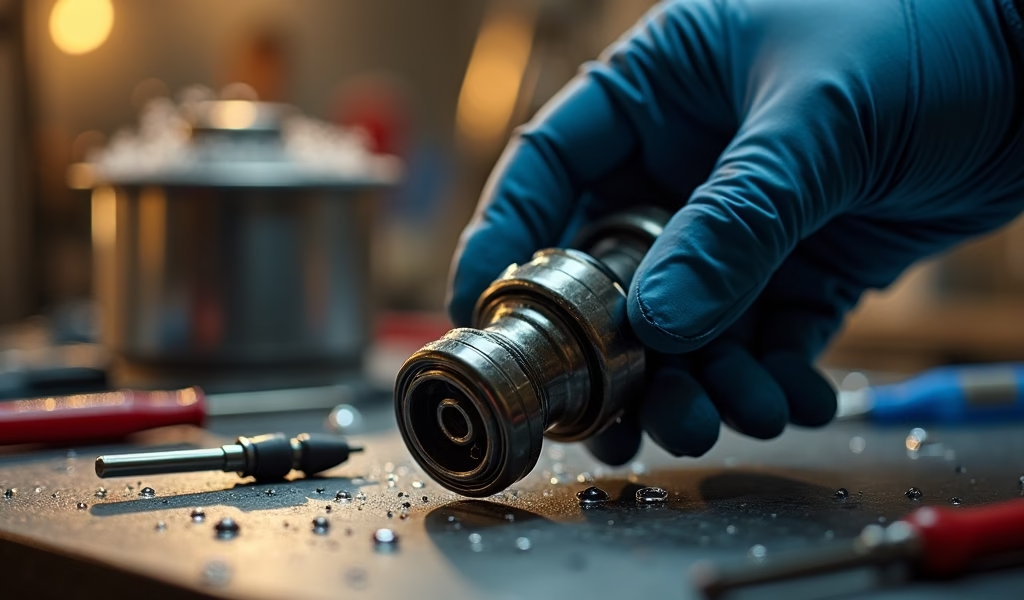
Sometimes, the best tool for the job is someone else’s hands. As much as I love DIY solutions, there are situations where professional cleaning makes more sense.
When to Consider Professional Service
Professional cleaning becomes the smart choice when:
- DIY methods haven’t resolved your symptoms
- Your vehicle has advanced direct injection technology
- You lack the tools, space, or confidence for advanced DIY methods
- Your vehicle is under warranty (DIY might void coverage)
- The injectors are difficult to access on your specific model
- You want flow testing to identify problematic injectors
What Professional Service Includes
A quality professional cleaning service typically offers advantages DIY methods can’t match:
Diagnostic testing: Professionals can perform pressure and volume tests to identify exactly which injectors are problematic and how severely they’re restricted.
Specialized equipment: Professional shops use commercial-grade ultrasonic cleaners and testing equipment that can cost thousands of dollars – equipment most DIYers don’t have.
Flow pattern analysis: After cleaning, shops can verify each injector’s spray pattern on specialized equipment, ensuring they’re functioning properly.
Complete service: Professional service typically includes cleaning or replacing related components like fuel filters and pressure regulators.
According to AAA’s automotive research, professional fuel system service can restore up to 10% of lost fuel economy and power in vehicles with significant injector contamination.
Expect to pay $150-300 for professional cleaning, depending on your vehicle and location. While this might seem expensive compared to a $10 bottle of cleaner, it’s far cheaper than replacing damaged injectors or dealing with the consequences of engine damage from severely restricted fuel flow.
Prevention Tips: Keep Those Injectors Clean Longer
An ounce of prevention is worth a pound of cure – especially when it comes to fuel injectors. Here’s my tried-and-true advice for keeping your fuel system clean:
Fuel Quality Matters
The single most important preventative measure is using quality fuel. Modern fuel injection systems are designed to work with fuels that contain proper detergent packages. Look for Top Tier certified gas stations – these brands maintain higher detergent standards than required by law.
Even if you normally use regular gas, treating yourself (and your car) to a tank of premium every 3-4 fill-ups can help keep injectors clean. Premium fuel often contains more detergents, regardless of octane rating.
Regular Maintenance Schedule
Develop a maintenance rhythm that works for your driving habits:
- Use a quality fuel system cleaner every 3,000-5,000 miles (or quarterly)
- Replace your fuel filter according to manufacturer recommendations
- Consider professional cleaning every 30,000-45,000 miles
- Don’t ignore minor symptoms – address them before they become major problems
Smart Driving Habits
How you drive affects injector life more than you might think:
- Avoid frequent short trips where your engine never fully warms up
- Take your vehicle on regular highway drives to help clean injectors naturally
- Don’t regularly run your tank below 1/4 full (sediment collects at the bottom)
- Let your engine run for 30 seconds before driving in cold weather
Storage Considerations
If you store a vehicle for extended periods (winter storage, classic cars, etc.), take these precautions:
- Fill the tank completely to prevent condensation
- Add a quality fuel stabilizer
- Run the engine long enough for the stabilizer to reach the injectors
- For storage longer than 6 months, consider draining the fuel system completely
Following these prevention tips might seem tedious, but they’re far less hassle than dealing with severe injector problems. An investment of a few minutes and dollars in prevention can save you hundreds in repairs down the road.
Cost Comparison: DIY vs. Professional Cleaning vs. Replacement
Let’s talk dollars and sense. Here’s what you’re looking at for each approach:
DIY Cleaning Costs
- Fuel additives: $8-25 per treatment
- Pressure cleaning kit: $50-150 (one-time purchase or rental)
- Ultrasonic cleaner: $80-300 (one-time purchase)
- Cleaning solutions: $15-40 per treatment
- O-rings and seals: $10-30 per set
- Your time: 15 minutes to several hours
Professional Cleaning Costs
- Basic on-car cleaning: $80-150
- Complete removal/ultrasonic cleaning: $200-300
- Diagnostic testing: $50-100 (often included in service)
- Related services (fuel filter, etc.): $50-100
Replacement Costs (If Cleaning Doesn’t Work)
- OEM injectors: $75-250 each (depending on vehicle)
- Aftermarket injectors: $40-150 each
- Labor: $200-500 (varies widely by vehicle)
- Total replacement cost: $500-2,000+
Now here’s where it gets interesting. According to U.S. Department of Energy research, a vehicle with dirty fuel injectors can suffer up to 10-20% reduced fuel economy. For a vehicle that gets 25 MPG and drives 15,000 miles annually, that’s 60-120 gallons of wasted fuel per year – approximately $180-360 at current prices.
When you factor in the potential for more serious engine problems caused by running with dirty injectors, regular cleaning becomes an obvious economic choice. Think of it as preventative medicine for your car – a small investment now prevents a major expense later.
Conclusion: Clean Injectors, Happy Engine
After spending decades under the hood, I can tell you with certainty that few maintenance items offer a better return on investment than keeping your fuel injectors clean. Clean injectors mean better performance, improved fuel economy, reduced emissions, and a longer engine life – all things every driver wants.
Whether you choose the DIY route with regular fuel additives, opt for occasional professional cleaning, or some combination of both, the important thing is making injector maintenance part of your regular vehicle care routine. Your vehicle will thank you with thousands of miles of reliable service.
Remember that prevention is always easier and less expensive than cure. By following the tips in this guide, you can avoid the frustration of stumbling acceleration, the nuisance of check engine lights, and the pain of unexpected repair bills.
So next time you’re at the pump, consider grabbing a bottle of quality injector cleaner. Your car deserves it, and your wallet will thank you down the road.
Frequently Asked Questions
How often should I clean my fuel injectors?
For preventative maintenance, use a quality fuel injector cleaner every 3,000-5,000 miles or every 3 months. Consider professional cleaning every 30,000 miles for optimal performance, especially if you notice symptoms of dirty injectors.
Can I drive with dirty fuel injectors?
Yes, but it’s not recommended for extended periods. Dirty injectors reduce fuel economy, decrease performance, and can eventually lead to more expensive repairs if left untreated.
Will any fuel injector cleaner work?
Not all cleaners are equally effective. Look for products containing PEA (Polyetheramine) which is more effective at removing deposits than cheaper alternatives.
How do I know if my injectors need cleaning or replacement?
If symptoms improve after cleaning, your injectors just needed cleaning. If problems persist after multiple cleaning attempts, or if you notice fuel leaks or extremely poor performance, replacement may be necessary.
Does premium gas keep injectors cleaner?
Often yes, but what matters most is using “Top Tier” certified fuel rather than octane rating. Top Tier fuels (available in regular, mid-grade, and premium) contain higher levels of detergents that keep injectors cleaner.