

Overview
Like giving your car a five-minute health checkup that could save you thousands in repairs, checking your transmission fluid regularly helps identify issues through its level, color, and texture before they become catastrophic failures. The guide provides a step-by-step process for checking and maintaining transmission fluid—whether your vehicle has a traditional dipstick or sealed system—while highlighting warning signs such as delayed shifting, unusual noises, and leaks that indicate potential problems requiring attention.
Table of Contents
- Why Checking Transmission Fluid Is Crucial
- What Is Transmission Fluid?
- Signs Your Vehicle Needs a Transmission Fluid Check
- Step-by-Step Guide to Checking Transmission Fluid
- How to Interpret What You See
- How to Add Transmission Fluid Safely
- Transmission Fluid Maintenance Tips
- Common Mistakes to Avoid
- Conclusion
- Frequently Asked Questions
Why Checking Transmission Fluid Is Crucial
Let me tell you something that might save you thousands of dollars: your transmission is one of the most expensive components to repair in your vehicle. I’ve seen too many folks roll into my shop with transmissions on their last legs, all because they neglected one simple maintenance task.
Checking your transmission fluid regularly is like giving your car a quick health checkup. It takes about 5 minutes but can prevent catastrophic damage that might cost you $1,500 to $4,500 for a replacement.
Think of transmission fluid as the lifeblood of your transmission system. It lubricates, cools, and creates the hydraulic pressure necessary for your transmission to function properly. When this fluid runs low or becomes contaminated, your transmission essentially starts cooking itself from the inside.
Unlike engine oil, transmission fluid issues don’t always announce themselves dramatically. They creep up slowly—a slight hesitation here, an unusual sound there—until one day, you’re stranded on the side of the road wondering what went wrong.
The good news? With regular checks, you can catch these issues early and avoid joining the ranks of drivers who learn this lesson the expensive way.
What Is Transmission Fluid?
Transmission fluid is a specialized hydraulic fluid engineered to perform several critical functions simultaneously. Unlike other fluids in your vehicle, it has to be a jack-of-all-trades.
First and foremost, it lubricates the many moving parts inside your transmission, preventing metal-on-metal contact that would quickly destroy these components. Good transmission fluid contains special additives that help it maintain its slickness even under extreme pressure and heat.
It also serves as your transmission’s cooling system. As it circulates, it absorbs heat from friction points and carries it away, preventing overheating that could warp or damage internal parts.
Additionally, transmission fluid creates the precise hydraulic pressure needed for your transmission to shift gears smoothly. Without proper fluid levels, this pressure drops, leading to delayed engagement, hard shifts, or slipping gears.
There are several types of transmission fluid, and using the right one is critical. Your owner’s manual specifies exactly which type your vehicle needs, whether it’s Dexron, Mercon, ATF+4, or a manufacturer-specific formulation. Using the wrong type can be as damaging as having no fluid at all, according to transmission specialists at CarMD.
Fresh transmission fluid typically has a bright red or pink color and a slightly sweet smell. As it ages and absorbs heat and contaminants, it darkens to deeper red or brown and develops a more burnt odor.
Signs Your Vehicle Needs a Transmission Fluid Check
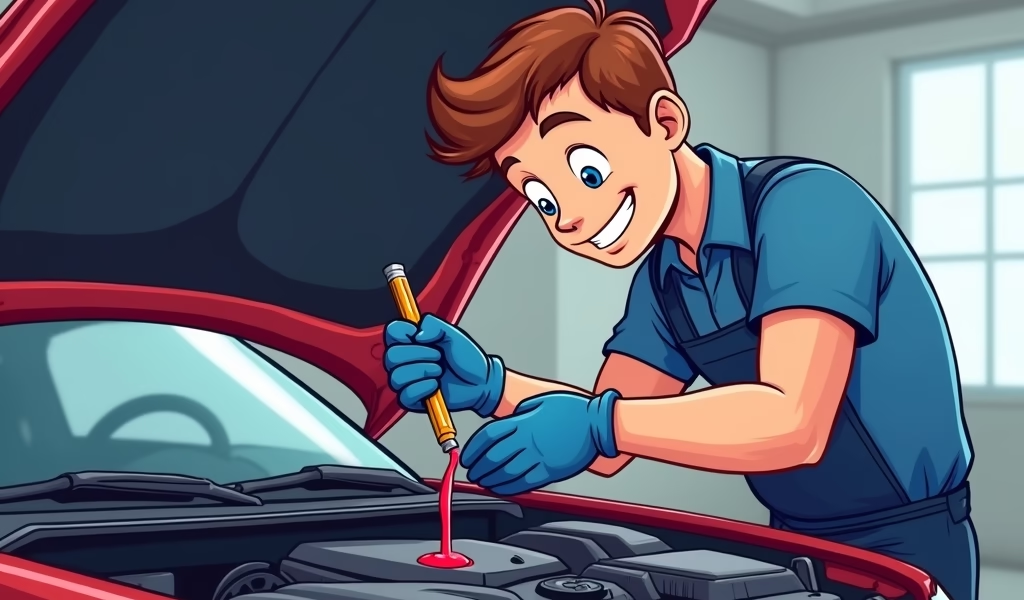
Your car will usually give you warning signs before a serious transmission problem develops. Here’s what to watch for:
Delayed or harsh shifting is often the first symptom drivers notice. If your car hesitates before moving when you shift from park to drive, or if gear changes feel rough and abrupt, your transmission fluid might be low or degraded.
Unusual noises are another telltale sign. Listen for whining sounds during acceleration, buzzing during deceleration, or clunking when shifting gears. These noises happen because parts that should be cushioned by fluid are making direct contact.
Slipping gears is both annoying and dangerous. If your engine revs higher than normal before your car accelerates, or if the transmission unexpectedly shifts into a different gear while you’re driving, your fluid might be low or burned.
A burning smell coming from your vehicle often indicates overheated transmission fluid. Fresh fluid has a slightly sweet smell, but when it overheats, it develops a distinctive burnt toast odor that’s hard to miss.
Leaks under your car deserve immediate attention. Transmission fluid leaks typically appear as red or brown puddles beneath your vehicle. Even small leaks can eventually lead to low fluid levels if not addressed.
Dashboard warning lights shouldn’t be ignored. Modern vehicles have sophisticated monitoring systems that can detect transmission issues. If your check engine light comes on, it could be transmission-related, especially if accompanied by any of the above symptoms.
If you experience any of these common signs of transmission problems, checking your fluid level and condition should be your first step before visiting a mechanic.
Step-by-Step Guide to Checking Transmission Fluid
Ready to check your transmission fluid? Here’s my step-by-step process that will help you do it right the first time:
What You’ll Need
- Clean, lint-free cloth or paper towel
- Funnel (if you need to add fluid)
- Appropriate transmission fluid for your vehicle
- Owner’s manual
For Vehicles with Dipsticks
Step 1: Prepare your vehicle
Park on level ground and apply the parking brake. For most vehicles, the engine should be running and warmed up to operating temperature. Your transmission should be in “Park” or “Neutral.”
Step 2: Locate the transmission dipstick
Open the hood and find the transmission dipstick. It’s typically located toward the back of the engine (rear-wheel drive) or side of the engine (front-wheel drive) and often has a red or pink handle labeled “TRANS” or “ATF.”
Step 3: Remove and wipe the dipstick
Pull the dipstick out completely, then wipe it clean with your lint-free cloth. This gives you a clean slate for an accurate reading.
Step 4: Reinsert and remove the dipstick
Push the dipstick all the way back in, ensuring it’s fully seated. Then pull it out again and hold it horizontally to check the fluid level.
Step 5: Check the fluid level
Most dipsticks have “FULL” and “ADD” or “LOW” markings. Your fluid level should be between these marks, ideally closer to “FULL” without exceeding it.
Step 6: Inspect the fluid condition
Look at the color and consistency of the fluid on the dipstick. Fresh fluid is bright red or pink and transparent. If it’s dark red, brown, or has a burnt smell, it may need to be changed.
For Vehicles without Dipsticks
Many newer vehicles have “sealed” transmissions without traditional dipsticks. For these vehicles:
- Check your owner’s manual for the specific procedure for your model
- Some require checking via a plug on the transmission itself
- Others monitor fluid electronically and alert you if service is needed
- For these vehicles, you might need to visit a mechanic for fluid checks
According to Consumer Reports, nearly half of new vehicles sold today have sealed transmissions, making professional checks more important for these models.
How to Interpret What You See
Now that you’ve checked your transmission fluid, let’s decipher what your findings mean:
Fluid Level
Proper level: If your fluid is between the “ADD” and “FULL” marks (or in the hatched area on some dipsticks), you’re good to go.
Low level: If it’s at or below the “ADD” mark, you’ll need to add fluid. Low fluid is often caused by leaks, so check underneath your vehicle for signs of red or brown fluid.
Overfilled: If the fluid is above the “FULL” mark, that’s actually a problem too. Overfilling can cause foaming and erratic shifting. You’ll need to drain some fluid or have a mechanic do it.
Fluid Color and Condition
Bright red/pink: This is fresh, healthy fluid. If yours looks like this and is at the proper level, congratulations!
Dark red: This indicates aging fluid but might still be serviceable if there are no other issues.
Brown: This suggests oxidized, overheated fluid that needs changing soon.
Black or burnt-smelling: This indicates severely burnt fluid that needs immediate changing. Your transmission has likely been overheating.
Texture and Particles
Smooth and clear: Healthy fluid should feel smooth between your fingers without grit.
Gritty texture: If you feel metal particles or see glittery material in the fluid, internal components may be wearing out. This requires professional attention.
Foamy or milky appearance: This suggests water contamination or air being whipped into the fluid, possibly from overfilling or internal problems. Don’t ignore this condition.
Remember that transmission fluid doesn’t burn off like engine oil. If your level is consistently dropping, you have a leak that needs addressing before it leads to more serious problems.
How to Add Transmission Fluid Safely
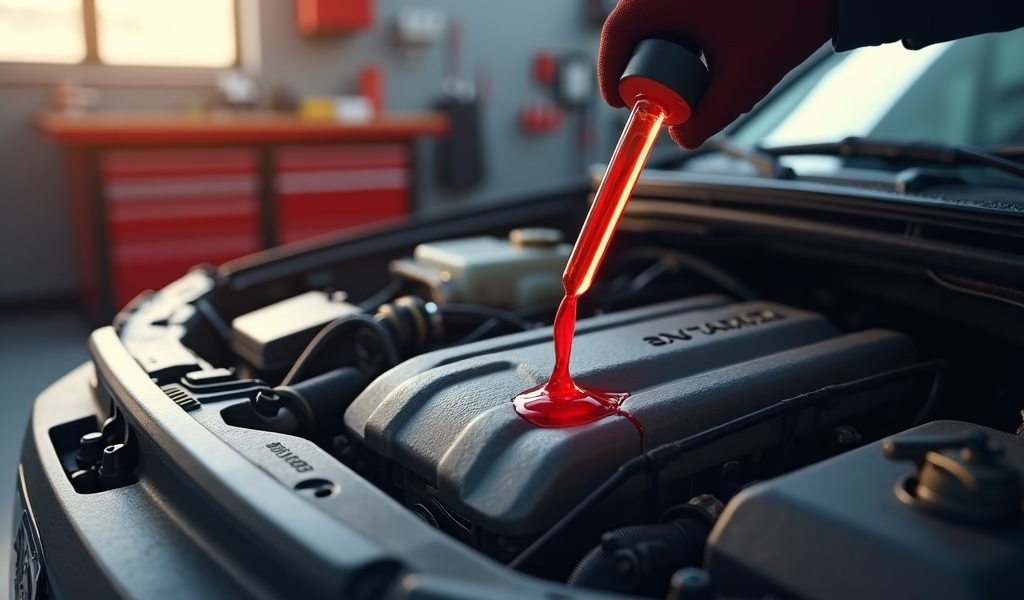
If your check shows low fluid levels, here’s how to top it off properly:
Step 1: Identify the correct fluid
Check your owner’s manual for the exact type and specification of fluid your transmission needs. Using the wrong fluid can cause serious damage, so this step is crucial. Fluid specifications can be very specific (like “Dexron VI” or “SP-IV”), not just general types.
Step 2: Prepare to add fluid
With the engine still running and in Park (as when you checked the level), remove the dipstick and position your funnel in the dipstick tube. Make sure the funnel is clean and free from dirt or other contaminants.
Step 3: Add fluid gradually
Pour small amounts of fluid at a time—about 1/4 quart (8 ounces) increments are ideal. After each addition, wait 1-2 minutes for the fluid to circulate, then check the level again with the dipstick.
Step 4: Check frequently
It’s much easier to add more fluid than to remove excess, so check frequently as you add. Continue until the level reaches the “FULL” mark or the upper part of the acceptable range on the dipstick.
Step 5: Secure the dipstick
Once you’ve reached the proper level, firmly reinsert the dipstick all the way. Close the hood and take the vehicle for a short drive, cycling through the gears if possible, then recheck to ensure the level remains stable.
If your vehicle doesn’t have a traditional dipstick, adding fluid typically requires specialized equipment or procedures. In these cases, it’s best to have a professional handle the task to avoid potential damage or overfilling.
Remember that a severely low fluid level might indicate a leak that needs addressing before adding more fluid. Otherwise, you’re just putting good fluid into a system that will soon lose it again.
Transmission Fluid Maintenance Tips
Maintaining proper transmission fluid not only prevents costly repairs but also improves your vehicle’s performance and longevity. Here are my top maintenance tips after 20+ years in the shop:
Develop a regular checking schedule
Mark your calendar to check your transmission fluid every 3,000 miles or with each oil change. This habit helps you catch changes in fluid level or condition before they become serious problems.
Know when to change your fluid
Most manufacturers recommend changing transmission fluid every 30,000 to 60,000 miles for conventional fluids and 60,000 to 100,000 miles for synthetic. However, if you do a lot of stop-and-go driving, towing, or driving in extreme temperatures, consider changing it more frequently.
Consider your driving habits
If you regularly tow heavy loads, drive in mountainous areas, or frequently sit in traffic, your transmission works harder and generates more heat. In these cases, checking fluid more often and changing it earlier can extend transmission life.
Don’t ignore small leaks
Even minor transmission fluid leaks can eventually lead to low fluid levels. If you notice spots on your driveway or garage floor, have them addressed promptly before they worsen.
Use cooling strategies in extreme conditions
In stop-and-go traffic or when towing, shifting to neutral at long stops reduces heat buildup in your transmission. Some vehicles benefit from aftermarket transmission coolers if you regularly drive in demanding conditions.
Your transmission is part of a larger system of essential fluids every car owner must check regularly to maintain vehicle health.
Common Mistakes to Avoid
Even with the best intentions, many vehicle owners make these common mistakes when dealing with transmission fluid:
Using the wrong type of fluid
I can’t stress this enough: using incorrect transmission fluid can destroy your transmission. Always consult your owner’s manual and use exactly what’s specified. “Close enough” doesn’t cut it with modern transmissions.
Checking the fluid incorrectly
Some vehicles require checking with the engine running, others with it off. Some need to be in Park, others in Neutral. Following the wrong procedure gives inaccurate readings that can lead to improper fluid levels.
Overfilling the transmission
Too much fluid is as bad as too little. Excess fluid gets whipped into foam, reducing lubrication effectiveness and potentially causing erratic shifting, overheating, and fluid leaks from seals.
Ignoring fluid condition
Some folks only check the level but ignore the color, smell, and texture of the fluid. Dark, burnt-smelling, or gritty fluid needs changing regardless of the level.
DIY service on sealed transmissions
Many newer vehicles have complex transmission systems without traditional dipsticks or drain plugs. Attempting DIY service on these can cause expensive damage. If your vehicle has a sealed transmission, leave service to professionals with the right equipment.
Ignoring early warning signs
Slight hesitation, occasional hard shifts, or minor leaks often get dismissed as “not that bad yet.” These are your transmission’s early cries for help—address them promptly before they escalate into major repairs.
As AAA advises, regular transmission checks are an essential part of preventative maintenance that can significantly extend your vehicle’s service life.
Conclusion
Checking your transmission fluid regularly is one of the simplest yet most important maintenance tasks you can perform on your vehicle. It takes just a few minutes but can save you thousands in repair costs and the considerable headache of unexpected breakdowns.
Remember, your transmission doesn’t fail overnight—it gives warning signs through fluid level, color, and condition long before catastrophic problems develop. By developing the habit of checking your fluid every few thousand miles, you’re giving yourself the opportunity to catch and address these issues early.
Even if your vehicle has a sealed transmission without a traditional dipstick, scheduling regular professional checks is still important. The investment in preventative maintenance is tiny compared to the cost of major transmission repairs or replacement.
Your transmission is designed to last the lifetime of your vehicle when properly maintained. With the knowledge you’ve gained from this guide, you’re now equipped to provide that maintenance and keep your vehicle shifting smoothly for years to come.
Frequently Asked Questions
How often should I check my transmission fluid?
Check your transmission fluid every 3,000 miles or with each oil change. For vehicles without dipsticks, have it checked during regular service intervals at your mechanic.
Can I check transmission fluid when the engine is cold?
For most vehicles, checking when cold will give inaccurate readings. The engine should be at normal operating temperature (after about 10 minutes of driving) for the most accurate results.
What if my car doesn’t have a transmission dipstick?
Many newer vehicles have sealed transmissions without dipsticks. For these vehicles, fluid checks require special procedures or equipment available at service centers.
Is it normal for transmission fluid to get darker over time?
Some darkening is normal as the fluid ages, but it shouldn’t be black or smell burnt. If it’s very dark or has a burnt odor, it’s time for a fluid change.
Can I mix different types of transmission fluid?
Never mix different types of transmission fluid. Each type has specific chemical properties, and mixing them can cause poor performance or damage.