
Overview
That frustrating check engine light or rough idle might just be a vacuum leak—one of the most common yet overlooked issues that affects your vehicle’s performance, fuel economy, and emissions. This mechanic’s guide walks you through identifying the seven telltale symptoms, locating common leak sources, and using simple DIY detection methods to save hundreds on unnecessary repairs, while providing practical advice on which fixes you can handle yourself versus when to seek professional help.
Table of Contents
- Understanding Vacuum Systems in Modern Vehicles
- 7 Tell-Tale Symptoms of Vacuum Leaks
- Most Common Vacuum Leak Locations
- DIY Vacuum Leak Detection Methods
- Step-by-Step Vacuum Leak Testing
- Fixing Vacuum Leaks: DIY vs. Professional Repairs
- Preventative Maintenance to Avoid Future Leaks
- Conclusion
- Frequently Asked Questions
Understanding Vacuum Systems in Modern Vehicles
That frustrating check engine light. The rough idle that makes your car feel like it’s about to stall at every stoplight. The sudden drop in fuel economy. If you’re experiencing any of these symptoms, you might be dealing with a vacuum leak – one of the most common yet overlooked issues in vehicle maintenance.
In my 20 years as a mechanic, I’ve seen countless drivers spend hundreds on unnecessary repairs before finally addressing the actual culprit: a simple vacuum leak. Today, I’m going to walk you through how to check for vacuum leaks and save yourself from those costly misdiagnoses.
Think of your engine’s vacuum system as its respiratory system. When your engine runs, it creates negative pressure (vacuum) in the intake manifold. This vacuum powers various components and helps control the air-fuel mixture. When this sealed system develops even a tiny leak, it’s like trying to breathe through a straw with a pinhole – everything works harder and less efficiently.
Modern vehicles rely on vacuum for brake boosters, emissions controls, HVAC systems, and even some transmission functions. When a leak develops, your engine computer detects the unmetered air entering the system and tries to compensate by adjusting fuel delivery. This compensation leads to poor performance and can trigger various engine fault codes if left unaddressed.

7 Tell-Tale Symptoms of Vacuum Leaks
Before grabbing your tools, it helps to confirm that a vacuum leak is indeed your problem. Here are the most common symptoms I see in my shop:
1. Rough or High Idle
When your engine idles faster than normal (over 1000 RPM) or fluctuates unpredictably, that’s often your first clue. The engine computer is struggling to maintain proper idle as unmetered air sneaks past the throttle body.
2. Hissing Sounds
A distinctive hissing noise, especially noticeable when the engine is at idle, often indicates a vacuum leak. The sound comes from air being pulled through the leak at high velocity.
3. Stalling or Hesitation
Does your vehicle stall when coming to a stop? Or hesitate when you press the gas? These are classic signs of vacuum leaks disrupting your engine’s air-fuel ratio.
4. Poor Fuel Economy
Noticed you’re filling up more often? When your engine runs lean due to unmetered air, the computer compensates by adding extra fuel – burning through your gas budget faster than necessary.
5. Check Engine Light
Modern vehicles will often trigger a check engine light with codes like P0171 or P0174 (system too lean) when vacuum leaks are present. These codes alone don’t pinpoint the leak but confirm something’s affecting your air-fuel ratio.
6. Failed Emissions Test
Vacuum leaks are one of the most common reasons for failing emissions tests. The improper air-fuel mixture leads to increased hydrocarbons and can affect catalytic converter efficiency.
7. Poor Brake Performance
If your brake pedal feels hard to press or lacks power assist, a vacuum leak in the brake booster line could be the culprit. This symptom requires immediate attention for safety reasons.
Experiencing multiple symptoms from this list? There’s a good chance you’re dealing with a vacuum leak. According to a study by AAA, nearly 40% of check engine lights related to poor performance stem from vacuum system issues.
Most Common Vacuum Leak Locations
Before you start testing, it helps to know where to look. In my experience, about 80% of vacuum leaks occur in these common locations:
- Vacuum hoses – especially those near hot components like the exhaust manifold
- Intake manifold gaskets – particularly on vehicles with 60,000+ miles
- PCV (Positive Crankcase Ventilation) system components
- Throttle body gasket – where the throttle body meets the intake manifold
- EGR (Exhaust Gas Recirculation) valve and associated vacuum lines
- Brake booster connection and check valve
- Cracked vacuum fittings and connectors
Age is the biggest factor in vacuum system failures. Rubber components naturally degrade over time, with heat accelerating the process. Vehicles in hot climates or those that experience frequent short trips (where the engine doesn’t fully warm up) are particularly susceptible to vacuum hose deterioration.
Some vehicle models are also more prone to specific vacuum issues. For example, many GM vehicles from the 2000s commonly develop intake manifold gasket leaks, while certain European imports often experience issues with specialized vacuum components that control various engine functions.
DIY Vacuum Leak Detection Methods
Now for the good part – finding that pesky leak! Here are several proven methods I recommend to my customers who enjoy learning car diagnostics themselves:
The Visual Inspection
Sometimes the simplest approach works best. With the engine off, carefully inspect all visible vacuum lines for cracks, splits, or disconnections. Pay special attention to bends in hoses and connection points. Hardened, brittle hoses are prime candidates for replacement, even if they haven’t failed yet.
The Smoke Test (Professional Method)
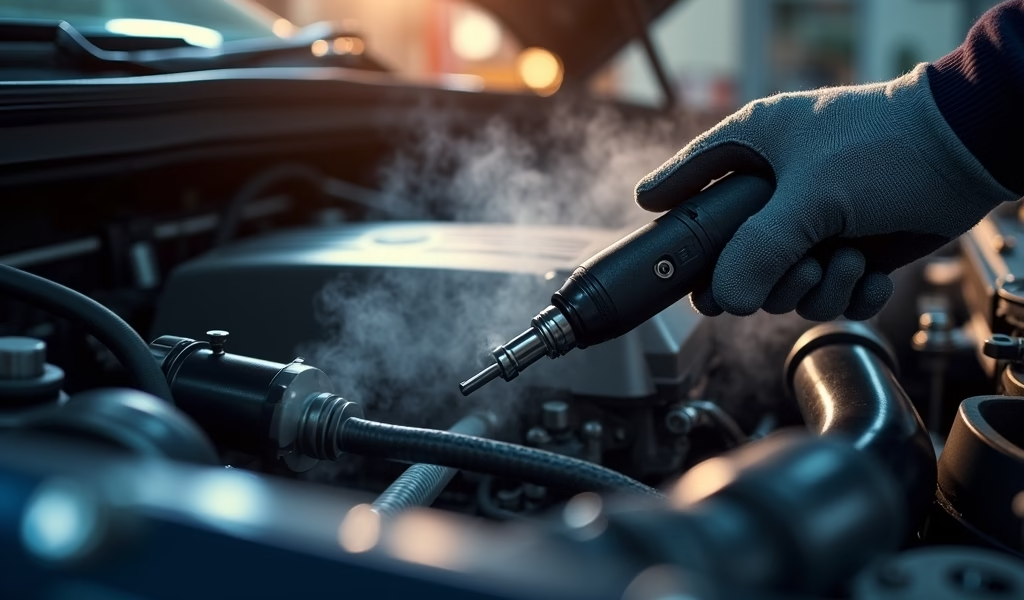
This is the gold standard for finding vacuum leaks. Professional smoke machines inject harmless smoke into the vacuum system, making leaks visible as smoke escapes. While professional machines are expensive, affordable DIY versions are available for around $100, making this a worthwhile investment if you maintain multiple vehicles.
The Carb Cleaner Method
With the engine running at idle, spray small amounts of carburetor cleaner (or propane from an unlit torch) around suspected leak areas. When you spray near a leak, the engine RPM will momentarily change as the spray is sucked in and burned. This change in RPM confirms you’ve found a leak location.
Safety tip: Be extremely careful with this method. Keep the spray away from hot components and ensure good ventilation.
The Vacuum Gauge Test
A vacuum gauge can provide valuable diagnostic information. Connect it to a direct vacuum source (like the brake booster hose), start the engine, and observe the reading. A healthy engine typically shows 17-21 inches of mercury (inHg) at idle. Fluctuating readings or consistently low vacuum indicates leaks.
The Listen Test
Sometimes you can hear what you can’t see. Using a mechanic’s stethoscope or even a long screwdriver (place the handle against your ear and the tip near suspected leak areas), you can often hear the distinctive hissing of a vacuum leak. This works best in a quiet environment with the engine at idle.
Step-by-Step Vacuum Leak Testing
Ready to hunt down that leak? Here’s my methodical approach that works for most vehicles:
Preparation
Safety first! Make sure your vehicle is parked on a level surface with the parking brake engaged. Let the engine cool if it’s been running recently – you want it warm but not hot enough to burn you.
Gather your tools: safety glasses, gloves, a flashlight, and your preferred testing materials. Having a vacuum diagram for your specific vehicle (found in service manuals or sometimes under the hood) is incredibly helpful.
Initial Visual Inspection
- Start by cleaning the engine bay if it’s dirty – a cleaner engine makes spotting issues much easier
- Trace every visible vacuum line from start to finish
- Check all connection points and T-fittings
- Look for cracked, hardened, or collapsed hoses
- Don’t forget to check under the intake manifold where possible
Smoke Testing (If Available)
- Connect the smoke machine to a main vacuum source (often the brake booster line)
- Seal the intake and exhaust (follow your smoke machine instructions)
- Introduce smoke and watch for escape points
- Use a flashlight to improve visibility in dark areas
Spray Testing
- Start the engine and let it reach normal operating temperature
- With the engine at idle, spray small amounts of carb cleaner around potential leak areas
- Work methodically from one side of the engine to the other
- Pay special attention to the intake manifold gasket seams, throttle body, and vacuum connections
- Note any spots that cause changes in idle speed
Testing Specific Components
- Check the PCV valve by removing it and shaking it – you should hear a rattle
- Inspect the brake booster by pumping the brake pedal with the engine off, then starting the engine – the pedal should move slightly
- Test the EGR valve connections with spray or smoke
When testing, remember that modern vehicles have complex vacuum systems with many components. Sometimes what appears to be a vacuum leak is actually a properly functioning component like a purge valve. When in doubt, consult a vacuum diagram for your specific vehicle model.
As the Environmental Protection Agency notes, identifying and repairing vacuum leaks not only improves performance but also reduces harmful emissions – making this a win for both your wallet and the environment.
Fixing Vacuum Leaks: DIY vs. Professional Repairs
Once you’ve pinpointed your leak, you’ll need to decide whether to tackle the repair yourself or visit a professional. Here’s my advice after helping hundreds of drivers with this decision:
DIY-Friendly Repairs:
- Replacing standard vacuum hoses
- Installing a new PCV valve
- Reconnecting loose vacuum lines
- Replacing simple vacuum control valves
These repairs typically require basic hand tools and some patience. Vacuum hose is inexpensive, usually costing $2-10 per foot depending on the diameter and material. Always use automotive-grade vacuum hose – never substitute fuel line or household tubing.
Pro tip: When replacing multiple hoses, do them one at a time to avoid confusion. If you must disconnect several, take clear photos or use masking tape with labels to mark connections.
Professional-Level Repairs:
- Intake manifold gasket replacement
- Complex component access requiring major disassembly
- Issues involving the internal portions of the EGR system
- Problems with integrated vacuum switches in modern vehicles
These repairs often require specialized tools, torque specifications, and sometimes reprogramming of vehicle computers. For example, replacing an intake manifold gasket might cost $300-800 at a shop, depending on your vehicle, but attempting this without proper tools can lead to more expensive problems.
For those interested in online car diagnostics, many modern OBD-II scan tools can help identify vacuum-related issues through live data monitoring of fuel trim values. These tools can confirm your repair was successful.
Preventative Maintenance to Avoid Future Leaks
An ounce of prevention is worth a pound of cure – especially when it comes to vacuum systems. Here’s my preventative maintenance schedule to help you avoid future vacuum leaks:
Regular Visual Inspections
Every 6 months or 6,000 miles, take five minutes to inspect visible vacuum lines – particularly those near hot components. Look for signs of hardening, cracking, or color changes in the rubber.
Replace Aging Components
Most vacuum hoses have a service life of 5-7 years, but this varies dramatically based on climate and driving conditions. If your vehicle is approaching the 5-year mark or has over 60,000 miles, consider proactively replacing critical vacuum lines as preventative maintenance.
Address Heat Exposure
Heat accelerates rubber deterioration. If you notice vacuum lines near hot exhaust components, consider adding heat shields or rerouting the lines if possible. For critical vacuum lines near heat sources, upgrading to silicone hoses (which withstand heat better than standard rubber) is a worthwhile investment.
Use Quality Replacement Parts
When replacing vacuum components, quality matters. OEM or high-quality aftermarket parts often last significantly longer than the cheapest options. For frequently problematic components, consider upgrading to silicone or reinforced materials designed for longer service life.
According to Car and Driver’s research, addressing vacuum system maintenance during routine service intervals can extend component life by up to 40% – making this one of the most cost-effective preventative measures you can take.
Conclusion
Vacuum leaks might seem mysterious, but with the right approach, they’re among the most DIY-friendly issues to diagnose and often to repair. By understanding the symptoms, knowing where to look, and using these testing methods, you can save hundreds in diagnostic fees and prevent more serious engine issues down the road.
Remember that your vehicle’s vacuum system is essential for proper engine operation, emissions control, and even braking performance. Taking the time to properly check for vacuum leaks not only improves performance and fuel economy but also extends the life of expensive components like oxygen sensors and catalytic converters.
Whether you tackle the repair yourself or take it to a trusted mechanic after your diagnosis, addressing vacuum leaks promptly is one of the smartest investments you can make in your vehicle’s longevity. Your engine (and wallet) will thank you!
Frequently Asked Questions
What tools do I need to check for vacuum leaks?
At minimum, you need a flashlight, safety glasses, and spray carburetor cleaner. For more thorough testing, a vacuum gauge, mechanic’s stethoscope, or smoke tester will make the job easier and more precise.
Can I drive with a vacuum leak?
While you can technically drive with minor vacuum leaks, it’s not recommended. Vacuum leaks reduce fuel economy, hurt performance, and can potentially damage expensive components like oxygen sensors and catalytic converters if left unaddressed.
How much does it cost to fix a vacuum leak?
DIY vacuum hose replacement typically costs $10-30 in parts. Professional diagnosis and repair ranges from $100-200 for simple hose replacements up to $300-800 for intake manifold gasket replacements on more complex engines.
Will a vacuum leak throw a check engine light?
Yes, vacuum leaks commonly trigger check engine lights with codes related to lean fuel conditions. The most common codes are P0171 and P0174 (system too lean) along with various idle control-related codes.
How often should vacuum hoses be replaced?
Most rubber vacuum hoses should be inspected every 30,000 miles and typically need replacement every 5-7 years. Vehicles in hot climates or with engines that run at higher temperatures often require more frequent replacement.