

Overview
That dreadful clicking sound when your car won’t start isn’t just a random occurrence—your battery typically sends warning signs before leaving you stranded, from slow engine cranking to dimming headlights. This guide walks you through identifying these warning signs, testing your battery’s health at home, extending its 3-5 year lifespan through proper maintenance, and knowing exactly when it’s time for a replacement rather than a recharge.
Table of Contents
- Understanding Car Batteries: Your Vehicle’s Powerhouse
- Warning Signs of a Failing Battery
- How to Check Your Battery’s Health
- Battery Testing Methods You Can Do at Home
- How to Extend Your Battery’s Life
- When It’s Time to Replace Your Battery
- DIY vs. Professional Battery Replacement
- Conclusion
- Frequently Asked Questions
Understanding Car Batteries: Your Vehicle’s Powerhouse
Picture this: you’re running late for an important meeting, rush to your car, turn the key, and… nothing happens. Just that dreaded clicking sound followed by silence. Your battery’s dead, and your day just got a whole lot more complicated.
As a mechanic with over 20 years of experience, I’ve seen this scenario play out countless times. The good news? Most battery failures don’t happen without warning. Learning how to check battery health can save you from being stranded and protect you from costly emergency services.
Your car battery is essentially the heart of your vehicle’s electrical system. It provides the initial jolt of electricity to start your engine and powers all the electronics when the engine isn’t running. Most vehicles use either traditional lead-acid batteries or more modern Absorbed Glass Mat (AGM) batteries, each with their own characteristics and specific maintenance requirements.
A typical battery lasts between 3-5 years, though this varies widely based on your climate, driving habits, and how well you maintain it. In extreme heat (hello, Arizona summers!), batteries might only last 2-3 years, while in moderate climates with proper care, they can sometimes push 6-7 years.
Warning Signs of a Failing Battery
Your battery usually sends distress signals before leaving you stranded. Here are the telltale signs that should prompt immediate attention:
- Slow engine cranking (that reluctant “rur…rur…rur” sound)
- Dimming headlights, especially at idle
- Electrical glitches (radio presets disappearing, power windows moving sluggishly)
- The battery warning light illuminating on your dashboard
- Swollen battery case or corrosion around terminals (that white or greenish powder)
- A sulfurous, rotten-egg smell when you open the hood
If you notice any of these symptoms, don’t ignore them! A weakening battery rarely recovers on its own, and that warning could be your last chance before being stranded at the worst possible moment.
How to Check Your Battery’s Health
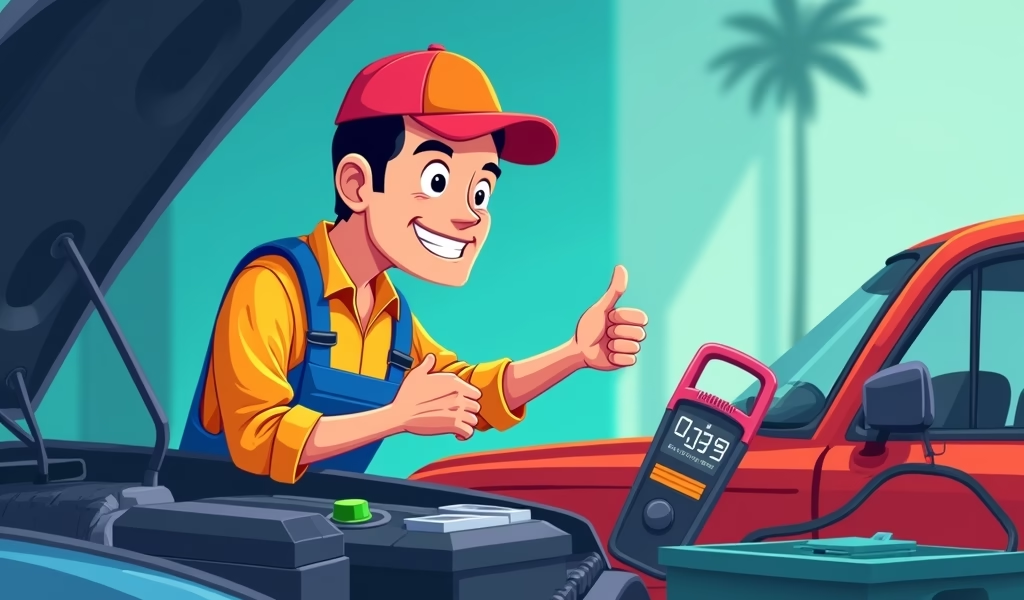
Let’s roll up our sleeves and talk about how you can evaluate your battery’s condition without fancy equipment. First, start with a visual inspection—it tells you more than you might think.
Visual Inspection Basics
Pop the hood and take a good look at your battery. A healthy battery should have:
- Clean terminals free of corrosion (that white, green, or blue powdery substance)
- A case that’s not cracked, bulging, or leaking
- Secure mounting with no excessive movement
- Tight cable connections that don’t wiggle when gently tugged
If you spot corrosion, don’t panic. It’s easily addressed with a simple mixture of baking soda and water (one tablespoon per cup). Disconnect the battery first (always negative terminal first, then positive), clean with an old toothbrush, rinse with water, dry thoroughly, and reconnect (positive first, then negative). Finish by applying a thin coat of petroleum jelly to prevent future corrosion.
A swollen or cracked case, however, is non-negotiable—that battery needs immediate replacement. These defects indicate internal damage that can lead to dangerous leaks or even battery failure while driving.
Battery Testing Methods You Can Do at Home
Beyond visual inspection, there are several practical ways to test your car battery’s health without specialized equipment.
The Headlight Test
This old-school method still works reliably:
- Start with the engine off
- Turn on your headlights
- Have someone start the car while you watch the headlights
- If the lights dim significantly during cranking and then brighten once the engine starts, your battery is showing its age
Severe dimming or momentary blackout of the headlights during cranking suggests your battery is struggling to deliver enough current for starting.
Using a Multimeter
If you own a digital multimeter (available for $10-20 at any auto parts store), you can get more precise readings:
- Set your multimeter to DC voltage (20V range)
- With the engine and all accessories off, connect the red probe to the positive terminal and black probe to negative
- A healthy battery should read at least 12.6 volts
- Readings below 12.4V indicate a partially discharged battery
- Anything below 12.0V means your battery is significantly discharged
For a more thorough test, check voltage during starting. Have someone crank the engine while you maintain the multimeter connection. Voltage shouldn’t drop below 9.5-10V during cranking. After starting, with the engine at about 2,000 RPM, voltage should rise to 13.7-14.7V, indicating your alternator is properly charging the battery.
According to a study by AAA, temperature extremes dramatically affect battery performance. At 0°F, a battery operates at only about 60% of its capacity, while high heat accelerates internal corrosion.
Professional Testing
When in doubt, leverage free testing services. Most auto parts stores offer comprehensive battery testing using specialized equipment that simulates real-world load conditions. These tests provide a clear “Good/Replace” assessment along with measurements of Cold Cranking Amps (CCA)—a crucial metric that indicates how well your battery performs in cold weather.
How to Extend Your Battery’s Life
An ounce of prevention is worth a pound of cure when it comes to battery care. These simple maintenance steps can significantly extend your battery’s lifespan:
- Keep terminals clean and connections tight (check every 6 months)
- Ensure your battery is securely mounted to prevent vibration damage
- Limit short trips when possible—batteries need longer drives to fully recharge
- Turn off all accessories before shutting off your engine to reduce initial load on next start
- For vehicles driven infrequently, use a battery maintainer/tender to prevent sulfation
- Address any electrical issues promptly—parasitic drains can quietly kill your battery
My personal tip: after washing your engine bay or during rainy seasons, apply dielectric grease to battery terminals. It’s an excellent water repellent that prevents moisture-related corrosion—a small $5 investment that can add months to your battery’s life.
The U.S. Department of Energy recommends keeping your battery tightly secured, as excessive vibration can damage internal plates and shorten battery life considerably.
When It’s Time to Replace Your Battery
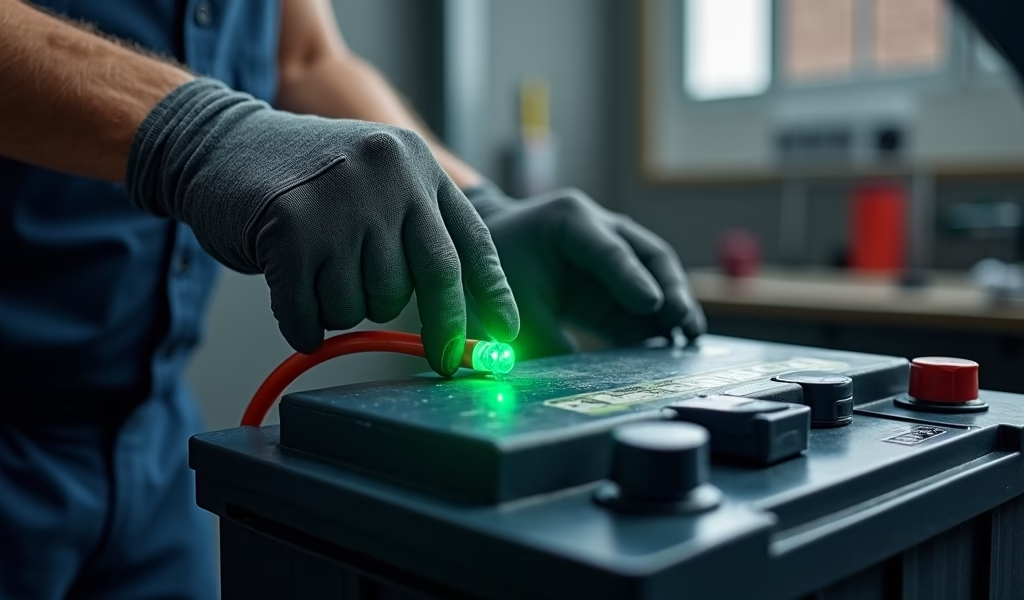
Even with perfect maintenance, every battery eventually reaches retirement age. Here’s when replacement becomes necessary:
- Your battery consistently tests below 12.4V after charging
- Starting your vehicle requires multiple attempts, even in mild weather
- The battery fails a load test (professional or DIY)
- Your battery is approaching 4-5 years old AND showing any performance decline
- Physical damage is visible on the case
- The battery can’t hold a charge for more than a few days
Pro tip: If your battery is showing weakness and winter is approaching, replace it proactively. Cold temperatures dramatically reduce battery capacity, turning a marginal battery into a guaranteed failure during the first cold snap.
When shopping for a replacement battery, don’t focus solely on price. Match the battery to your specific vehicle and driving conditions. The right battery isn’t necessarily the most expensive one, but rather the one that meets your vehicle’s power requirements and your typical driving patterns.
DIY vs. Professional Battery Replacement
Replacing a battery is generally straightforward in most vehicles, making it a perfect DIY job if you’re comfortable with basic tools. Here’s what you’ll need:
- Basic hand tools (typically wrenches or a socket set)
- Safety glasses and gloves
- Anti-corrosion spray or petroleum jelly
- Battery carrying strap (these things are heavy!)
Always follow proper sequence: disconnect negative terminal first, then positive. When installing, reverse the order—positive first, then negative. This sequence prevents accidental shorts and potential damage to electronic components.
That said, some modern vehicles make battery replacement challenging by burying it under other components or requiring computer resets after replacement. According to Consumer Reports, certain luxury vehicles may require dealer-level computer programming after battery replacement to restore all functions properly.
If your vehicle has start-stop technology, requires component removal to access the battery, or you’re simply not comfortable working around electrical systems, professional installation is worth the modest cost (typically $15-30, and many retailers include installation with purchase).
Conclusion
Your car’s battery might be easy to forget—until it leaves you stranded. By understanding how to check battery health and recognizing early warning signs, you can avoid most battery-related emergencies and extend the service life of this crucial component.
Remember that preventive maintenance is always less expensive than emergency service. A quick visual inspection every few months, regular terminal cleaning, and addressing electrical issues promptly can add years to your battery’s useful life and save you from the frustration of unexpected breakdowns.
Most importantly, be proactive rather than reactive. When your battery approaches the end of its typical lifespan or begins showing warning signs, don’t wait for complete failure. The cost of a planned battery replacement is far lower than emergency service, towing charges, or the personal cost of missing important commitments when your car won’t start.
Your vehicle’s electrical system is a partnership of components working together. By maintaining your battery properly, you’re protecting not just the battery itself but the alternator, starter, and sensitive electronics that depend on stable electrical power.
Frequently Asked Questions
How often should I check my car battery’s health?
Check your battery visually every 3 months and perform a more thorough test every 6 months. For batteries older than 3 years, increase testing frequency, especially before extreme temperature seasons.
Can I recharge a dead battery instead of replacing it?
A battery that’s simply discharged can often be recharged, but one that’s failed internally needs replacement. A load test after recharging will tell you whether the battery can still perform adequately.
Why does my battery die in cold weather?
Cold temperatures reduce chemical activity in batteries, decreasing current output while simultaneously making the engine harder to crank. This double-whammy often causes borderline batteries to fail during the first cold snap.
How long should a car battery last?
Most car batteries last 3-5 years, with premium AGM batteries often reaching 5-7 years. Your climate, driving patterns, and maintenance habits significantly impact actual lifespan.
Can I test my battery without special tools?
Yes, you can perform basic checks by observing your headlights’ brightness during starting or watching for slow cranking. However, a multimeter ($10-20) provides much more reliable results.