

Overview
Just like that friend who always lets you know when something’s amiss, your car gives clear signals when its spark plugs—the tiny but mighty components responsible for igniting fuel in your engine—need replacement. The article outlines how replacement intervals vary by plug type (30,000-40,000 miles for copper, up to 120,000 for iridium), details warning signs like rough idling and reduced fuel economy, and explains how proper maintenance can prevent costly repairs while improving performance.
Table of Contents
- Understanding Spark Plugs: What They Do and Why They Matter
- General Guidelines for Spark Plug Replacement
- Signs Your Spark Plugs Need Replacement
- Factors That Affect Spark Plug Lifespan
- Different Types of Spark Plugs and Their Longevity
- DIY Spark Plug Replacement: A Step-by-Step Guide
- Cost Considerations: Replacement vs. Repairs
- Maintenance Tips to Extend Spark Plug Life
- Conclusion
- Frequently Asked Questions
Understanding Spark Plugs: What They Do and Why They Matter
Knowing how often to replace spark plugs is fundamental to proper vehicle maintenance. These small but critical components are responsible for igniting the air-fuel mixture in your engine’s combustion chamber, effectively powering your vehicle forward. Without properly functioning spark plugs, your engine would simply fail to run.
Spark plugs create the electrical spark needed for combustion by transferring electricity from the ignition coil across a small gap between electrodes. This precise timing of electrical discharge is what keeps your engine running smoothly. When spark plugs begin to degrade, this process becomes less efficient, leading to a cascade of potential issues throughout your vehicle’s systems.
Over time, spark plugs naturally wear down from the extreme heat and pressure they endure. The electrode gap widens, carbon deposits build up, and their ability to produce a consistent spark diminishes. This degradation isn’t just an inconvenience—it directly impacts your vehicle’s performance, fuel economy, and overall reliability.
As a technician who’s seen countless preventable engine issues, I can’t stress enough how proper vehicle maintenance routines that include timely spark plug replacement can save you from significant headaches down the road. Let’s explore exactly when and why these crucial components need your attention.
General Guidelines for Spark Plug Replacement
The general recommendation for spark plug replacement varies significantly based on your vehicle and the type of spark plugs installed. Conventional copper spark plugs typically need replacement every 30,000 to 40,000 miles. Premium plugs made with more durable materials like platinum or iridium can last significantly longer—often between 60,000 to 120,000 miles.
Your vehicle’s owner manual remains the most reliable source for specific replacement intervals. Manufacturers design vehicles with particular spark plug types and performance characteristics in mind, so their recommendations are tailored to optimize your specific engine’s performance and longevity.
Modern vehicles equipped with onboard diagnostic systems may alert you when spark plug performance is declining. However, these systems typically indicate problems only after performance has already been affected, which is why following preventive maintenance schedules is preferable.
According to AAA’s automotive experts, neglecting spark plug maintenance can lead to reduced fuel efficiency of up to 30% in severe cases. This means that regular replacement isn’t just about preventing breakdowns—it’s also about maintaining optimal performance and fuel economy.
While some newer vehicles with advanced engine designs and premium spark plugs may advertise “lifetime” spark plugs, this typically means the expected lifetime of the vehicle under ideal conditions. Even these should be inspected regularly after 80,000-100,000 miles, as real-world driving conditions rarely match ideal test environments.
Signs Your Spark Plugs Need Replacement
Your vehicle often communicates when spark plugs are failing, well before complete failure occurs. Recognizing these warning signs can help you address the issue before it leads to more costly repairs or inconvenient breakdowns.
Difficulty starting your engine, especially in cold weather, is often one of the first signs of deteriorating spark plugs. When spark plugs can’t generate sufficient spark, the combustion process becomes less reliable, making cold starts particularly challenging.
A rough idle is another common indicator. If your vehicle shakes or vibrates noticeably when stopped at traffic lights or in park, worn spark plugs could be causing uneven combustion across your engine’s cylinders. This uneven performance puts additional stress on your engine mounts and can lead to increased vibration throughout the vehicle.
Perhaps the most noticeable symptom is engine misfiring—that brief hesitation or stumble when accelerating. This occurs when one or more cylinders fail to ignite properly, causing a momentary power loss that can feel like the vehicle is briefly “catching its breath” before continuing.
Poor fuel economy often accompanies failing spark plugs as well. When combustion is inefficient, your engine compensates by using more fuel, which you’ll notice at the pump. Many drivers report fuel efficiency improvements of 10-30% after replacing severely worn spark plugs.
Reduced acceleration and power are additional symptoms that indicate it may be time for new spark plugs. This performance reduction happens gradually, which is why many drivers don’t notice it until it becomes significant. The engine requires optimal combustion to deliver full power, and deteriorated spark plugs simply can’t provide that.
If you’re experiencing a check engine light accompanied by codes related to cylinder misfires (typically P0300 series codes), this is a clear indication that spark plug replacement should be considered. These diagnostic codes specifically point to combustion issues that often relate directly to spark plug performance.
Factors That Affect Spark Plug Lifespan
Several factors influence how quickly your spark plugs wear out, which explains why replacement intervals can vary significantly between vehicles and driving situations. Understanding these factors can help you better anticipate when replacements might be necessary for your specific situation.
Your driving habits play a major role in spark plug longevity. Short trips where the engine never fully warms up can cause accelerated carbon buildup on spark plugs. This is because the combustion chamber operates most efficiently at normal operating temperatures, and cold operation promotes deposit formation.
Frequent high-performance driving or towing puts additional stress on spark plugs. The higher temperatures and increased electrical demands can accelerate electrode wear, particularly in conventional copper plugs. This is one reason why performance vehicles often specify premium spark plug materials.
Fuel quality significantly impacts spark plug life. Lower-quality fuels with more impurities can create deposits that coat the spark plug electrodes, reducing their effectiveness. Similarly, vehicles that burn oil due to worn piston rings or valve guides will deposit oil residue on spark plugs, compromising their performance.
Environmental conditions also affect spark plug durability. Extremely cold climates require more voltage to create sufficient spark, which puts additional strain on the plugs. Similarly, very hot climates can contribute to thermal stress on spark plug components.
The engine’s condition and overall maintenance history influence spark plug performance as well. Engines with carbon buildup, improper fuel mixtures, or cooling system issues may cause spark plugs to run hotter than designed, shortening their effective lifespan. This is why proper engine maintenance contributes to the longevity of all components, including spark plugs.
Vehicle modifications, particularly those affecting air/fuel mixture or increasing engine power, can dramatically change the demands placed on spark plugs. Modified vehicles often require more frequent spark plug inspections and replacements to maintain optimal performance.
Different Types of Spark Plugs and Their Longevity
The type of spark plug installed in your vehicle significantly impacts its replacement interval. Modern vehicles use several different spark plug technologies, each with distinct advantages and lifespans.
Copper spark plugs (sometimes called standard plugs) feature a copper core with a nickel alloy electrode. These plugs conduct electricity efficiently and perform well but have the shortest lifespan—typically 30,000-40,000 miles. Despite their shorter life, they remain popular for older vehicles and performance applications due to their excellent conductivity.
Platinum spark plugs use platinum-coated electrodes that resist wear and high temperatures better than copper. Single platinum plugs generally last 60,000-80,000 miles, while double platinum designs (with platinum on both electrodes) can extend this further. Their improved durability comes with a higher price tag, but the extended replacement intervals often justify the cost.
Iridium spark plugs represent the premium option for most modern vehicles. Featuring an iridium alloy center electrode that’s significantly harder and more durable than platinum, these plugs typically last 80,000-120,000 miles. Their fine-wire center electrode design requires less voltage to produce a spark, improving efficiency and cold-starting performance.
Some specialized applications use silver spark plugs, which offer excellent thermal conductivity but moderate longevity (approximately 20,000-30,000 miles). These are less common in passenger vehicles but may be specified for certain European performance cars.
When selecting replacement spark plugs, always follow your vehicle manufacturer’s recommendations regarding type and heat range. Using incorrect spark plugs can lead to poor performance, reduced fuel economy, and in some cases, engine damage. The nominal cost difference between economy and premium spark plugs is typically outweighed by the performance benefits and extended service intervals of higher-quality options.
According to NGK Spark Plugs, one of the leading manufacturers, upgrading to premium spark plugs can provide performance improvements even in vehicles originally equipped with standard plugs, though the greatest benefit remains the extended service life.
DIY Spark Plug Replacement: A Step-by-Step Guide
Replacing spark plugs is a maintenance task many car owners can handle themselves with basic tools and mechanical knowledge. This DIY approach can save on labor costs while giving you better insight into your engine’s condition.
Before beginning, gather the necessary tools: socket wrench, spark plug socket (usually 5/8″ or 13/16″), extension bar, gap tool, anti-seize compound, and of course, the correct replacement spark plugs for your vehicle. Working on a cool engine is essential for safety and easier access.
Start by locating your spark plugs. In most vehicles, they’re connected to thick rubber boots at the end of spark plug wires or, in modern vehicles, directly to ignition coils. If you’re unsure of their location, consult your vehicle’s repair manual.
It’s best to replace one plug at a time to avoid confusion. Gently remove the spark plug wire or ignition coil, being careful to pull from the boot rather than the wire itself. This prevents damaging the internal wire.
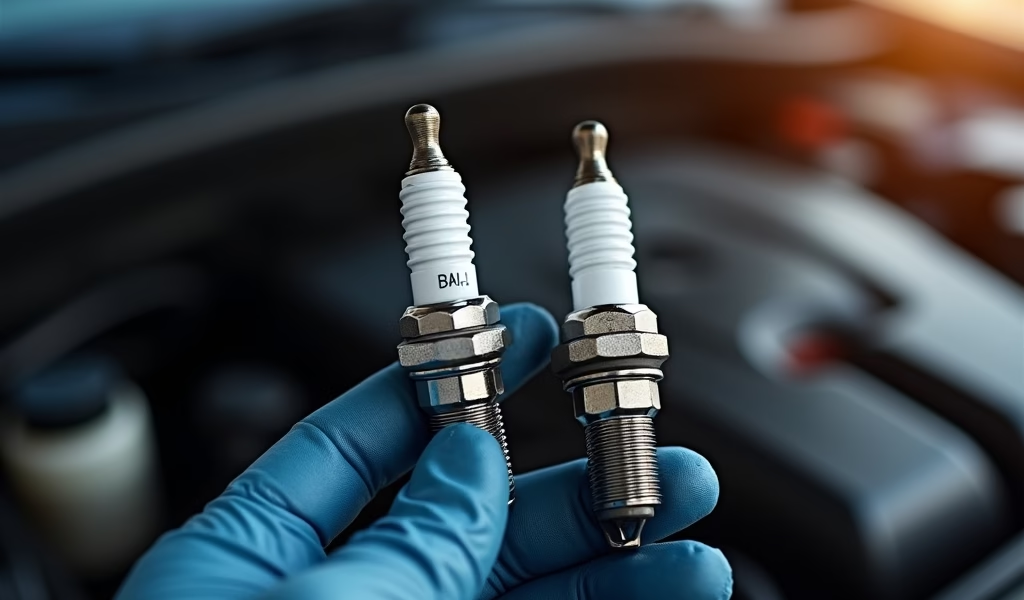
Use your spark plug socket and extension to carefully loosen and remove the old spark plug. Take a moment to examine it—the condition can reveal valuable information about your engine’s health. A normal plug should have light tan or gray deposits. Black, sooty deposits might indicate a rich fuel mixture, while white, blistered electrodes could suggest the engine is running too hot.
Before installing the new plug, check its gap using a gap tool and adjust if necessary to match your vehicle’s specifications. Apply a small amount of anti-seize compound to the threads (unless the manufacturer specifically advises against it), being careful not to get any on the electrode.
Thread the new spark plug by hand initially to prevent cross-threading. Once finger-tight, use your socket wrench to tighten to the manufacturer’s torque specifications—typically about 1/4 to 1/2 turn past finger-tight for most vehicles. Over-tightening can damage the threads in the cylinder head, while under-tightening may allow compression leaks.
Reattach the spark plug wire or ignition coil securely, ensuring it clicks into place. Repeat the process for each spark plug, working methodically to avoid mixing up the firing order. After replacement, start the engine to confirm smooth operation.
This process is part of comprehensive car maintenance tasks that help keep your vehicle running at its best. While straightforward on many vehicles, some modern engines have spark plugs located underneath intake manifolds or other components, making access difficult. If your vehicle has such a configuration, professional service may be more practical.
Cost Considerations: Replacement vs. Repairs
Understanding the economics of spark plug maintenance helps illustrate why regular replacement is a wise investment. The cost of spark plugs varies widely based on type and vehicle requirements, but this preventive maintenance is invariably less expensive than addressing the problems caused by failure.
Standard copper spark plugs typically cost $2-$5 per plug, while platinum versions range from $5-$10 each. Premium iridium spark plugs generally cost $10-$25 per plug. For a typical four-cylinder engine, complete replacement with premium plugs might cost $40-$100 in parts alone.
Professional installation adds labor costs, typically ranging from $40-$150 depending on your vehicle and local labor rates. Some vehicles with difficult access may incur higher labor charges. This brings the total professional replacement cost to approximately $80-$250 for most vehicles.
Compare this to the potential costs of ignoring spark plug maintenance. Continued driving with failing spark plugs can lead to:
- Catalytic converter damage ($500-$2,500)
- Ignition coil failure ($150-$400 per coil)
- Oxygen sensor damage ($150-$300 per sensor)
- Increased fuel consumption (potentially hundreds of dollars annually)
- In extreme cases, engine misfires that damage pistons or valves ($1,000-$4,000+)
The cost-benefit analysis clearly favors preventive maintenance. Regular spark plug replacement not only prevents these expensive repairs but also maintains optimal fuel efficiency. Even a modest 5% improvement in fuel economy could save the average driver $100-$200 annually, often covering the cost of replacement within a year.
For those comfortable with DIY maintenance, the economics become even more favorable. The tools needed for spark plug replacement are basic and, once purchased, can be used for future maintenance, further reducing the lifetime cost of this essential service.
Maintenance Tips to Extend Spark Plug Life
While spark plugs will inevitably require replacement, several practices can help maximize their service life and maintain optimal performance between replacements.
Regular engine tune-ups ensure all systems work in harmony, reducing stress on spark plugs. When air filters, fuel injectors, and oxygen sensors all function properly, combustion remains efficient, preventing abnormal spark plug wear.
Using high-quality fuel helps prevent deposit buildup on spark plug electrodes. Premium fuels typically contain more effective detergent additives that keep fuel system components cleaner, including the combustion chamber where spark plugs operate.
Occasional use of fuel system cleaners can remove carbon deposits that might otherwise accumulate on spark plug electrodes. These products are particularly beneficial for vehicles primarily used for short trips where the engine rarely reaches full operating temperature.
Addressing check engine lights promptly prevents cascade failures that could impact spark plug performance. Many engine management issues, if left unresolved, create conditions that accelerate spark plug deterioration.
Maintaining proper engine operating temperature through regular cooling system maintenance helps prevent overheating, which can damage spark plug electrodes. Similarly, ensuring your engine oil is changed regularly prevents oil consumption issues that could lead to fouled spark plugs.
For vehicles driven infrequently or only for short distances, occasional longer drives help the engine reach full operating temperature, burning off condensation and deposits that might otherwise accumulate on spark plugs.
When replacing spark plugs, always torque them to manufacturer specifications. Over-tightened plugs can damage thread seats or break, while under-tightened plugs may work loose or allow compression leaks that affect performance.
These maintenance practices align with comprehensive care approaches that contribute to vehicle longevity and reliability. By incorporating spark plug awareness into your overall maintenance strategy, you’ll not only extend their service life but also improve your vehicle’s overall performance and efficiency.
Conclusion
Determining how often to replace spark plugs is not a one-size-fits-all proposition, but rather a balance between manufacturer recommendations, driving conditions, and the specific type of spark plugs installed in your vehicle. By understanding the role these critical components play and recognizing the signs of their deterioration, you can make informed decisions about maintenance timing.
For most vehicles, replacement intervals fall between 30,000 miles for standard copper plugs and up to 120,000 miles for premium iridium options. However, your specific driving patterns and vehicle condition may necessitate adjustments to these general guidelines.
Regular inspection and timely replacement of spark plugs represent one of the most cost-effective maintenance practices available to vehicle owners. The relatively modest investment in parts and labor pays dividends through improved performance, enhanced fuel economy, and the prevention of more expensive repairs down the road.
Whether you choose to perform the replacement yourself or rely on professional service, maintaining awareness of your spark plugs’ condition and lifespan contributes significantly to your vehicle’s overall health and reliability. This small but crucial maintenance item exemplifies the principle that preventive care is invariably less costly and disruptive than reactive repairs.
By incorporating spark plug maintenance into your vehicle care routine, you’re not just preventing potential breakdowns—you’re ensuring your engine continues to perform at its best, maximizing both efficiency and longevity while minimizing your long-term ownership costs.
Frequently Asked Questions
Can I replace just one spark plug if it’s failing?
It’s best to replace all spark plugs at the same time even if only one is failing. This ensures even performance across all cylinders and prevents having to revisit the job soon after when others begin to fail.
What happens if I don’t replace worn spark plugs?
Ignoring worn spark plugs can lead to reduced fuel economy, engine misfires, difficulty starting, and eventually more serious problems like catalytic converter damage. The longer you wait, the more expensive the potential repairs become.
Is it worth paying more for platinum or iridium spark plugs?
For most drivers, the additional cost of premium spark plugs is justified by their significantly longer lifespan and better performance. The reduced frequency of replacement often makes them more economical in the long run.
Can spark plugs affect fuel economy?
Worn spark plugs can reduce fuel efficiency by up to 30% in extreme cases. Even moderately worn plugs can cause a noticeable increase in fuel consumption as the engine compensates for incomplete combustion.
How long does it take to replace spark plugs?
A professional mechanic can typically replace spark plugs in 30 minutes to 2 hours, depending on engine design and accessibility. DIY replacements may take longer for those less experienced but remain manageable for most home mechanics.